

Pivot From Research Into Museum Education Jobs
Archival vaults demand absolute focus. Curators spend decades researching obscure artifacts, translating centuries of history into peer-reviewed journals that only a handful of colleagues actually read. Institutions lock their brightest minds in back rooms, entirely separating the content experts from the daily crowds walking the gallery floors. This rigid divide creates severe burnout for academics who crave human connection. Meanwhile, the public wanders through exhibits craving energetic storytelling. Bridging this gap requires a deliberate career shift. The deep analytical skills forged in those quiet archives provide the exact foundation needed to secure highly engaging museum education jobs. Moving from academic isolation to the bustling gallery floor completely alters a stagnant career path. Researchers secure these roles when they reframe their exhaustive studies into vibrant public programming, bringing history to life for eager audiences.
The growing appeal of museum education jobs
Cultural institutions increasingly prioritize community engagement over isolated observation. As stated in an Excellence and Equity report by the American Alliance of Museums, the educational function of these institutions stands at the center of their public service. Traditional museum research jobs often trap brilliant scholars in academic silos, limiting their direct effect on society. In sharp contrast, modern education roles thrive on fast-paced, community-focused interactions. According to projections published by the Bureau of Labor Statistics, overall employment in educational instruction and library occupations will experience slower-than-average growth from 2024 to 2034.
Educators experience the immediate thrill of watching a child grasp a difficult historical concept or guiding adults through provocative conversations about ancient artifacts. Many professionals changing careers wonder about specific qualifications. Do I need a teaching degree to work in museum education? Most institutions value subject matter expertise and public speaking experience over a formal teaching license, though some pedagogy training is a bonus. Ultimately, leaving the quiet archives to lead vibrant public discussions offers deep emotional rewards and undeniable career stability.
Translating museum research jobs into education assets
Curators and archivists already possess the essential tools necessary to captivate museum visitors. A growing industry movement advocates for shared expertise, demanding that content specialists actively participate in public outreach. Scholars chasing museum education jobs must translate rigorous academic skills into accessible daily activities. Exhaustive literature reviews easily become the structural foundations for engaging summer camp curricula. Thorough archival investigations seamlessly turn into interactive, hands-on gallery workshops for local school districts. George Hein championed the constructivist museum, arguing that visitors actively build new meanings rather than passively absorbing lectures. Researchers excel at unearthing detailed narratives. Educators guarantee successful educational programming when they frame those narratives around the prior knowledge of the audience. Academics simply need to translate their deep historical silos into immediate, floor-level interactions. They guide visitors through a process of active learning instead of static memorization.
Moving from peer-review to public consumption
Academic publishing demands dense terminology and rigid structures. Public programming demands the exact opposite. Successful educators strip away intimidating jargon, choosing relatable language to connect deeply with diverse crowds. The focus shifts entirely to the art of engaging storytelling. Professionals moving from the back room must prioritize inquiry-based dialogue over one-way lectures. Visual Thinking Strategies serve as the perfect tool for this change. According to an article published on ArtMuseumTeaching.com, Abigail Housen and Philip Yenawine developed this inquiry-based teaching method to encourage analytical skills. Educators use open-ended, neutral questions, asking groups to describe exactly what they see in a specific painting or artifact. This technique replaces the recitation of peer-reviewed bibliographies with lively, visitor-led discussions. Facilitators guide the conversation, validating observations while subtly weaving in factual context. They ensure the audience remains actively engaged from start to finish.
How a museum studies background accelerates the pivot
Cultural workers often forget the sheer breadth of their academic training. Past museum studies coursework provides an incredible advantage when targeting modern education departments. Unlike traditional marketing degrees that focus on ticket sales, visitor studies courses explore the voice of the audience. Harvard Graduate School of Education notes that these spaces function as free-choice or informal environments, where institutions invite learning rather than require it. Harvard Extension School states that transcripts invariably contain valuable classes on museum collections and care, exhibition design, and audience engagement. These core subjects prove that a candidate completely understands how cultural institutions operate from the ground up. Educators constantly collaborate with designers and curators to build accessible spaces. A firm grasp on these operational details allows new educators to hit the ground running. Hiring managers aggressively seek candidates who combine high-level pedagogical theory with practical knowledge of exhibit fabrication and ADA compliance standards.
Tapping into the alumni network
Career changes require strategic relationships. University connections serve as a powerful tool for securing rare museum education jobs. Candidates should immediately connect with former classmates currently working in public programming. Scheduling casual informational interviews reveals unadvertised opportunities and clarifies daily operational challenges. Navigating this network prompts a common concern. Is it hard to switch from museum research to education? It takes targeted effort to reframe the resume, but research professionals already possess the vital core knowledge required to succeed. Using organizations like the Museum Education Roundtable speeds up this networking phase. Academics prepare to speak the language of the floor staff when they review the fifty-year archive of peer-reviewed operational methodology from these groups. When candidates ask for warm introductions from established contacts, they often bypass automated hiring systems. These introductions land applications directly on the desks of influential department directors.
Bridging the gap with hands-on teaching experience
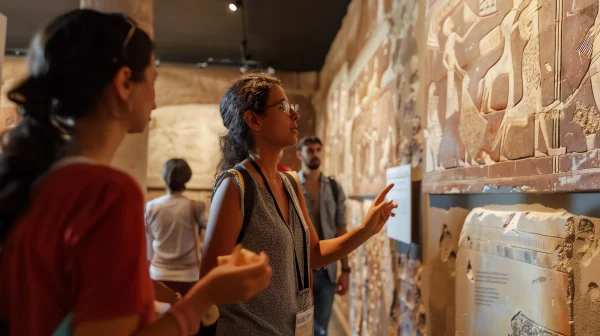
Theoretical knowledge rarely survives first contact with a chaotic kindergarten field trip. Career-changing professionals must secure practical floor experience to validate their pedagogical theories. Volunteering through formal docent programs offers an immediate, actionable pathway into the daily rhythms of the institution. While administrators historically viewed them as free labor, modern docent training now relies heavily on sophisticated adult learning theory. Accumulating over one hundred hours of volunteer floor time proves a candidate can handle highly diverse, unpredictable audiences. Floor staff face wild questions from energetic children and skeptical adults every single day. Perfecting the art of the pivot during a chaotic gallery tour demonstrates extreme professional resilience. Hiring managers enthusiastically recruit individuals who have already conquered the steep learning curve of public facilitation. These managers trust them to oversee large groups with both confidence and grace.
Partnering with current educators
Building a strong portfolio does not always require leaving a current employer. Resourceful academics find ways to collaborate directly with the public outreach teams down the hall. Scholars provide their deep subject matter expertise to the education department, volunteering to translate a current curatorial project into K-12 learning materials. Designing a gallery workshop alongside veteran educators creates a tangible asset for future museum education jobs. This internal shadowing strategy effectively builds a temporary hybrid role. It breaks down the traditional silos separating the archival staff from the public-facing teams. The researcher gains valuable insight into curriculum development, while the educators receive highly accurate, deeply researched content to share with local schools. Initiating these collaborative projects signals strong initiative and a genuine passion for making difficult historical data accessible to everyone.
Tailoring the resume for top museum education jobs
Traditional academic curriculum vitae prioritize exhaustive bibliographies and peer-reviewed journals. Education hiring managers instantly reject documents that fail to highlight human interaction. Candidates must ruthlessly restructure their resumes using the Situation, Task, Action, Result framework. The spotlight shifts away from lengthy publication histories and moves directly toward active engagement metrics. Resumes must front-load the specific times the candidate presented findings to a live audience, trained junior staff members, or organized community outreach initiatives. Quantifying the results of these events creates a strong story. Writing "co-curated an exhibition that increased visitor engagement by twenty-two percent" clearly communicates tangible value. Career-changing professionals must prove they understand how to captivate an audience. Translating solitary research milestones into measurable, community-focused achievements demonstrates a clear readiness to step out of the archives and onto the gallery floor.
Applying keywords to beat the modern ATS
Brilliant qualifications mean nothing if human eyes never actually see the application. Modern cultural institutions utilize aggressive Applicant Tracking Systems to filter out irrelevant resumes. These software programs scan documents for highly specific terminology related to public programming. Applicants must strategically sprinkle exact phrases throughout their work history sections to beat the automated gatekeepers. High-value terms include multimodal learning, community engagement, visitor studies, public lecturing, exhibition design, and program development. Modern departments absolutely require candidates familiar with inquiry-based learning techniques. When candidates weave these targeted keywords naturally into achievement bullet points, the software flags the application as a perfect match. Candidates who treat the automated filter like a rigid search engine bypass the digital wall entirely. Strategic placement of the right vocabulary in the right context guarantees the resume lands on the manager's desk.
Acing the audition for the new career path
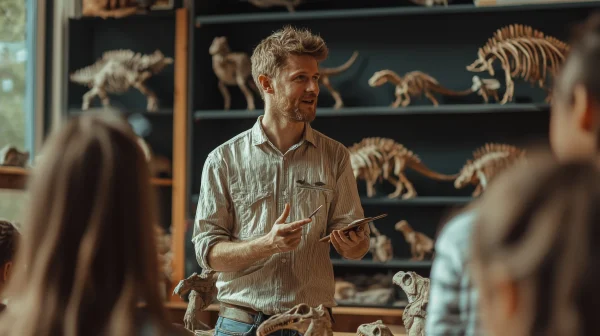
Securing museum education jobs demands a live teaching demonstration or a brief gallery tour in addition to a stellar interview. Hiring committees almost always require this presentation. This practical audition forces candidates to prove their capabilities in real-time under intense scrutiny. Success relies heavily on demonstrating higher-order thinking facilitation. Presenters must utilize object-based inquiry and actively solicit feedback rather than monologuing at the interview panel. Perfecting audience adaptation and pacing ensures the lesson flows naturally. Candidates should fully anticipate simulated disruptions, as interviewers frequently role-play as distracted children or argumentative tourists. Candidates prove extreme competence when they maintain composure and gently guide the group back to the core lesson. Applicants show the committee that they truly understand the hectic reality of the floor when they treat the mock lesson as an interactive conversation instead of a rigid academic lecture.
Addressing the overqualified objection
Former academics frequently face intense skepticism from hiring managers regarding their long-term commitment. Committees worry that public instruction serves merely as a temporary fallback plan. Candidates must proactively reassure interviewers that facilitating public exploration represents a genuine, enduring passion. When candidates frame their advanced research background as a massive asset, they change the narrative entirely. The candidate's deep knowledge allows them to simplify difficult topics into age-appropriate pedagogical formats without sacrificing historical accuracy. Navigating the financial realities of this career change requires clear expectations. According to the Bureau of Labor Statistics, the median annual wage for archivists, curators, and museum workers reached $57,100 in May 2024, while museum technicians earned $47,460 and curators secured $61,770. Applicants use their exhaustive academic credentials and proven project management skills to negotiate higher starting wages, ensuring they receive fair compensation for their comprehensive expertise.
Staying current with pedagogical trends in the cultural sector
Cultural programming expanded aggressively beyond the physical exhibit walls following the global disruptions of recent years. Educators now face the challenge of engaging audiences through monitors and touchscreens. Familiarity with hybrid models remains absolutely essential for any modern professional entering the space. Departments heavily rely on distance learning technologies to reach underfunded rural school districts. Candidates must familiarize themselves with designing virtual field trips, issuing digital badges, and managing adaptive digital archives. Utilizing generative tools to enhance STEM curricula proves highly attractive to progressive institutions. Professionals entering the field need to learn digital accessibility standards, ensuring online content serves visually or hearing-impaired visitors effectively. When new educators combine traditional storytelling with cutting-edge technological platforms, they expand their geographic reach, turning a local cultural center into a global hub for interactive, accessible learning.
Diversity, Equity, Accessibility, and Inclusion (DEAI)
A policy statement from the American Alliance of Museums notes that museums actively embrace diversity, equity, accessibility, and inclusion to make their programs and collections accessible to all audiences. Ignorance regarding DEAI principles immediately disqualifies candidates from serious consideration. Reviewing resources like the American Alliance of Museums' Facing Change report provides essential context for current industry standards. Professionals must embrace decolonization principles when developing new curricula, actively challenging biased historical narratives.
Culturally responsive pedagogy ensures that educators honor the diverse backgrounds of every visitor walking through the doors. Educators create safe spaces for marginalized communities to explore sensitive or painful historical exhibitions when they implement trauma-informed teaching methods. They guarantee that even the youngest learners feel respected when they incorporate early childhood frameworks like Montessori into interactive spaces. Adopting these inclusive methodologies changes a standard gallery tour into a deeply affirming experience, cementing the institution's role as a vital community anchor.
Taking the final step toward the gallery floor
Leaving the familiar comfort of the archives demands courage and strategic planning. Researchers genuinely make incredibly skilled educators because they possess an authentic, deep-rooted passion for the subject matter. Their exhaustive training in museum studies provides a powerful, structural advantage over candidates lacking institutional knowledge. Scholars completely revitalize a stagnant career when they translate dense bibliographies into vibrant, inquiry-based dialogues. The modern gallery floor desperately needs professionals who understand the precise details of history but choose to share them through engaging, constructivist facilitation. Academics hold all the necessary tools to captivate audiences and change static exhibits into lively community forums. This exciting process begins when candidates polish their resumes to highlight public interaction. Candidates should confidently apply for top museum education jobs, trusting that their advanced analytical skills flawlessly translate into unforgettable visitor experiences.
Recently Added
Categories
- Arts And Humanities
- Blog
- Business And Management
- Criminology
- Education
- Environment And Conservation
- Farming And Animal Care
- Geopolitics
- Lifestyle And Beauty
- Medicine And Science
- Mental Health
- Nutrition And Diet
- Religion And Spirituality
- Social Care And Health
- Sport And Fitness
- Technology
- Uncategorized
- Videos

