
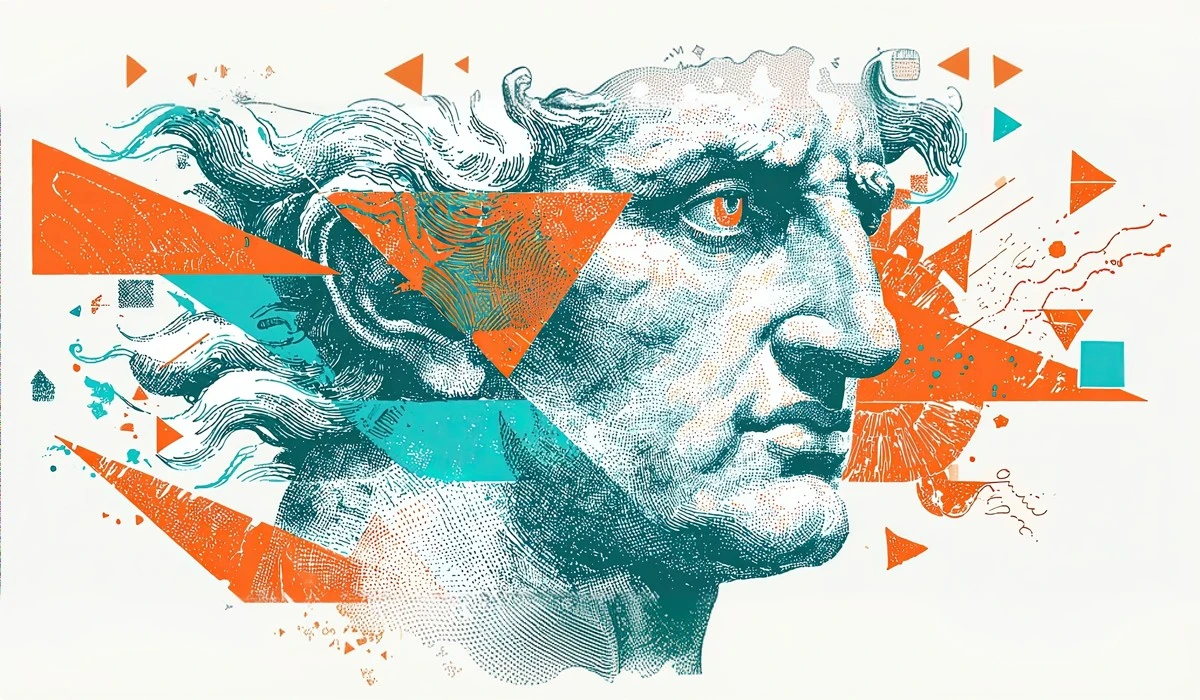
Decoding Modern Vibes In Contemporary Art History
When you stare at a pile of candy in a museum corner and feel a sudden wave of annoyance, the artist successfully traps you in a psychological experiment. You naturally expect a painting to display technical skill. The creator actively uses your expectation against you. Understanding these exact philosophical shifts that completely redefined modern creativity allows you to grasp Contemporary Art History. Philosopher Arthur Danto famously realized this in 1964. He watched Andy Warhol stack completely ordinary Brillo boxes in a gallery space.
As documented in a 1964 paper published by the University of Helsinki, Danto realized visual representation completely died at that exact moment, arguing that identifying something as art necessitates an atmosphere of artistic theory rather than just visual qualities. Pure artistic theory immediately took its place. We will dissect this period using two primary lenses. First, we will explore postmodern aesthetics. Then, we will analyze conceptual art. These two frameworks transform frustrating museum trips into thrilling intellectual conversations. You will decode complicated contemporary pieces with total confidence.
Defining the Period: A Primer on Contemporary Art History
Art historians firmly draw the clear line between modernism and contemporary creativity during a period of massive global upheaval. Post-war societies experienced intense cultural shifts. Creators actively rejected the old modernist pursuit of absolute universal truths. They permanently abandoned the rigid obsession with specific mediums like oil paint or bronze. As you map out these timelines, you might ask, when exactly does contemporary art start? Art experts generally start contemporary art in the late 1960s or early 1970s, marking a decisive philosophical break from modernist traditions. This distinct timeline rupture allowed entirely new creative vocabularies to flourish globally. Artists embraced radical skepticism and subjective viewpoints. They actively dismantled the grand narratives that previously governed fine art. The ensuing decades introduced a time of unprecedented pluralism. Creators constantly demanded rigorous intellectual engagement while rejecting simple visual pleasure.
The Rise of Postmodern Aesthetics: Rejection of Traditional Norms
The old rules simply stopped working for a generation facing rapid technological expansion. According to Tate, postmodern aesthetics emerged as the dominant visual language during this specific timeframe, functioning primarily as a reaction against modernism. Artists started questioning objective reality itself. They viewed history as a series of fragmented, unreliable narratives. This radical perspective completely transformed the traditional gallery space. Creators prioritized ongoing conversations and actively rejected final, polished destinations. You see this shift clearly in how artists began documenting their daily lives and political struggles. They weaponized everyday materials to challenge authoritative voices. An exploration into Contemporary Art History reveals a captivating timeline of cultural rebellion. Every new piece actively challenged the establishment. Viewers suddenly had to work hard to find meaning. Artists stripped away obvious beauty and demanded pure intellectual participation. The period essentially turned the viewer into a vital collaborator.
The Shift from Physical Object to Pure Idea
Traditional physical craft took a dramatic backseat to the core message during the late 1960s. Pioneers of conceptual art actively sought to bypass the highly commercialized gallery system. They recognized that wealthy collectors easily bought and sold traditional paintings. Artists wanted to completely destroy this rigid commodification. They prioritized the human mind and completely ignored the skilled hand. Lucy Lippard officially codified this massive shift in her influential 1973 book. She documented the complete dematerialization of the physical art object. Studying Contemporary Art History reveals this exact timeline of dematerialization. Artists stopped producing beautiful things and started producing challenging ideas. Research published in a 1971 MoMA catalogue notes that American conceptualist Sol LeWitt perfectly defined this new methodology, asserting that the idea acts as a machine making the art. Artists simply wrote down instructions and hired other people to construct the actual physical pieces.
Lawrence Weiner and the Emergence of Conceptual Art
Lawrence Weiner took this radical methodology even further in his famous 1968 declaration. He firmly asserted that the artist never actually needs to build the piece. The written concept holds the exact same value as a finished sculpture. This massive realization liberated creators from the confines of their physical studios. They started using language, photography, and everyday actions as their primary artistic tools. Postmodern aesthetics heavily influenced this rejection of traditional craftsmanship. Artists completely stopped worrying about technical perfection. They focused entirely on delivering sharp cultural critiques. This ideological pivot terrified traditional art critics. They suddenly had to evaluate the artist's intellect while ignoring traditional painting techniques. You understand the true power of conceptual art when you recognize this deliberate defiance. The creators successfully forced the incredibly wealthy art market to purchase completely intangible ideas.
Deconstructing the Rules of Postmodern Aesthetics
Postmodern aesthetics actively dismantled the rigid boundaries between elite culture and everyday life. Traditional critics heavily guarded the gates of high art for centuries. New creators successfully smashed those gates using irony and mass media imagery. They enthusiastically blended cheap kitsch with prestigious museum formats. As outlined in a paper hosted by Villanova University, theorist Fredric Jameson famously defined postmodern pastiche as blank parody, describing it as an imitation that has entirely lost its sense of humor. Artists actively imitated dead historical styles without using any traditional satirical humor.
According to teaching materials from the Whitney Museum of American Art, Jeff Koons perfectly weaponized this exact technique, collaborating with a California foundry to cast and finish the sixty precision-engineered, stainless steel parts of a ten-foot, one-ton balloon dog. Koons forced wealthy collectors to pay millions for giant shiny toys. His work completely destroyed the old rules governing artistic value and originality. Artists relentlessly mocked the idea of unique creative genius. They blatantly stole images from television, magazines, and comic books to create their masterworks.
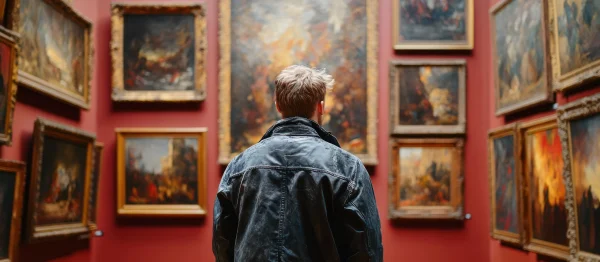
Redefining Originality in Postmodern Art
A MoMA educational guide details that Andy Warhol practically invented this specific visual vocabulary with his vibrant silkscreen prints, frequently transferring formatted photos onto surfaces either alone or multiplied in a grid. He repeated the same celebrity faces over and over across massive canvases. Warhol actively questioned the true value of originality in a consumerist society. He used mechanical printing techniques to mock the emotional intensity of abstract painters. This heavy reliance on appropriation defines the core of postmodern aesthetics.
Artists actively scavenged through the garbage bin of popular culture for inspiration. They reassembled these discarded commercial fragments into brilliant cultural critiques. Learning to read these specific visual clues allows you to grasp Contemporary Art History. The artist wants you to recognize the stolen imagery. They want you to feel the tension between high culture and cheap advertising. The artwork functions as a harsh mirror reflecting our chaotic, consumer-driven modern society.
Key Milestones in Contemporary Art History
A few incredibly radical exhibitions completely rewired public expectations during the late twentieth century. Curator Harald Szeemann shocked the European public with a groundbreaking 1969 exhibition. He gathered process-based and conceptual pieces that focused entirely on artistic attitudes. Szeemann formally demoted the finished object and prioritized raw creative energy. When looking at these radical exhibitions, a common question arises: what is the main focus of conceptual art? The main focus of conceptual art remains the core idea, completely overriding traditional aesthetic or material concerns. These chaotic shows forced ordinary audiences to engage intellectually and abandon simple visual observation. People walked into galleries expecting beautiful paintings and found piles of dirt instead. A major tobacco corporation controversially sponsored Szeemann's massive European exhibition. This sponsorship marked an early collision between experimental ideas and corporate money.
The Institutionalization of Conceptual Art
The Museum of Modern Art in New York quickly legitimized this radical movement. They launched a massive exhibition centered entirely around information and communication networks. MoMA heavily featured text-based displays and confusing data sets. Public audiences eagerly read the artwork while completely abandoning traditional visual observation. Documenta 5 in Germany subsequently brought this intellectual revolution to a massive international stage. Over one hundred and fifty artists showcased earthworks, performances, and conceptual pieces. These specific landmark events firmly cemented the rules of Contemporary Art History. Curators successfully proved that museums could display temporary actions and written words. The gallery space transformed from a quiet sanctuary into an active laboratory. Critics finally realized that art could exist entirely outside the physical realm. The public slowly learned to appreciate raw ideas while discarding polished objects.
The Mechanics and Meaning of Conceptual Art
Radical artists completely abandoned paint and adopted everyday language as their primary medium. Based on MoMA's collection records, Joseph Kosuth probed the strict nature of meaning with a physical chair, representing a single seat three ways: as a manufactured object, a photograph, and a copy of its dictionary entry. He placed a real chair next to a photograph of that exact chair. He then hung a dictionary definition of a chair on the same wall. Kosuth forced the viewer to decide which version represented the truest reality.
Artists like Robert Barry completely stopped making objects and simply typed sentences. Analyzing these radical text formats remains a core competency for anyone studying Contemporary Art History. Marina Abramović aggressively shifted the creative medium to the human body itself. She performed highly ritualized endurance feats that exposed deep psychological and physical vulnerabilities. Abramović prioritized raw human connection and actively destroyed any traditional aesthetic beauty. Audiences wept openly during her intense physical performances.
Redefining the Gallery Experience
Spatial awareness eventually replaced the flat canvas as the ultimate artistic frontier. According to Tate, installation art forcefully rejected the commodity status of the traditional gallery system, often taking the form of large-scale, mixed-media constructions designed for specific locations or temporary durations. Creators built massive, three-dimensional environments that completely altered the viewer's spatial perception. You cannot easily buy or sell a room filled with specific light arrangements. These massive installations practically forced museums to rethink their entire structural layouts.
Postmodern aesthetics heavily guided these immersive, room-sized experiences. Artists intentionally overwhelmed the human senses with flashing lights and loud noises. They demanded total physical engagement from anyone walking through the gallery door. Conceptual art essentially turned the viewing process into a full-body sport. Viewers suddenly had to navigate physical obstacles to fully understand the intended message. This evolution completely destroyed the old habit of passively staring at a flat wall.
Reading the Layers: Media, Message, and Meaning
Placing a urinal inside an exhibition allowed Marcel Duchamp to establish a massive legacy. He successfully proved that physical context alone creates deep meaning. A gallery environment instantly transforms an ordinary plumbing fixture into a conceptual statement. George Dickie expanded on this exact idea when he popularized the institutional theory. He boldly asserted that the actual artworld grants an object its special status. Museums, critics, and wealthy galleries hold the true power to define modern creativity. The object's inherent visual properties matter very little in this new model. A true grasp of Contemporary Art History requires understanding the physical space itself. The pristine white walls of a museum actively generate meaning and dictate public value. You must learn to read the room before you try to read the specific artwork on display.
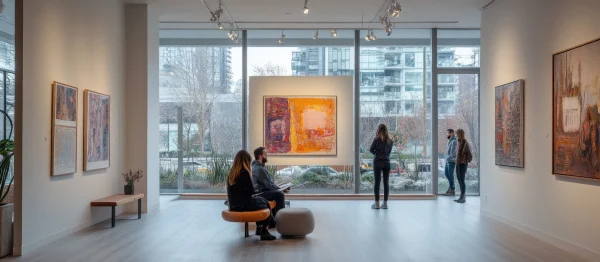
Turning Galleries into Interactive Spaces
The exhibition space eventually became a volatile and highly active participant. Galleries morphed into scientific laboratories where creators tested radical new ideas. Context consistently overpowered traditional craft throughout the late twentieth century. Artists fully recognized that their surrounding environment completely changed their central message. They actively played with lighting, wall colors, and floor textures to manipulate emotions. Postmodern aesthetics actively encouraged this deep spatial manipulation. Viewers complete the artwork through physical interaction with the curated environment. A pile of candy only becomes art when you decide to take a piece. The artist actively requires your participation to activate the specific cultural critique. Every individual brings their own personal baggage into the physical gallery space. The artwork powerfully absorbs these diverse personal experiences to create multiple layers of deep meaning.
Acquiring Visual Literacy in Contemporary Art History
Conceptual art forcefully demands active intellectual participation from every single viewer. The creator relies entirely on your mental engagement to complete the relational loop. Theorist Julia Kristeva correctly stated that any artwork functions as a mosaic of quotations. You must recognize these stolen references to achieve true visual literacy. Even armed with these frameworks, you may still wonder, why is postmodern art so hard to understand? Postmodern art consistently baffles viewers because it relies heavily on deep cultural references and demands intense intellectual participation. The artist actively wants you to feel slightly confused, constantly engaged, and highly inquisitive. You should always ask what exact rules the creator attempts to break. Look closely at the raw materials and question their original commercial purpose. This active interrogation process quickly opens the true power of the artwork.
Embracing Ambiguity in Postmodern Art
Postmodern messages frequently invite a completely superficial surface reading from the audience. Creators intentionally use cheap commercial imagery to mimic the overwhelming nature of advertising. You must successfully navigate intense irony without constantly searching for a singular truth. Contemporary Art History essentially teaches you how to embrace total ambiguity. The artists actively reject the idea of one correct, authoritative interpretation. They want you to argue with the piece and debate its specific merits. Your personal frustration actually proves that the artwork functions exactly as intended. You successfully decode the piece the moment you start asking difficult questions. The creators want to actively disrupt your comfortable, everyday perception of reality. Walk into your next museum visit with intense analytical confidence. Treat every bizarre installation as a thrilling intellectual puzzle waiting for your solution.
Your Exploration Through Contemporary Art History
The shift from traditional forms completely rewired the global creative scene forever. Artists successfully liberated human expression from the rigid confines of specific physical mediums. Postmodern aesthetics actively paved the way for modern digital media and social practice. We completely stopped judging creators based on their ability to mimic reality accurately. The global metric of success shifted into interrogating the philosophical definition of creativity. You now understand how conceptual art demands rigorous intellectual participation from the audience. The creators successfully turned passive observation into an active, thrilling human conversation. You hold the powerful tools needed to decode these complicated visual languages effortlessly. You will never look at a bizarre museum installation with confusion again. Embrace the ambiguity and enjoy your personal exploration through Contemporary Art History with absolute confidence.
Recently Added
Categories
- Arts And Humanities
- Blog
- Business And Management
- Criminology
- Education
- Environment And Conservation
- Farming And Animal Care
- Geopolitics
- Lifestyle And Beauty
- Medicine And Science
- Mental Health
- Nutrition And Diet
- Religion And Spirituality
- Social Care And Health
- Sport And Fitness
- Technology
- Uncategorized
- Videos

