
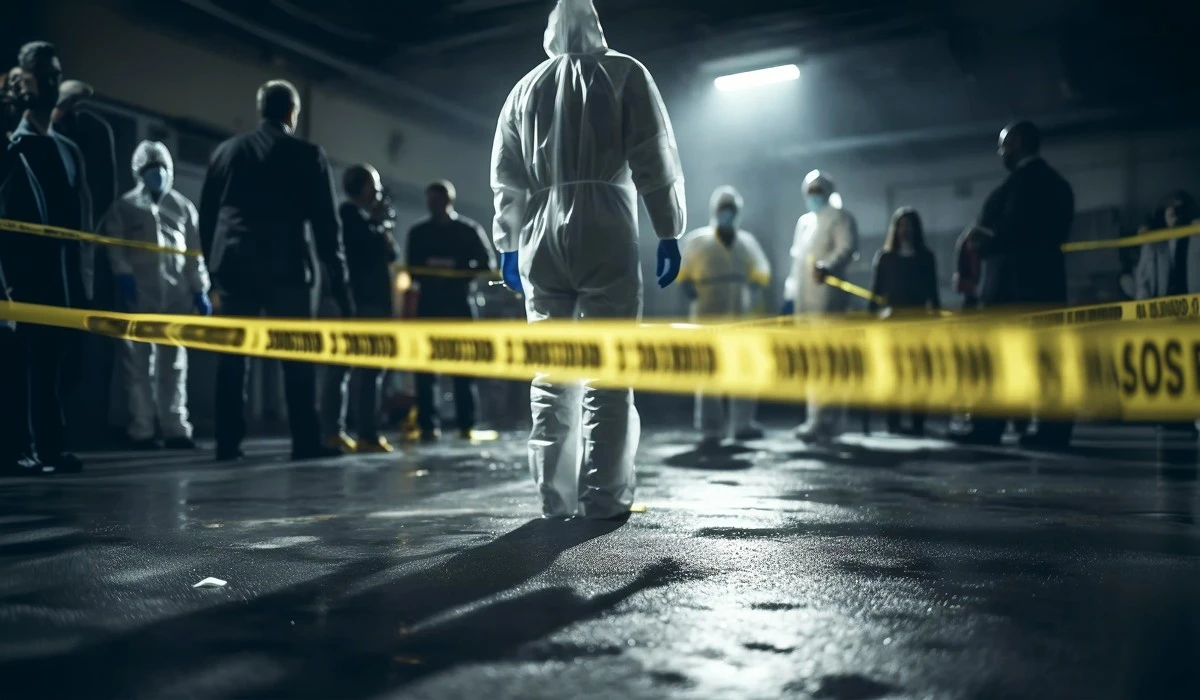
Where Dead Clues Meet Crime Scene Investigation
Dusty cardboard boxes sit on steel shelves inside police basements across the country. These boxes hold forgotten victims, bloody clothing, and yellowed paper files from decades ago. Most people assume time destroys all clues. Time actually preserves the most vital details waiting for the right scientific approach. The initial crime scene investigation never truly ends, even after 20 or 30-years pass. Detectives seal the evidence, lock away the physical items, and wait for technology to catch up. Modern science consistently gives a voice back to these forgotten victims. Cold cases represent a massive backlog, with more than 216,000 homicides remaining unsolved in the United States since 1980. This post explores how detectives pull these old files out of storage, apply modern techniques, and finally catch killers who thought they got away with murder.
The evolution of modern criminalistics
The field of criminalistics transformed completely from basic physical collection to advanced molecular analysis over the past century. As documented in historical archives from onin.com, Sir Francis Galton established the individuality and permanence of fingerprints with his 1892 publication. Shortly after, police criminologist Juan Vucetich matched bloody fingerprints to a killer in Argentina in 1892, solving the first recorded homicide with this method. Decades later, Dr. Alec Jeffreys discovered DNA profiling, leading to the identification of murderer Colin Pitchfork in 1986. Detectives now see tiny details that original officers had absolutely no way of processing during the initial crime scene investigation. When reviewing these historical shifts, people often wonder, how often do cold cases actually get solved? Roughly 1% of cold cases are solved each year, but that number is steadily rising thanks to advancements in genetic genealogy and improved laboratory processing techniques.
Re-evaluating older crime scene investigation reports
Investigators must dig through original police sketches, typed notes, and grainy black-and-white photographs to establish a clear baseline before sending any item to the laboratory. Detectives read every single page of the original crime scene investigation report to understand the exact layout of the room. Officers in the past captured overall photographs using wide-angle lenses from the four corners of a room. Today, forensic analysts scrutinize these wide shots to detect historical contamination. They often find evidence of tracked blood or moved furniture that the original response team completely overlooked. Analysts apply modern image editing and non-destructive photographic techniques to these archival photos. Experts use ultraviolet, infrared, and excitation filters to visualize latent patterns in the original images that the naked eye simply could not see during the initial walk-through.
Spotting the missed details in archival photos
Archival photography holds secrets trapped inside the background elements of the frame. Forensic analysts examine the original mid-range photographs to spot items that seemed entirely irrelevant fifty years ago. A blurry coffee cup or a discarded cigarette butt in the corner of a 1970s living room now represents a prime target for modern DNA extraction. Analysts digitally enhance these old negatives to reveal distinct tread patterns on dusty floors. Detectives use these restored images to map out the exact path the killer took through the house. The original detectives lacked the scientific knowledge to value these background items. Modern investigators know that every single pixel in an archival photograph contains potential forensic evidence. They systematically break down the image grid by grid to pull fresh leads directly from the past.
Cross-referencing witness statements with physical layouts
Detectives actively compare original witness testimonies against the spatial data recorded in the initial reports to find forgotten inconsistencies. A witness might claim they saw the killer strike the victim from the doorway. Investigators then look at the historical crime scene investigation photographs and measure the exact distance between the door frame and the blood spatter. They mathematically prove spatial inconsistencies regarding the exact distance of a suspect or weapon from surrounding furniture. This process reveals lies told decades ago. People forget their lies, and witnesses die, but the mathematical reality of the room remains permanent in the police file. Merging the old typed interviews with precise physical measurements exposes basic flaws in the suspect's original alibi, cracking the case wide open without needing a single new physical item.
Extracting new forensic evidence from old items
Research published on ResearchGate confirms that usable DNA may be retained in dry biological stains for years, prompting laboratories to routinely pull items stored in evidence lockers and re-test them using entirely new methodologies. Detectives target vintage clothing, ropes, and bricks. As investigators pull these dusty boxes from storage facilities, a common question arises: how long does DNA last on clothes? According to geneticists at The Tech Interactive, DNA can stay on clothes for several days to sometimes even decades if kept away from moisture, extreme heat, and direct sunlight, allowing modern labs to extract viable profiles from vintage items.
Modern criminalistics relies heavily on the M-Vac wet-vacuum system. This machine aggressively sprays a sterile solution while simultaneously applying vacuum pressure to loosen and extract DNA trapped deep in the pores of rough substrates. Research published in the Journal of Forensic Sciences demonstrates that the wet-vacuum method yields more total nuclear DNA than traditional wet-swabbing on porous substrates, recovering on average 12 times more DNA. This technology proves vital for items that officers already unsuccessfully swabbed decades ago.
Advanced DNA recovery and touch DNA
Advanced vacuum systems allow technicians to gather trace skin cells from highly porous surfaces. Detectives previously struggled to pull touch DNA from fabrics like denim or thick wool. The vacuum pressure literally sucks the microscopic biological material right out of the fabric weave.
As reported by CBS News Texas, detectives successfully solved the 1979 cold case murder of twelve-year-old Lesia Michell Jackson in 2022 after a new forensic technology called M-Vac was used to test evidence believed to be on the girl's clothing. They deployed the wet-vacuum system to extract an unknown male DNA profile directly from her heavily degraded garments. The ability to pull tiny clusters of skin cells off a forty-year-old shirt changes the entire field of modern forensics. Cold case detectives no longer need massive pools of blood or visible bodily fluids to secure a genetic profile. They simply need the killer to have briefly touched the victim's garment.
The magic of chemical luminescence
Modern laboratories apply highly sensitive chemical luminescence to detect latent blood spatter concealed from the naked eye. Older chemical reagents frequently failed to react with cleaned or heavily degraded bloodstains. According to a study on ResearchGate detailing new high-performance reagents based on luminol chemiluminescence, forensic scientists use advanced detecting agents like Bluestar to reveal glowing blue trails of wiped-away blood on floorboards and walls. These modern chemicals react forcefully with the iron present in hemoglobin, even if the suspect scrubbed the floor with bleach thirty years prior. The glowing reaction allows investigators to photograph the exact shape and direction of the blood drops. These concealed blood trails dictate the true narrative of the assault, proving whether the victim ran, crawled, or fought back. Detectives gain a flawless roadmap of the physical struggle, turning an apparently clean room into a massive source of forensic evidence.
The role of digital technology in crime scene investigation
Digital technology brings historic, long-gone scenes directly into the twenty-first century. Cold case units regularly deploy 3D laser scanners, like the FARO Focus Premium, to accurately capture millions of spatial data points. These machines capture 60 to 120 million data points per second to digitally reconstruct a past crime scene investigation environment. Detectives can digitally walk through a room that a construction crew demolished ten years ago. They also use handheld digital scanners, such as the Freestyle 2, to capture 288,000 points per second at half a millimeter accuracy. Technicians scan bodies, tight spaces, and small artifacts without risking the disturbance of physical evidence. This digital preservation locks the environment perfectly in time. Investigators accurately measure historical bullet trajectories and verify witness sightlines using nothing but a computer monitor and a mouse.
Virtual reality scene recreation
Virtual reality actively places detectives back inside the room at the exact moment of the murder. Programmers feed the 3D laser scan data directly into virtual reality headsets. Detectives put on the goggles and test historic sightlines from the exact perspective of a key witness. If a witness claimed they saw the shooting from a seated position on the couch, the detective physically sits down, lowers their virtual head, and checks the view. They frequently find that a lamp or a wall completely blocked the witness's line of sight. This technology reconstructs bullet trajectories in three-dimensional space, showing exactly where the shooter stood. Juries and judges put on these headsets to experience the spatial reality of the assault firsthand. VR transforms abstract measurements on a page into a highly immersive physical experience.
Ground-penetrating radar for long-lost graves
Detectives find clandestine burials using advanced, non-destructive subsurface mapping techniques. Forensic anthropologists rely heavily on Ground Penetrating Radar to scan empty fields and concrete basements for missing bodies. The machine emits radio waves in the 10 megahertz to 2.6 gigahertz range into the earth. These waves bounce back off buried objects, soil anomalies, and empty voids. The radar acts as a presumptive test to detect clandestine graves without triggering a premature, destructive excavation. Investigators can map an entire acre of land in a single afternoon. The radar screen displays distinct hyperbolic arcs whenever the radio waves hit a buried skeleton or a wrapped tarp. This technology saves law enforcement thousands of hours of random digging. It points them directly to the exact location of the victim buried thirty years ago.
Bridging the gap between the lab and the field
Pure criminalistics data must translate into actionable leads for field detectives to secure an actual arrest. Scientists working in sterile laboratories isolate the genetic profiles, but they rely completely on street detectives to track down the matching suspect. This process requires immense teamwork between the scientific community and local law enforcement agencies. A lab technician identifies a rare genetic marker, and the field detective uses that specific information to narrow down a list of local suspects. They meet weekly to discuss the physical limitations of the forensic evidence. The scientist explains the degradation of the sample, while the detective maps out the suspect's movements. This collaboration turns abstract molecular chemistry into a physical pair of handcuffs. The lab provides the name, and the field investigators build the narrative needed for court.
The multidisciplinary cold case task force
Modern cold case task forces operate as highly specialized multidisciplinary units. These teams combine retired homicide detectives, laboratory analysts, and forensic anthropologists to tackle unsolved files from every possible angle. They heavily integrate forensic taphonomists into their search operations. These specific anthropologists study human decomposition and the environmental interaction of buried remains to guide physical field searches. The taphonomist tells the detective exactly how an animal might scatter bones in a specific forest over twenty years. The retired detective uses their deep knowledge of historical gang territories to contextualize the dumping ground. The laboratory analyst then determines the best extraction method for the recovered bones. This combined expertise prevents severe mistakes. Every team member brings a completely different scientific or investigative lens to the exact same piece of heavily degraded evidence.
Maintaining the chain of custody for aged samples
Legal admissibility of historical evidence depends entirely on an unbroken chain of custody. Prosecutors must prove to the judge that decades-old items remained safe from tampering throughout the years. The 1994 O.J. Simpson trial heavily highlighted this exact vulnerability, where improper handling severely damaged the prosecution's physical evidence. Systemic failures also occurred in the 1999 Jessica Lal case in India, where authorities misplaced vital bullets. These high-profile disasters demonstrate that courts will reject scientifically flawless lab results if the chronological paper trail breaks at any point. Cold case detectives carefully track every signature, lockbox transfer, and storage temperature log from 1980 to the present day. One missing signature from a retired evidence clerk completely destroys the entire case. The paperwork carries just as much legal weight as the matching DNA profile.
Overcoming contamination and degradation
Environmental variables inherently destroy biological material over time. Exposure to ultraviolet radiation causes strand breaks and cross-linking in genetic material. High temperatures aggressively accelerate destruction through oxidation and hydrolysis. In sexual assault cases, biological material extracted from vaginal swabs frequently exhibits rapid degradation within the first forty-eight hours because warm, moist environments aggressively promote microbial growth. Even with heavily degraded samples, the legal process dictates strict investigative protocols, prompting people to ask: can a cold case be reopened without new evidence? Yes, a case can be reopened simply because new investigators want to review the existing file with fresh eyes, though securing a conviction usually requires a new scientific or testimonial breakthrough. Re-testing existing forensic evidence gathered during a prior crime scene investigation often provides that exact breakthrough using highly modern methods on heavily degraded material.
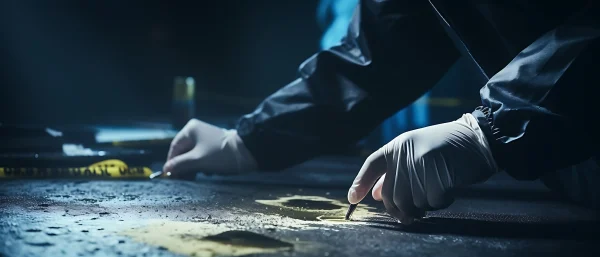
Recovering DNA from Degraded Evidence: How SNP Technology Revives Cold Cases
According to research published by the National Center for Biotechnology Information (NCBI), when physical items become too degraded for conventional Short Tandem Repeat typing, scientists shift their entire methodology. The study notes that Single-Nucleotide Polymorphism (SNP) panels, which utilize very short amplicons, are often far more successful for genotyping highly degraded DNA. It also suggests that these highly variable genetic targets require vastly smaller amounts of intact material to amplify from heavily fragmented biological stains.
Scientists carefully isolate the perpetrator's profile from deep environmental contamination caused by decades of sitting in a humid police warehouse. They wash away the bacterial growth and focus purely on the human genetic markers. This chemical separation requires immense patience and extremely expensive laboratory equipment. Detectives rely on this specific extraction process to save cases that previous forensic experts declared totally hopeless. Targeting shorter genetic sequences allows technicians to bypass the massive structural damage caused by years of intense heat, humidity, and direct sunlight exposure.
Securing convictions with historical crime scene investigation data
Identifying the suspect represents only half the battle for law enforcement. Prosecutors must aggressively use the results of a cold case crime scene investigation to convince a modern jury beyond a reasonable doubt. They take the scientific findings out of the sterile laboratory and present them inside a highly combative courtroom. The defense attorney attacks the age of the evidence, the memory of the surviving witnesses, and the reliability of the original patrol officers. Prosecutors build a massive chronological narrative to show exactly how the old physical items safely traveled to the modern laboratory. They secure convictions by proving the science remains mathematically absolute, regardless of how much time has passed. The trial relies on expert witnesses confidently explaining advanced genetic sequencing to twelve regular citizens sitting in the jury box.
Presenting aged evidence to modern juries
Prosecutors presenting old cases face a massive hurdle known globally as the CSI Effect. Researchers named this phenomenon in 2004 when they noticed jurors holding highly unrealistic expectations for flawless scientific evidence due to exaggerated television dramas. A survey of 444 prosecutors found that 56% stated the CSI Effect almost always influences juries. This mindset artificially raises the burden of proof in the courtroom. It constantly pressures legal teams to provide pristine genetic material even when incredibly strong circumstantial facts exist. A massive study of potential jurors in Michigan confirmed that frequent viewers of crime shows held significantly higher expectations for modern science. This increases the likelihood of wrongful acquittals if investigators rely purely on aged, ugly, or heavily degraded physical items. Prosecutors must actively train the jury to accept imperfect items.
Translating advanced science into a clear narrative
Legal teams combat jury skepticism by heavily managing expectations regarding decades-old forensic evidence. Prosecutors utilize high-resolution, full-color 3D diagrams generated from laser scans to translate difficult, messy lab data into a highly visual trial package. Expert witnesses take the stand and break down the timeline, chain of custody, and high-level genetics into an easily understandable, human narrative. They explain criminalistics using simple analogies instead of relying on dense academic jargon. The expert shows the jury the digital reconstruction of the room, pointing directly to where the blood landed. This visual storytelling forces the jury to see the reality of the murder, rather than focusing on the confusing chemical abbreviations in the lab report. The prosecutor turns a heavily degraded, forty-year-old shirt into a powerful, undeniable witness against the defendant.
Breathing New Life into Old Files
The relentless pursuit of justice eventually forces the darkest secrets out into the light. Dusty cardboard boxes no longer represent a permanent dead end for victims seeking peace. A heavily documented crime scene investigation serves as a timeless anchor for the truth. Law enforcement officers actively use modern tools to reverse the decay of time. Advancing technology consistently reveals the concealed details of our violent past, proving that a killer never truly escapes the physical environment. Genetic sequencing, laser mapping, and chemical extraction systematically dismantle decades of lies. Detectives will keep reopening these old files until every missing piece snaps perfectly into place. Share this post with fellow true crime enthusiasts to spread awareness about the power of modern forensics, or subscribe to our newsletter for more deep dives into unsolved mysteries.
Recently Added
Categories
- Arts And Humanities
- Blog
- Business And Management
- Criminology
- Education
- Environment And Conservation
- Farming And Animal Care
- Geopolitics
- Lifestyle And Beauty
- Medicine And Science
- Mental Health
- Nutrition And Diet
- Religion And Spirituality
- Social Care And Health
- Sport And Fitness
- Technology
- Uncategorized
- Videos

