

Gun Trails & Forensic Audit and Investigations
A cold wind blows through a hollow warehouse where a single brass casing sits under a rusted shelf. For ten years, this piece of metal told no stories. Local police stopped searching for the shooter when the trail of witnesses dried up. However, a new lead appears when a bank auditor flags a series of strange wire transfers from a decade ago. These payments connect a local gang leader to a specialized machinist across the country. This moment marks where financial records meet physical crime scenes.
Modern investigators solve these puzzles by combining traditional police work with Forensic Audit And Investigations. They look past the grease and lead to find the digital fingerprints on every dollar used to buy the weapon. Every shot leaves a mark on a wall, and every purchase leaves a mark on a ledger. Merging these two worlds allows experts to reveal the people who think they stayed in the shadows. This approach turns a simple crime scene into a detailed map of financial and physical activity.
The Evolution of Forensic Audit And Investigations in Ballistics
In the past, police officers and financial auditors worked in different buildings and spoke different languages. The detective stayed at the crime scene while the auditor stayed at the bank. This gap allowed criminals to hide their tracks by using cash and untraceable weapon transfers. Everything changed as global crime networks became more organized. Authorities realized that a bullet at a scene is just the final step in a long chain of financial decisions. Treating a shooting as a business transaction that went wrong, Forensic Audit and Investigations now bridge this gap. This shift gives investigators a 360-degree view of the crime.
The legal foundation for this work began with the Gun Control Act of 1968. This law forced manufacturers to put unique serial numbers on every gun. While this helped police identify the weapon, it failed to identify the purchaser or the path through the black market; however, the investigation provides the necessary context that links a physical weapon to a specific criminal organization. Through the examination of records from the National Tracing Center, auditors find patterns in how certain groups acquire their hardware. This integrated approach ensures that the person who pulled the trigger and the person who bought the gun both face justice.
Reconstructing the Scene Using Bullet Trajectory Data
When a bullet hits a wall, it records the exact position of the shooter. Investigators treat the strike point as a physical document that they must read with precision. They start by analyzing the shape of the hole. As reported in forensic research published in PubMed Central, a bullet striking a surface at an angle creates an elliptical hole rather than a circular one. This research describes a mathematical method for determining the strike angle by dividing the width of the hole by its length and then calculating the inverse sine of that value. This calculation gives them a reliable starting point for the bullet trajectory.
How do investigators determine where a bullet came from? Using lasers, stringing techniques, and mathematical calculations, experts can work backward from a strike point to the exact origin of fire. This allows the team to place a shooter at a specific coordinate during the crime. Meanwhile, the team must account for gravity and air resistance. A bullet does not fly in a straight line over long distances. It follows a parabolic path. This bullet trajectory serves as a physical audit of the incident, proving exactly where the shooter stood, even if no witnesses remain.
Tools Used for Path Calculation
Modern technicians no longer rely on simple rulers and string. They use 3D scanners and FARO Zone 3D software to create a perfect digital version of the crime scene. These scanners take millions of measurements in minutes. This technology provides a vertical angle accuracy of 0.47 degrees. This level of detail removes human error and makes the evidence much stronger in a courtroom.
Technicians also use CAD software to test different scenarios. They can simulate how a bullet moves through glass or metal. Utilizing these digital tools, the team documents every inch of the flight path with surgical precision. They use these tools to understand the Drag Coefficient, which is often around 0.295 for standard bullets.
The Significant Role of Firearm Tracing in Global Security
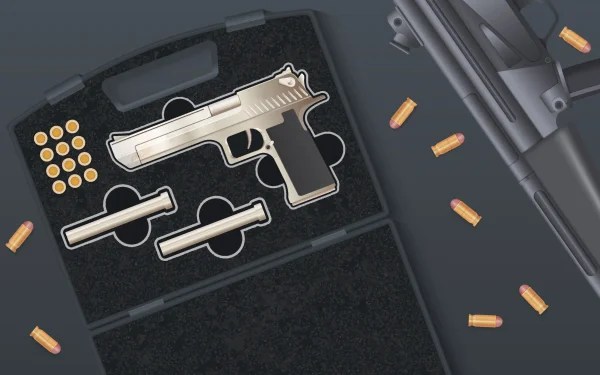
Identifying a gun is the first step in stopping a criminal network. According to an ATF National Tracing Center Fact Sheet, the center handled nearly 640,000 trace requests during fiscal year 2024 to determine where specific weapons originated. They start with the manufacturer and follow the trail to the first retail sale. This process helps authorities identify the primary source of illegal weapons. Ironically, many criminals believe that removing a serial number makes the gun untraceable.
Regarding the tracing of weapons with removed serial numbers, the ATF’s Obliterated Serial Number Program confirms that experts can use acid etching or magnetic particle inspection to reveal the identification. This program notes that these techniques expose the compressed metal beneath the surface where the number was first marked, allowing for identification even when origins are masked. This breakthrough often provides the lead needed to begin a full firearm tracing protocol. Once the team recovers the number, they can see exactly which store sold the gun and who filled out the paperwork. This link often leads straight to a straw purchaser who bought the gun for someone else.
Advanced Methodologies for Forensic Audit And Investigations
Modern Forensic Audit And Investigations go far beyond looking at simple bank statements. Auditors now investigate encrypted communication logs and digital payment apps to find the who behind the what. They monitor ATF Form 3310.4 filings, which, according to ATF regulations, require licensed dealers to report any individual purchasing two or more handguns within five consecutive business days. This financial flag often matches up with weapons found at crime scenes months later. Following the money allows auditors to find the people who finance large-scale gun-running operations.
The team also utilizes specialized software to track Time-to-Crime data. This metric measures the time between a legal sale and a crime scene recovery. A short time-to-crime often indicates that someone bought the gun specifically for illegal use. Forensic Audit and Investigations look for these statistical anomalies in a dealer’s records. They apply Benford’s Law to see if the numbers in the sales books look natural or if someone faked them. This level of scrutiny makes it very difficult for corrupt dealers to hide their activities.
Auditing the Dark Web and Illicit Markets
Criminals often use the dark web to buy parts for untraceable weapons. They think cryptocurrency protects their identity. In reality, auditors use tools like Chainalysis to track these transactions across the blockchain. They identify clusters of addresses that belong to illegal marketplaces like the now-defunct illicit marketplace.
When an auditor finds a payment for a specific weapon part, they match it to a physical weapon seized in the real world. This process exposes the supply chain for illegal hardware. Even when users try to hide their location, their financial footprint remains on the ledger. This auditing process turns the blockchain into a powerful tool for law enforcement.
Correlating Physical Evidence with Documentary Proof
Success in a high-stakes case requires the physical and financial teams to work together. For example, a technician finds a specific bullet trajectory that suggests a shooter used a high-powered rifle from a long distance. Meanwhile, the audit team finds a credit card charge for that exact rifle and a set of long-range optics. When these two pieces of evidence meet, the case becomes much harder for the defense to fight. This cooperation proves that the suspect had the means, the motive, and the physical presence at the scene.
What is the difference between ballistics and firearm tracing? Ballistics focuses on the motion and behavior of the projectile, while firearm tracing focuses on the history and ownership of the weapon itself. Combining both allows Forensic Audit and Investigations to build an airtight case for prosecutors. This correlation also helps in cases where the weapon is never found. If the financial records show a suspect bought a specific caliber of ammunition and the crime scene shows that same caliber, the link remains strong.
Overcoming Challenges in Modern Ballistic Audits
The rise of ghost guns creates a new set of problems for investigators. These weapons often come as Polymer80 kits and lack serial numbers. Because these guns have no records, traditional firearm tracing often hits a dead end. Criminals use 3D printers to make frames and receivers at home. This makes the weapon invisible to standard government registries. To fight this, auditors now track the sale of the raw materials and the specialized CNC milling machines used to finish these guns.
Forensic Audit and Investigations adapt to these changes by looking for the procurement chain. If a suspect buys a 3D printer, high-strength filament, and a specific set of metal rails, they leave a trail. Auditors search for these combined purchases across different online retailers. While the gun itself might not have a number, the parts used to build it almost always have a paper trail. This form of auditing ensures that untraceable weapons still lead back to their creators.
Legal Admissibility of Integrated Reports
For an investigation to matter, it must hold up in a court of law. Federal Rule of Evidence 702 requires that all forensic data come from reliable methods. This means the team must document every step of the bullet trajectory analysis and the financial audit. They must maintain a strict chain of custody for every digital file and every physical shell casing. If a gap exists in the records, a defense attorney can have the evidence thrown out.
Integrated reports combine the physical and financial facts into one document. These reports often survive a Daubert challenge because they use multiple, independent sources of proof. The goal of Forensic Audit and Investigations is to provide a narrative that is impossible to ignore. When an auditor shows a jury the receipt for a gun and a technician shows the path of the bullet from that gun, the truth becomes clear.
Improving Accuracy through Modern Technology
Artificial intelligence now helps investigators find patterns that humans might miss. Automated systems compare bullet trajectory data from thousands of different crimes. If the math shows the same shooting style or angle at three different scenes, the AI flags it as a signature of a single shooter. This data then flows into a larger Forensic Audit and Investigations database. This system helps departments share information and catch serial offenders who move between different cities.
The National Integrated Ballistic Information Network also uses 3D imaging to catalog shell casings. This system, known as IBIS, allows for high-speed comparisons of tool marks. These are the tiny scratches a firing pin leaves on a primer. When the audit team finds a suspect, they can quickly check if their weapon matches any shell casings in the national database. This technology turns a single arrest into a way to solve dozens of cold cases with ongoing efficiency.
The Future of Forensic Audit And Investigations
The path of a bullet only tells half of the story. The path of the money tells the other half. As technology advances, these two fields will continue to grow closer together. Future investigators will use real-time financial tracking to stop illegal gun sales before a crime even occurs. They will use acoustic sensors to map a shooting and instantly cross-reference that location with nearby digital transactions. This proactive approach will change how we think about public safety and justice.
The high-tech marriage of ballistic science and financial scrutiny creates a world where criminals have nowhere to hide. Every illegal transfer and every shot fired leaves a permanent record in both the physical and digital worlds. Through the command of Forensic Audit And Investigations tools, the modern justice system ensures that every lead finds its way home. The period of the truly untraceable crime is coming to an end.
Recently Added
Categories
- Arts And Humanities
- Blog
- Business And Management
- Criminology
- Education
- Environment And Conservation
- Farming And Animal Care
- Geopolitics
- Lifestyle And Beauty
- Medicine And Science
- Mental Health
- Nutrition And Diet
- Religion And Spirituality
- Social Care And Health
- Sport And Fitness
- Technology
- Uncategorized
- Videos

