
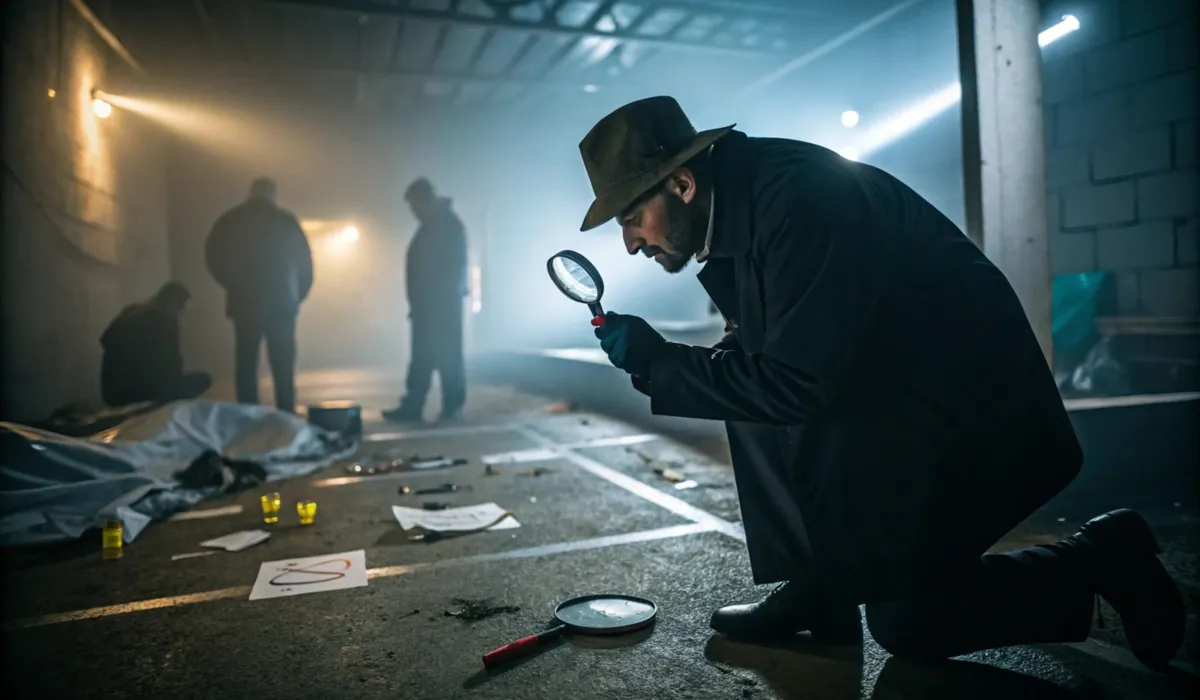
Free Them: Criminology And Police Investigations
When a witness points a trembling finger at a suspect in a courtroom, a man’s life often changes forever in an instant. This single moment of certainty can lock a prison door for decades, even when the memory behind the finger is completely wrong. According to the Innocence Project, eyewitnesses are frequently expected to identify perpetrators of crimes based on memory, which is incredibly malleable. Today, criminology and police investigations work to prevent these tragic mistakes by moving toward objective data.
In 1986, Richard Buckland sat in a small room and confessed to a murder he did not commit. He likely believed the system would crush him regardless of the truth. However, the birth of modern forensic science changed his fate. Sir Alec Jeffreys used newly discovered DNA profiling to prove Buckland had no connection to the crime. This marked the first time a scientific test saved an innocent person from a life behind bars.
Modern justice now relies on three strong pillars to protect the public. Researchers provide academic theory, officers apply field practice through police training, and technicians conduct laboratory analysis. These forces combine to ensure that facts, rather than feelings, lead the way. Criminology and police investigations now prioritize finding the truth over simply securing a conviction.
The Evolving Role of Criminology and Police Investigations in Justice
Detectives once relied heavily on gut feelings and high-pressure tactics to solve crimes. This old approach often led to tunnel vision, where investigators ignored evidence that did not fit their theory. Research from EBSCO notes that James Marsh changed the field in 1836 when he developed a historical technique for detecting arsenic in human tissue. This Marsh Test gave everyone their first look at how hard science could verify or disprove a suspect's story.
What is the role of a criminologist in a police investigation? Criminologists provide the theoretical framework and behavioral patterns that help investigators filter out unlikely suspects and focus on data-driven leads. These experts look at the why and how of criminal behavior. Their work allows officers to move away from stereotypes and focus on evidence-based practices that improve accuracy.
Modern departments now treat every crime scene as a data set rather than a simple puzzle. Investigators search for microscopic proof through the application of Locard’s Exchange Principle, which states that every contact leaves a trace. This change ensures that criminology and police investigations remain grounded in physical reality. Through the application of these methods, the legal system protects people from the flaws of human memory.
How Forensic Science Acts as the Ultimate Truth Teller
Physical evidence does not forget, and it does not feel pressure to lie. While witnesses may feel certain about a face they saw in a dark alley, forensic science provides a narrative that stands up to intense scrutiny. Technology now allows us to see things the human eye misses, creating a safety net for those wrongly accused of crimes.
DNA Profiling and the End of False Testimony

DNA acts as a biological barcode that is unique to every individual. Since its first forensic use in 1986, DNA has become the gold standard for proving innocence. According to the Innocence Project, statistics show that eyewitness misidentification is involved in 69% of cases overturned by DNA evidence. The application of biological proof allows investigators to override certain witnesses and free the wrongly convicted.
Digital Forensics and Reconstructing the Timeline
Phones and computers now serve as digital witnesses that track our every move. Digital forensics allows experts to recover deleted messages and GPS data that provide digital alibis for suspects. In 2005, digital investigators caught the BTK serial killer by finding metadata on a floppy disk, showing how digital footprints lead to the truth.
How often do forensic tests prove someone's innocence? Statistics from projects like the Innocence Project show that forensic DNA testing has been a factor in nearly 400 exonerations in the United States alone. These numbers continue to grow as technology improves. Forensic science ensures that a person's location and actions can be verified with mathematical precision.
Modern Police Training and the Reduction of Human Error
The human element remains the most vulnerable part of any investigation. To combat this, police training now includes deep psychological insights to prevent bias and mistakes. Officers learn to recognize their own mental shortcuts, which often lead to confirmation bias during the first 48 hours of a case.
Cognitive Interviewing Techniques vs. Traditional Tactics
Traditional interrogation often relied on the Reid Technique, which used high pressure to get a confession. In the early 1990s, the UK developed the PEACE model to shift the focus to gathering information. This method encourages suspects to talk freely, which helps investigators spot inconsistencies without using coercion or threats.
Mitigating Tunnel Vision in Preliminary Investigations
Training programs like FAIR (Find a suspect, Avoiding bias, Instructing the witness, Record the procedure) help officers handle lineups correctly. A report published by Routledge notes that utilizing a blind lineup administrator through these steps prevents officers from accidentally nudging a witness toward a specific person. The act of recording every interrogation creates a clear record that protects suspects from unfair treatment.
Can better police training reduce false confessions? Yes, and an article from The Signature Brand notes that replacing confrontational interrogation with frameworks like the PEACE model produces more reliable information. The implementation of non-coercive interviewing standards and the recording of all interrogations significantly lowers the risk of extracting unreliable or forced admissions for departments. These recorded sessions provide a clear look at how a confession was obtained. When the process is transparent, the innocent are much less likely to admit to crimes they did not commit.
Expanding Criminology and Police Investigations into Cold Case Reviews
Cold cases represent some of the greatest challenges in the justice system. Decades-old files often contain evidence that investigators could not process with the tools of the past. Today, the combination of criminology and police investigations allows teams to look at these files with fresh eyes and better tools.
According to the Death Penalty Information Center, the Justice for All Act of 2004 established rules and procedures for federal inmates applying for DNA testing, giving prisoners the right to request post-conviction analysis. This law recognized that science could find answers in old evidence that was previously ignored. When investigators revisit these cases, they often find trace evidence like hair or skin cells that were once useless but now provide a clear identity.
An article in Wired highlights that criminologists also use geographic profiling to figure out where a criminal might live by examining the sites of connected serial crimes. The publication also notes that this method, pioneered by criminologist Kim Rossmo, predicts an offender's residence based on the locations of their acts. Narrowing the search area allows police to concentrate their limited resources on the most likely suspects. This systematic approach helps clear innocent people who were previously persons of interest simply because they lived near a crime scene.
The Scientific Rigor of Physical Evidence Collection
The integrity of a case depends entirely on how officers handle evidence at the scene. If a sample is contaminated or lost, the truth may never come to light. Strict procedural adherence ensures that the evidence presented in court is the same evidence collected by the forensic science team.
Maintaining the Chain of Custody
According to research from ScienceDirect, organizations carrying out digital forensics must gain accreditation to ISO/IEC 17025, which is the international standard that labs must follow to keep their results valid. Additionally, an article from Forensic Focus states that this standard requires comprehensive documentation, including operation logs and calibration records, to maintain a clear paper trail for every piece of evidence. If the chain of custody breaks, the evidence becomes unreliable. This strictness prevents gray areas where an innocent person might be charged due to messy record-keeping.
Advanced Ballistics and Trace Evidence
In 1835, Henry Goddard identified a killer by finding a unique mold mark on a bullet. Today, ballistics technology is even more advanced, allowing experts to match microscopic scratches on shell casings to specific firearms. This trace evidence can exclude individuals who were caught in the wrong place at the wrong time but had no weapon.
Behavioral Analysis as a Tool for Exoneration
Criminology involves both physical sciences and the comprehension of the human mind. Behavioral science helps investigators rule out suspects who do not fit the psychological profile of a crime. This prevents the system from focusing on people who have no logical connection to the act.
Victimology and Environmental Factors
The study of a victim's life and the environment where a crime occurred allows investigators to build a clearer picture of the event. Criminologists use Routine Activity Theory to look for the convergence of a motivated offender and a suitable target. If a suspect's routine never crossed paths with the victim, they can be ruled out quickly.
Geographic Profiling in Complex Investigations
According to Wired, geographic profiling uses the Distance Decay principle to show that the likelihood of a crime site decays with distance, meaning most offenders stay within a comfortable range of their home. If a suspect lives 50 miles away and has no transportation, they likely did not commit a localized crime. These spatial patterns provide objective reasons to stop investigating an innocent person and move on to more likely leads.
Strengthening the Bond Between Science and the Street
The future of justice depends on how well different experts work together. When labs and precincts communicate, the entire system becomes more accurate. This collaboration ensures that the latest forensic science discoveries reach the officers on the front lines as quickly as possible.
Collaborative Efforts in the Justice System
Universities and police departments now work in a constant loop of information. This partnership ensures that police training reflects the newest data on memory and evidence. When a new method for testing mitochondrial DNA emerges, officers learn how to collect hair samples without damaging the root, preserving vital data for the lab.
The Effect of Evidence-Based Policing on Public Trust
When the public sees that criminology and police investigations focus on accuracy, trust in the law grows. A report by the Police Executive Research Forum explains that ICAT, which stands for Integrating Communications, Assessment, and Tactics, provides training that is associated with a statistically significant 28% reduction in use of force in some cities. The prioritization of truth proves that the justice system exists to protect every citizen equally.
Why Criminology and Police Investigations Matter for Liberty
The pursuit of justice is a constant race between human error and scientific truth. While the legal system is not perfect, the integration of forensic science and better training has created a powerful shield for the innocent. We no longer have to rely on shaky memories or forced confessions to find answers.
Every exoneration reminds us that liberty is fragile. However, when we apply the principles of criminology and police investigations, we move closer to a society where the innocent remain free. Science and logic provide the clarity we need to ensure that the heavy hand of the law only reaches those who truly deserve it. The future of our justice system lies in the hands of those who value the truth above all else.
Recently Added
Categories
- Arts And Humanities
- Blog
- Business And Management
- Criminology
- Education
- Environment And Conservation
- Farming And Animal Care
- Geopolitics
- Lifestyle And Beauty
- Medicine And Science
- Mental Health
- Nutrition And Diet
- Religion And Spirituality
- Social Care And Health
- Sport And Fitness
- Technology
- Uncategorized
- Videos

