
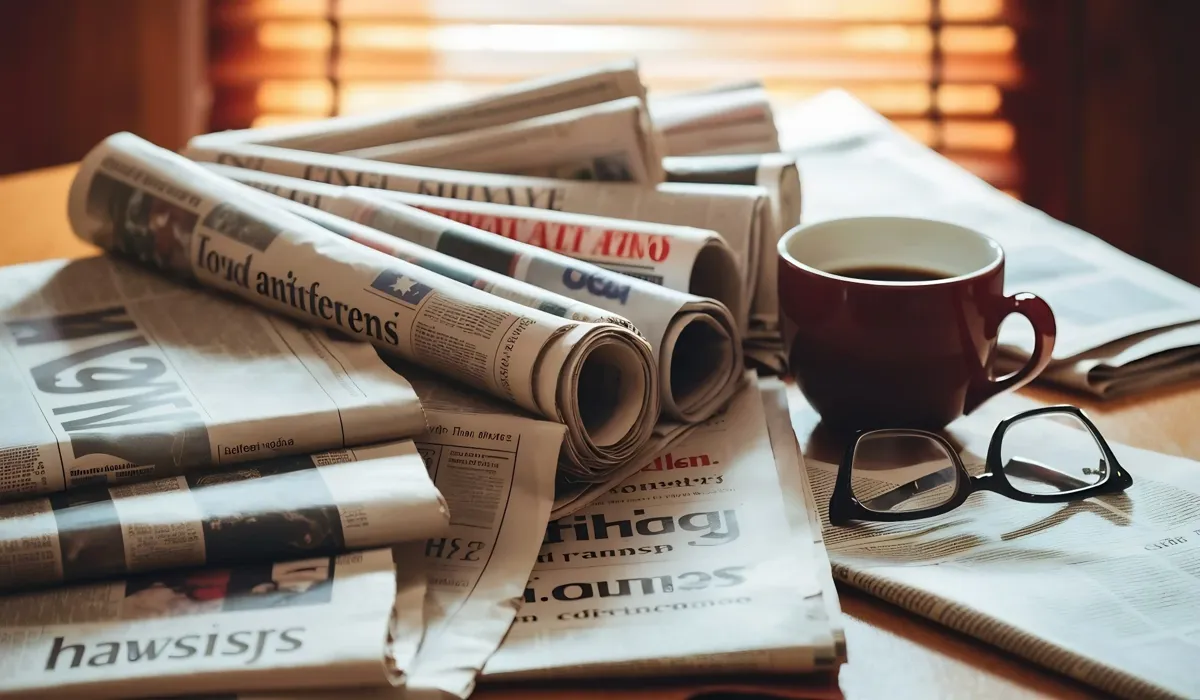
Does Ethics Truly Guard Newspaper Journalism?
When a local reporter chooses to delay a story to verify a second source, they participate in a system that keeps a community from sliding into chaos. Most people think the internet killed the news because of free content, but the real rot started when we forgot that trust is a physical asset. If a paper prints a lie, the town loses its map of reality. This is why newspaper journalism survives only when it acts as a gatekeeper rather than a megaphone. Every verified fact acts as a brick in a wall that protects the public from the flood of manipulated data.
Reliability is the only thing a newsroom has left to sell. When we strip away the flashy headlines, we find that the daily work of a reporter is actually a form of protection. As highlighted by The Guardian, a vibrant local press is important because councils cannot get away with misconduct, meaning if the standards drop, the community loses its ability to hold the powerful accountable. We must understand that newspaper journalism functions as the eyes and ears of the public, and if those eyes stop looking for the truth, the whole neighborhood goes blind.
The Civic Duty of Newspaper Journalism in a Divided Age
In 1787, Edmund Burke famously pointed toward the press gallery in the British Parliament and called it the Fourth Estate. He realized that while the government has the law, the press has the power of information. This role makes newspaper journalism the first draft of history. According to research by Journalistik Dortmund, the top-heavy structure known as the inverted pyramid style of writing was developed by reporters during the American Civil War. As noted by Poynter, a popular myth suggests they put the most important facts at the top because telegraph lines often failed during battles. This structure ensured that the public got the vital news first, even if the connection died.
Today, that same urgency exists, but the threat is noise rather than broken wires. Why is newspaper journalism important today? A report by the Government Accountability Office points out that digital and other local outlets have not filled the gap left by newspapers, highlighting that newspaper journalism provides the localized, vetted facts to hold local governments and institutions accountable in ways social media cannot. While a social media post might spread a rumor about a school board meeting, a professional reporter sits through the four-hour session to record the actual votes. They provide a stable record that neighbors can use to make real decisions about their lives.
Defining Press Ethics as a Competitive Advantage
With free blogs and viral videos everywhere, the truth becomes a premium product. Most people think press ethics are just a list of things reporters are not allowed to do. In reality, these rules are the reason a reader will pay for a subscription. Transparency acts as a business strategy. When a paper is honest about its mistakes and clear about its sources, it builds a bond with the reader that a random website cannot match. This bond is the only way to survive in a crowded market.
Accuracy vs. Speed: The Modern Reporter’s Dilemma
The pressure to be the first to post a story on social media is intense. However, being first is useless if the information is wrong. Ethical standards require a reporter to slow down. If a newsroom rushes to report a death or a crime without official confirmation, they cause permanent harm to real families. Choosing accuracy over speed is a core part of professional newspaper journalism because it prevents the spread of panic.
The Pillars of Independence and Accountability
The Reuters Handbook of Journalism states that work must be executed with integrity and free from bias, meaning a reporter must stay independent from the people they cover. This means they cannot accept gifts or work for the people they are supposed to investigate. If a journalist has a conflict of interest, the story loses its value. Accountability is the other side of this coin. According to the American Press Institute, newsrooms should acknowledge errors and correct them promptly, meaning when a paper makes a mistake, it must print a correction in a prominent place. This shows the reader that the paper cares more about the truth than its own ego.
How Newspaper Journalism Feeds Into Magazine Journalism
There is a deep connection between the daily news cycle and the long stories we see in monthlies. The daily grind of newspaper journalism often reveals the small clues that lead to massive investigations. Many of the most famous long-form stories started as a simple 500-word report in a local paper. Without the daily beat reporter, the deep narrative pieces would have no foundation to build upon.
From Breaking News to Long-Form Narrative
A daily news story focuses on what happened in the last twenty-four hours. It is ephemeral and fast. However, that same story can grow into magazine journalism when a writer spends months looking at the why and the how. For example, a news report about a factory closing is a daily event. A magazine piece explores the lives of the workers, the history of the town, and the economic shifts that led to the closure.
Skill Transfer: Adapting Investigative Rigor for Glossy Pages
The move from news to magazines requires a change in style, but the rules remain the same. According to Britannica, the American literary movement known as New Journalism pushed the boundaries of traditional nonfiction in the 1960s and 1970s, showing that writers like Tom Wolfe could use narrative techniques while staying factually accurate. The ethical training found in newsrooms is vital for this. Even when the writing is more creative, the commitment to press ethics ensures that the narrative is rooted in reality rather than fiction.
Practical Verification Shields for High-Stakes Reporting
Verification is the heart of the job. It is the process of proving that a claim is actually true before it reaches the public. Reporters use a tool called the Potter Box to help them make tough choices. This model asks the journalist to look at the facts, the values, the principles, and their loyalties before they publish. It forces them to think about the consequences of their words.
What are the 4 principles of press ethics? The Society of Professional Journalists states they are seeking truth and reporting it, minimizing harm, acting independently, and being accountable and transparent. These four pillars guide every decision in a professional newsroom. If a story does not meet these standards, it does not get printed. High-stakes reporting often requires double-sourcing, which means at least two different people must confirm the same information before it is considered a fact.
Why Local Newspaper Journalism Demands Specialized Ethics
Reporting on your own neighbors is harder than reporting on a distant city. When a journalist lives in the community they cover, they face unique pressures. They might see the mayor at the grocery store or have children in the same school as the police chief. This proximity requires a very specific set of rules to keep the reporting fair and balanced.
The Ethics of Community Engagement
A local reporter must balance being a good neighbor with being an objective observer. They have to be involved enough to know what is happening, but distant enough to report the truth, even when it is unpleasant. This balance is what makes newspaper journalism so difficult and so necessary. It is about serving the public interest, even if it makes your social life a little more awkward.
Protecting Vulnerable Sources in Small Markets
In a small town, a source who speaks out against a powerful person faces a huge risk. They could lose their job or be shunned by their neighbors. The reporter has a massive responsibility to protect these people. This is where press ethics becomes a matter of safety. Knowing when to keep a name off the record is just as important as knowing when to publish it.
Navigating the Intersection of Profit and Integrity
Running a newsroom costs money, but the need for profit should never dictate the news. Research published by the Reuters Institute indicates that if advertising falls short, newspapers will erect pay walls for their digital editions, meaning many papers now use paywalls or sponsored content to stay afloat. This creates a tension between the business side and the editorial side. A study published on ResearchGate notes that traditional ideals aimed to keep editorial lines independent from commercial influences, a separation that in the past was called the wall between church and state. Keeping these two areas separate is the only way to ensure that advertisers do not control what the public reads.
How does newspaper journalism differ from magazine journalism? Newspapers prioritize daily immediacy and hard-hitting news cycles, while magazines focus on thematic depth and aesthetic presentation. This difference affects how they make money. A newspaper needs a broad audience every day, while a magazine can cater to a specific niche. According to the Society of Professional Journalists, the practice of paying for information threatens to corrupt the field, so both must reject checkbook journalism, which is the unethical practice of paying sources for interviews.
Strategies to Guard Newspaper Journalism Against Misinformation
The internet has made it easy for lies to look like the truth. To fight this, newsrooms are using new technology to verify images and videos. As explained by First Draft News, a reverse image search finds identical photos indexed online before an event took place, and Bellingcat notes that geolocation compares landmarks in videos to other images, so these tools help reporters spot fakes before they go viral. According to a timeline by Reuters, News Corp closed the publication just days after the 2011 News of the World scandal peaked, showing what happens when a paper abandons its morals for clicks. It led to the closure of a century-old paper and a massive loss of trust.
The Role of the Public Editor in the Digital Age
Some newsrooms hire a public editor, also known as an ombudsman. This person acts as a bridge between the reporters and the readers. If a reader has a complaint about a story, the public editor investigates it and writes a report. This level of transparency shows that the paper is willing to police itself. It is a vital tool for maintaining the health of newspaper journalism in a skeptical age.
Transparency as a Shield Against Bias Allegations
One of the best ways to fight claims of bias is to show the work. Ethical reporters now often include links to the original documents they used for a story. When the paper lets the reader see the evidence for themselves, it proves its honesty. This open-book approach is the best defense against those who want to discredit the media for political reasons.
The Future of Guarding Newspaper Journalism
The tools we use to read the news will keep changing, but the need for the truth will never go away. Whether we use paper or a screen, the core of our work remains the same. We must protect the integrity of the facts at all costs. If we let our standards slip, the loss extends beyond a business and destroys our ability to understand the world around us.
Sticking to the rules of press ethics ensures that our stories have the power to change things for the better. The survival of newspaper journalism relies entirely on its mission rather than the medium. Supporting ethical outlets is the only way to make sure that the truth remains available for everyone. When we guard the process, we guard the future of our communities.
Recently Added
Categories
- Arts And Humanities
- Blog
- Business And Management
- Criminology
- Education
- Environment And Conservation
- Farming And Animal Care
- Geopolitics
- Lifestyle And Beauty
- Medicine And Science
- Mental Health
- Nutrition And Diet
- Religion And Spirituality
- Social Care And Health
- Sport And Fitness
- Technology
- Uncategorized
- Videos

