
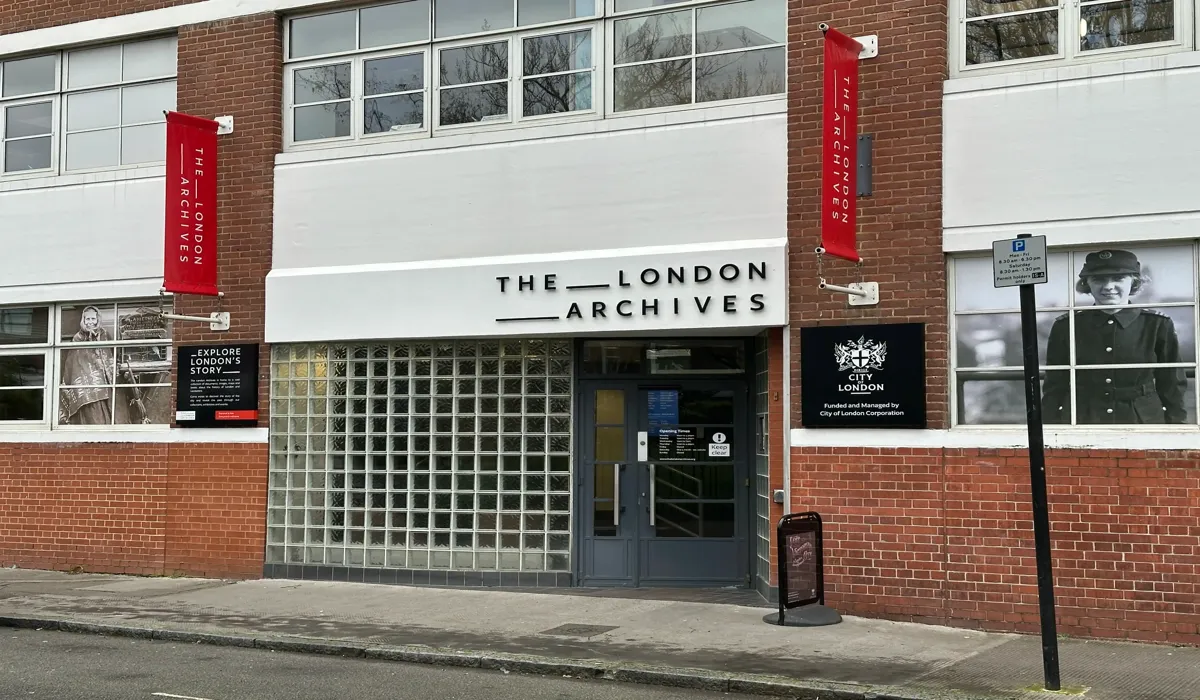
Image Credit - by Matt Brown, CC BY 2.0, via Wikimedia Commons
Exploring Preserved Pasts At The London Archives
Every time someone touches an ancient document, the oils on human skin cause a rapid chemical degradation that destroys centuries of history. People think locking a fragile paper in a dark box keeps the item safe forever. Over time, trapped moisture inside closed containers breeds aggressive mold, eating through irreplaceable medieval registries and modern city planning maps. The protection of delicate materials requires a rigorous methodology. Institutions must balance physical accessibility with extreme environmental control to keep history alive. The London archives stands as the ultimate gold standard for historical safeguarding. This facility manages a vast repository of records, serving as the definitive memory bank for a sprawling metropolis. Readers will learn the essential strategies for protecting delicate materials, the organizational frameworks that professionals utilize, and methods to apply these professional standards to vital personal documents.
The vital role of the London archives in preserving our past
According to the official website, the massive facility formerly known as the London Metropolitan Archives operates as a free public archive tracking London's history from 1067 to the present day. As noted by the Archives and Records Association, staff manage an astounding one hundred kilometers of shelving. The organization adds that those rigid shelves stretch unbroken from the bustling city center all the way to the distant white cliffs of Dover.
The oldest surviving document in the repository is the William Charter, dating back to 1067. The holdings span massive municipal collections, ranging from the records of the Metropolitan Board of Works to medieval parish registries, modern hospitals, and various Jewish organizations. The association also states that this centralized repository operates as the principal regional archive for Greater London. Direct funding from the City of London Corporation makes this specific location the largest county record office in the entire United Kingdom. This immense scale establishes unparalleled authority in modern preservation.
Why centralized preservation matters
A highly controlled central location prevents catastrophic loss from slow decay, aggressive theft, or improper daily handling. Historic materials remain highly susceptible to wild fluctuations in seasonal humidity and temperature. In 1947, a severe mold outbreak in the Victoria Tower damaged parliamentary and municipal records heavily due to poor climate control. Centralization strictly solves this vulnerability. What purpose does the London Archives serve? It serves to acquire, preserve, and make publicly available the historical documents relating to Greater London, acting as the primary memory bank for the city. A single shared roof for all critical items guarantees consistent environmental monitoring. Professional conservators immediately identify early signs of degradation and apply emergency stabilization techniques. This unified approach turns fragmented, vulnerable paper trails into a highly secure, permanently protected historical resource for global researchers.
Core principles of modern archives and records management
Proper archives and records management requires strict strategic planning. Professionals strategically organize materials to ensure long-term accessibility and prevent data loss. Cataloging relies heavily on highly functional classification schemes. Staff store bulky documents purely by size and shape to maximize shelf space utilization. A massive ledger rests flat on a specialized lower shelf; meanwhile small correspondence files stand upright in standard cardboard boxes. Despite this physical separation, rigorous metadata and detailed cross-referencing preserve the intellectual order and exact context of the disparate items. Researchers trace a single historical event across multiple formats, linking a small photograph to a massive architectural layout through standardized reference codes. These specific cataloging taxonomies ensure data remains searchable and highly relevant for decades. Archivists constantly update digital finding aids to map the exact physical location of every single item resting across the vast shelving.
Appraisal and retention strategies
A core rule of modern archiving dictates that only a tiny fraction of newly created files survive permanently. Typically, institutions select a mere three to five percent of the records that workers generate in a given year for permanent retention based on legal, fiscal, or historical significance. Archivists utilize a strict appraisal methodology to evaluate records at the series level rather than appraising items document by document. Professionals analyze an entire batch of administrative correspondence or a decade of contract files as a single, cohesive unit. This high-level evaluation immediately prevents massive cataloging backlogs. Experts implement a comprehensive records retention schedule, determining the exact lifespan of a record series. This schedule dictates how long files must remain active before final disposition through secure shredding or permanent transfer to a historical archive for future research and unrestricted public access.
How to access and use the London archives for research
The immense physical and digital resources require complete adherence to basic visitor protocols. Who can access the London Archives? According to the official services page, anyone can access the archives at no cost, provided researchers register for a History Card and bring two forms of identification to complete the registration process. This mandatory registration acts as a necessary security measure to protect irreplaceable materials from devastating theft or random vandalism. The required History Card allows verified researchers to request original items directly from the secure strongrooms.
Without this specific card, visitors still enjoy immediate access to the public Information Area. This open section offers one hundred thousand reference books and free terminal access to major genealogical databases like Ancestry and FindMyPast. The card registration process takes only a few minutes at the front registration desk. As detailed on the visitor guide, staff members remain ready to answer questions and provide immediate assistance to new visitors, ensuring a perfectly smooth entry.
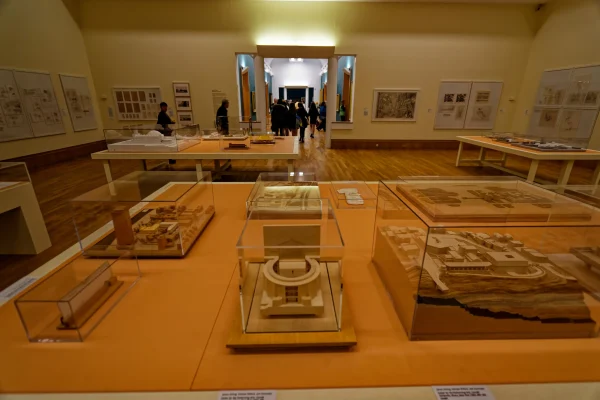
Image Credit - by Txllxt TxllxT, CC BY-SA 4.0, via Wikimedia Commons
Navigating the physical and digital catalogs
The Clerkenwell building features a welcoming open-plan reading room that a large, protective glass window separates. Researchers sit at spacious wooden desks that accommodate oversized maps and heavy financial ledgers safely. A nearby Mediatheque facility allows individuals to instantly access over 250,000 digitized historical images via the London Picture Archive without requesting fragile physical materials. Effective researchers always search the online catalogue to locate specific reference codes before arriving on the actual site. Advance preparation of these unique codes dramatically speeds up the physical retrieval process from the highly secure strongrooms. Staff locate requested items using the reference codes and deliver them directly to the assigned reading room desks. Early database navigation completely prevents long wait times. This digital preparation allows historians to maximize actual reading time during standard operating hours.
Physical conservation techniques from the London archives experts
Extreme environmental consistency represents the absolute most essential aspect of daily physical care. The secure strongrooms adhere strictly to precise BS 4971:2017 standards constantly. Facilities keep temperatures consistently low and operate within a strict margin of plus or minus ten percent regarding baseline climate controls. These rigid atmospheric parameters actively slow the natural chemical degradation of organic materials like paper, leather, and animal parchment. How do conservators preserve old historical records? According to the Canadian Conservation Institute, professionals preserve these items by storing them in acid-free folders, ensuring protection from light and physical damage, and maintaining a stable climate-controlled environment. Fragile items like medieval documents or delicate historical textiles demand extra physical protection. Conservators buffer these highly vulnerable materials using bespoke, archival-grade enclosures that drastically minimize destructive acid migration. Protection from bright light, intense heat, and rapid humidity fluctuations ensures the complete physical survival.
Handling delicate and damaged documents
Highly specialized professionals work daily to repair centuries of physical trauma that rare manuscripts suffer. The dedicated on-site conservation studio utilizes precise physical tools, such as specialized smooth bone folders and soft weighted bags, to safely manipulate extremely fragile items. Experts use these precise tools to gently relax stiff collagen fibers in tightly rolled medieval parchment documents. The team actively reverses severe fire and water damage through highly controlled and monitored humidification chambers. Controlled exposure to exact amounts of gentle moisture allows conservators to slowly flatten curled edges without snapping the delicate internal fibers. Staff mandate strict handling rules for all visitors sitting in the public reading rooms. Researchers must strictly use soft lead pencils instead of damaging ink pens and rest heavy books on supportive foam wedges to prevent sudden spine breakage during routine research.
Navigating other major London archives for cross-referencing
Comprehensive historical research rarely stops at a single central metropolitan building. The main facility is just one of roughly 670 distinct archive services operating evenly across Greater London. Thorough researchers must frequently cross-reference data with these independent local borough collections. Significant boundary changes occurred heavily before 1965, constantly shifting regional legal jurisdictions. Genealogists tracing family history must look to outer borough repositories to locate specific missing community parish registries. Record investigations in Bexley and Bromley, formerly part of Kent, or Croydon, formerly part of Surrey, fill necessary missing genealogical gaps. Each local municipal center manages specialized community records unavailable at the central main repository. The connection of these fragmented regional collections provides a completely accurate picture of urban development, rapid demographic shifts, and changing municipal governance. A diverse paper trail guarantees a much more comprehensive investigation.
Expanding research beyond Clerkenwell
Independent local centers hold vital open-access materials entirely necessary for localized municipal investigations. Local borough offices provide immediate public access to highly detailed regional Ordnance Survey maps, comprehensive neighborhood electoral registers, and vast historical collections of local newspapers resting safely on microfilm. Private historic guilds, large corporate libraries, and specialized university collections offer focused london archives detailing specific regional trades or localized academic movements. A historical search beyond the main Clerkenwell facility requires a highly systematic approach. Researchers create a detailed checklist to carefully cross-reference specific dates, family names, and shifting property boundaries between different archival networks. A standard birth record verification at a central metropolitan repository often leads directly to a corresponding school registry inside a local borough office. Specific data from multiple specialized sources ensures modern historians build highly sound, fully verifiable historical narratives.
Digitization strategies for long-term historical preservation
Modern technology provides incredible physical tools to completely protect fragile physical items from constant, damaging human handling. High-resolution digitization allows large repositories to quickly create highly accessible digital twins of frequently requested, massively oversized, or extremely delicate historical documents. These specific surrogate copies essentially reduce the destructive physical handling and rapid chemical deterioration of fragile eighteenth-century paper. Researchers view the absolutely perfect digital replica clearly on a modern computer screen while the original parchment remains safely secured inside a climate-controlled strongroom. The scanning of millions of records requires highly specialized, towering overhead camera rigs that successfully capture entire thick ledgers without forcing delicate historical bindings completely flat. This safe, non-invasive scanning process captures incredible microscopic detail, easily revealing heavily faded ink and subtle paper watermarks unnoticeable to the normal naked eye during typical viewing.
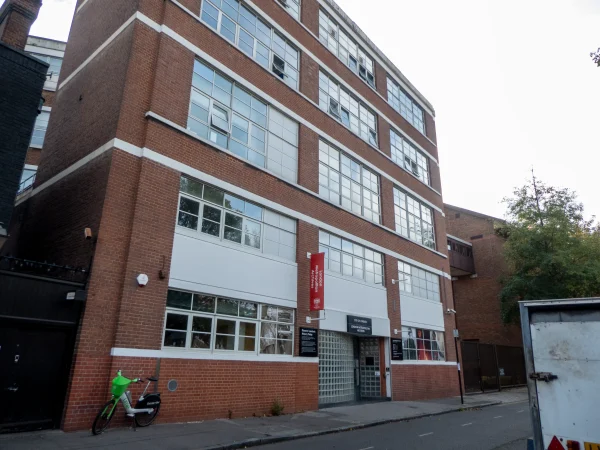
Image Credit - by Sebastiandoe5, CC BY-SA 4.0, via Wikimedia Commons
Metadata standards and digital storage
The process of scanning millions of rare historical documents creates massive amounts of raw digital files requiring strict technical organization. Research published by the International Council on Archives notes that accurate and complete metadata remains strictly necessary for preserving digital media to combat the rapid obsolescence of software systems. Without highly accurate metadata tags, a scanned photograph becomes instantly lost inside vast, chaotic server databases.
Professional archives and records management ensures specific digital formats remain fully searchable, contextually accurate, and entirely unalterable over decades. Skilled technologists embed vital descriptive information directly into the core file structure, accurately noting the original human creator, specific creation date, and exact physical location of the fragile source document. Institutions continually migrate older, aging file formats into modern, universally readable extensions to totally prevent catastrophic data loss from rapid software obsolescence. Massive global server redundancies perfectly guarantee the essential digital twins survive unexpected catastrophic hardware failures.
Building a sustainable archiving strategy alongside the london archives
Personal or large corporate archiving should exactly mimic strict institutional strategies through the immediate establishment of highly structured organizational frameworks. Individuals begin by precisely defining distinct series for loose documents, strictly separating modern tax records from sensitive medical histories or fragile family correspondence. A rigid retention timetable for each unique series immediately prevents massive, unmanageable paper accumulation. Standard financial documents face secure destruction after exactly seven years, meanwhile original birth certificates receive permanent retention status indefinitely. Physical family heirlooms demand immediate rehousing inside specialized, acid-free archival folders rather than cheap, standard office envelopes. Damp residential attics or humid basements practically guarantee complete physical destruction. Wild seasonal humidity fluctuations in domestic storage spaces perfectly mimic the exact harsh environmental conditions that historically destroyed massive institutional collections rapidly. Rigid acid-free boxes inside stable, climate-controlled interior closets dramatically extend preservation.
Using public resources for private preservation
Essential digital assets demand the exact same rigorous technical attention as fragile physical paper collections. True digital sustainability requires a shift away from a disorganized loose file approach on a messy computer desktop. A perfectly clear, highly logical digital folder hierarchy guarantees lightning-fast retrieval of highly important financial and historical data. Consistent file naming conventions perfectly ensure diverse items sort accurately by specific date and central subject matter. Individuals must actively migrate older, completely obsolete computer file formats into universally readable modern PDFs to immediately prevent permanent digital data loss. The specific organizational strategies that the london archives perfectly refines daily translate seamlessly into highly actionable steps for anyone currently managing essential legal records. Strict institutional procedures completely safeguard vulnerable corporate archives and precious historical family heirlooms alike for generations.
Safeguarding history alongside the London archives
Proper historical preservation requires a constant, delicate balance of strict physical care and highly rigorous strategic organization. Vital history security relies entirely on strict control over chaotic external environmental factors and the firm establishment of absolutely flawless cataloging methodologies. Centralized repositories prove completely essential for actively protecting fragile historical paper trails from rapid chemical decay and permanent accidental loss. The immense cultural value that the London archives provides daily ensures the incredibly sprawling chronological timeline of a massive global metropolis remains perfectly intact, fully publicly searchable, and completely physically safe. Proven, highly structured professional conservation frameworks allow any dedicated individual to effectively protect vital private corporate documents or incredibly fragile personal family heirlooms. A highly rigid documentation retention schedule and specialized acid-free archival storage materials thoroughly guarantee long-term historical survival for highly vulnerable private domestic collections forever.
Recently Added
Categories
- Arts And Humanities
- Blog
- Business And Management
- Criminology
- Education
- Environment And Conservation
- Farming And Animal Care
- Geopolitics
- Lifestyle And Beauty
- Medicine And Science
- Mental Health
- Nutrition And Diet
- Religion And Spirituality
- Social Care And Health
- Sport And Fitness
- Technology
- Uncategorized
- Videos

