
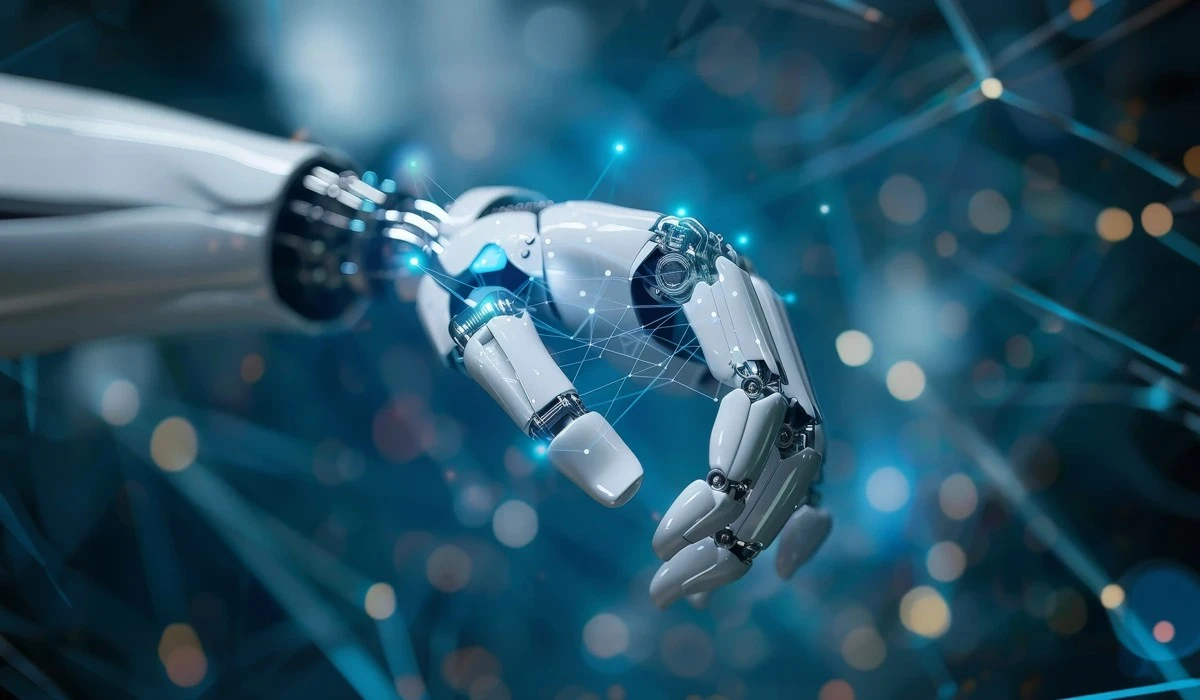
The Brutal Truth About Building Robotic Hands
We design machines to mimic humans, but building a synthetic finger instantly breaks the rules of modern manufacturing. Engineers can train artificial intelligence to map galaxies and process billions of data points in seconds. Yet, mass-producing robotic hands derails million-dollar hardware projects every single day.
Human-centric environments force androids to interact with objects using physical appendages originally evolved for soft biological tissue. Translating living bone and muscle into metal and wire exposes a massive engineering bottleneck. Developers face a harsh physical reality where delicate precision completely destroys long-term durability.
A single mechanical joint requires intense computing power, turning the simplest daily tasks into a logistical nightmare for major tech companies. These limbs represent the absolute limit of modern physical engineering. They force developers to choose between raw industrial strength and delicate physical control.
The Biology Trap Inside Robotic Hands
Copying nature directly creates highly complicated machines that snap under the pressure of daily physical work. The human hand houses 18 separate joints and 28 bones. Recreating this anatomical layout requires engineers to assign separate motors for every single movement. This layout forces designers to cram massive amounts of heavy hardware into a tiny, fragile physical space.
A human wrist and hand seamlessly perform 27 different types of movement. Conversely, the most agile robotic hands manage only seven movement types. A report by The Verge notes Tesla aggressively aims to establish its first production line to output 5,000 Optimus units by the end of 2026. However, hand design remains the primary manufacturing bottleneck for the entire product line.
Why do humanoid robots have human hands? Engineers build them this way because we built our entire surroundings—from door handles to power tools—specifically for biological fingers. Achieving this biological-level agility requires highly detailed manipulator designs that current mass-production methods cannot easily support.
The tech industry recognizes a definitive truth. Research published on arXiv suggests true android innovation relies entirely on object handling proficiency, as the rapid development of humanoid machines brings dexterous manipulation to the forefront of the field. Humans rely on manual tasks for more than 90% of daily actions. This makes grasping capability the absolute core technological milestone for any embodied artificial intelligence project.
How Actuators Dictate Strength and Control
Where a machine places its power source determines whether it can hold a needle or carry a cinderblock. Engineers face a severe conflict between high controllability and streamlined physical design. Traditional approaches heavily utilize tendon-driven actuators to solve tight space constraints. Building a robotic hand forces engineers to make difficult, permanent choices about physical weight distribution.
According to AOL News, Shadow Robot heavily relies on 40 metal tendons pulled by small forearm electric motors to move joints with precision from a distance. This specific design enables smooth object manipulation and pushes the potential for affordable capability. Moving the heavy motor components away from the fingers keeps the extremity lightweight and highly agile.
Other companies completely reverse this design approach. As noted by Sidecar AI, Chinese robotics firm Wuji places tiny motors directly inside each finger segment. Furthermore, a product listing on Humanoid Guide specifies that this independent hand features a 20-degree-of-freedom architecture, translating to four distinct joints per finger. This direct method provides immediate power but requires highly specialized, custom-built parts for deep joint integration.
Both design philosophies currently fail to match basic human pinch strength. A human easily exerts 70 to 100 Newtons of force during a simple pinch. A robot currently manages only a few dozen Newtons of force. Engineers continue to struggle to bridge this severe gap between compact physical power and long-term durability.
The Crushing Weight of the Durability Deficit
Highly sensitive equipment performs perfectly in climate-controlled labs while failing instantly on dirty factory floors. Startups proudly share highly produced videos of multi-fingered machines delicately handling fragile items. These polished demonstrations hide a severe simulation-to-reality gap that plagues the entire tech industry.
High-tech research and development sensors suffer from exceptionally short operational lifespans. As industry expert Bren Pierce points out, an academic lab sensor typically functions for half a year before degrading completely. Meanwhile, the commercial sector strictly requires a full decade of uninterrupted, daily reliability. Deploying these units into real-world factories instantly exposes this massive lab-to-factory gap.
How long do robot sensors last? According to Modern Mechanics 24, many research touch sensors work well initially but typically fail after six months of constant use. This rapid hardware failure forces developers to constantly replace expensive components just to keep early prototypes functioning.
An industrial production line cannot stop twice a year for full hardware replacements. Physical hardware degradation ruins the overall economic viability of these experimental machines. Manufacturers must totally bridge this decade-long reliability gap before widespread commercial adoption occurs.
The Processing Speed Limit of Compute Power
Processing touch requires moving massive amounts of data faster than a physical object can slip away. Dexterous robotic hands demand at least 20 degrees of freedom to execute advanced, coordinated movements. Every single joint movement generates a massive flood of operational data that the central processor must calculate instantly.
Modern machines capture touch through highly advanced visuo-tactile streams. These advanced systems rely on multiple cameras actively analyzing the internal deformation of soft silicone fingertips. They provide incredible analytical precision. A machine's visual-tactile resolution hits between 30 and 100 micrometers.
Research published by the National Center for Biotechnology Information shows this technical capability easily beats the adult human fingertip resolution, which ranges from 2.8 to 3.5 millimeters. Machines definitively win at local geometry reconstruction. They can map the exact surface of a small object better than human skin ever could.
However, this extreme precision demands overwhelming computing power. Operating systems face strict, unforgiving real-time constraints. Perception processing must successfully finish in 10 to 20 milliseconds. Control commands must then execute within 1 to 5 milliseconds. A slight delay causes the machine to drop the item entirely. Handling this aggressive data flow remains a massive hurdle.
The Financial Reality of Robotic Hands
Building a machine that can do anything costs astronomically more than building a tool that does one thing well. For four decades, the industry has chased the goal of a universal manipulator. Engineers want a single appendage capable of performing any imaginable task. The real-world economics tell a completely different story.
Creating a peak-difficulty component drains development budgets rapidly. Today, roughly 200 Shadow Robot hands currently operate in active research settings. Meanwhile, Kinisi holds about 10 KR1 robots in commercial trials. How much does a robotic hand cost? Advanced multi-fingered models currently cost between $5,400 and $12,000, while simple grippers cost less than $500.
A prototype three-finger hand from Kinisi runs roughly £4,000, or $5,400. A simple, functional pincer from the exact same company costs only £400. Wuji’s highly specialized hand unit sits at an intimidating $12,000 price point. Executive Yunzhe Pan anticipates future iterations will bring enhanced sturdiness and significant price reductions.
This massive price gap explains why massive logistics centers still rely heavily on simple suction cups and basic metal claws. The parcel logistics sector moves between 400 billion and 520 billion packages annually. This creates massive economic incentives for industrial automation. Yet, expensive humanoid fingers cannot justify their enormous cost over cheap, highly reliable task-specific grippers.
Breaking Free from the Human Shape
Forcing a machine to keep its appendages permanently attached severely limits its ability to maneuver in tight spaces. Biology strictly restricts human movement, but engineers can design machines that abandon biological limitations entirely. Researchers publishing in Nature Communications recently demonstrated a crawling, completely detachable robotic hand.
Scientists Aude Billard and Xiao Gao engineered a system that completely rethinks physical reach and utility. Their radical design features autonomous detachment and independent mobility for multi-object retrieval. The appendage actively scurries across a table, grabs a target item, and reattaches to the main android unit post-task.
Billard notes that biological limbs frequently experience heavy overloading during multi-item transport tasks. Humans must utilize their entire bodily structure simply to retain multiple items at once. We also struggle significantly with awkward spatial positioning. Reaching behind our backs requires highly difficult maneuvering and joint strain.
Machines easily avoid these physical traps. Engineers can swap heavy joints for soft pneumatic elements to create compliance when handling fragile goods. They can abandon the universal human shape entirely to achieve millimeter-level precision. The lucrative $70 billion minimally invasive surgery market heavily rewards this exact type of specialized, non-human precision.
The True Timeline for Dexterity
Public promises of immediate technological breakthroughs clash directly with the slow, physical reality of testing metal and wire. Elon Musk heavily highlighted the top three challenges in robotics during his September 2025 All-In Summit speech. As covered by Bloomberg, the CEO confidently promised biological-level agility for upcoming iterations of Tesla Optimus, planning to sell units to the public by late next year.
The broader robotics community strongly disagrees with this highly optimistic timeline. Expert Nathan Lepora openly dismisses these rapid timeline claims. He calls short-term expectations highly unrealistic and officially projects a full 10-year wait for human-level robot dexterity. Researchers actively view 2036 as a much more realistic target for true manual proficiency.
The long path toward physical automation started decades ago. In the late 1990s, Rich Walker built the original Shadow Robot wooden prototypes from scavenged materials and random on-hand parts. Today, modern hardware serves primarily as an agility testing platform rather than a finished commercial product.
Engineers use these advanced builds to actively explore physical capabilities. They study hardware failures to create functional models for future, larger-scale factory deployments. Despite massive financial investments and incredible computing advances, true universal dexterity remains a distant, hard-fought physical milestone.
The Final Barrier to True Automation
Translating flesh and bone into steel and code exposes the hardest physical limits of modern engineering. Building a machine that can thread a needle and swing a hammer requires solving severe friction between astronomical cost, massive compute speed, and daily physical durability. The industry must forcefully move past highly controlled laboratory environments.
These advanced units must learn to survive the chaotic wear and tear of real-world factory floors. We currently possess the raw processing power to instantly map the physical surroundings. Giving a machine the physical grace to actually interact with those physical surroundings remains a grueling, decade-long challenge.
Developers must totally rethink the structural design of robotic hands before mass production can fully succeed. Until engineers forcefully solve the durability deficit, these highly sophisticated machines will remain impressive research projects rather than true industrial tools. The intense push for ultimate dexterity continues to aggressively reshape the rigid boundaries of applied physics.
Recently Added
Categories
- Arts And Humanities
- Blog
- Business And Management
- Criminology
- Education
- Environment And Conservation
- Farming And Animal Care
- Geopolitics
- Lifestyle And Beauty
- Medicine And Science
- Mental Health
- Nutrition And Diet
- Religion And Spirituality
- Social Care And Health
- Sport And Fitness
- Technology
- Uncategorized
- Videos

