

Subtotal:
£199.00


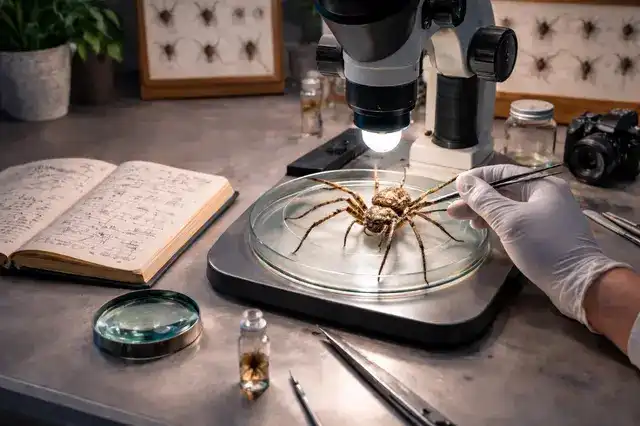
Arachnology course offers a focused introduction to the science of spiders and other arachnids. This subject combines zoology, ecology and field observation. Consequently, it attracts naturalists, researchers, wildlife photographers and enthusiasts who wish to understand the remarkable diversity of spiders. The Arachnology course presents this knowledge through an accessible digital learning environment. As a result, learners gain the flexibility to study spider biology and field practice from any location.
Spiders occupy almost every terrestrial ecosystem on Earth. Therefore, understanding their biology helps reveal how ecosystems function. The Arachnology online course explores the foundations of spider anatomy, behaviour and ecological roles. Students learn how spiders hunt, build webs and interact with their environment. Moreover, the course explains the evolutionary adaptations that allow arachnids to thrive in forests, grasslands and urban environments.
Because this programme operates entirely online, learners can access lectures, study materials and visual resources through an intuitive learning platform. This structure supports independent learning while maintaining academic rigour. Furthermore, the Arachnology online course integrates visual guides, diagrams and field photography to help students recognise species and understand diagnostic features.
The Arachnology course begins by building a strong understanding of spider biology and behaviour. Students examine the structure of the arachnid body and the functions of each anatomical component. For example, the course explains how spinnerets produce silk and how spiders use silk for multiple purposes. In addition, learners study sensory systems, locomotion and feeding strategies. Consequently, students gain a clear understanding of how spiders survive and reproduce in complex ecological settings.
Following this foundation, the Arachnology course explores the diversity of the British arachnid fauna. Britain hosts hundreds of spider species that occupy different habitats. Therefore, the course introduces the ecological niches that these species fill. Learners also review how environmental factors shape spider distribution and behaviour. Moreover, the Arachnology Diploma course presents important examples of British spider families and the distinctive characteristics that help researchers identify them.
Field observation forms an essential part of arachnological research. Accordingly, the Arachnology online course introduces practical field methodologies and equipment used by professional arachnologists. Students learn how to survey habitats, collect specimens responsibly and record environmental conditions. Additionally, the programme explains the use of sweep nets, pitfall traps and observation techniques that minimise ecological disturbance.
Accurate identification stands at the heart of arachnology. Therefore, the Arachnology course provides detailed instruction on techniques for arachnid curation and identification. Students learn how to examine morphological features under magnification and compare specimens with scientific references. Furthermore, the course explains the importance of maintaining properly labelled collections for scientific research. Through these methods, learners develop the ability to distinguish species with confidence.
Photography now plays a vital role in wildlife documentation. Consequently, the Arachnology online course includes dedicated guidance on photographic documentation and image analysis. Learners discover how macro photography reveals fine anatomical details. In addition, the course discusses lighting, composition and equipment choices that improve identification accuracy. As a result, students learn how to create valuable visual records of spider species.
Many enthusiasts also keep spiders for educational observation. Therefore, the Arachnology Diploma course introduces the principles and practices of keeping spiders in captivity. Students learn how to design suitable enclosures, manage humidity and provide appropriate food sources. Moreover, the course emphasises ethical responsibility and the importance of replicating natural habitats whenever possible.
Scientific recording helps researchers track biodiversity and environmental change. Accordingly, the Arachnology course explains the organisation of the British Spider Recording Scheme. Students discover how this national database gathers observations from researchers and citizen scientists. Furthermore, the programme describes how these records contribute to conservation strategies and ecological monitoring.
The Arachnology online course also explores recent advances in arachnid recording and research. Technological developments have transformed how scientists document species. For example, digital databases, mapping tools and improved imaging techniques allow researchers to analyse distribution patterns with greater accuracy. Consequently, learners gain insight into how modern research strengthens biodiversity knowledge.
Safety remains essential in any field investigation. Therefore, the Arachnology course includes comprehensive instruction on physical safety and risk management. Students learn how to prepare for field surveys, assess environmental hazards and use equipment responsibly. Moreover, the course explains how careful planning reduces risks when working in unfamiliar habitats.
In addition, the Arachnology Diploma course outlines medical precautions and laboratory safety considerations. Although most spiders pose little risk to humans, proper handling procedures remain important. Learners therefore study safe specimen handling and laboratory hygiene practices. As a result, students develop confidence while maintaining professional safety standards.
Access to proper equipment supports effective research. Consequently, the Arachnology online course provides guidance on sourcing laboratory and entomological supplies. Students learn how to select appropriate tools for specimen examination, preservation and photography. Furthermore, the course highlights suppliers and resources that support field researchers and hobbyists alike.
Optical equipment also plays a crucial role in arachnological study. Therefore, the Arachnology course introduces microscopes, magnifiers and specialised lenses used for specimen analysis. Students learn how to select and maintain optical instruments that support accurate identification. In addition, the course discusses important literature resources that assist researchers in verifying species classifications.
The digital format of this Arachnology online course provides considerable advantages for learners. First, students can access materials at any time. Consequently, they can organise their study around professional or personal commitments. Furthermore, the platform allows learners to revisit lectures and resources whenever they need clarification. This flexibility ensures that students progress at a comfortable pace while maintaining consistent learning outcomes.
Moreover, interactive content enhances understanding throughout the Arachnology course. Visual guides, annotated images and structured lessons help learners connect theoretical knowledge with practical observation. As a result, students gradually develop the analytical skills required for scientific identification and ecological study.
Assessment also supports continuous learning throughout the programme. Each unit concludes with a multiple-choice examination. This exercise will help you recall the major aspects covered in the unit and help you ensure that you have not missed anything important in the unit. The results are readily available, which will help you see your mistakes and look at the topic once again. If the result is satisfactory, it is a green light for you to proceed to the next chapter.
This structured approach encourages steady progress through the Arachnology Diploma course. Consequently, learners maintain motivation while strengthening their knowledge step by step. In addition, the online format allows students to review earlier lessons whenever necessary, which reinforces long-term retention.
The Arachnology course therefore provides an engaging pathway into the scientific study of spiders. Through carefully structured lessons, students gain both theoretical understanding and practical observation skills. Furthermore, the flexible digital format makes the Arachnology online course suitable for beginners, naturalists and professionals who wish to expand their expertise.
Ultimately, the Arachnology Diploma course connects curiosity with scientific knowledge. By the end of the programme, learners will recognise spider diversity, understand ecological roles and apply field techniques with confidence. Consequently, students who complete this Arachnology course gain valuable skills that support wildlife observation, ecological research and biodiversity recording.
1:Fundamentals of Spider Biology and Behaviour
2:The British Arachnid Fauna
3:Field Methodologies and Equipment for Arachnology
4:Techniques for Arachnid Curation and Identification
5:Photographic Documentation and Analysis of Arachnids
6:Principles and Practices of Keeping Spiders in Captivity
7:Organization of the British Spider Recording Scheme
8:Recent Advances in Arachnid Recording and Minor Orders
9:Physical Safety and Risk Management in Field Arachnology
10:Medical Precautions and Laboratory Safety
11:Sourcing Laboratory and Entomological Supplies
12:Optical Equipment and Arachnological Literature Resources

After completing the course, you will receive a diploma certificate and an academic transcript from Elearn college.
Each unit concludes with a multiple-choice examination. This exercise will help you recall the major aspects covered in the unit and help you ensure that you have not missed anything important in the unit. The results are readily available, which will help you see your mistakes and look at the topic once again. If the result is satisfactory, it is a green light for you to proceed to the next chapter.
Elearn College is a registered Ed-tech company under the UK Register of Learning( Ref No:10062668). After completing a course, you will be able to download the certificate and the transcript of the course from the website. For the learners who require a hard copy of the certificate and transcript, we will post it for them for an additional charge.


£199.00

£199.00


