

Weak Muscles? Hydrotherapy Builds True Power
Stepping into a standard pool transforms the surrounding water into a heavy, 360-degree weighted vest. Every single movement meets immediate, unrelenting drag. Society often incorrectly labels aquatic workouts as gentle rehabilitation tools meant exclusively for seniors recovering from injuries. However, moving a human body through a fluid medium demands massive force and steady energy expenditure. The dense liquid resistance entirely changes how muscles contract and grow.
A scientific review published in ScienceDirect states that water generates significantly greater resistance than air because liquid density is approximately eight hundred times greater, which provides up to fifteen times more drag than moving through an empty room. Pushing an arm or leg forward requires overcoming substantial physical resistance in real time. Floating appears incredibly effortless on the surface. Underneath the waterline, maintaining balance activates stabilizing muscles across the entire torso. A basic swimming lane functions as a grueling, high-resistance gym capable of forging serious, full-body athletic strength and raw physical power.
From 19th-Century Hydrotherapy to Elite Aquatic Strength Training
Historically, modern hydrotherapy originated during the nineteenth century. Austrian farmer Vincent Priessnitz and Bavarian monk Father Sebastian Kneipp established specific water-based restorative cures to treat various ailments. Today, modern exercise science validates these aquatic environments as premier arenas for intense physical conditioning. Integrating targeted water exercises into a weekly routine drastically alters muscular development. Submerged training builds impressive raw mass and cardiovascular endurance while defying gravitational limitations. Athletes use hydrostatic properties to train aggressively with zero harsh shocks on their vulnerable joints. Swimmers push against unbroken tension, experiencing a unique hypertrophy stimulus impossible to replicate on dry land. The combination of cardiovascular health and raw power output turns standard pool sessions into elite training programs. Adopting this fluid-based approach promises a safer, highly effective route to building undeniable physical resilience and a thoroughly stronger human physique.
Why Hydrotherapy is the Ultimate Strength Builder
Fluid viscosity generates an active drag force inside the pool. This unique physical property provides up to fifteen times more resistance than moving through regular air. When researching this topic, many beginners naturally ask whether an individual can build muscle with water aerobics. A randomized trial indexed in PubMed concluded that water-exercise programs with a resistance emphasis successfully increase maximum strength even in elderly women.
Yes, the unbroken 360-degree drag of water forces muscle fibers to work against resistance in every direction, leading to significant strength and hypertrophy gains over time without heavy weights. This multi-directional viscosity ensures complete muscular engagement during any aquatic workout. Every sweep of an arm requires intense physical exertion to displace the heavy surrounding liquid. Gravity-based lifting focuses tension primarily on the downward pull. Conversely, submerged training environments demand equal effort during both the pushing and pulling motions. The surrounding fluid essentially acts as heavy liquid weights, transforming simple body movements into rigorous strength conditioning routines.
The Science of Multi-Directional Resistance
Traditional gym workouts rely entirely on gravity to stimulate muscular tears. Lifting a heavy iron dumbbell challenges the bicep during the upward curl, leaving the triceps relatively inactive. Hydrotherapy introduces a completely different biomechanical reality. Multi-directional resistance entirely alters how human physiology responds to physical stress. Moving an arm forward against fluid viscosity targets the pushing muscles. Pulling that same arm backward immediately engages the opposing pulling muscles with equal intensity. Both the concentric and eccentric phases of every movement receive a powerful, muscle-tearing stimulus. The dense fluid medium removes all momentum, forcing sustained muscular contractions throughout the entire range of motion. Athletes must generate steady force just to maintain progress across the lane. This unbroken tension forces rapid adaptations, sparking immense muscle growth without ever requiring a single piece of heavy iron equipment.
Zero Shock and Maximum Muscle Engagement
Archimedes' principle of buoyancy dramatically counteracts gravitational pull upon entering deep water. Submerging a human body to hip level immediately reduces weight-bearing loads by fifty percent. According to the Mayo Clinic, sinking further to chest depth eliminates seventy-five percent of overall body weight, while neck-deep water cancels out approximately ninety percent of a person's mass. This zero-shock environment completely unloads the skeletal structure and vulnerable spinal columns. Athletes generate maximum muscular power output without enduring the harsh compressive forces typical of land-based powerlifting. Joints move freely through expanded ranges of motion.
Individuals recover faster because bone collisions disappear entirely beneath the surface. Heavy squats compress knee cartilage, whereas aquatic squat variations stretch and strengthen the surrounding ligaments safely. Using these buoyant forces maximizes cellular muscle engagement. Every repetition pushes physical limits while simultaneously preserving delicate joint health. This massive reduction in structural stress ultimately allows participants to train with unprecedented intensity and remarkable consistency.
Core Stabilization Through Targeted Water Exercises
Simply maintaining an upright position in a deep pool forces the human trunk into extreme overdrive. Specific water exercises elevate standard abdominal workouts into grueling full-body stabilization tests. Deep-water running and aquatic planks compel the abdominal wall to contract relentlessly. Lower back muscles fire simultaneously to stabilize the spine against shifting underwater currents. Floating off the pool floor removes stable ground footing, leaving the core responsible for all body alignment. Every ripple and wave acts as a disruptive force, demanding immediate proprioceptive corrections. Performing a simple leg lift in deep water requires intense oblique activation to prevent the torso from flipping over entirely. These steady micro-adjustments systematically strengthen deep stabilizing tissues. Training the midsection under these turbulent fluid conditions builds an unbreakable foundation, drastically improving overall athletic performance and ensuring proper spinal health.
Engaging the Trunk in Deep Water
Deep-water running requires suspending the entire body using specialized foam flotation belts. This specific training modality removes all ground contact, forcing the transverse abdominis and multifidus to activate without hesitation. Runners pump their arms and legs vigorously, creating massive underwater turbulence. The midsection must fight aggressively to keep the spine perfectly vertical against these self-generated aquatic storms. This specific form of conditioning decreases collision hits on knees and hips by ninety percent compared to traditional land treadmills. Meanwhile, the muscular exertion skyrockets due to the intense viscosity of the fluid. Every stride acts as a concentrated core crunch. Submerged sprinting isolates the abdominal muscles far better than standard floor crunches. Athletes build functional core power because the trunk steadily acts as the primary anchor for all heavy limb movements taking place below the waterline.
Balance and Posture Enhancements
The inherent instability of a fluid environment demands steady proprioceptive adaptation from the human nervous system. A 2026 review indexed in PubMed reports that completing a water-based program lasting at least eight weeks yields optimal outcomes, particularly for improving balance, muscle strength, and dynamic force transfer. Additionally, a 2024 meta-analysis from Springer concluded that aquatic exercise offers better benefits than land exercises for improving balance function in older adults.
Low-load aquatic trunk rotations effectively enhance external oblique activation. These targeted rotational movements directly prevent dangerous falls and correct poor spinal alignment in serious athletes. Water currents steadily attempt to knock participants off balance. Resisting these gentle yet relentless lateral forces trains muscles to react instantly to sudden physical shifts. These microscopic postural adjustments translate beautifully onto dry land. A stronger, more reactive core automatically pulls the shoulders back, lifting the chest and straightening the spine. Regular hydrotherapy essentially rewires muscular coordination, ensuring bodies stand taller, move more effectively, and resist postural fatigue throughout long, demanding days.
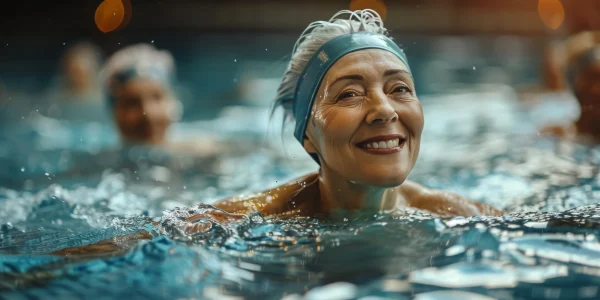
Swimming for Health and Unmatched Muscular Power
Embracing swimming for health functions as an exceptional dual-purpose conditioning strategy. Many fitness plans mistakenly separate cardiovascular conditioning from heavy strength work. Aquatic locomotion shatters this outdated division, merging extreme heart rate elevation with relentless muscular tearing. Traversing a fifty-meter lane demands immense raw muscular power alongside staggering aerobic capacity. Every single stroke pulls heavily against the dense water, effectively mirroring a steady cable row or lat pulldown. A review published in PMC reports that aquatic sprint training elevates cardiac volume by twenty-seven to thirty percent, producing a thirty-five percent mean increase in stroke volume even at rest. Concurrently, the intense resistance forces rapid muscle hypertrophy across the entire upper torso. Swimmers sculpt broad shoulders, massive lats, and powerful leg drives simply through refusing to sink. This unique combination of maximum heart output and heavy drag resistance proves standard lap swimming completely replaces traditional, separate cardio and lifting routines.
Upper Body Sculpting with Freestyle and Butterfly
The freestyle and butterfly strokes heavily isolate the latissimus dorsi, pectoralis major, and triceps during every propulsive underwater pull phase. Athletes drive their hands deep into the water, forcefully pulling massive volumes of liquid backward to generate forward momentum. This aggressive physical action mimics performing thousands of high-resistance pull-ups. The butterfly stroke amplifies this muscular engagement even further, requiring explosive power to heave the entire upper torso above the waterline simultaneously. Shoulders burn intensely as the deltoids rotate against the fluid viscosity. This sustained tension drastically increases muscle fiber recruitment, leading to visually prominent upper-body hypertrophy. Swimmers naturally develop a distinct V-taper aesthetic because these specific movements forcefully widen the back while tightening the waistline. Ditching the iron weights in favor of aggressive butterfly sprints guarantees unparalleled shoulder stability and formidable upper back strength.
Lower Body Power via Breaststroke and Kick Drills
Explosive lower-body power stems directly from learning the breaststroke whip kick and relentless flutter drills. These rhythmic, high-resistance leg movements demand intense gluteus maximus, quadriceps, and hamstring activation. Gripping a simple foam kickboard isolates the lower kinetic chain entirely, removing all upper body momentum. Leg muscles must push through extreme liquid density to prevent the body from stalling. The breaststroke whip kick closely replicates a heavily weighted leg press, violently snapping the knees backward against massive fluid drag. This ferocious muscle recruitment rapidly clears metabolic waste, successfully accelerating recovery times within the lower extremities. Strong aquatic kicks translate instantly to increased sprinting speeds on a standard running track. Forging iron-like legs in the pool safely bypasses the heavy joint compression associated with traditional heavy back squats, resulting in pure, unadulterated lower limb power.
Essential Hydrotherapy Equipment for Muscle Growth
Scaling up the difficulty of any hydrotherapy session requires specialized aquatic gear. Bare hands and feet eventually adapt to standard water resistance, leading to inevitable strength plateaus. Adding tools increases the total surface area moving through the water, creating exponentially more drag. This enhanced drag translates directly to heavier weight lifted during the aquatic workout. Utilizing these specialized implements turns basic movements into brutal tests of physical endurance. Manufacturers construct most water fitness tools from highly buoyant, closed-cell foam materials. Pushing a highly buoyant object downward forces athletes to engage their entire core just to maintain their footing. The combination of intense downward buoyancy and severe horizontal drag creates a dual-resistance training environment. Investing in proper aquatic gear fully activates the maximum muscle-building potential secured within every rigorous swimming pool training session.
Aqua Dumbbells and Resistance Gloves
Aqua dumbbells utilize strong natural buoyancy to create harsh downward resistance during triceps extensions and chest presses. Manufacturers mold these weights from specialized closed-cell EVA foam, ensuring they float aggressively against downward physical pressure. Pulling them across the body forcefully engages the chest while simultaneously fighting horizontal drag. Additionally, webbed resistance gloves exponentially increase the hand's total surface area. Wearing these simple gloves heightens upper-body drag to maximize strength yields during lateral shoulder raises and aquatic bicep curls. Spread fingers instantly catch massive amounts of water, turning a basic arm sweep into a heavy muscular challenge. Combining foam dumbbells with webbed gloves drastically overloads the muscular system. This straightforward equipment upgrade thoroughly exhausts the upper body, mimicking the intense burn typically experienced by athletes after completing multiple heavy sets of traditional barbell bench presses.
Kickboards and Parachutes
Flat, compressed foam kickboards isolate the lower-body kinetic chain through safely floating the torso. Holding this board outward intentionally adds forward surface area to create massive pushing resistance. Legs must work infinitely harder to propel the body forward against the solid foam wall catching the water. Advanced swimmers also incorporate aquatic parachutes to elevate their strength gains. These specialized nylon chutes drag forcefully behind the athlete, aggressively adding sustained tension against all forward momentum. Pulling a parachute demands significantly higher propulsive forces from the core, quadriceps, and glutes just to maintain a stationary swimming speed. Moving across the pool requires grueling effort. Implementing these high-drag devices systematically forces muscle fibers to recruit deeper motor units. Ultimately, this specific resistance gear rapidly turns ordinary kicking drills into elite-level lower-body aquatic powerlifting sessions.
Structuring A Weekly Aquatic Strength Routine
Developing a practical plan for dividing pool time between different muscle groups ensures consistent physical progress. Proper scheduling dictates ultimate success in aquatic fitness. As newcomers plan out new schedules, many frequently ask how many days a week someone should do hydrotherapy. For optimal strength building and adequate muscle recovery, aiming for three to four sessions per week provides the perfect balance of intense resistance training and restorative rest. Splitting workouts by muscle groups maximizes muscle fiber recovery times. A dedicated upper-body day utilizes foam dumbbells and aggressive butterfly sprints. Forty-eight hours later, a lower-body session focuses heavily on parachute dragging and breaststroke kick drills. This structured methodology systematically fatigues targeted muscle groups before allowing them ample time to rebuild thicker and stronger. Consistency within these structured aquatic split guarantees spectacular long-term athletic results.
Balancing Intensity with Active Recovery
A highly successful hydrotherapy regimen intentionally alternates high-intensity resistance sessions with targeted active recovery days. Training without strategic rest leads directly to central nervous system fatigue and severe muscular stagnation. Incorporating thermoneutral water sessions on designated rest days induces rapid cellular vasodilation. Submerging the body in warmer temperatures safely relaxes stiff muscles while actively flushing built-up lactic acid from the tissues. Light mobility work, such as slow freestyle swimming or basic treading, pushes oxygen-rich blood into recovering muscle bellies. This gentle aquatic movement successfully clears metabolic waste products generated during heavy resistance sessions. Proper active recovery vastly accelerates tissue repair compared to total physical inactivity. Balancing grueling drag workouts with soothing aquatic stretching completely optimizes the body for maximum athletic performance. Smart programming respects the vital need for restorative healing between grueling strength workouts.
Applying Progressive Overload in the Pool
Progressive overload remains the absolute basis of all muscular development, even within a liquid environment. Athletes mathematically achieve increased resistance primarily through manipulating their movement velocity. Physical water drag systematically increases as the second power of overall speed. Pushing an arm twice as fast requires four times the muscular force. Swimmers systematically scale their workouts through intentionally increasing their stroke cadence. Utilizing an underwater digital metronome to move from one hundred thirty to one hundred fifty beats per minute drastically elevates the physical challenge. Furthermore, expanding equipment surface area ensures steady muscular progression. Moving from small aquatic gloves to massive foam dumbbells forces the body to adapt to heavier loads. Steadily adding speed and increasing surface area guarantees endless physical adaptation, firmly preventing frustrating strength plateaus and pushing physical boundaries consistently further.
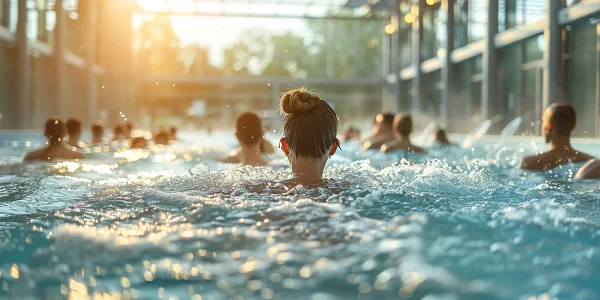
Overcoming Plateaus with Advanced Hydrotherapy Techniques
Intermediate and advanced swimmers eventually need extreme protocols to successfully push their established physical limits. Basic lap routines inevitably lose their muscle-building effectiveness once the body fully adapts to standard water drag. High-intensity aquatic protocols beautifully elevate traditional hydrotherapy into a grueling, elite-level conditioning tool. Subjecting the body to extreme intervals shocks the central nervous system into immediate hypertrophy adaptation. Athletes ditch leisurely laps for aggressive, oxygen-depleting exercises designed to recruit fast-twitch muscle fibers. Adding vertical jump squats or explosive tethered sprints shatters conventional fitness ceilings. These aggressive techniques maximize calorie expenditure while drastically increasing resting metabolic rates long after the pool session ends. Pushing past a stubborn strength plateau requires overwhelming the muscles with highly unconventional fluid resistance. Advanced aquatic routines deliver exactly this overwhelming stimulus, forcing dramatic and undeniable whole-body physical changes.
High-Intensity Interval Training in Water
Aquatic High-Intensity Interval Training involves explosive, agonizing sprints engineered to maximize muscle tear. A standard protocol includes twenty-second Tabata work intervals followed immediately by strict ten-second rests. Participants perform explosive aquatic jump squats, violently launching their shoulders above the surface before landing safely in the buoyant fluid. This rigorous methodology consistently pushes the heart rate directly to ninety-five percent of its absolute maximum limit. This advanced hydrotherapy protocol drastically increases post-exercise resting energy expenditure. Fat oxidation skyrockets while the athlete maintains a noticeably lower rate of perceived exertion compared to dry-land interval training. The water actively cools the core temperature, preventing premature exhaustion during these brutal sets. Engaging in such intense bursts rapidly develops raw fast-twitch muscle power, turning ordinary fitness enthusiasts into incredibly powerful, well-conditioned athletes capable of supreme maximum physical outputs.
Tethered Swimming and Artificial Currents
Tethered swimming utilizes a highly calibrated elastic cord securely attached to the pool wall. This incredibly demanding practice provides unyielding stationary resistance, preventing the athlete from ever reaching the opposing edge. Clinical research proves this brutal training style positively correlates with remarkably faster overall free-swimming velocities. The elastic cord yanks the swimmer backward continually, demanding explosive, unbroken forward propulsion from the lats and legs. Similarly, exercising against high-powered, variable-speed artificial pool currents forces steady motor unit recruitment. Traditional lap swimming inherently includes brief rest periods during mandatory wall flip turns. Endless artificial currents entirely eliminate these micro-rests, demanding maximal cardiovascular output and uninterrupted muscular exertion. Battling an unending river of water systematically obliterates muscular weaknesses. These stationary resistance methods guarantee unmatched stamina development, sculpting an exceptionally resilient physical frame capable of dominating any fluid environment.
Injury Prevention and Joint Longevity in the Pool
Aquatic strength training represents the most sustainable lifelong fitness model currently available in exercise science. Training with extreme intensity often leads directly to severe joint degradation over time. While discussing inevitable joint wear and tear, fitness enthusiasts often ask whether swimming is better than the gym for joints. Because water buoyancy supports up to ninety percent of overall body weight, aquatic exercises completely remove the harsh compressive forces found in traditional weightlifting, making it vastly superior for preserving delicate joint health. This massive reduction in gravity-induced stress perfectly protects fragile cartilage. Heavy barbell lifting inherently grinds knee and shoulder joints under immense physical loads. Fluid resistance provides equally punishing muscular stimulation while simultaneously protecting the base skeletal frame entirely. Athletes seamlessly push their muscles to total failure without ever risking catastrophic ligament snaps or painful tendonitis.
Protecting Ligaments While Building Mass
Water-based strength programs severely limit damaging eccentric loading during the actual workout phase. Eccentric loading, or the lengthening of a muscle under heavy tension, represents the primary physical cause behind delayed onset muscle soreness. Lowering a massive barbell slowly causes microscopic trauma directly to the tendons and ligaments supporting the moving joint. Conversely, fluid drag applies resistance uniformly, naturally removing the heavy eccentric strain associated with dropping iron weights. Pushing an aqua dumbbell downward builds concentric strength, while the buoyancy safely guides the weight back upwards without violently tearing the connective tissues. Eliminating this specific structural stress dramatically reduces overall injury risk. Lifters successfully pack on dense, functional muscle mass without waking up to debilitating joint stiffness. This protective quality essentially ensures individuals maintain high-level athletic performance well into their later adult decades.
Soothing Micro-Tears and Reducing Inflammation
Hydrostatic pressure represents the physical force exerted evenly by still water at any given depth. This incredible environmental pressure firmly compresses all submerged human tissues, actively moving excess fluids directly back into the body's central bloodstream. The Mayo Clinic notes that this even water pressure actively reduces local swelling following an intense muscular workout. The fluid environment actively accelerates vital lymphatic drainage, ensuring metabolic waste flushes away rapidly. Oxygen-rich blood immediately rushes to heal the newly formed muscular micro-tears. Submerging the body essentially acts as a full-body compression garment, providing steady healing therapy concurrently with the heavy resistance training. Swimmers consistently report significantly less systemic inflammation after brutal water sessions compared to equivalent land workouts. Utilizing this natural hydrostatic healing solidifies aquatic environments as premier tools for maintaining long-term athletic longevity, supreme physical resilience, and optimal overall health.
Dive Into a Stronger Self with Hydrotherapy
Hydrotherapy has undeniably progressed far beyond its humble nineteenth-century medical origins. Today, science universally validates the pool as an unparalleled medium for safely forging elite, full-body strength. Incorporating specialized drag equipment massively amplifies the natural fluid resistance, forcing muscles to grow exponentially thicker and significantly stronger. Embracing swimming for health replaces dangerous, heavy-shock gym sessions with joint-friendly, hyper-productive muscular conditioning. Floating on the surface seems gentle, yet moving aggressively underwater demands supreme physical endurance and raw physical power. The zero-shock nature of aquatic environments ensures athletes build massive functional strength without ever destroying their vulnerable skeletal joints. Pack a swim bag, embrace the relentless physics of deep water, and start completely overhauling physical performance today. The liquid weights are perpetually ready, waiting to forge an entirely new level of athletic resilience and pure power.
Recently Added
Categories
- Arts And Humanities
- Blog
- Business And Management
- Criminology
- Education
- Environment And Conservation
- Farming And Animal Care
- Geopolitics
- Lifestyle And Beauty
- Medicine And Science
- Mental Health
- Nutrition And Diet
- Religion And Spirituality
- Social Care And Health
- Sport And Fitness
- Technology
- Uncategorized
- Videos

