

Safe Ears: Noise Control And Hearing Protection
You step onto the shop floor and feel the air thrum against your skin. A heavy press slams down every six seconds. Each strike sends a pressure wave through the room. This wave hits your eardrums and travels deep into your inner ear. Thousands of microscopic hair cells stand in rows like a field of wheat. The pressure waves from high sound decibel levels bend these cells until they snap. Once they break, they stay broken. You do not feel pain when this happens. You only notice the results decades later when the world starts to sound like it is underwater. Proper noise control and hearing protection keep these hair cells upright. Without a plan for industrial safety, you trade your ability to hear for a paycheck. You might think your ears are tough, but they are fragile sensors that cannot repair themselves.
The High Cost of Silence in Industrial Safety
Neglecting the ears leads to a physical and financial disaster. Occupational noise-induced hearing loss accounts for nearly 17 percent of all global disability-adjusted life years related to hearing. This is a massive burden on the global workforce. When a worker loses their hearing, they lose a vital sensory connection to the world around them. According to a report in The Hearing Journal, depending on the severity of the condition, workers with untreated hearing loss often see their annual income drop by as much as 30,000 dollars compared to their peers. This happens because communication becomes difficult, and safety risks increase on the job site.
The Health and Financial Repercussions of Industrial Noise
The brain suffers alongside the ears. Research published in PubMed Central indicates that constant exposure to loud noise can lead to Tinnitus, which is a permanent ringing or buzzing in the ears that leads to more missed workdays. A study in JAMA Otolaryngology similarly notes that this condition often causes worse sleep quality, anxiety, and depressive symptoms compared to non-bothersome forms of the ailment. Industrial safety requires protecting limbs from sharp blades alongside preserving the neurological health of every person in the building. As noted by the Hearing Health Foundation, using data from the U.S. Bureau of Labor Statistics, over 20,000 to 25,000 cases of permanent, work-related hearing loss are recorded every single year in the United States. These numbers represent real people who can no longer hear the voices of their families or the sounds of nature.
Insurance and legal costs also pile up quickly. Research detailed in The Hearing Journal shows that companies pay out approximately 242 million dollars every year in workers' compensation claims for hearing disability. This money goes toward hearing aids, medical visits, and disability payments. A company that ignores the sound environment faces these high costs directly. Investing in a quiet workplace preserves employee hearing and protects the company's bottom line.
Manage Noise Control and Hearing Protection in the Workshop
Stopping noise requires a specific order of operations. The Centers for Disease Control and Prevention encourages initiatives like Buy Quiet, meaning you should always look for ways to reduce the sound by purchasing or renting quieter machinery before you hand out earplugs. This approach follows the hierarchy of controls. You start by looking at the tools themselves. If a machine is too loud, you try to fix it or replace it. Replacing a loud pneumatic tool with a quiet electric version is a great example of substitution. This removes the hazard from the environment entirely, which is the most effective way to manage industrial safety.
Engineering Controls to Stop the Sound
Engineering controls focus on the physical environment. You can build enclosures around loud pumps or motors. A well-sealed acoustic enclosure can reduce noise by 20 to 30 decibels. This moves the sound from a dangerous level to a safe one. You can also use vibration-dampening materials on metal chutes or bins. This stops the ringing sound that happens when parts hit metal surfaces.
Installing silencers on pneumatic exhaust ports is another powerful move. These silencers can drop localized noise by 15 decibels without slowing down the machine. When you change the path of the sound, you protect everyone in the room. This is much better than asking every worker to wear heavy gear all day long.
PPE Selection for Maximum Preservation
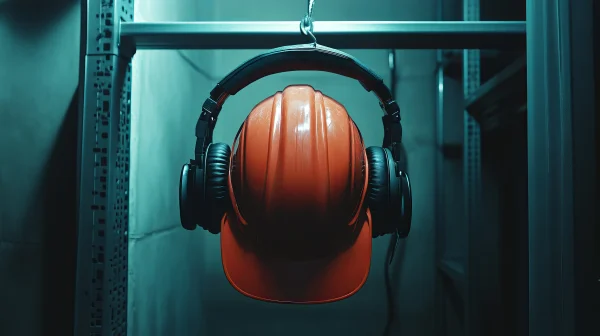
Personal protective equipment is the last line of defense. You must choose the right gear for the specific sound decibel levels in your shop. Common choices include foam earplugs, silicone plugs, and over-the-ear muffs. How many decibels of noise cause hearing loss? The Centers for Disease Control and Prevention states that workers face a high risk of developing significant and permanent damage through exposure to sounds at or above the recommended limit of 85 decibels for prolonged periods. The louder the sound, the faster the damage occurs, making immediate protection vital.
When you select a gear, look at the Noise Reduction Rating or NRR. According to the Occupational Safety and Health Administration, the NRR on the box is often higher than what you get in real life. The agency suggests a specific formula to calculate the field-adjusted NRR to find the true protection. You subtract 7 from the NRR and then divide that number by 2, meaning a plug with a 29 NRR actually provides about 11 decibels of protection in a busy shop. Another guideline from the organization clarifies that if you wear both plugs and muffs, you do not add the numbers together. The agency notes that using this double protection will add only 5 decibels of attenuation to the higher derated NRR. This double protection is necessary for the loudest environments, like jet engine testing or heavy mining.
Navigating Dangerous Sound Decibel Levels Daily
Sound works on a logarithmic scale. This means a small change in numbers equals a huge change in power. Information provided by the Occupational Safety and Health Administration explains that a 3 decibel increase represents a physical doubling of the sound energy and cuts the recommended exposure time in half. This is why 88 decibels is twice as dangerous as 85 decibels. If you move from 85 to 95 decibels, the sound energy has increased tenfold. You must understand this math to keep your team safe.
You can use the 3-foot rule as a quick test. According to the National Institute for Occupational Safety and Health, noise levels are likely hazardous and frequently above 85 decibels if you have to raise your voice to be heard by someone standing an arm's length or 3 feet away. This is the point where you need to start a hearing conservation program. Common tools like jackhammers reach 130 decibels. At that level, your ears can sustain permanent damage in less than one minute. Angle grinders and power saws usually hover around 105 to 110 decibels. This still far exceeds the safe limit for an 8-hour shift.
OSHA vs. NIOSH Noise Exposure Standards
OSHA sets a legal limit of 90 decibels for an 8-hour workday. They use a 5 decibel exchange rate. This means if the noise goes up to 95 decibels, a worker can only stay there for 4 hours. If it goes to 100 decibels, the limit is 2 hours. The organization also recommends an even stricter occupational exposure limit of 85 A-weighted decibels over an eight-hour shift with a 3 decibel exchange rate. Most safety experts follow the NIOSH rules because they offer better protection for the workers' long-term health.
Why Noise Control and Hearing Protection Programs Fail

Many safety programs fail because they rely too much on the workers' memory. People get tired of wearing earplugs. They might feel they are too busy to put them in for a quick task. This is called compliance fatigue. If the plugs are uncomfortable or do not fit right, workers will take them out. A successful program provides different types of protection so every person can find a comfortable fit.
Programs also fail when they ignore the air quality. Over 10 million workers face exposure to ototoxic chemicals like lead or toluene. The Centers for Disease Control and Prevention states that these chemicals can travel to the inner ear and make it more sensitive to the harmful effects of noise. A study published in PubMed Central suggests that elements like toluene exacerbate the condition in a noisy environment, meaning if a worker is exposed to these chemicals and loud noise at the same time, their hearing disappears much faster. You must track chemical exposure alongside sound levels to ensure true industrial safety.
The Unseen Danger of Over-Protection
Protecting the ears too much can actually create new risks. If a worker wears muffs that block out all sound, they might not hear a forklift backing up. They might miss a fire alarm or a shout from a coworker. This isolation makes the workplace more dangerous. What are the four types of noise control? The four main types include source reduction, path interruption, administrative changes, and personal protective equipment. Combining these creates a multi-layered defense that ensures workers remain aware of their surroundings while staying safe.
Essential Equipment for Industrial Safety Audits
You cannot manage what you do not measure. As outlined by the Occupational Safety and Health Administration, which requires monitoring when exposure may equal or exceed an 8-hour time-weighted average of 85 decibels, a sound level meter is the basic tool for any audit that gives you a snapshot of the noise at a specific moment. This is great for checking a single machine. However, noise levels change throughout the day. For a better view, use a noise dosimeter. A worker wears this small device on their shoulder for an entire shift. It records every sound they hear and calculates their average exposure.
These audits help you stay compliant with the law. The Walsh-Healey Public Contracts Act of 1969 was the first law to set these limits. Today, the OSHA 1983 Hearing Conservation Amendment requires companies to test workers' hearing every year. An OSHA publication dictates that employers must provide and establish a baseline audiogram within six months of an employee's first exposure at or above an 8-hour time-weighted average of 85 decibels. This baseline serves as a reference point for all future tests.
According to a glossary from BlueHive, if a test shows a change of 10 decibels or more in certain frequencies, it is called a Standard Threshold Shift that prompts employer notification and required action. This is a red flag that your noise control and hearing protection plan is failing. You must then investigate why the damage is happening. Regular audits and testing prevent these shifts from becoming permanent disabilities.
Integrating Technology into Sound Decibel Levels Monitoring
Modern technology offers new ways to stay safe. Many companies now use smart wearables that vibrate when noise hits a dangerous level. These devices give workers immediate feedback. Instead of waiting for an annual test, a worker knows right away if they need to move or put on gear. This real-time data shifts the responsibility from the manager to the individual.
Smartphone apps can also act as basic sound meters. While they are not as accurate as professional tools, they provide a good starting point for small shops. Some high-tech earmuffs now feature Active Noise Cancellation. These muffs use microphones to pick up low-frequency hums. They then create a mirror-image sound wave that cancels out the noise. This allows workers to hear voices and alarms while the dangerous drone of a generator disappears.
Real-Time Data and Worker Agency
Giving workers access to their own data builds a culture of safety. When people see the numbers on a screen, they understand the danger better. They are more likely to use noise control and hearing protection correctly when they can see the sound decibel levels in real time. What is the OSHA noise exposure limit? OSHA's permissible exposure limit is 90 decibels as an 8-hour time-weighted average. However, they require a comprehensive hearing conservation program to begin once levels reach 85 decibels.
Using data helps you plan administrative controls. You can rotate workers through different areas to keep their average exposure low. If one area is 95 decibels, a worker might spend only two hours there before moving to a quiet office. This rotation keeps the total daily dose of noise within a safe range.
Training Your Team for Long-Term Hearing Success
Training is the most important part of any safety plan. You must show workers how to insert foam earplugs correctly. Many people just push them in halfway, which provides almost no protection. You should roll the plug into a thin cylinder, pull the top of the ear up and back, and then hold the plug in place while it expands. This simple technique can double the effective NRR of the plug.
Briefings should focus on the why behind the rules. Tell stories about retired workers who can no longer enjoy music or hear their grandchildren. Make the danger feel real rather than just a list of decibel numbers. Explain that once those hair cells in the ear snap, no doctor can fix them. There is no surgery to restore perfect hearing after noise damage.
Encourage a Buy Quiet policy in your company. When it is time to buy a new saw or compressor, check the noise specs first. Buying a quieter machine today prevents a lifetime of hearing loss for your team. This proactive approach is the ultimate form of industrial safety.
Ending the Ringing with Noise Control and Hearing Protection
Protecting your ears is a lifelong commitment that starts on the shop floor. We often focus on the obvious dangers of the job, like heavy loads or sharp edges. However, the energy in the air can be just as damaging over time. Monitoring sound decibel levels and following the hierarchy of controls will help you prevent a lifetime of Tinnitus and isolation.
Noise control and hearing protection must be a core part of your daily routine. It is an investment in your future and the future of your coworkers. When you prioritize acoustic health, you ensure that everyone goes home with their senses intact. Stop the noise at the source, choose the right gear, and stay alert to the levels around you. Your hearing is a gift that you cannot replace, so guard it with every tool at your disposal. Keep the world clear and the ringing away through immediate action today.
Recently Added
Categories
- Arts And Humanities
- Blog
- Business And Management
- Criminology
- Education
- Environment And Conservation
- Farming And Animal Care
- Geopolitics
- Lifestyle And Beauty
- Medicine And Science
- Mental Health
- Nutrition And Diet
- Religion And Spirituality
- Social Care And Health
- Sport And Fitness
- Technology
- Uncategorized
- Videos

