

Art And Science Of Diary Keeping: Grief Antidote
According to the American Psychological Association, grief traps your brain in a constant state of replay, frequently causing bodily distress, an intense longing, and an obsessive focus on the past alongside anxiety about what lies ahead. You remember the loss, and your body reacts as if the event happens again every single morning. This happens because your mind struggles to file away the trauma as a past event. Instead, it keeps the pain in the present. You feel stuck, heavy, and unable to find a path forward.
The art and science of diary keeping changes how your brain handles this pain. It provides a dual approach to healing that affects your nervous system and your emotional spirit. When you sit down to write, you engage parts of your brain that usually shut down during deep sorrow. This practice turns a chaotic mental state into a structured path toward recovery.
Using therapeutic writing helps you anchor your mind when everything feels out of control. It gives you a way to talk back to your grief. Merging the art and science of diary keeping allows you to start moving from just surviving to truly processing your loss.
The neurological shift from trauma to clarity
Grief changes the physical state of your brain. It forces you into a heightened state of alertness that exhausts your body. Writing provides a way to interrupt this cycle and regain control over your thoughts.
Calming the amygdala's alarm response
As reported by Wired, when you experience a loss, your amygdala stays on high alert, but putting your fears into words with another person or a professional activates brain regions that naturally calm distress. This part of the brain initiates your fight or flight response, making you feel anxious or jumpy. How does journaling help with grief? Research published in PubMed indicates that translating emotions into language reduces activity in the amygdala, the brain's fear center, and moves it to the rational prefrontal cortex by diminishing emotional reactivity along specific neural pathways. Furthermore, a separate article from PMC notes that identifying emotional states and explicitly putting them into words, known as affect labeling, reduces amygdala activation. This change allows you to think more clearly and feel less overwhelmed by sudden waves of sadness.
Moving from circular thoughts to linear narratives
According to an article in PMC, traumatic memories often feel like a mess of disconnected images and feelings, as these memories are typically less coherent than non-traumatic ones until expressive writing helps clarify them. The art and science of diary keeping helps the brain organize these disorganized memories into a chronological story. As noted in treatment guidelines by the American Psychological Association, when you write things down in order, your brain finally begins to recognize the event as something that happened in the past, much like how a therapist helps a patient establish a timeline blending trauma and positive events. This makes the memories easier to process because they no longer feel like a constant, ongoing threat.
Why the art and science of diary keeping heals the heart
The act of writing calms your nerves while also creating a bridge between your physical body and your emotional needs. This connection is vital for long-term healing.
Externalizing the internal burden
Keeping your pain inside causes physical and mental strain. Using the art and science of diary keeping allows a person to physically move their pain from the mind onto the paper. This creates a necessary distance between you and your sorrow. You stop being the grief and start observing it. This venting effect lowers your heart rate and allows your muscles to finally relax.
Creating a safe space for unspoken words
According to the Mayo Clinic, many people feel they must stay strong for others after a loss, even though experiencing a period of sorrow, numbness, guilt, and anger is completely normal during bereavement. This social pressure prevents you from expressing your true feelings. The page offers a private room where no one judges your thoughts. This privacy is a core pillar of creative journaling. You can express anger, guilt, or confusion without worrying about how it sounds to the outside world.
Developing a routine for therapeutic writing
Starting a new habit feels impossible when you are grieving. You might feel too tired or too distracted to write. Setting small, manageable goals helps you build momentum without adding to your stress.
The five-minute rule for consistency
Research published in ScienceDirect shows that you do not need to write for hours to see a benefit, demonstrating that engaging in an expressive writing paradigm about emotional events for just fifteen to twenty minutes over a few sessions is effective. Setting a timer for just five minutes makes the task feel achievable. What should I write in a grief journal? You can start by simply listing three physical sensations you feel or writing a short I remember sentence to break the initial wall of silence. Small entries build the habit, and the habit builds the healing. Over time, these five-minute sessions become a reliable anchor for your day.
Finding your ideal medium
The tool you use affects how you process your thoughts. Some people prefer the tactile feel of a pen on paper. This slow process forces you to slow down your thinking. Others prefer the speed of digital apps, which allow for quick thoughts during busy moments. Both methods work well within the art and science of diary keeping. Choose the one that feels most comfortable for your current energy level.
Creative journaling techniques to honor your lost loved ones
According to The Loss Foundation, healing involves processing pain while also finding ways to keep the memory of your loved one alive, aligning with the idea that relationships do not end with death but simply change form. These techniques help you move from focusing on the loss to celebrating the life.
The unsent letter technique
Unfinished business often haunts those who are grieving. You might have things you never got to say or apologies you never made. A study published in PubMed highlights the unsent letter technique, noting that writing directly to the person who is gone helps resolve these lingering feelings because it serves as an effective and meaningful method to access deep emotions. This is a classic exercise in the art and science of diary keeping. As noted in a journal article from Ovid, it allows you to express your love and your regrets in a way that feels direct and personal, facilitating self-disclosure and helping you confront avoided emotions.
Visual storytelling and collage
Sometimes, words are not enough to describe how you feel. Creative journaling incorporates both written sentences and other visual formats. You can add photos, ticket stubs, or even splashes of color to your pages. These visual elements express feelings that language cannot reach. They turn your journal into a living memorial that honors the unique bond you shared with the person you lost.
Learning the art and science of diary keeping for emotional release
Advanced techniques help you dig deeper into the roots of your pain. These methods provide a structured way to handle the most difficult aspects of bereavement.
Identifying Cognitive Distortions in your entries
Grief often twists your thinking. You might blame yourself for things you could not control. When you look back at your writing, you can find patterns of guilt or hopelessness. Recognizing these Cognitive Distortions is a key part of therapeutic writing. Once you see these patterns on the page, you can start to challenge them with more realistic and kinder thoughts.
The Pennebaker method of disclosure
According to ScienceDirect, Dr. James Pennebaker developed a specific protocol for writing about trauma, establishing an expressive writing paradigm where individuals write about stressful life events for short periods over several occasions. He suggests writing for 15 to 20 minutes for four consecutive days about your deepest thoughts and feelings. Utilizing the art and science of diary keeping in this way follows a path proven to improve immune function, as an American Psychological Association report notes that expressing emotional stress on paper boosts immunity in patients managing various illnesses. This structured approach helps you confront the hardest parts of your grief in a controlled and safe way.
The psychological benefits of documenting the process
Healing from grief is a slow process. It often feels like you are making no progress at all. Keeping a record of your healing provides the proof you need to keep going.
Recognizing the stages of your own evolution
When you look back at entries from months ago, you will see how much you have changed. These old pages provide tangible proof of your resilience. Can journaling every day reduce stress? Daily practice lowers cortisol levels by providing a consistent outlet for the mental pressure that builds up throughout a difficult day. Seeing your growth on paper gives you the confidence to face the future.
Rebuilding identity after a major loss
A major loss often leaves you wondering who you are now. Your old roles and routines might have vanished. Therapeutic writing helps you redefine your identity. You can use your journal to explore new interests or reflect on the strengths you found during your darkest times. This process helps you build a new life while still carrying the lessons of the past.
Overcoming common obstacles in the art and science of diary keeping
Challenges will arise as you commit to this practice. Knowing how to handle these hurdles ensures that you stay on the path to healing.
Dealing with the fear of re-traumatization
Sometimes, writing about a loss feels like reliving it too intensely. If you feel overwhelmed, it is okay to stop. You must pace yourself so you do not flood your nervous system with too much emotion at once. Take breaks and focus on your breathing. The art and science of diary keeping serves as a tool for healing rather than a form of punishment.
Moving past the blank page syndrome
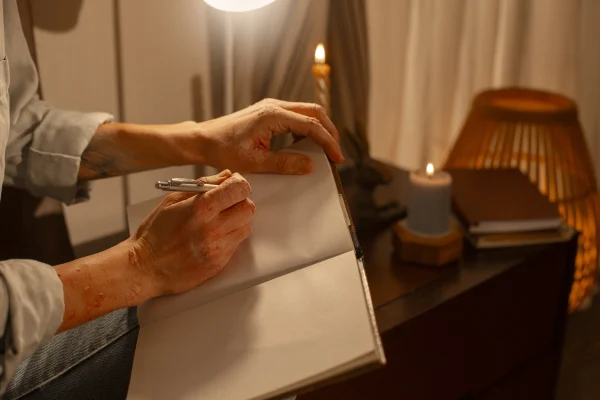
Some days, the words simply will not come. You might stare at a blank page and feel empty. Use simple prompts to get started. Writing about the weather or what you ate for breakfast can lower the pressure. These warm-up exercises, rooted in the art and science of diary keeping, help the words flow more naturally during creative journaling sessions later on.
Embracing the art and science of diary keeping
Healing involves learning how to carry the memory without the weight of the world on your shoulders, rather than forgetting the person you lost. The art and science of diary keeping provides the structure you need to handle the chaos of grief. It offers a way to speak when you feel silent and a way to move when you feel stuck.
This practice focuses on building a lifelong toolkit for your emotional health rather than simply feeling better for a few minutes. Through consistent therapeutic writing and creative journaling, you turn your pain into wisdom. You create a record of your strength that will serve you for years to come. Using the art and science of diary keeping allows you to honor your past while finally giving yourself permission to step into the future.
Recently Added
Categories
- Arts And Humanities
- Blog
- Business And Management
- Criminology
- Education
- Environment And Conservation
- Farming And Animal Care
- Geopolitics
- Lifestyle And Beauty
- Medicine And Science
- Mental Health
- Nutrition And Diet
- Religion And Spirituality
- Social Care And Health
- Sport And Fitness
- Technology
- Uncategorized
- Videos

