
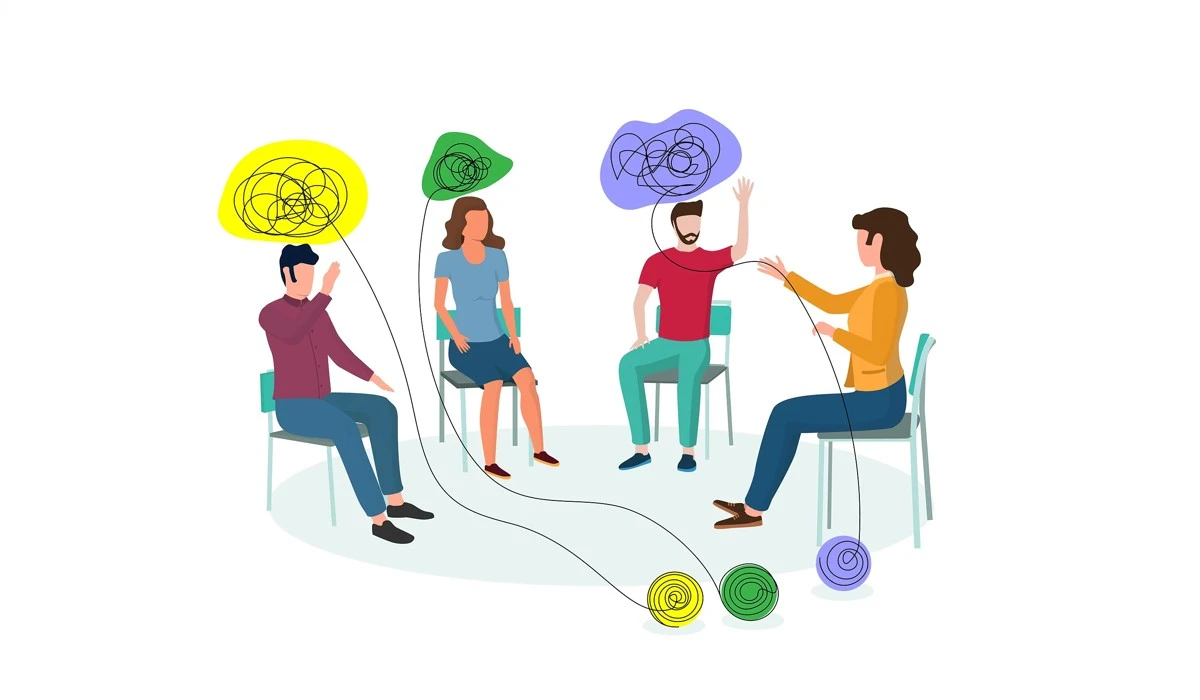
Heal Subconsciously: Awareness Integration Therapy
You wake up and realize you made the same mistake for the tenth time. You promised yourself you would stop overspending or picking fights with your partner. Yet, your body moves before your conscious mind can intervene. According to research published in the National Center for Biotechnology Information (PMC2948957), your brain chooses familiarity over your actual happiness because individuals often associate familiarity with safety for their nervous system.
You keep dating the same person with a different face. You keep hitting a wall at work, even when you change jobs. These patterns persist because your brain treats your past like a survival manual. Awareness Integration Therapy offers a way to stop this cycle. It bridges the gap between what you know you should do and what you actually end up doing.
This framework turns your history into a tool for change. It moves you from feeling stuck to feeling in control. You cease fighting yourself to start understanding the parts of your mind that operate without your permission. This therapy shifts your life from repetition to intentional creation.
The Science Behind Why We Get Stuck in Toxic Cycles
Your brain loves patterns. It builds neural pathways based on what you experienced as a child. If you grew up around chaos, your brain learns that chaos equals home. It repeats these behaviors to keep you safe from the unknown.
According to literature from NCBI Books (NBK604200), even if the pattern hurts, your brain knows how to survive it, because traumatic experiences heavily affect cognitive, emotional, and physical functioning. Additional research in the NCBI (PMC3951033) indicates that willpower alone usually fails to change deep-seated habits, as structured therapies are required to modify ingrained responses. You need subconscious trauma clearing to reach the parts of your mind that drive these automatic choices.
Survival Habits of Trauma Loops
Your nervous system prioritizes safety over satisfaction. It views a new, healthy habit as a threat because it is unfamiliar. Meanwhile, a toxic habit feels comfortable because the brain knows the outcome.
You must address the root cause to stop the repetition. Subconscious trauma clearing targets the "unresolved emotional debt" stored in your body. This debt forces you to react to the present using the pain of the past. Clearing it allows your nervous system to finally relax.
How Awareness Integration Therapy Rewires Your Narrative
Dr. Foojan Zeine created Awareness Integration Therapy to fix the disconnect between the head and the heart. Most people know their habits are bad. They just cannot stop them.
AIT uses a specific 6-step trajectory to create alignment. You move through awareness, acceptance, and accountability. Then you take action, followed by assessment and affirmation.
Integrating the Cognitive and the Emotional
This process changes how you see your past. It stops your old stories from writing your new chapters. You align your conscious goals with your subconscious beliefs.
Many people often wonder what happens during an awareness integration therapy session. During a typical session, a practitioner guides you through a structured process of identifying a specific life challenge and tracing it back to the core belief that sustains it. This allows you to see exactly where your logic and your feelings disagree.
Using Subconscious Trauma Clearing for Lasting Change
As noted in a study from ScienceDirect (S0149763423000027), traumatic events leave a physical mark on your nervous system, as trauma affects the nervous system’s brain structure and connectivity. Your body remembers things your mind tries to forget. This physical memory keeps you in a state of hyper-vigilance.
Subconscious trauma clearing helps you release this stored energy. Research published in the NCBI (PMC4588064) explains that memory reconsolidation is a real neurobiological process where long-term memories temporarily become sensitive to alteration, which updates your brain's files. A separate NCBI study (PMC3218787) states that therapeutic approaches based on memory reconsolidation focus on changing negative memories, allowing you to recall an event while staying physically calm to re-edit the emotional charge.
Releasing the Weight of the Past

This technique downregulates your amygdala. You stop living in a state of high alert. You finally feel safe in your own skin.
A common concern for those in recovery is whether Awareness Integration Therapy is effective for PTSD. Research published in the NCBI (PMC3182008) highlights that PTSD is associated with measurable neurobiological abnormalities. A report in Frontiers in Neuroscience (10.3389/fnins. 2023.1281401) adds that PTSD involves dysfunction in brain systems regulating fear and stress. A study from the BBR Foundation suggests this happens because trauma memory representations may differ from other memory types, acting as a distinct cognitive entity. To address this physiological imprint, research in the NCBI (PMC8417130) reveals that therapeutic approaches based on memory reconsolidation show emerging evidence in PTSD treatment. Furthermore, an additional NCBI publication (PMC11459874) confirms that reconsolidation of traumatic memories has emerged as an effective intervention for PTSD, helping the brain realize the threat has ended.
The Role of Mindful Emotional Processing in Daily Life
Reactivity happens when your past hijacks your present. You hear a certain tone of voice and immediately get angry. You don't choose the anger; it just happens.
Mindful emotional processing teaches you to catch these moments before they explode. You learn to observe your feelings like a scientist. You notice the tightness in your chest or the heat in your face as data points.
Moving from Reactivity to Response-Ability
This observation creates a gap between the initial stimulus and the reaction. In that gap, you find the power to choose a different path. Awareness Integration Therapy widens this space over time.
You develop the "Observing Self." This part of you watches your emotions without being consumed by them. You stop being the anger and start being the person experiencing the anger. This shift changes everything.
Why Awareness Integration Therapy Outperforms Traditional Talk Therapy
Talking about problems often makes people experts on their own misery. They understand why they are unhappy, but they stay unhappy. They have insight without integration.
Awareness Integration Therapy prioritizes integration over just talk. It treats the 14 domains of life, from finances to spirituality. It asks you how you feel and focuses on how you want to live.
Beyond Just Talking About the Problem
Traditional methods often focus on "catharsis" or emotional release. While release feels good, it rarely changes long-term behavior. AIT focuses on the actual merging of insight into daily habits.
Potential clients often ask, " How is awareness integration therapy different from CBT? While CBT focuses primarily on changing thought patterns, AIT integrates somatic awareness and subconscious trauma clearing. This ensures the change registers physically in the body alongside thoughts in the mind. It targets the physical root of the thought.
Reclaiming Your Agency and Autonomy
Many toxic cycles started long before you were born. You inherited behavioral models from your parents and grandparents. These are generational hand-me-downs that no longer fit.
Awareness Integration Therapy helps you identify these inherited habits. When you clear your own trauma, you stop passing it on to your children. You become a "cycle-breaker" for your entire family line.
Breaking the Chains of Generational Trauma
This work demands radical self-responsibility. We define this as "response-ability"—the ability to choose your response to life. You shed the role of a victim of your history to become the architect of your future.
You build resilience that lasts. You no longer fear your emotions or your stressors. You know how to handle them. This creates a deep sense of personal empowerment.
Practical Steps to Integrating Your New Awareness
Change happens in small, quiet moments. Use mindful emotional processing throughout your day to check in with yourself. When you feel a surge of stress, stop for ten seconds.
Name the emotion specifically. Avoid simply saying you are "upset." Instead, decide if you feel neglected, overwhelmed, or unheard. This increases your emotional granularity and calms your nervous system instantly.
Creating a Daily Integration Practice
Identify somatic markers in your body. Notice if you clench your jaw when you talk to your boss. Notice if your stomach knots when you check your bank account.
For deeper work, seek a professional for subconscious trauma clearing. They use a 70-question assessment to bypass your conscious defenses. This reveals the core beliefs you cannot see on your own. Consistent practice builds new neural pathways that eventually make healthy choices feel like your new "normal."
Moving Toward a Cycle-Free Future
You possess the power to rewrite your life story starting today. Toxic cycles feel heavy, but they do not define your worth or your potential. Awareness Integration Therapy gives you the tools to unload that weight forever.
You learn to align your subconscious mind with your highest goals. This progression moves you from the passenger seat to the driver's seat. Your past informs you, but it no longer controls your destination. Choose to integrate your awareness and build a life that reflects your true self.
Recently Added
Categories
- Arts And Humanities
- Blog
- Business And Management
- Criminology
- Education
- Environment And Conservation
- Farming And Animal Care
- Geopolitics
- Lifestyle And Beauty
- Medicine And Science
- Mental Health
- Nutrition And Diet
- Religion And Spirituality
- Social Care And Health
- Sport And Fitness
- Technology
- Uncategorized
- Videos

