
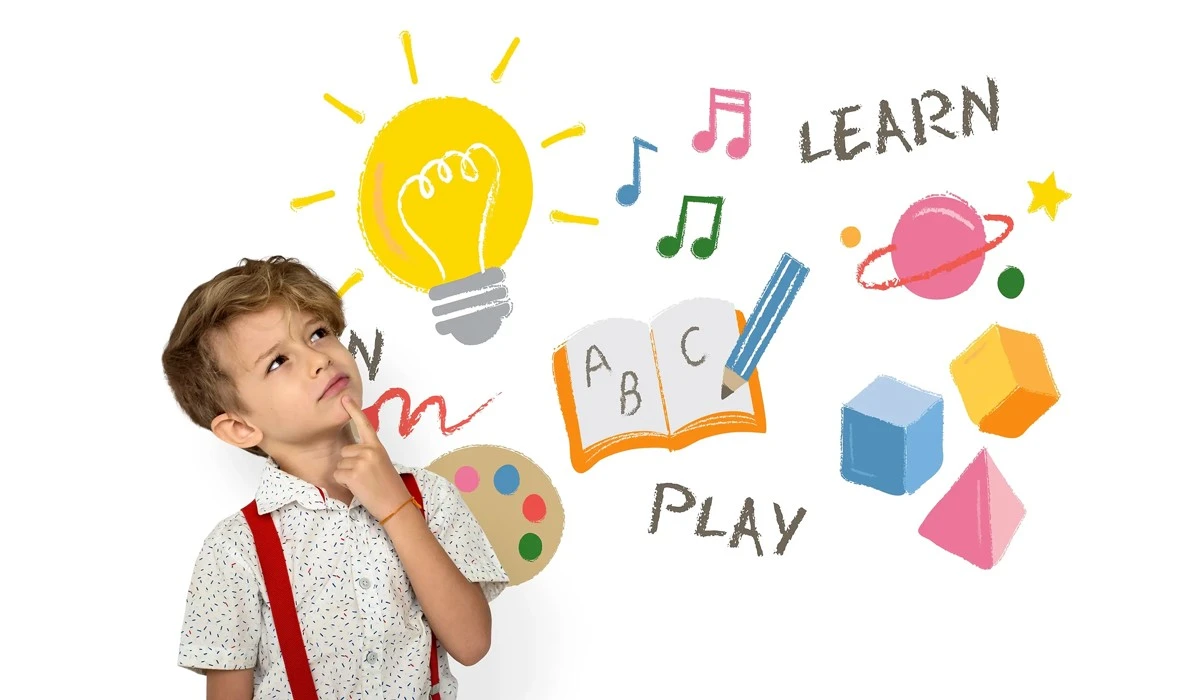
Sharpen Focus Fast With Multisensory Learning
Most students struggle to stay awake during long lectures because their brains treat flat, repetitive sound as background noise. When you force a child to sit perfectly still while listening, their mind naturally wanders to find stimulation elsewhere. Their brain thinks the environment is empty of real rewards or urgent information, so it effectively goes to sleep.
You can solve this by opening multiple doors to the brain at the same time. This is called Multisensory Learning. It turns a dry lesson into a full-body experience. Instead of hearing a teacher talk about the letter 'A,' the student sees the shape, feels the rough texture of a letter card, and moves their arm to draw it in the air. This approach changes abstract concepts into concrete experiences that the brain cannot ignore. It stops the drift of attention by giving every part of the mind a job to do at once.
The Neurobiology of Active Engagement
Traditional teaching often relies on just one sense, usually hearing. Your brain handles this by filtering out most of the noise to save energy. However, when you engage the visual, auditory, and somatosensory cortices together, the brain enters a high-alert state. It realizes the information is detailed and worth keeping. Multisensory Learning forces different parts of the brain to talk to each other. How does multisensory learning help focus? Engaging multiple neural pathways reduces the "cognitive load" on a single sense, preventing mental fatigue and keeping the student tethered to the task.
Meanwhile, this cross-talk between brain regions builds stronger connections. When you see a word and feel its shape at the same time, you create two separate memory records. If one memory fades, the other acts as a backup. Research on Dual Coding Theory shows that the brain stores verbal and non-verbal data in separate channels. According to Lindamood-Bell, words paired with imagery build richer and more durable mental representations, making this double-entry system much harder to forget what you have learned. The more channels you use, the more likely the information is to stick in your long-term memory.
Understanding the Core Principles of Multisensory Learning
To understand Multisensory Learning, you must know the VAKT framework. This stands for Visual, Auditory, Kinesthetic, and Tactile. Although the Poorvu Center for Teaching and Learning at Yale University notes there is no scientific evidence that matching content to learning styles enhances learning outcomes, using these methods together ensures that no student is left behind due to their specific learning preferences. In a typical lesson, a student might look at a chart (Visual), listen to an explanation (Auditory), trace a textured surface (Tactile), and use large body movements (Kinesthetic).
Simultaneous Processing vs. Sequential Learning
Most classrooms follow a "watch then do" pattern. The teacher shows a problem, and the student tries it later. This delay allows the brain to lose focus and forget the initial steps. The best results come from "doing while seeing." This is the core of the Multisensory Learning model. Students might trace a sandpaper letter while saying the sound out loud. This simultaneous action glues the sound to the feeling and the sight instantly. It prevents the brain from checking out during the "listening" phase because the hands are already involved.
Strengthening Memory with Tactile Learning Tools
The sense of touch is a direct line to the brain's attention center. When a student picks up an object, their brain immediately focuses on its weight, texture, and shape. This is why tactile learning tools are so effective for students who normally drift off. Moving information from the eyes to the hands makes the lesson impossible to ignore.
Texture and Resistance in Early Literacy
Young readers often find letters to be abstract and confusing. You can make these letters real by using sand trays or textured cards. When a child traces a letter in sand, the resistance of the grains sends a clear signal to their brain. This physical feedback helps them "feel" the shape of the language. Raised-line paper also helps by giving a physical bump when the pencil goes out of bounds. This corrects the hand in real-time, helping the child stay focused on their penmanship without needing constant verbal reminders.
Manipulatives for Abstract Mathematical Concepts
Math often feels like a foreign language to a struggling student. Using base-ten blocks or weighted tools turns numbers into objects you can hold. If a student can grip a block that represents 'one hundred,' the value becomes a physical reality instead of a digit on a page. These tactile learning tools allow students to build and deconstruct problems with their hands. This physical manipulation grounds their thinking. It prevents mental wandering because the student is physically responsible for the "answer" in their palms.
Building Movement into Kinesthetic Lesson Plans
Movement is often viewed as a distraction in the classroom. In reality, purposeful movement keeps the brain awake and alert, as research from the American Psychological Association demonstrates that physical activity benefits both white and gray matter in the brain. You can design kinesthetic lesson plans that use the body as a tool for understanding. A study published in the National Center for Biotechnology Information indicates that physical exercise affects brain plasticity, influencing cognition and wellbeing so that when students move, their brains release chemicals that help them stay sharp and motivated.
What are some examples of multisensory activities? Common examples include "air writing" vocabulary words, jumping on a number line to solve equations, or using rhythmic clapping to practice syllables. These actions turn a sedentary task into an active one. Instead of fighting the urge to move, the student uses that energy to drive their learning forward.
Adding gross motor movements engages the cerebellum. This part of the brain handles balance and coordination, but it also supports memory. When a student "skywrites" a word using their whole arm, they build muscle memory. This makes the spelling of that word automatic over time. Effectively, the body remembers the "swing" of the word even if the mind momentarily blanks on the letters.
Why Multisensory Learning Benefits Neurodiverse Students
Traditional schooling often rewards sitting still, which is the hardest task for many neurodiverse students. Multisensory Learning offers a different path by working with the student's brain instead of fighting against it. It acknowledges that some minds need more input to stay regulated and engaged.
Mitigating ADHD Distractions through Sensory Feedback

A wandering mind often searches for external stimulation to stay awake. Providing a constant stream of sensory input offers a "guardrail" for the mind. If a student uses a weighted lap pad or a textured fidget tool while working, they satisfy their body's need for input. This allows their brain to stay focused on the actual lesson. The movement or touch acts as a tether that keeps them in their seat and mentally present.
Decoding Dyslexia with VAKT Techniques
Dyslexic learners often have trouble connecting sounds to letters using only their eyes and ears. According to research published in the International Journal of Creative Research Thoughts, the Orton-Gillingham approach uses Multisensory Learning to bridge this gap by integrating visual, auditory, and kinesthetic-tactile pathways. Seeing the letter, hearing the sound, and tracing the shape at the same moment helps the student bypass the typical roadblocks in their processing. They use their sense of touch and movement to anchor the visual information. This method has been the gold standard for literacy intervention for decades because it creates multiple paths to the same piece of information.
Implementing Multisensory Learning in Digital Environments
Screens often strip away the sensory richness of a lesson. However, you can still use Multisensory Learning in a digital space. You simply have to be more creative with the tools available at home. You can ask students to find physical objects in their house that relate to the screen content.
If a student is learning about geometric shapes, they can go find a circular lid or a square box. Who benefits from multisensory learning? While specifically designed for those with learning differences—such as students with dyslexia who require multisensory structured language instruction, as noted by the International Dyslexia Association—research shows that all students experience higher retention and faster focus recovery when using multisensory methods.
Even in a remote setting, you can use kinesthetic lesson plans. Have students stand up and use their bodies to mimic the angles of a triangle during a math slide. This break from sedentary screen time resets their attention span. It keeps them engaged with the material by making the physical environment part of the digital classroom.
Changing Your Classroom or Home Study Space
You do not need an expensive lab to start. You can audit your current lessons and look for "sensory gaps." Ask yourself if the student is only using their eyes or ears. If so, find a way to add touch or movement. This change can happen one step at a time.
The Low-Cost Sensory Kit
Many household items make excellent tactile learning tools. Shaving cream spread on a table is perfect for practicing cursive or spelling words. Playdough can be used to sculpt the parts of a cell or geometric forms. Even pipe cleaners are great for building letter shapes or modeling chemical bonds. These simple items turn a standard desk into a sensory station.
When you plan your week, look for opportunities to use kinesthetic lesson plans. Use "gallery walks" where students walk to different posters in a room to find information. This simple change increases blood flow to the brain and makes the information more memorable. You can also use "floor math," where students jump to different numbers to solve equations. These small shifts make a massive difference in how much focus a student can maintain throughout the day.
Releasing Potential through Multisensory Learning
Focus is a state you can build by changing how information enters the mind, rather than a fixed trait that some people have and others do not. According to a dissertation from Scholar Commons at the University of South Carolina, utilizing visual, auditory, and kinesthetic-tactile pathways simultaneously enhances memory, meaning that when you stop relying on just one sense, you give the brain more reasons to pay attention. Multisensory Learning creates a bridge between simply hearing a fact and truly understanding it. Start by adding one tactile or kinesthetic element to your next lesson. You will find that when the hands are busy and the senses are full, the mind stays right where it belongs. Engaging the whole body turns learning from a chore into a physical reality.
Recently Added
Categories
- Arts And Humanities
- Blog
- Business And Management
- Criminology
- Education
- Environment And Conservation
- Farming And Animal Care
- Geopolitics
- Lifestyle And Beauty
- Medicine And Science
- Mental Health
- Nutrition And Diet
- Religion And Spirituality
- Social Care And Health
- Sport And Fitness
- Technology
- Uncategorized
- Videos

