
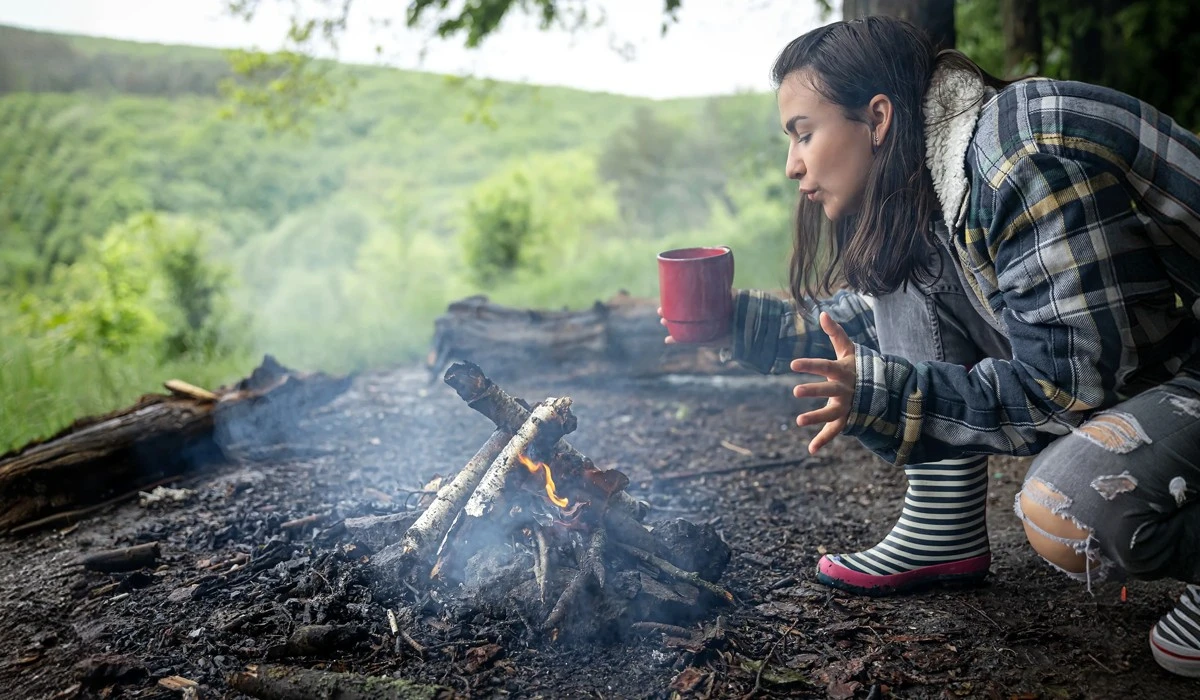
Off Grid Survival, Warmth And Proper Bushcraft
Many people pack heavy, expensive sleeping bags because they believe thick insulation will provide safety when temperatures plunge. They choose to rely on modern synthetic fabrics to fight off the freezing cold. This heavy reliance creates a dangerous vulnerability. When expensive gear gets completely soaked in a storm, your primary defense vanishes instantly. True self-reliance requires a person to move away from that fragile dependency.
In reality, the most powerful survival tool weighs nothing and lives entirely in your head. Mors Kochanski, a legendary survival expert, famously said, "The more you know, the less you carry." He proved that carrying knowledge outlasts any physical piece of equipment. Learning bushcraft gives you the power to generate heat from nothing but wet wood and friction. This specific knowledge changes wilderness living from a desperate struggle against the elements into a sustainable lifestyle. We will examine the exact fire-making hacks that keep you alive when the modern world falls away.
Why Bushcraft Fire Making is the Heart of Wilderness Living
The human body enters dangerous hypothermia when the core temperature drops below 95 degrees Fahrenheit. A campfire fights this rapid heat loss directly. It radiates infrared heat that quickly penetrates human skin and clothing. This infrared radiation warms your body without wasting energy trying to heat the cold surrounding air. Fire making keeps your blood pumping.
Meanwhile, hydration poses an equally massive threat off the grid. When you bring water to a rolling boil at 212 degrees Fahrenheit for at least one minute, it creates a safer drinking source. The Centers for Disease Control and Prevention (CDC) notes that boiling is the best method to kill disease-causing organisms, including viruses, bacteria, and parasites. The CDC specifically recommends this full rolling boil for one minute as a way to kill highly resilient parasites like Giardia and Cryptosporidium to ensure safe drinking water.
Psychologically, the human brain responds positively to a flickering flame. According to a study published in the journal Evolutionary Psychology and featured on PubMed, sitting next to a hearth or campfire induces relaxation and leads to consistent blood pressure decreases. These findings suggest that the physical response actively fights the mental panic that ruins many attempts at wilderness living in deep isolation.
Sourcing the Best Tinder for Your Bushcraft Camp
Finding good tinder distinguishes a quick, warm fire from a frustrating night in the freezing cold. According to the National Park Service, paper birch bark stands out as a top-tier natural ignition source because it contains betulin, which is so flammable that it can be an explosion hazard in powdered form. This compound allows the bark to burst into flames even when saturated with rain.
Historically, ancient survivalists relied heavily on natural fungi. Research published in a study on the Iceman’s fungi explains that explorers like Otzi the Iceman, who died more than 5,000 years ago, carried tinder material prepared from the true tinder bracket, Fomes fomentarius, rather than Chaga. This material catches weak sparks easily and smolders for hours without bursting into open flame. These characteristics make it a reliable coal extender for long journeys.
Processing Fatwood for Maximum Spark
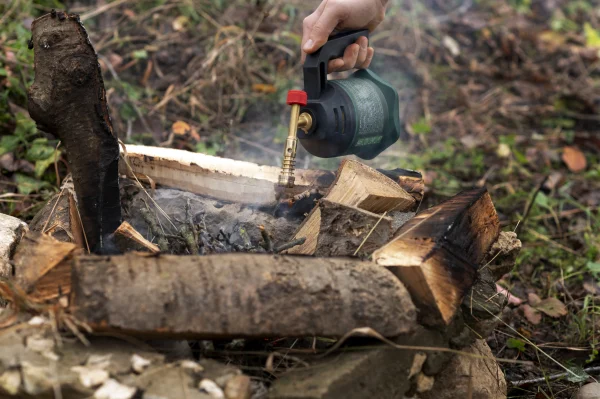
Fatwood comes directly from the stumps of dead, resinous pine trees. A guide by Better Wood Products explains that as a pine tree dies, thick terpene sap settles into the old pine stumps and taproot, hardening over time. This natural process creates a dense, waterproof chunk of fuel that burns aggressively at over 1,500 degrees Fahrenheit.
Evaluating your gathered materials directly determines your success in the damp woods. When foraging, the best natural tinder includes highly resinous fatwood, dry birch bark, and dried inner cedar bark because they easily catch the smallest sparks and burn hot. You should always store these gathered materials in a waterproof pouch to keep them ready for immediate use. When you scrape fatwood down into fine dust with a sharp knife edge, it ensures that even a cool spark triggers an instant flame.
Learning Friction: The Bow Drill Technique Broken Down
The act of converting mechanical motion into thermal energy has kept humans alive since the fourth millennium BC. The traditional bow drill relies on friction to create a glowing coal from raw wood. Wood selection dictates everything here. You need medium-soft woods that rank between 300 and 400 on the Janka hardness scale. Excellent choices include Eastern Cottonwood, Box Elder, and Basswood.
You must carve a straight spindle measuring six to eight inches long and about three-quarters of an inch thick. The flat hearth board needs a carefully carved V-notch to collect the hot, black dust created by the rapidly spinning wood.
Achieving the Perfect Ember
The creation of an 800-degree coal requires balancing firm downward pressure with a steady, rhythmic speed. Information from Primitive Ways states that wood dust will only give off a little smoke below 800 degrees Fahrenheit. Furthermore, research from the University of Dayton indicates that experiments in lighting fire often yield ignition temperatures in the range of 650 to 800 degrees Fahrenheit. To reach this, you need a fluid bowing motion of exactly one to two strokes per second. If you speed up recklessly, it only exhausts your muscles and snaps the wooden spindle in half.
Once you generate a smoking ember, you must carefully transfer it into a prepared birds' nest tinder bundle. This bundle needs a coarse outer layer made from shredded inner cedar bark to provide physical structure. The inner core requires fine materials like cattail down to cup the fragile ember. When you gently blow on this specific bundle, it feeds oxygen into the heat until it erupts into flames.
Key Hacks for the Modern Ferrocerium Rod
Modern tools require specific traditional knowledge to work effectively in harsh conditions. Austrian chemist Carl Auer von Welsbach invented the ferrocerium alloy in 1903. According to Forest Fundamentals, this synthetic survival metal is a pyrophoric alloy made from a blend of elements including cerium, lanthanum, iron, and magnesium. A standard wooden match burns at roughly 1,100 degrees Fahrenheit, but striking a high-quality ferro rod creates showers of molten metallic sparks reaching 5,430 degrees Fahrenheit.
Factory-new rods arrive covered in a thick black protective paint layer to prevent shipping damage. You must scrape off this dark coating with a sharp steel striker before the metal will yield any usable sparks.
Many beginners destroy their arranged tinder by pushing the striker forward and hitting the dirt. You must use the bushcraft pull-back method instead. Anchor your striker firmly against the tinder bundle at a 45-degree angle. Pull the ferro rod backward with force to drop the sparks exactly where you want them.
Modern gear is only better than primitive tools if you understand its physical limits. A standard high-quality ferrocerium rod can last anywhere from 8,000 to 12,000 strikes, depending on its thickness and the pressure of your scraping technique. You can attach a dedicated steel striker directly to your knife sheath using strong cordage to ensure you always have access to quick fire-making capabilities.
Advanced Bushcraft Hacks for Wet Weather Conditions
Freezing rain creates a dangerous environment for wilderness living. Damp earth steals heat from your newly formed coals through conduction. You prevent this heat loss by building a raised platform, often called a floating fire. Lay six to eight thick green branches flat on the muddy ground to create a protective wooden raft for your dry tinder.
Finding Dry Core Wood
When you harvest fuel during a downpour, it requires looking up into the canopy instead of down at the ground. Dead wood decaying on the forest floor acts like a sponge. You must harvest dead, standing wood known among survivalists as snags. Gravity pulls the rainwater down the exterior bark rapidly, leaving the inside wood dry.
To reach this dry fuel, you must use a heavy wooden mallet to drive a fixed-blade knife through the saturated log. This technique, called batoning, splits the wood to expose the inner heartwood. This protected heartwood retains a highly combustible moisture content of 15 percent even after days of heavy rain.
Working in a flooded forest can be difficult for survivalists. While burning wood with high moisture content produces more smoke and less heat, as noted by the University of Illinois Extension, you can still start a fire with wet wood. This is achieved by splitting saturated logs to access the dry inner core and using long-burning tinder to dry out damp kindling. You must gather three times as much wood as you normally need because the moisture forces you to constantly feed the flames to maintain high temperatures.
Designing the Perfect Fire Lay for Off-Grid Survival
The way you stack your gathered wood dictates how quickly your fuel burns. The upside-down fire, or Council Fire, changes overnight wilderness living. You place four-inch thick logs on the bottom, medium logs in the middle, and tiny kindling on top. The flame burns slowly from the top down. Gravity drops hot embers onto the unburnt fuel below, giving you five hours of radiant heat with no manual maintenance.
The Dakota Fire Hole
The Dakota people engineered a subterranean fire pit to survive the freezing, high-wind environments of the Great Plains. You dig two connected holes in the dirt, creating a main combustion chamber and a secondary angled tunnel for continuous airflow.
This setup operates on the Bernoulli principle and the chimney effect. The rising heat in the main chamber creates a physical vacuum. This vacuum pulls fresh, oxygen-rich air down the secondary vent. You get an effective, smokeless burn that cooks food fast while hiding your location and saving fuel.
Safely Managing and Extinguishing Your Campfire
Surviving the elements requires a deep respect for the environment. A report by the National Park Service states that humans cause nearly 85 percent of all wildland fires in the United States. These human-caused fires result from debris burning and campfires left unattended. Strict fire management remains a required bushcraft discipline.
You must follow the drown, stir, and feel protocol before packing up your gear. First, flood the entire fire pit with water. Next, grab a thick stick and churn the mud and ash to expose any hidden embers. Finally, hover the back of your bare hand two inches above the wet slurry. If you detect any heat, you must flood the pit again before moving your off-grid camp.
Learning Bushcraft for Lifelong Wilderness Living
Learning these fire-making skills changes how you interact with natural environments. Combining primitive friction methods with modern ferro rod techniques ensures you are never helpless in the freezing rain. Understanding the physics of combustion, smart wood layouts, and proper foraging makes independence a reality.
You gain control over your personal safety when you can generate heat on demand. Practice these fire-making techniques in your own backyard on a rainy afternoon before trusting your life to them in the woods. True self-reliance starts the moment you stop relying on fragile gear and start relying on applied, actionable knowledge.
Recently Added
Categories
- Arts And Humanities
- Blog
- Business And Management
- Criminology
- Education
- Environment And Conservation
- Farming And Animal Care
- Geopolitics
- Lifestyle And Beauty
- Medicine And Science
- Mental Health
- Nutrition And Diet
- Religion And Spirituality
- Social Care And Health
- Sport And Fitness
- Technology
- Uncategorized
- Videos

