
Western Languages History: Romance Evolution
Every time you speak, you use words that survived thousands of years of migration, conquest, and social change. You might think your vocabulary is your own, but a massive web of ancient connections dictates how you form every sentence. When you say "mother," you are echoing a sound used on the grassy plains of Eurasia over six thousand years ago.
Studying Western Languages History reveals that our modern speech actually works like a biological family tree. A close look at Indo-European linguistics shows how a single group of people changed the way the world talks. This historical progression explains why a Spanish speaker can easily recognize words from an Italian speaker, a process known as romantic language evolution.
Comprehending these deep roots makes every conversation feel like a trip through time. We are going to look at how a simple dialect from a small Italian village grew into a global powerhouse. You will learn how those ancient sounds still ring out in every text message you send today.
The Early Foundations of Indo-European Linguistics
The story starts with a ghost language. No one alive has ever heard a native speaker of Proto-Indo-European (PIE), yet we know it existed. Linguists use a strategy called the comparative method to bring this dead tongue back to life. They look at "regular sound correspondences" across hundreds of different languages.
For example, the word for "father" is pater in Latin, pitar in Sanskrit, and vader in Dutch. Rather than coincidences, these cognates prove a shared heritage. Is Indo-European a language or a family? It is a massive language family that serves as the common ancestor for hundreds of tongues spanning from Europe to Northern India. According to a report by the Biblical Archaeology Society discussing a recent study in Science, researchers mapped 103 ancient and contemporary languages using biological and statistical approaches to model this linguistic spread.
Around 4,000 BCE, the PIE people lived in the Pontic-Caspian steppe. The Kurgan hypothesis suggests these people expanded because they learned to ride horses and build wheeled vehicles. As they moved, their language fractured into different branches. This split is the very beginning of Western Language History.
In the early 20th century, finding the Hittite language in Turkey provided a missing piece of the puzzle. It confirmed the "Laryngeal Theory," which scientists had predicted using mathematical models. This proved that Indo-European linguistics is a precise science, almost like forensics for human speech.
Tracking Indo-European Roots in Western Languages' History
As tribes migrated, the original PIE tongue warped into distinct dialects. One group became the Celts, another the Germanics, and another the Italics. These migrations consisted of slow drifts over centuries. This expansion is why we see such a wide variety of sounds across the European continent today.
The tree of Western Languages History represents a sprawling collection of overlapping influences. The way a person in ancient Gaul spoke was shaped by the neighbors they traded with and the enemies they fought. This constant friction caused languages to shed old rules and adopt new ones.
The Centum-Satem Divide
One of the biggest splits in history is the Centum-Satem divide. This phonetic line separated the family based on how people pronounced the word for "hundred." Western branches like Celtic and Germanic used a hard "k" sound (Centum). Eastern branches like Slavic and Indo-Iranian used a soft "s" sound (Satem).
This divide is why the Latin centum (pronounced with a "k") sounds so different from the Sanskrit satam. Even though they mean the same thing, the way the air hits the roof of the mouth changed as tribes moved toward the Atlantic. This split is a primary pillar in Indo-European linguistics.
The Rise of Rome and the Standardization of Speech
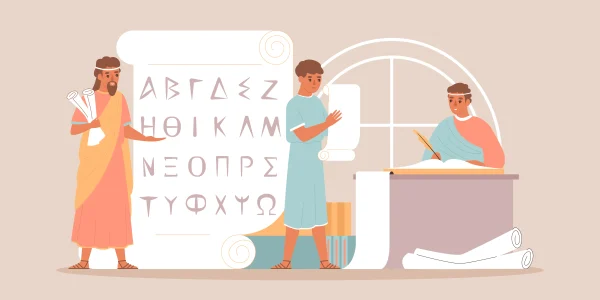
Everything changed when a small city-state in Italy began to conquer its neighbors. Along with roads and aqueducts, Rome brought a standardized way of communicating. Latin became the language of the army, the law, and the marketplace. If you wanted to succeed in the Roman Empire, you had to speak the Emperor’s tongue.
This administrative power crushed many local languages, like Oscan and Etruscan. However, the average person used a different dialect from the elite in Rome. While poets like Cicero wrote in "Classical Latin," the soldiers in the trenches spoke a simplified version.
What are the five main Romance languages? The primary branches surviving today are French, Spanish, Italian, Portuguese, and Romanian, all of which evolved from the Latin spoken by Roman soldiers. These five sisters represent the most famous outcome of romantic language evolution.
According to notes from Mahatma Gandhi University published on Studocu, as soldiers brought this "Vulgar Latin" with them into regions like Iberia, Gaul, and Dacia, the dialect developed differently in the various parts of Europe in which it was introduced. It acted as the raw material that would eventually be hammered into the modern languages we recognize today. This period is the most active phase in Western Languages' History.
The Processes of Romantic Language Evolution
The shift from Latin to Romance occurred as a gradual process where difficult grammar rules were traded for simpler ones. Classical Latin was a "synthetic" language, meaning it used extensive noun endings called "cases" to show who was doing what.
In romantic language evolution, these endings started to disappear. People found it easier to use prepositions like "of" or "to" instead of memorizing six different endings for every noun. This turned Latin into an "analytic" language, where word order became the most important part of a sentence.
The "Appendix Probi" is a 3rd-century document that shows this change in real-time. It was a list written by a schoolmaster complaining about how his students were "misspelling" words. He noted that they were saying speclum instead of speculum. Such "errors" directly contributed to the birth of Italian and French.
Another huge change was the loss of vowel length. Latin speakers used to distinguish words by how long they held a vowel sound. Eventually, they switched to "vowel quality," focusing on whether a sound was open or closed. This shift is a core concept in Indo-European linguistics and defines the "sound" of modern Italian.
Regional Divergence in Western Languages' History
You might wonder why Spanish and French sound so different if they both came from Latin. The answer lies in the "Substrate Theory." When the Romans conquered a new area, the local people didn't just stop using their old speech patterns. They spoke Latin with a heavy accent and kept some of their old words.
In Gaul (modern France), the local Celtic speakers influenced how Latin was pronounced. They contributed words for farm tools and perhaps even their way of counting by twenties. This "substrate" layer acted like a filter, changing the flavor of the Latin spoken in that region. This is a recurring theme in Western Language History.
The Effects of Germanic Invasions
When the Roman Empire finally fell, Germanic tribes like the Franks and Visigoths moved in. Rather than replacing Latin, they added a "superstrate" layer to it. The Franks gave the French language roughly 1,000 new words, mostly related to war, social status, and colors.
Words like guerre (war) and blanc (white) are Germanic gifts to the French language. Meanwhile, in Spain, the Visigoths left their mark on personal names and law. These invasions acted as a wedge, pushing the different regions of the former Empire further apart and accelerating romantic language evolution.
By the year 813, the Church officially admitted that common people couldn't understand Latin anymore. The Council of Tours mandated that priests give sermons in the "rustic Romance tongue." This was the first official acknowledgement that Latin was dead and the modern languages were born.
Identifying the Shifts within Romantic Language Evolution
As the centuries passed, each region developed its own unique "sound laws." In Western Romance, a process called lenition occurred. This is the "weakening" of consonants when they are trapped between two vowels. For example, the Latin word sapere (to know) became saber in Spanish and savoir in French.
Another major shift was the invention of the definite article. Latin did not have a word for "the." According to A Linguistic History of Italian on Vdoc.pub, the structural evolution of Romance definite articles comes from Latin demonstratives such as ILLU(M). Speakers began using these Latin pointers, like ille (that) and illa (that woman), to fill the gap. Over time, these words were shortened into le, el, la, and o, which are now essential in Western languages.
How did Latin turn into Spanish? Through centuries of phonetic shifts and influence from Visigothic and Arabic speakers, the Latin spoken in the Iberian Peninsula gradually morphed into the distinct Spanish grammar we use today. This process involved the "Reconquista", spreading the Castilian dialect across the country.
Even the future tense changed. Latin had a complicated way of saying "I will love" (amabo). Romance speakers started saying "to love I have" (amare habeo). Eventually, these two words fused together to create modern forms like the Italian amerò. This shows how romantic language evolution constantly recycled old parts to build new tools.
The Modern Global Reach of Western Languages: History
The story of these languages didn't stop at the borders of Europe. During the Age of Discovery, Spanish, Portuguese, and French were carried across the oceans. Today, more people speak Romance languages in the Americas than in Europe. This global spread is the final chapter in the current period of Western Languages History.
Because of this massive reach, Indo-European linguistics remains one of the most important fields of study. Understanding how these languages moved helps us track human migration and cultural exchange. We can see the tracks of history in the Arabic-influenced Spanish of Argentina or the Frankish-influenced French of Quebec.
According to Scuolitalia.com, linguists now use "isoglosses," which delineate the geographical limit of linguistic features, to map these changes. The study also suggests that isoglosses demarcate shared linguistic innovations between dialects, as western Romance languages generally show common innovations that eastern ones tend to lack. As noted by JP Linguistics, a prime example is the La Spezia–Rimini Line, which runs between the Italian towns of La Spezia and Rimini, separating the Western Romance world from the Eastern one. It is a visible border showing how romantic language evolution moved geographically.
Even isolated languages like Romanian tell a story. Because it was cut off from the rest of the Romance world, it kept some old Latin grammar that French and Spanish lost. It also picked up a large Slavic vocabulary from its neighbors. This proves that Western Languages History is always a conversation between the past and the present.
The Enduring Path of Western Languages' History
The words we use today serve as survivors of history, along with being tools for communication. Every time you order a "cafe" or talk about your "family," you are participating in a tradition that spans five millennia. The progression from the ancient steppe to the modern digital world shows that speech is always in motion, reacting to war, trade, and technology.
Studying Western Languages History reveals that no language is an island. Our speech is a collaborative project built by millions of people over thousands of years. The structures of Indo-European linguistics give us the map, but the people driving the Romance language evolution provided the heart.
The next time you struggle to learn a new verb or wonder why a word is spelled a certain way, remember that you are looking at a historical artifact. These sounds have been shaped by Roman soldiers, Germanic warriors, and medieval monks. They have crossed oceans and survived the fall of empires. The legacy of our shared history is woven into every syllable we speak.
Recently Added
Categories
- Arts And Humanities
- Blog
- Business And Management
- Criminology
- Education
- Environment And Conservation
- Farming And Animal Care
- Geopolitics
- Lifestyle And Beauty
- Medicine And Science
- Mental Health
- Nutrition And Diet
- Religion And Spirituality
- Social Care And Health
- Sport And Fitness
- Technology
- Uncategorized
- Videos

