
Tribal Power Dynamics In Gulf History
In the middle of the scorched desert, survival depends on who you know and who will fight for you. While many people view the past of the Arabian Peninsula as a collection of scattered people wandering the dunes, the actual history is much sharper. A rigid system of kinship kept people alive and built the foundation for modern nations. This structure dictated every trade deal, every war, and every water well.
A thorough knowledge of this social bond is the only way to grasp the true depth of Gulf History. These groups functioned as political units rather than just families that managed the toughest land on earth. Through the sharing of resources and risks, these groups turned a harsh environment into a thriving hub. This deep sense of community is the core of Middle Eastern heritage today.
The Foundations of Gulf History
The harsh climate of the Arabian Peninsula forced people to work together or perish. Individualism was a death sentence in a land with little water. Large alliances, known as confederations, became the standard for security. The Bani Yas confederation is a perfect example of this. They grew from a small group in the Liwa Oasis into a massive power.
By the 1790s, the Al Bu Falah branch of the Bani Yas moved to Abu Dhabi island. They found fresh water and stayed to build a new future. Meanwhile, the Al Qasimi confederacy took control of the northern coast. They used Ras Al Khaimah and Sharjah as bases for their massive fleet. By the early 1800s, they commanded 15,000 sailors and 60 large ships. This cooperation turned the coast into a major trade zone.
Migration and Settlement Patterns
Tribes moved constantly to find better opportunities. The YouTube confederation provides a great look at this movement. These families moved from the central Najd region of the Arabian Peninsula toward the coast. They were looking for trade routes and pearl banks.
This move led to the birth of modern Kuwait and Bahrain. The Al Khalifa and Al Sabah families established these ports as centers of commerce. As they settled, they stopped being just nomads. They became merchants and naval powers. This shift redefined the economic potential of the entire region. It proved that tribal bonds could adapt to both the deep desert and the high seas.
Social Architecture and Tribal Solidarity
A scholar named Ibn Khaldun described a concept called Asabiyyah. He meant social cohesion, or the psychological glue that holds a group together. In the Gulf, this meant that every member of a tribe felt a deep responsibility for every other member. This bond allowed nomadic groups to build stable political systems.
Shared bloodlines provided a safety net for everyone. If one person lost their camels, the tribe replaced them. How did tribes survive in the desert? Survival depended on strict adherence to tribal laws and communal resource sharing, where the collective's needs always outweighed the individual's. This high level of trust made it possible to govern large areas without a formal police force.
Lineage and the Preservation of Middle Eastern Heritage
Keeping track of family history was a vital job. A specialist called a Nassaba, or genealogist, held a very high status. They memorized thousands of years of family trees. Knowing lineage served purposes beyond pride, such as preventing bloodline disputes and helping families make strategic marriages.
These oral records are the backbone of Middle Eastern heritage. They kept the specific identity of the region alive even through centuries of change. Tribes also used a Wasm, which is a unique geometric brand. They marked their camels and territory with these signs to show ownership and stop raids. Even without paper maps, everyone knew the borders.
Maritime vs. Inland Power Relations in Gulf History
The tribes living along the coast had a different life from those in the dunes. They formed maritime alliances to protect valuable pearling banks. As noted in research hosted on Academia.edu, early historical references to pearling in the region date back to at least the 4th century BCE. The study identifies the Pinctada radiata as a primary oyster species harvested for these gems. According to the historical analysis, these pearl beds were located mainly off the coasts of Bahrain, Qatar, and Abu Dhabi.
To access these waters, pearling vessels were gathered seasonally at various pearling centers across the Gulf. The research further highlights that around the start of the 20th century, the historian Lorimer estimated that roughly 74,000 men were involved in the harvest. This growth caused Dubai to be recognized as the secondary pearl trading hub in the region during that period. This economic cycle kept thousands of people employed and connected.
Oasis Strongholds and Trade Route Security
While coastal tribes looked to the sea, inland tribes controlled the sands. They held the oases, which were the only places where travelers could rest. These tribes provided safe passage for caravans carrying goods across the Arabian Peninsula. Without their protection, trade would have stopped.
Inland tribes were the guardians of the desert's wealth. They knew the secret locations of wells and the fastest paths through the dunes. This control gave them great leverage over the coastal cities. The relationship between the desert and the coast was a constant exchange of goods and protection. It created a balanced system that allowed both sides to prosper.
Political Alliances and External Diplomacy
Tribal leaders were highly skilled diplomats. They had to deal with massive powers like the Portuguese, Ottomans, and the British. Rather than being victims of these empires, they acted as active agents who negotiated for the best deals.
The General Treaty of 1820 is a major milestone. The British East India Company signed this deal with the "Trucial Shaikhs" to stop piracy and secure trade. Who were the most powerful tribes in the Gulf? The Bani Yas, Al Khalifa, and Al Saud emerged as dominant confederations through the consolidation of smaller clans and the control of strategic ports or interior trade hubs. These leaders used these treaties to solidify their own power and define their borders.
The Emergence of Ruling Dynasties
Over time, the role of the tribal chief evolved. These leaders began to take on more formal roles as the region modernized. However, they never lost their tribal roots. The way they led was still based on the old ways of consensus and family loyalty.
This shift is why the modern monarchies in the region are so stable. They serve as the heads of the most respected families in addition to being rulers. This style of leadership is a central part of Middle Eastern heritage. It links the past to the present. The respect for a leader today often stems from the respect their ancestors earned on the battlefield or in the Majlis centuries ago.
Economic Engines of the Tribal Period
Water was more valuable than gold. To survive, tribes used an ancient system called Aflaj. These were underground channels that brought water from the mountains to the farms. Managing this system required incredible cooperation.
A "water master" called an Arif was in charge. He used sundials during the day and stars at night to give each family their fair share. Usually, a family gets a 30-minute window of water. This methodology prevented fights and ensured everyone could grow food. It shows that Gulf History is a story of advanced engineering and social fairness.
The Maritime Silk Road
The Arabian Peninsula served as a bridge between the East and the West. Tribal merchants used dhows to travel across the Indian Ocean. They timed their trips with the monsoon winds. They sailed to India during the Kaus winds and returned during the Shimal winds.
These sailors traded dates and pearls for teakwood, silk, and spices. The date palm was the engine of this trade. It provided food that stayed fresh for months at sea. Tribes also used dates as a form of currency. This trade network reached all the way to China and East Africa, making the Gulf a global economic hub long before oil was discovered.
Cultural Values and the Majlis System
Governance in the Gulf was never a one-man show. It happened in the Majlis, a public meeting room. This was a place where any person could talk directly to their leader. It was a form of direct democracy based on the principle of Shura, or consultation.
The Sheikh would listen to complaints, settle land disputes, and share news. Why is tribal history important today? Understanding tribal roots provides the blueprint for the social stability and political structures currently found in the modern Gulf states. This open-door policy is still a major part of Middle Eastern heritage. It ensures that the leader stays connected to the needs of the people.
Nabati Poetry as a Historical Record
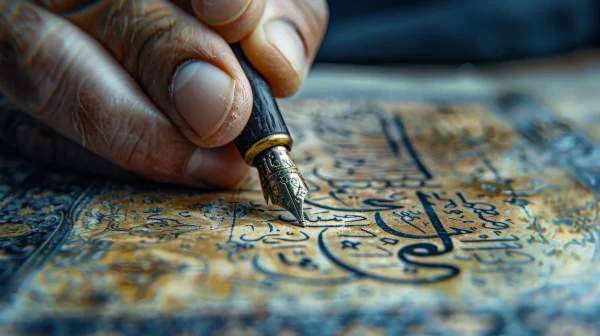
Since books were rare, tribes used poetry to record their history. This style is called Nabati poetry, often known as "the people’s poetry." It uses rhymed prose to tell stories of great battles, brave heroes, and long migrations.
Poets were the historians of the Arabian Peninsula. Their verses acted as a living archive of Gulf History. When a poet spoke at a gathering, they reminded everyone of who they were and where they came from. These poems preserved the values of courage and hospitality that still define the region today.
From Tribal Alliances to Modern Statehood
The modern United Arab Emirates is the ultimate success story of tribal cooperation. In 1968, the leaders of Abu Dhabi and Dubai met at Al Sumeih. They decided to form a union. They knew that their tribes were stronger together than they were apart.
In 1971, they officially formed the federation. Rather than being a brand-new idea, this was a modern version of the old tribal confederations. They took the ancient concept of working together for survival and applied it to a national government. This blend of tradition and modern law has made the country one of the most stable in the world.
Legacy in the 21st Century
The tribal system still affects daily life today. Even in modern cities like Dubai or Doha, people identify with their tribe. This is often seen in their last name, or Nisba. It tells everyone about their family’s history and their place in the social order.
This identity provides a sense of belonging in a fast-changing world. The resilience found in the Arabian Peninsula thousands of years ago now drives the region's rapid growth. Modern Gulf states use their tribal values to navigate global politics and business. They prove that you can build skyscrapers while still honoring the wisdom of the desert.
The Enduring Legacy of Gulf History
The story of the Gulf is a story of people choosing to stick together. The tribal confederations were not obstacles to progress. They were the very thing that made progress possible. Through a focus on kinship and shared goals, these groups turned a land of sand into a global power.
Every part of Middle Eastern heritage today can be traced back to these early alliances. From the way people greet each other with coffee to the way governments make big decisions, the tribal spirit is alive. Gulf History shows that the strongest bond on earth is the one between people who refuse to let each other fail. Understanding these roots is the only way to truly see where the people of the Arabian Peninsula are headed next.
Recently Added
Categories
- Arts And Humanities
- Blog
- Business And Management
- Criminology
- Education
- Environment And Conservation
- Farming And Animal Care
- Geopolitics
- Lifestyle And Beauty
- Medicine And Science
- Mental Health
- Nutrition And Diet
- Religion And Spirituality
- Social Care And Health
- Sport And Fitness
- Technology
- Uncategorized
- Videos

