
Crack Animal Neglect With Veterinary Forensics
Every time an animal enters a room, it leaves something behind and takes something with it. A stray hair on a rug or a speck of mud on a paw tells a story that the victim cannot speak out loud. In a normal clinic, a doctor looks at a wound to heal it. In a criminal case, the doctor looks at that same wound to catch a person. This change in focus alters the entire process.
Veterinary Forensics turns biological traces into legal weapons. It changes a dog’s broken rib from a medical misfortune into a documented crime. When an animal suffers in a backyard, the physical evidence remains written in its bones and blood. Forensic experts read these marks to ensure that those who cause harm face the consequences of their actions.
The Scientific Foundation of Veterinary Forensics in Case Building
Science provides the only objective way to stand up for an animal in court. When a vet steps into Veterinary Forensics, they stop guessing and start measuring. They rely on Locard’s Exchange Principle. This rule states that every contact leaves a trace. A person who hurts a dog will walk away with that dog’s fur or skin cells on their clothes. Finding these microscopic bits links a suspect to the crime scene with total certainty.
Experts must also follow the Daubert Standard. This rule means that any science used in court must be proven, tested, and peer-reviewed. You cannot use a "hunch" to put someone in jail. You need data that other scientists can check and verify. Applying high-level methods like DNA analysis or toxicology turns a chaotic scene into a clear, factual report. This rigor is the backbone of all modern animal cruelty investigations.
The Difference Between Clinical Diagnosis and Forensic Analysis
A regular vet trip focuses on the future and how to make the patient better. Forensic work focuses on the past. The expert must document every single detail, even the ones that do not help the animal feel better right now. They take photos of the pet before cleaning it. They bag every flea and every piece of debris found in the fur.
This work requires a complete shift in mindset. In a clinic, you might assume a dog got hit by a car because the owner said so. In a forensic setting, you assume nothing. You look at the bruising and the fractures to see if they actually match a car impact or if they suggest a different kind of strike.
Establishing the Burden of Proof
Lawyers must prove a crime happened "beyond a reasonable doubt." This is a high bar to clear. Forensic data helps meet this requirement by providing numbers and photos that do not lie. How do investigators tell the difference between animal neglect and animal abuse? According to the ASPCA, animal cruelty typically separates into intentional acts of harm and acts of neglect, such as failing to supply food, water, shelter, or veterinary care.
Physical evidence makes the motive of the owner clear. If a dog has three different broken bones in three different stages of healing, it shows a pattern of violence. This is much harder for a suspect to explain away than a single injury. Documentation of these patterns ensures that the court sees the full reality of the animal's life.
Red Flags in Animal Cruelty Investigations
Neglect often stays concealed behind closed doors until it becomes a crisis. Identifying the signs early saves lives. In many animal cruelty investigations, the most important clues are the ones that people usually ignore. An animal that is constantly tied up or left in a filthy crate suffers in ways that leave permanent marks on the body.
Investigators look for environmental data. They measure ammonia levels in the air of a hoarding house. The Centers for Disease Control and Prevention (CDC) reports that high ammonia levels from urine cause physical harm, noting that significant inhalation leads to long-term lung damage, and eye contact causes ulcerations. Documenting these levels provides scientific proof that the living conditions were toxic. It removes the argument that the owner was just "messy."
Dermatological Indicators of Neglect
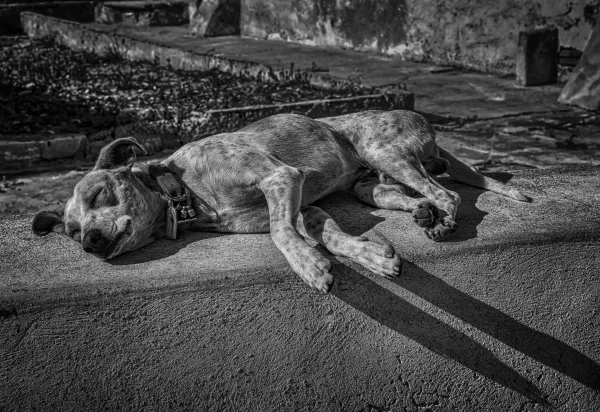
Skin is the largest organ and the first to show neglect. Forensic vets look for urine scald, which are chemical burns caused by sitting in waste for long periods. They also look for severe matting of the fur. In extreme cases, matted hair can cut off blood flow to a limb, leading to the loss of a foot.
Parasites also tell a story. A massive flea infestation that causes life-threatening anemia shows a long-term failure to provide care. Experts measure the Packed Cell Volume of the animal's blood. If the blood is thin because parasites have drained it, the neglect is medically undeniable.
Behavioral Evidence as Forensic Data
A dog’s reaction to a human is a piece of evidence. Fear-based behaviors, such as cowering or extreme aggression when touched in a certain way, can support a diagnosis of long-term trauma. Within the framework of Veterinary Forensics, these reactions are recorded alongside physical wounds.
Irony exists in how an animal tries to conceal its pain. Many animals have a "survival drive" that makes them act normally even when they are suffering. Forensic experts know how to look past this mask. They use video recordings to show how an animal’s behavior changes when the owner enters or leaves the room.
Proving Starvation and Malnutrition with Veterinary Forensics
Starvation is one of the most common forms of neglect, but it is also one of the hardest to prove if you only look at the surface. A thin animal might be sick, or it might be old. To win a case, you must prove the animal lacked food. Guidelines published by the World Small Animal Veterinary Association (WSAVA) show that Veterinary Forensics relies on the Body Condition Score (BCS), utilizing a 9-point scale.
The WSAVA also notes that a score of 1 indicates an emaciated animal with no discernible body fat and easily visible pelvic bones. While this score is a great start, the real proof happens on the inside. Forensic experts look for internal markers that show the body has started to eat itself to stay alive.
The Role of Bone Marrow Fat Analysis
When an animal starves, its body uses up fat in a specific order. Research published in ScienceDirect states that bone marrow fat is the final fat reserve mobilized in a starving body. The same study notes that measuring the percentage of bone marrow fat helps experts verify starvation across various species.
What are the biological signs of a starved animal? Forensic experts look for the complete absence of internal fat stores and specific changes in the liver and bone marrow that occur when the body consumes its own tissue for energy. This data proves the starvation was chronic and not caused by a sudden illness.
Applying Veterinary Forensics to Wildlife Crime Pathology
Wildlife crimes happen in the shadows of forests and fields. The victims are often found long after the crime occurred. Solving these cases requires a deep understanding of wildlife crime pathology. When a dead hawk or deer is found, the expert must determine if the death was natural or criminal.
This field faces unique challenges. Weather, scavengers, and time can destroy evidence quickly. Forensic experts must work with what is left, sometimes just a few bones or feathers. They use these remains to reconstruct the animal's final moments and identify the person responsible.
Determining Cause of Death in the Wild
Trauma analysis is key in the wild. Experts look for gunshot wounds or signs of trapping. According to literature from the National Center for Biotechnology Information (NCBI), experts distinguish wound types because entry marks are generally smaller and show invagination, or inward turning, of the tissue.
Poisoning is another major issue. Many people use illegal pesticides to kill predators. As detailed by the Environmental Chemistry Group, experts analyze stomach contents for chemicals like carbofuran, a poison so severe that signs of toxicity can occur within minutes. Finding it is a "smoking gun" in many poaching cases.
Ballistics and Toxicology in the Field
Modern labs use X-ray fluorescence to find tiny metal fragments in a carcass. This helps identify the type of bullet used. Even if the bullet passed through the animal, the metal "dust" it left behind can be matched to a specific brand of ammunition. Wildlife crime pathology relies on these high-tech tools to track down poachers.
Reports from Reuters indicate that wildlife crime investigators use forensic DNA analysis to match seized wildlife products to suspects, proving illegal hunting or trafficking occurred. This technology makes it impossible for poachers to claim they found the animal already dead.
The Critical Importance of the Forensic Necropsy
A forensic necropsy is far more detailed than a standard pet autopsy. A forensic necropsy serves to determine the cause of death while simultaneously gathering evidence for a jury. Veterinary Forensics requires a step-by-step process that leaves no stone unturned. Every inch of the animal is examined and documented.
Experts often perform "full-thickness" skin reflection. This means they peel back the skin to look for bruises on the muscles underneath. Fur often hides severe bruising from kicks or punches. Without this step, a violent crime might look like a natural death from the outside.
Photo documentation and Evidence Preservation
Photos are the most powerful tool in the courtroom. An expert must take clear, high-resolution pictures of every injury. They use scales and rulers in the photos so the jury can see the exact size of a wound. These images serve as permanent proof of the animal's condition.
Preserving the "chain of custody" is also vital. Every sample, from blood to fur, must be logged and tracked. If a single person handles a sample without signing for it, the evidence could be thrown out of court. This discipline ensures that the science remains untainted.
Identifying Ante-mortem vs. Post-mortem Injuries
It is essential to know if an injury happened before or after death. Bruising only happens when the heart is still beating. If an expert finds a bruise, they know the animal was alive when it was hit. If they find a bone break with no bleeding, it likely happened after death.
Establishing this timeline helps tell the story of the crime. It can show if an animal suffered for days or if it died instantly. This information directly affects how a judge or jury views the severity of the defendant's actions.
Bridging the Gap Between the Clinic and the Courtroom
A veterinarian’s job does not end in the lab. They must go to court and explain their findings. This is where Veterinary Forensics meets the legal system. An expert witness must take advanced medical data and turn it into simple English that anyone can understand.
They use analogies and clear visuals to explain things like bone marrow fat or toxic levels. The expert must remain neutral and professional. An article in Today’s Veterinary Practice notes that forensic veterinarians act as neither judge nor jury; rather than acting as advocates for the animal, they use the best current science and medicine to elucidate the truth. The facts should speak for themselves.
Preparing for Cross-Examination
Defense lawyers will try to poke holes in the forensic report. They might question the vet’s experience or the way a sample was stored. An expert stays ready by knowing their data inside and out. They stick to the science and avoid getting emotional.
Success in court comes from being prepared. If the vet can show a clear chain of custody and peer-reviewed methods, the defense has a hard time winning. Standing by the data ensures that the legal system respects the medical evidence.
The Effect of Forensic Reports on Sentencing
Detailed forensic reports lead to much higher conviction rates. When a judge sees clear proof of long-term suffering, they are more likely to hand down a tough sentence. In the past, neglect was often seen as a minor mistake. Today, forensic science shows that it is a serious crime.
These reports also help in getting "ban orders." A ban order prevents a person from owning animals in the future. This is often the most important outcome of a case, as it prevents more victims from suffering at the hands of the same person.
Technological Advancements in Veterinary Forensics
Technology is changing how we solve animal cruelty investigations. We now have tools that were once only used for humans. According to a chapter published by IntechOpen, a virtopsy employs imaging techniques like CT and MRI scans to provide a complete three-dimensional inside and outside view of the body before any surgery begins.
Furthermore, Reuters highlights that this digital approach allows experts to detect tiny fractures missed by physical exams and creates a retained digital record for other professionals to review years later. These advancements make it harder for criminals to hide their tracks.
The Rise of Digital Forensics in Animal Cases
Many people post about their lives on social media, including their animals. Investigators now link digital evidence to physical findings. If a person posts a photo of a "skinny" dog but claims it just got sick yesterday, the date on the photo can prove they are lying.
A Reuters report reveals that performing DNA testing on tons of seized ivory allows investigators to identify specific elephant poaching hotspots. This global reach is a vital part of protecting species around the world.
Protecting the Voiceless through Veterinary Forensics
The world of animal law is moving forward. We no longer rely on stories or guesses to protect animals. Instead, we use the hard facts of Veterinary Forensics to demand justice. Whether it is a case of backyard neglect or a complicated hunt involving wildlife crime pathology, science provides the answers.
Every successful case builds a safer world for domestic pets and wild creatures alike. Integrating detailed animal cruelty investigations with top-tier medical data ensures that the truth always comes to light. For any veterinary professional, seeking specialized training in this field is the best way to help those who cannot help themselves. Education turns a regular vet into a powerful force for legal change.
Recently Added
Categories
- Arts And Humanities
- Blog
- Business And Management
- Criminology
- Education
- Environment And Conservation
- Farming And Animal Care
- Geopolitics
- Lifestyle And Beauty
- Medicine And Science
- Mental Health
- Nutrition And Diet
- Religion And Spirituality
- Social Care And Health
- Sport And Fitness
- Technology
- Uncategorized
- Videos

