
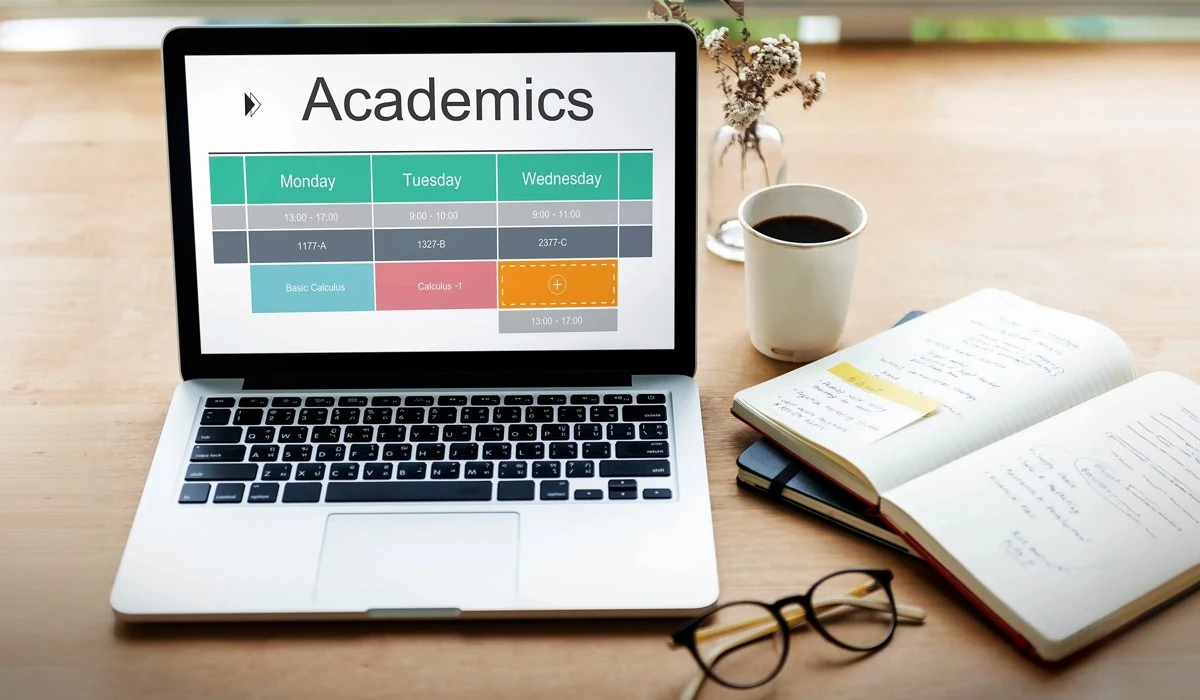
Better Teaching Via Planning Lessons And Courses
Every Sunday night, thousands of educators sit at their kitchen tables feeling the weight of a hundred small choices. They pick a video here, a worksheet there, and a quiz for Friday. They hope these pieces fit together. Often, they do not. This decision fatigue happens when teachers view instruction as isolated events instead of a single, connected path.
When you spend three hours searching for a "hook" activity before you decide what the students should actually learn, you trap yourself in a cycle of busywork. This approach leaves students confused and teachers exhausted. Professional Planning Lessons and Courses solve this problem. It turns a pile of random activities into a straight line toward student proficiency.
When you focus on the outcome first, the daily stress of what to do tomorrow fades away. This post explores how to use a professional instructional design framework to build better learning experiences. We will look at how curriculum mapping keeps your entire year on track.
The Core Philosophy of Planning Lessons And Courses
Great teaching starts with a shift in perspective. Many beginners focus on what they will say or what they will show. Expert educators focus on what the student will produce. According to a guide from the University of Illinois Chicago (UIC), shifting from traditional content-heavy teaching to a learner-centered alternative facilitates cohesive experiences and defines successful Planning Lessons And Courses.
Shifting from content-centered to learner-centered models
When using a content-centered setup, the teacher acts as the primary source of information. They talk, and students listen. When applying a learner-centered layout, the teacher designs experiences where students solve problems. This change requires you to prioritize the student's actions over your own lecture.
When you plan, ask yourself what the student will do to prove they understand the topic. Use the revised Bloom’s Taxonomy to guide these choices. As noted by the University of Vermont (UVM), taxonomic models present a hierarchical classification that becomes successively harder, meaning educators should design tasks requiring students to analyze or create, rather than simply asking them to remember facts. This makes the classroom active and keeps students engaged with the material.
Why intentionality beats intuition
Relying on "teacher intuition" often leads to burnout. Intuition relies on feelings, whereas a framework acts as a definitive tool. When you use a specific instructional design framework, you make every choice with a reason. You know exactly why you chose a specific reading or why a quiz happens on Tuesday.
This intentionality reduces the mental load of teaching. You no longer wonder if your lessons hit the required standards. You have a record of your goals and how you plan to reach them. This structure provides a safety net for the teacher and a clear ladder for the student.
Adopting a Proven Instructional Design Framework
Research published on ResearchGate indicates that an instructional design framework provides a structured process for educators and serves as the skeleton for your course. It ensures you don't miss important steps like checking for prior knowledge or evaluating the results of your teaching. The University of Vermont (UVM) points out that these frameworks come from decades of research in cognitive psychology, reflecting ongoing revisions to classification systems like Bloom's Taxonomy.
The Backward Design approach

Grant Wiggins and Jay McTighe popularized "Backward Design" to help teachers focus on the finish line. You start by identifying the "Enduring Understandings" students should keep long after the class ends. Then, you decide what evidence proves they learned those things. Only then do you pick the activities.
Which instructional design model is best for beginners? According to a teaching guide from UIC, most experts recommend Backward Design because it begins with learning objectives and works backward to create assessments before finally selecting specific learning activities. A publication in the National Center for Biotechnology Information (NCBI) outlines this simple three-step process—identifying desired results, determining acceptable evidence, and planning instruction. The same UIC guide suggests that this approach stops you from wasting time on "busy work" activities that don't teach anything, noting that it may also increase overall student learning.
Utilizing the ADDIE model for large course builds
The ADDIE model was started at Florida State University for military training. It stands for Analyze, Design, Develop, Implement, and Evaluate. A paper on ResearchGate highlights that instructional designers widely use ADDIE to create learning courses, and this model works particularly well for large courses or semester-long programs. It forces you to look at your audience and their needs before you write a single slide.
During the Analysis phase, you find out what your students already know. In the Design phase, you map out the objectives. Development is where you create the materials. Implementation is the actual teaching, and Evaluation is where you check the data to see if the plan worked. According to ResearchGate, this systematic approach ensures high-quality results by guaranteeing the educational experience remains well-planned, structured, and effective.
The Strategic Role of Curriculum Mapping
If a lesson plan is a single step, curriculum mapping is the entire GPS route. It is a live record of what you teach and when you teach it. Mapping helps you see the big picture and ensures that every month of the year builds on the previous one.
Vertical vs. horizontal alignment
Vertical alignment means your lessons get more difficult as the year goes on. You ensure that 9th-grade skills provide the basis for 10th-grade work. Horizontal alignment means that every teacher teaching the same subject stays on the same page. This creates a fair experience for all students at a grade level.
What is the difference between a lesson plan and a curriculum? A lesson plan is a detailed guide for a single day of instruction, whereas a curriculum is the broader set of learning goals, materials, and sequences across an entire course or program. Curriculum mapping helps you manage both levels of planning without losing your way.
Identifying and filling learning gaps
When you map out your year, you will find "islands" of information. These are topics that don't connect to anything else. You might also find "gaps" where you expected students to know something you never actually taught.
Mapping reveals these issues before they become problems in the classroom. It also helps you spot "repetitions." These are topics taught multiple times without any increase in difficulty. Cleaning up your map makes more room for deep learning and reduces student boredom.
Tactical Steps for Planning Lessons And Courses
Moving from a big idea to a daily schedule requires a clear process. You must break down large goals into small, manageable tasks. Effective Planning Lessons and Courses follow a logical sequence that builds student confidence.
Establishing clear learning objectives
Every lesson needs a goal. Use the SMART acronym to make your goals Specific, Measurable, Achievable, Relevant, and Time-bound. Instead of saying "Students will understand history," say "Students will identify three causes of the Civil War."
Clear objectives drive every other decision in your workflow. They tell you which worksheet to use and which questions to put on the test. If an activity does not directly support your objective, remove it. This keeps your teaching lean and effective.
Sequencing activities for maximum retention
The order of your lesson matters. Many teachers use the "Hook, Book, Look, Took" structure. You start with a "Hook" to grab attention. The "Book" is the new information. "Look" is the practice or analysis, and "Took" is the final takeaway or assessment.
How do you start planning a course? The most effective way to start is by identifying the "Big Idea" or the primary skill students must acquire by the end of the term. Once you have that anchor, you can sequence your daily hooks and books to lead directly toward that main skill.
Balancing Rigor and Engagement in Your Design
A good plan challenges students without breaking their spirit. You must find the balance between difficult academic work and the excitement of learning. This requires you to build flexibility into your instructional design framework.
Differentiated instruction within a fixed framework
Not every student learns at the same speed. Differentiation means you provide different ways for students to reach the same goal. You might offer three different articles at different reading levels or let students choose between writing an essay and creating a video.
Instead of lowering the standards, you simply offer alternative paths. Incorporating these options into your Planning Lessons And Courses early prevents the stress of trying to help struggling students at the last minute. You give everyone a fair shot at success.
Scaffolding difficult concepts
Scaffolding is like using training wheels. You provide temporary support while a student learns a new skill. You might give them a graphic organizer or a list of sentence starters. As they get better, you take these supports away.
This technique allows you to teach "heavy" or dense information without overwhelming the class. Breaking a large project into five small steps is a form of scaffolding. It keeps the rigor high but makes the mountain easier to climb one step at a time.
Using Technology in Planning Lessons And Courses
Modern tools can handle much of the heavy lifting in an organization. Technology exists to support your curriculum mapping and your daily delivery rather than replacing your teaching.
Using LMS platforms to visualize your map
Learning Management Systems (LMS) like Canvas or Google Classroom are perfect for hosting your course structure. These platforms allow students to see the "path" you have designed. They can see how Monday's lesson connects to Friday's project.
When you put your instructional design framework online, you make the course more transparent. Students who miss a day can see exactly where they fell off the path. It also allows you to store your digital materials in one place for easy access next year.
AI-assisted brainstorming for lesson components
Artificial intelligence can help you generate ideas for activities or quiz questions. You provide the learning objective, and the tool suggests ways to teach it. This speeds up the "Development" phase of your planning process.
However, you must ensure these ideas fit your established map. AI is a great servant but a poor leader. Use it to find creative ways to explain a concept, but always check those ideas against your core learning goals to ensure they add real value.
Refining Your Strategy Through Data and Feedback
Your plan is a living document. Even the best curriculum mapping requires adjustments once you see how students react in real-time. You must build in moments to pause and check your progress.
Formative assessments as a feedback loop
Formative assessments are small, low-stakes checks. Think of them as "pulse checks" for the classroom. An exit ticket or a quick poll tells you if the students understood the day's objective.
If most of the class fails a quick check, you must pivot. You might need to spend another day on that topic. This flexibility is a sign of a strong teacher. It shows a priority for actual learning over simply "finishing the book."
The end-of-course audit
At the end of the semester, look back at your data. Which lessons caused the most confusion? Which activities resulted in the best projects? This audit is the final step of the instructional design framework.
Use this information to update your curriculum mapping for the next year. Cut out the parts that didn't work and double down on the ones that did. Over time, this process of constant refinement leads to a refined course that runs smoothly and produces excellent results.
Perfecting the Art of Planning Lessons And Courses
A great course does not happen by accident. It is the result of using a clear instructional design framework and detailed curriculum mapping. When you connect your daily choices to a long-term goal, you transform from a manager of chaos into a designer of student success.
This organized approach saves your time and energy. It removes the guesswork from your nights and weekends. More importantly, it gives your students a clear, reliable path to success. They feel the difference when a teacher knows exactly where the class is going.
Take the first step by picking one framework and applying it to your next unit. Focus on the student's output and align every activity to a measurable goal. This shift in Planning Lessons and Courses will change your classroom from a room of random events into a true center of learning. Excellence is a choice, and it starts with your next plan.
Recently Added
Categories
- Arts And Humanities
- Blog
- Business And Management
- Criminology
- Education
- Environment And Conservation
- Farming And Animal Care
- Geopolitics
- Lifestyle And Beauty
- Medicine And Science
- Mental Health
- Nutrition And Diet
- Religion And Spirituality
- Social Care And Health
- Sport And Fitness
- Technology
- Uncategorized
- Videos

