
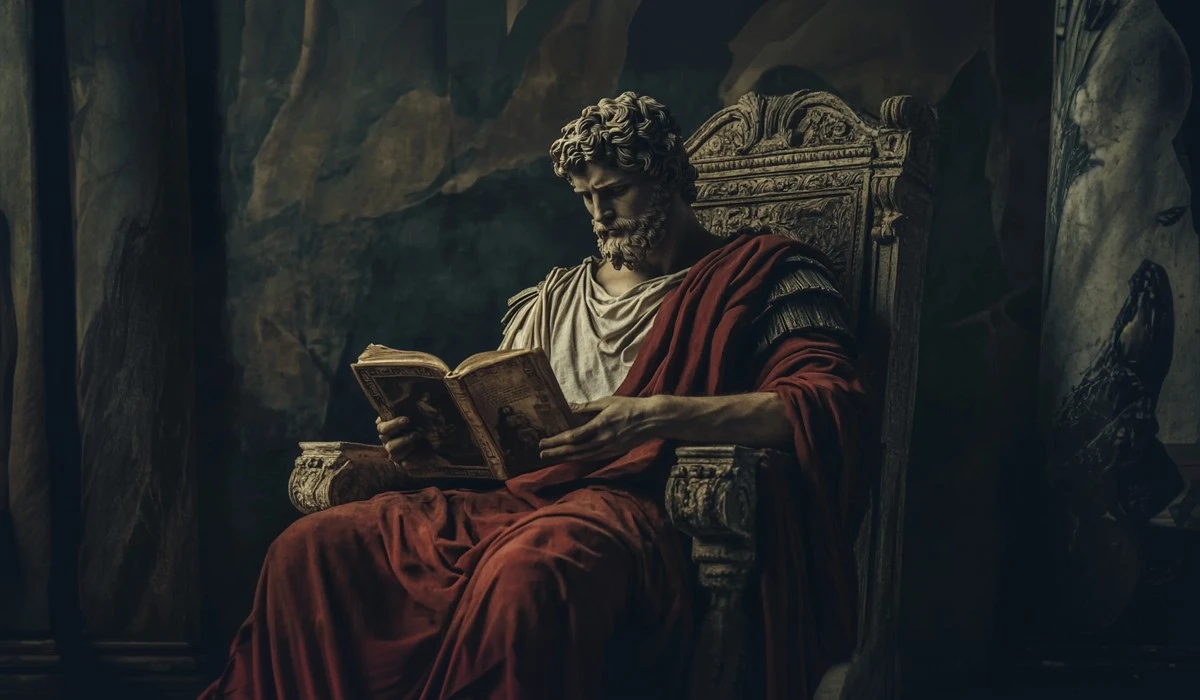
Aquinas Decoded Through Medieval Philosophy
When you argue with a friend about what is "fair," you use a logic system built 800 years ago. Most people call the Middle Ages the "Dark Ages." They imagine mud, superstition, and ignorance. In reality, thinkers in this period built the university system and the legal frameworks we still use today.
Medieval Philosophy acts as the engine under the hood of Western thought. According to the Encyclopedia Britannica, Thomas Aquinas acted as the bridge for this movement because he achieved a deep synthesis of Aristotelian philosophy and Christian theology. This work allowed him to connect ancient Greek wisdom with a new kind of logical rigor. Today, we face hard moral choices about technology and justice. These old ideas offer a clear path through the mess. The study of this period helps you think better, argue stronger, and live with more purpose.
The Foundations of Medieval Philosophy
Britannica defines the period between the 5th and 15th centuries as the time that shaped the Western mind, spanning from the collapse of the Roman Empire to the Renaissance. Scholars during this time worked to reconcile faith with reason. A report by Britannica notes that the logic of Aquinas required the basic consistency of the realities of nature to be recognized. They viewed faith and reason as two different tools for finding a single truth rather than seeing them as enemies. Medieval Philosophy flourished when thinkers synthesized Judeo-Christian ideas with Greek metaphysical systems. This period proved that logic could support belief.
The Marriage of Faith and Logic
In the 12th century, a major change happened. Translators brought Aristotle’s Physics and Metaphysics into Europe from Arabic sources. These texts changed everything. Before this, people relied mostly on the ideas of Plato. Aristotle offered a way to study the physical world through observation.
Scholars used this new logic to explain the divine. What is the main goal of medieval philosophy? According to Britannica, the primary goal was to harmonize religious revelation with Aristotelian logic to create a unified, rational understanding of reality and human existence. This approach gave people a way to talk about God and the world using the same set of rules.
Exploring the origins of scholasticism
Britannica states that scholasticism's origins trace back to the palace schools and monastic libraries of the early Middle Ages. These places kept knowledge alive during chaotic times. The source notes that teachers like Gerbert of Aurillac taught the Trivium, which included grammar, logic, and rhetoric, as well as the Quadrivium, covering arithmetic, geometry, music, and astronomy. These seven "liberal arts" formed the base of all higher learning.
The Birth of the University System
Britannica Kids reports that by 1150, cathedral schools in Paris and Bologna grew too large for their old buildings, leading the schools associated with Notre Dame to evolve into the first "Universitas." This was a new kind of guild for masters and students. The publication adds that these institutions, which gained legal recognition as corporations by 1215, gave scholars a protected space to think. They moved away from simple memorization and focused on rigorous questioning instead.
The Disputed Question Method
Peter Abelard introduced a method called Sic et Non, or "Yes and No." He would list contradictory statements from famous authorities. This forced students to find a logical way to resolve the conflict. This method became the "disputed question." Masters and students engaged in public debates. This process is the direct ancestor of modern peer review and the scientific method.
Why Medieval Philosophy Still Shapes Modern Law
Modern law arises from historical development rather than thin air; it stands on the shoulders of medieval thinkers. They moved society away from the idea that "might makes right." They argued that laws must follow reason. If a king passed a law that went against basic logic, scholars argued that the law had no power. Medieval Philosophy taught that justice must be objective.
The Concept of Universal Truth
Before this period, laws often changed depending on who was in charge. According to Britannica, medieval scholars argued for a "Universal Truth" through a system of natural law that applied to everyone. They believed that certain moral laws governed all people, regardless of where they lived. Research from the same source suggests that this idea led to our modern understanding of international law and human rights by influencing thinkers in the 17th and 18th centuries. It created a standard that even rulers had to follow.
Deconstructing Aquinas ethical theories
Thomas Aquinas remains the most famous figure of this time. He took the messy debates of his day and turned them into a clear system. According to the Internet Encyclopedia of Philosophy, Aquinas ethical theories focus on the idea that humans have a specific purpose. Humans are something other than biological accidents; they possess a "telos," or an end goal. This source explains that our completion or perfection involves flourishing through reason and virtue.
The Four Tiers of Law
The Stanford Encyclopedia of Philosophy notes that Aquinas broke law down into four categories to help people understand their duties. Eternal Law is the mind of God governing the universe. Natural Law is how humans participate in that eternal order through reason. Human Law consists of the specific rules societies create, like speed limits. Divine Law includes the specific instructions found in scripture.
These layers work together to guide behavior. What are the four natural virtues of Aquinas? The Internet Encyclopedia of Philosophy identifies prudence, justice, fortitude, and temperance as the core "cardinal" virtues necessary for a moral life. These virtues help a person navigate the four tiers of law. They act as the "hinges" upon which a good life turns.
The Concealed Logic of the Summa Theologica
Aquinas wrote the Summa Theologica as a textbook for beginners. Yet, it became one of the most complicated books ever written. He organized the book into thousands of "Questions." For every topic, he listed the strongest arguments against his own position first. He showed respect for his opponents by presenting their views fairly before answering them.
Using Syllogisms for Moral Clarity
Aquinas relied on the syllogism to reach his conclusions. A syllogism is a three-step logic puzzle. For example: All humans seek happiness; John is a human; therefore, John seeks happiness. This structure prevents emotional bias from clouding judgment. The use of these logical steps allowed Aquinas to solve complicated moral problems with surgical precision. This method teaches us to look at the facts before we react with our feelings.
Virtue Ethics in the Age of Medieval Philosophy

Many people view morality as a list of prohibitions, but Medieval Philosophy presented it as a series of positive actions. It focused on building character. This is known as virtue ethics. Rather than just following rules, you train yourself to become the kind of person who naturally does the right thing. It is like training for a sport. The more you practice a virtue, the easier it becomes.
The Pursuit of Human Flourishing
The Internet Encyclopedia of Philosophy notes that while Aquinas's goal is often linked to the term Eudaimonia, he specifically described this end as "blessedness" or "perfection." This term represents "flourishing" rather than simply "feeling good." It is the state of a human being living at their highest potential. Morality acts as a guide for reaching one's potential rather than as a burden or a collection of restrictions. It is a guide for how to reach your best self.
Why is Thomas Aquinas so important? He is considered the preeminent figure of the period because he successfully synthesized classical Greek philosophy with Western theological traditions. His work ensured that reason would always have a place in Western culture. He proved that you do not have to stop thinking to have faith.
Applying Medieval Philosophy to 21st Century Dilemmas
You can use these 800-year-old tools today. When you face a tough choice at work or in a relationship, look at it through the lens of Aquinas. His theories help you cut through the noise of social media and public opinion. They remind you that truth is not a matter of a popular vote.
Decision Making Through the Lens of Reason
To use "Prudence" like Aquinas, you follow three steps. First, you take counsel. You gather all the facts and listen to wise people. Second, you judge. You weigh the facts against the common good, not just your own ego. Third, you command. You take action without hesitating. This process turns a stressful choice into a logical step toward flourishing.
The Lasting Power of Medieval Philosophy
The "secrets" of Thomas Aquinas exist within our courts and schools rather than being concealed in a dusty vault. Medieval Philosophy provides a steady compass for societies that often feel lost. It teaches us that reason and faith can walk hand in hand. The study of Aquinas ethical theories reveals that the path to happiness is paved with virtue and logic. This ancient wisdom remains the most practical tool we have for living a meaningful life. Embrace these principles, and you will find the clarity needed to overcome the challenges of today.
Recently Added
Categories
- Arts And Humanities
- Blog
- Business And Management
- Criminology
- Education
- Environment And Conservation
- Farming And Animal Care
- Geopolitics
- Lifestyle And Beauty
- Medicine And Science
- Mental Health
- Nutrition And Diet
- Religion And Spirituality
- Social Care And Health
- Sport And Fitness
- Technology
- Uncategorized
- Videos

