
Psychological Anthropology and Your Worldview Shift
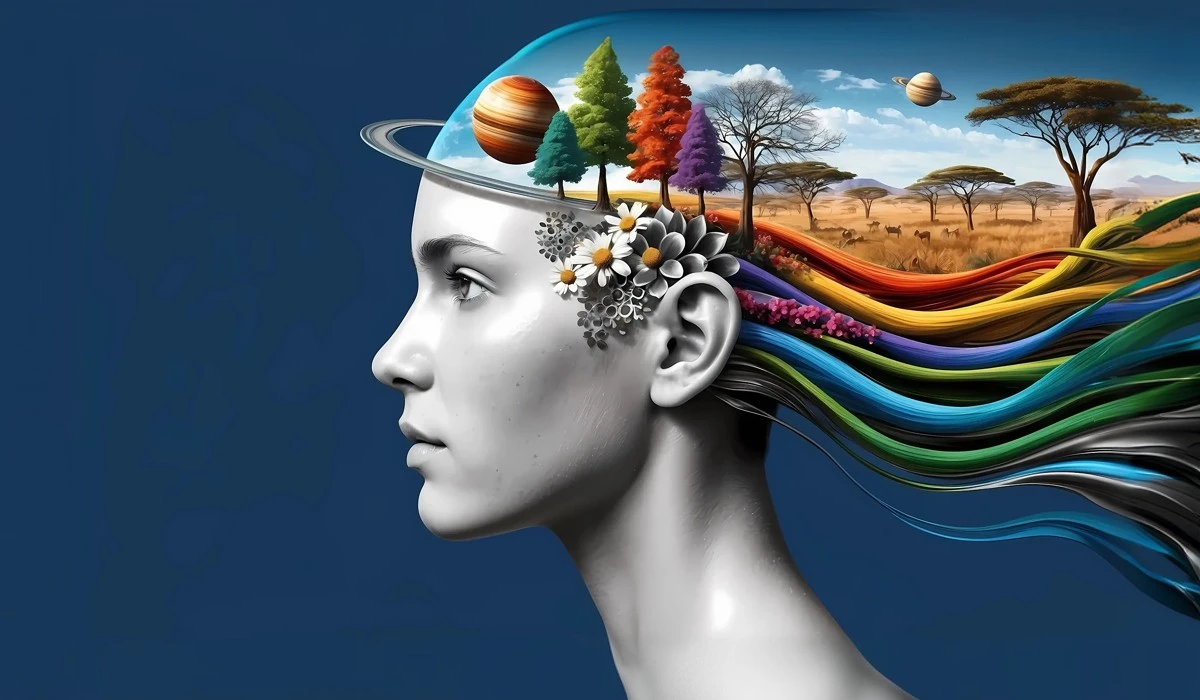
You likely believe your thoughts belong only to you. You assume your feelings, your reactions to stress, and your sense of right and wrong grow naturally from your DNA. In reality, your community builds the rooms inside your mind long before you learn to speak. Your culture acts as a sculptor, carving out the way you perceive every person and event you encounter. This study of how social environments mold the human mind defines the field of Psychological Anthropology. It reveals that your "common sense" actually represents a specific cultural script.
The study of these scripts allows researchers to show us that there is no single way to be human. Every society provides its members with a different toolkit for processing reality. When we understand these tools, we can see why people from different backgrounds often seem to live in entirely different worlds. Psychological Anthropology forces us to look past our own biases and see the significant variety in human experience.
Why Psychological Anthropology Matters Today
According to research published by the University of British Columbia, most of what we know about the human mind comes from a very small group of people. Standard psychology historically focuses on "WEIRD" populations. This acronym stands for Western, Educated, Industrialized, Rich, and Democratic societies. These people represent only about 12 percent of the global population. The study also suggests that many textbooks treat their behaviors as the universal standard for all of humanity.
Psychological Anthropology challenges this narrow view. It proves that a college student in Boston views the world differently than a farmer in rural Ethiopia or a monk in Tibet. Without this field, we risk pathologizing healthy behaviors simply because they do not fit Western norms. Within a globally connected society, we need to understand the full spectrum of human thought to communicate effectively.
Bridging the Gap Between Neuroscience and Culture
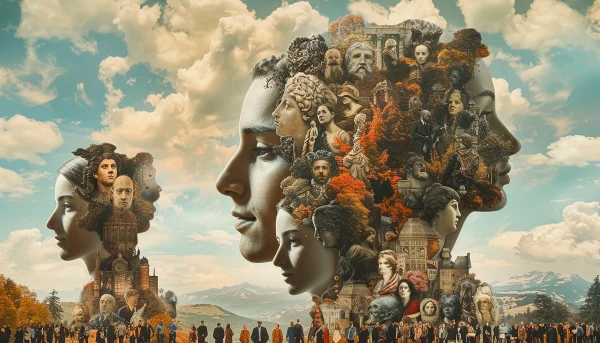
Biology provides the hardware of the brain, but culture provides the software. Neuroplasticity shows that our brains physically change based on our repeated actions and environments. If you grow up in a culture that emphasizes individual achievement, your brain develops pathways that focus on self-reliance. Conversely, a culture that values the group trains the brain to monitor social harmony.
Culture and biology work together constantly. A child’s brain absorbs the values of their parents and peers like a sponge. This process creates a physical reality within the folds of the cortex. We cannot separate the "nature" of our neurons from the "nurture" of our social lives. They exist as one single, functioning unit.
Understanding the "Internal Map" Through Ethnopsychology
Every culture possesses its own folk theory of the mind. This concept, known as ethnopsychology, describes how a group defines the self, the soul, and mental health. Some cultures do not see the "self" as an independent entity inside the body. Instead, they view the self as a knot in a web of relationships. If you pull one element, the whole web moves.
These internal maps dictate how people handle pain and success. For example, in Japan, the concept of Amae describes a healthy sense of indulgent dependency on others. While a Western doctor might call this "codependency," many Japanese people view it as a vital social glue. Ethnopsychology teaches us to respect these local definitions rather than forcing our own labels onto them.
Local Wisdom vs. Universal Psychology
Western clinical models often emphasize internal chemical imbalances when discussing mental health. However, many indigenous frameworks focus on social disharmony or spiritual disconnection. People in these societies may find more healing in a community ritual than in a private therapy session. What is the main goal of ethnopsychology? The primary goal involves understanding how specific cultural groups conceptualize and experience the human mind and emotions in their own terms.
When researchers center the "emic" or insider perspective, they avoid cultural imperialism. Research published in the Journal of Korean Medical Science notes that a person in Korea might experience "Hwa-byung," a physical illness caused by the continued repression of anger. This condition requires a specific cultural understanding that a standard Western check-up might miss. Recognizing these differences saves lives and preserves dignity across borders.
Modern Research Methods for a Complicated World
Anthropologists no longer sit in distant libraries and guess how other people think. They use rigorous research methods to gather data directly from the source. According to guidelines from the University of Toronto, modern researchers favor long-term immersion over quick surveys. They believe that you cannot understand a person's mind until you walk in their shoes for a year or more.
As described in the Cambridge Handbook of Psychological Anthropology, these research methods include person-centered ethnography. This technique focuses on the individual’s subjective experience within their culture. The researcher asks deep questions about personal history and daily struggles. This approach reveals how people negotiate the rules of their society while trying to maintain their own identity.
Beyond the Laboratory: The Power of Participant Observation
A laboratory provides a controlled environment, but it lacks the messiness of real life. The University of Toronto explains that participant observation requires the researcher to live, eat, and work within a community. They observe psychological events as they happen in real time. This might mean watching how a mother comforts a crying child or how a village handles a theft.
Data from these observations often contradict what people say in surveys. People often report what they think they should do rather than what they actually do. Anthropologists who stay present for months see the truth behind the social mask. This deep level of data provides a much clearer picture of the human condition than a thirty-minute questionnaire.
How Psychological Anthropology Decodes Human Emotion
We often think emotions like "sadness" or "anger" are the same everywhere. Psychological Anthropology suggests otherwise. While the physical sensation of a fast heartbeat might be universal, the meaning we give it varies wildly. Some cultures have dozens of words for types of love, while others focus on shame or social obligation.
As suggested in research published in Philosophical Transactions of the Royal Society B, the way we label our feelings actually changes how we experience them. Findings published in PubMed show that in Southeast Asia, researchers study "Latah," a condition where people become highly suggestible and may imitate those around them after a sudden fright. This emotional reaction only exists because the culture recognizes and expects it. Our emotional lives follow the paths our language clears for us.
The Language of Feeling Across Borders
Language acts as a filter for our internal world. If your language lacks a word for "depression," you might experience that heaviness as a physical pain in your back or stomach. This does not make the feeling less real. It simply changes where you feel it and how you seek help. How does culture affect human psychology? Culture provides the frameworks, values, and social norms that dictate how individuals interpret their experiences and express their inner lives.
When a society values "grit" and "toughness," its members may literally stop noticing minor physical pain. Their psychological training dulls the signal. Meanwhile, a culture that celebrates sensitivity might heighten those same signals. We do not just "have" emotions; we practice them according to the rules of our community.
The Development of the Cultured Self
No one is born with a personality. We develop one through a process called enculturation. Psychological Anthropology studies show how different parenting styles create different types of adults. In some societies, babies stay in constant physical contact with their mothers for years. These children often grow up feeling deeply secure and connected to others.
In contrast, many Western parents emphasize independence from day one. They put babies in separate rooms and encourage them to self-soothe. These different starts in life lead to different psychological outcomes. One path leads to an individualistic self, while the other leads to a collectivist self. Neither is superior. Both emerge from deep cultural roots.
Enculturation and the Forming of Identity
As documented by the Library of Congress, Margaret Mead found that the stress of teenage years does not represent a biological requirement. In Samoa, she found that adolescents experienced a smooth shift into adulthood because their culture lacked the sexual taboos of the West. This finding challenged previous assumptions in the field of psychology. It showed that our identity crises often stem from cultural friction rather than hormonal changes.
Every child acts as a tiny anthropologist. They watch the adults around them and learn which behaviors earn rewards and which earn punishments. Over time, these lessons become "natural" to the child. They don't feel like they are following rules; they feel like they are simply being themselves.
Navigating Global Conflict with Deeper Insights
Modern research methods in anthropology now help solve global crises. When organizations try to bring peace to a war-torn region, they often fail because they ignore the local psychology. They try to apply Western ideas of justice to cultures that value reconciliation or ritual forgiveness.
Recognizing the "psychological logic" of a group helps mediators find common ground. For example, in post-conflict Rwanda, traditional community courts called "Gacaca" worked better than international tribunals. These courts focused on healing the social fabric rather than just punishing the individual. This approach matched the local ethnopsychology and led to more lasting peace.
Reducing Bias through Cultural Relativism
Cultural relativism serves as a tool for understanding. It does not function as a moral pass. It requires us to set aside our judgments to see why a behavior makes sense to someone else. Why is psychological anthropology important? According to the University of British Columbia, it is vital because it reveals that human nature is not a fixed constant but a shifting interaction between our brains and our social environments.
When we understand that a "radical" viewpoint comes from a specific set of cultural pressures, we can address those pressures more effectively. We stop seeing others as "crazy" and start seeing them as people reacting to a specific world. This shift in perspective reduces the "us vs. them" mentality that fuels most global conflicts. It turns enemies into puzzles that we can eventually solve.
Rewiring Your Perspective for Greater Empathy
The lessons of Psychological Anthropology can be applied to your own life today. Realizing your worldview is a product of your upbringing gives you the power to question it. You start to see your own biases as "cultural habits" rather than absolute truths. This awareness creates space for genuine empathy toward people who think differently.
Most arguments happen because two people use different internal maps to navigate the same situation. If you recognize this, you can stop fighting about who is "right." Instead, you can ask about the other person's map. This simple change in communication can transform your relationships, your workplace, and your community involvement.
Practical Takeaways for Your Daily Interactions
Next time you feel offended by someone’s behavior, pause and consider their cultural background. They might not be rude; they might just follow a different set of social rules. For instance, according to research from EBSCO, some cultures view direct eye contact as a sign of respect, while others view it as a challenge. Recognizing these small differences prevents unnecessary anger.
These insights can also be used to understand your own stress. Are you actually anxious, or are you just trying to live up to a cultural standard that doesn't fit you? Identifying the "cultural voices" in your head allows you to decide which ones to keep and which ones to ignore. This is the ultimate form of self-awareness.
Embracing the Lens of Psychological Anthropology
Your mind is a vast mental space shaped by every person you have ever met and every tradition you have ever followed. No single culture holds the monopoly on the human experience. We are all part of a grand experiment in how a brain can adapt to its surroundings. Looking through the lens of Psychological Anthropology allows you to see the world with more clarity and less judgment.
This field describes behavior and also builds bridges across the gaps that divide us. It reminds us that while our cultures make us different, our capacity to be "cultured" makes us the same. Continue to explore these intersections of mind and society, and you will find that your world becomes much larger and more meaningful. Embracing the perspective of Psychological Anthropology is the first step toward becoming a true citizen of the world.
Recently Added
Categories
- Arts And Humanities
- Blog
- Business And Management
- Criminology
- Education
- Environment And Conservation
- Farming And Animal Care
- Geopolitics
- Lifestyle And Beauty
- Medicine And Science
- Mental Health
- Nutrition And Diet
- Religion And Spirituality
- Social Care And Health
- Sport And Fitness
- Technology
- Uncategorized
- Videos

