
Image Credit - By Wikimedia Commons
Tuntou Lanterns Survive Through a Unique Economy
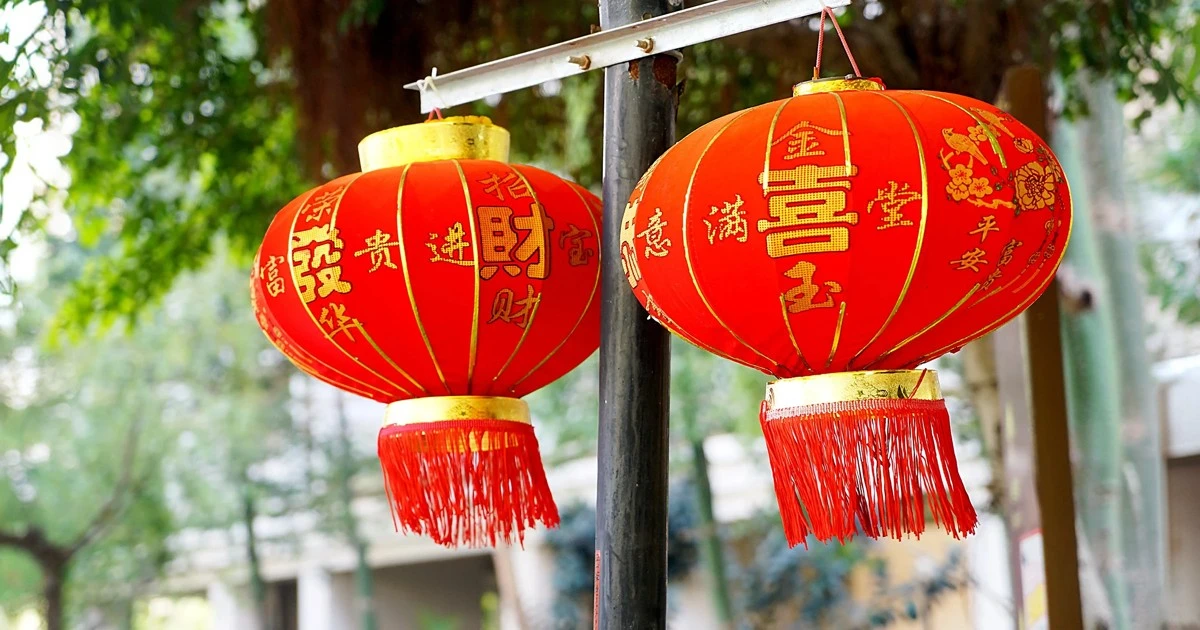
Highly advanced factory automation completely fails when a wholesale buyer requests exactly fifty customized items. Mass production requires massive volume to turn a profit. Heavy industry loses money on small, tailored batches. This harsh economic reality forces wholesale buyers to look outside traditional corporate manufacturing. They find their permanent solution inside a single rural Chinese village. According to a report by People.cn, out of every ten palace lanterns made in China, eight originate from Tuntou village in Hebei Province, allowing these hand-crafted red lanterns to dominate the national market precisely because manual production enables cheap, small-batch customization.
Artisans beat modern robots at a game of pure flexibility. Human hands adjust designs instantly without reprogramming expensive manufacturing equipment. This direct competitive advantage keeps an ancient craft highly relevant inside a fiercely modern economy. Customization capabilities secure the financial future of these local makers.
The village essentially runs a monopoly on the entire trade. Makers in this rural location maintain an iron grip on global and domestic production. This specific economic edge proves that human dexterity still outpaces modern robotics in highly specialized niche markets.
The Manufacturing Edge of Tuntou Red Lanterns
As outlined by ScienceDirect, mass production depends entirely on manufacturing massive quantities of identical goods over prolonged periods, which leaves highly specific custom orders entirely unfulfilled.
Senior artisans in Tuntou village win micro-order contracts because manual labor easily undercuts the cost of mechanized factory output. A commercial robot requires expensive retooling for minor design tweaks. A human worker simply changes their hand movements and grabs different tools. This extreme flexibility allows local makers to produce highly specific orders for clients at a fraction of the corporate cost.
Hand-crafted production gives this village total dominance over the sector. Makers currently supply 80 percent of all similar items across the entire nation. The geography of this massive market share centers on a very specific, concentrated region. Tuntou village sits inside the Meihua township. This township operates within the Gaocheng district of Shijiazhuang city, located in Hebei Province.
Local families turn their private homes into specialized workshops to meet constant daily demand. This decentralized production network drastically outperforms massive centralized factories. Hand-crafted production remains the most logical financial choice for varied, low-cost output. The senior artisans recognize this specific superiority. They know large factories simply cannot match their low costs for micro-orders.
Evolving Frameworks and Materials
Ancient traditions survive after abandoning their original, fragile ingredients. Early artisans relied on brittle local plants to build their goods. Modern builders rejected these natural elements to create items that withstand brutal international shipping routes. What materials are traditional Chinese lanterns made of? Historically, artisans used bamboo frames covered with delicate silk or paper, but modern builders construct them using durable steel wires and metal rods.
This structural upgrade ensures the items survive long transit routes and harsh weather conditions upon arrival. The switch from bamboo to steel entirely changed the durability of the final product. Steel wire holds difficult shapes far better than bending bamboo. Metal rods prevent the structural collapse of the product during transit.
Changing the core materials allowed the craft to reach new international buyers. Producers regularly export their goods directly to South Korea, Japan, and Russia. Makers combine these tough modern frames with highly specific decorative skins. The current product range spans 18 different series.
Buyers select from over 200 distinct designs. Popular variants include modern rotating models, traditional sheepskin covers, and detailed paper-cut variations. These heavy-duty materials preserve the classic aesthetic while surviving the brutal physical demands of global commercial shipping.
The Murky Origins of Tuntou Red Lanterns
Historical records frequently mutate to support the preferred narrative of the current storyteller. Researchers struggle to pinpoint the exact historical starting point for Tuntou red lanterns. Primary sources lack a definitive timeline. Local residents often vaguely trace the craft genesis to an unknown period centuries in the past. The physical evidence of the earliest models rotted away long ago.
Other historical accounts push the timeline much further back. According to a report by People.cn and historical overviews from ChinaCulture.org, the craft began during the Eastern Han Dynasty between 25 and 220 AD. Different researchers place the genesis firmly in the Ming Dynasty from 1368 to 1644. Meanwhile, academic research published by Wiley notes the tradition served as prominent imperial decor during the Qing Dynasty, spanning 1636 to 1912.
The origin mythology features similar extreme contradictions. Competing legends offer wildly different explanations for the initial creation of the craft. One prominent myth involves Han Dynasty Buddhist monks spreading the practice among the common people.
A completely different legend states that the Jade Emperor sought revenge over a goose. In this story, the villagers displayed bright items to trick the angry deity into thinking their homes were already burning. Other accounts claim a Ming Dynasty imperial gift started the local tradition. A final legend credits a specific Qing Dynasty inspection tour by Emperor Qianlong. Presenting these contradictory tales serves the cultural allure of the region.

Image Credit - By Pascal Terjan, Wikimedia Commons
Conflicting Production and Revenue Data
Wealth generated inside decentralized rural homes easily evades standard corporate tracking networks. Tracking the exact financial footprint of this industry yields wildly different numbers across various official reports. Some primary sources describe the annual production volume as completely unquantifiable. The sheer number of individual home workshops makes a central count impossible for these reporters.
Other reporting agencies claim the village produces over 100 million pairs yearly. Reporting from Goldthread states the village churns out exactly 80 million units to global markets every single year. A completely separate group of researchers estimates an annual output of only 6 million units. The massive gap between 6 million and 100 million highlights the chaotic nature of the rural supply chain.
The revenue reports show identical massive discrepancies. Some official sources omit financial details entirely, offering zero monetary data for the region. Competing reports list total annual earnings at a massive 278 million dollars.
Another set of economic documents claims the industry brings in 160 million dollars annually. The lowest formal estimates put the yearly revenue at just 14.5 million dollars. Thousands of individual families operate separate ledgers and manage personal client lists. Government auditors struggle to consolidate numbers from independent homes operating on varied schedules.
Digital Commerce Meets Intangible Cultural Heritage
Ancient aesthetic traditions now rely entirely on short-form video algorithms for global distribution. Government officials officially classified the craft as a provincial intangible cultural heritage in 2007. This formal classification highlights the historical value of the trade. Despite this deep historical status, makers currently use modern digital tools to move their massive inventory. Where do people buy traditional red lanterns today? Consumers purchase them directly through e-commerce platforms and short-video apps like Kuaishou.
Village official Bai Yanguang actively monitors the expansion of the industry. He notes that the current product catalogue features unprecedented geometric variety. Digital storefronts display the 18 distinct collections and 200 novel patterns directly to smartphone users. These digital sales channels allow rural makers to bypass traditional corporate distributors completely.
Some younger workshop owners actively update the production methodology to meet internet demand. Millennial artisan Su Lijie believes historical reliance upon pure manual labor remains completely obsolete in the digital age. She aggressively integrates modern machines for specific repetitive production steps.
This partial mechanization achieves an accelerated output velocity while preserving the necessary custom elements. The workers use machines for the basic frame, but finish the custom details entirely by hand. The combination of direct-to-consumer digital sales channels and hybrid manufacturing techniques keeps the village highly competitive.
Navigational Beacons for the Divine
Physical household decorations serve a highly functional, transactional purpose with local deities. Buyers purchase these physical items to secure specific spiritual and financial outcomes. The bright illumination acts as a clear signal for domestic gods returning from long celestial travels. What does a red lantern symbolize in Chinese culture? Families hang them as navigational beacons to guide household deities safely home and attract prosperity.
Merchant Qin Yongcheng explains the exact spiritual transaction driving the sales. Families desperately want the Kitchen God to return to their specific house. They want this deity to deliver favorable celestial harvest reports to the heavens on their behalf. The resulting divine favor guarantees financial prosperity for the household. The bright colors represent family reunion and function as massive prosperity magnets for the upcoming calendar year. Consumers view the purchase as a direct investment in their future luck.
Families pair these glowing physical displays with specific regional festival culinary customs. Northern households eat sweet Yuanxiao during the lantern festival celebrations. Southern households consume Tangyuan, offering both sweet and savory varieties to their guests. The physical craft and the local food work closely together to secure good fortune.
The Demographic Threat to Tuntou Red Lanterns
A highly profitable trade collapses when the daily reality of the work repels the next generation. The future of Tuntou red lanterns faces a severe existential threat from changing demographic preferences. Local residents absorb the necessary craft skills rapidly through daily familial exposure. Children watch their parents build the items inside their living rooms every single day.
One unnamed female resident noted the extreme speed of this informal education. She confirmed that local children achieve full craft proficiency around their ten-year age mark. When they reach middle school, these kids can build commercial-grade products with their bare hands.
Despite acquiring these valuable skills early, local youth show absolutely zero interest in taking over the profitable family businesses. A severe labor shortage currently threatens the entire industry. Younger generations express a strong, unyielding preference for urban migration.
They aggressively choose modern city life over rural craftsmanship. The youth view the intense manual labor as entirely undesirable, regardless of the strong financial returns. This generational shift forces current workshop owners to reconsider how they will fulfill future orders. The physical skills exist in the youth, but the motivation to use them disappears entirely.
The Future of Hand-Crafted Illumination
The survival of this rural industry highlights a raw economic truth about modern manufacturing. Massive factories lack the agility to handle highly customized, small-batch orders. Artisans in Hebei province fill this specific gap relying on sheer manual dexterity. They build physical goods that guide domestic deities and satisfy strict corporate event planners alike.
The primary threat to Tuntou red lanterns comes entirely from within the village borders. The industry survived the shift from bamboo to steel wire. It survived the shift from physical storefronts to short-video algorithms. The craft outlasted dynasties and embraced direct-to-consumer e-commerce.
Yet, the ultimate fate of the craft relies on a purely human element. The youth possess the necessary physical skills but reject the lifestyle required to maintain the global monopoly. They prefer the city over the workshop. The trade will only survive if families can convince their children to stay and build.
Recently Added
Categories
- Arts And Humanities
- Blog
- Business And Management
- Criminology
- Education
- Environment And Conservation
- Farming And Animal Care
- Geopolitics
- Lifestyle And Beauty
- Medicine And Science
- Mental Health
- Nutrition And Diet
- Religion And Spirituality
- Social Care And Health
- Sport And Fitness
- Technology
- Uncategorized
- Videos

