
The Truth Behind China Solar Capacity
We assume Beijing carpets the Gobi Desert with panels strictly to lower global temperatures. This assumption misses the real driver behind the construction. China builds an industrial fortress alongside a green grid. Flooding the global market with affordable technology forces other nations to rely on their supply chains while securing their own power against foreign blockades.
This strategy creates a double-edged sword. While the world applauds the environmental numbers, the internal reality involves massive financial losses and a grid struggling to keep up. The government prioritizes energy security over profit. They treat renewable infrastructure as a national defense asset rather than a commercial product. This approach explains why they keep building even when the market screams "oversupply." To understand China solar capacity, one must look past the green promises and see the aggressive economic strategy underneath.
The Accidental Green Leader
Raw numbers often hide the chaotic path to dominance. In 2006, China passed the US to become the world’s top CO2 producer. Back then, their solar generation lagged behind Germany, Spain, and even Japan. The shift happened fast.
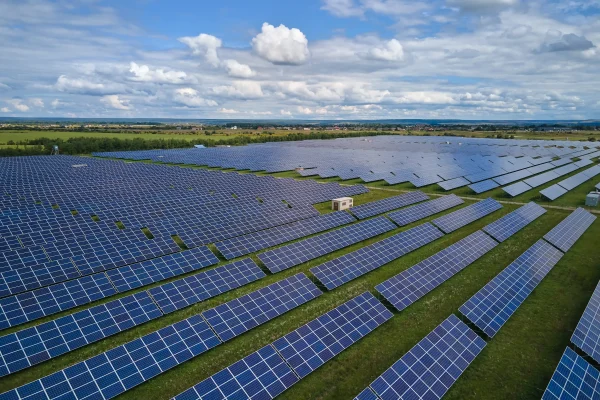
By 2024, a single Chinese facility produced one out of every seven solar panels globally. The nation now holds a staggering 1,063 GW of total solar capacity. This explosion of infrastructure was reactive rather than purely planned. As the US retreated from climate leadership under shifting administrations, Beijing stepped into the vacuum.
Political changes in the West accelerated this timeline. With the US administration signaling a reversal of emissions rulings in 2026, China stands as the primary driver of green tech. A report by The Independent confirms that China installed more wind and solar power capacity than the rest of the world combined in 2023, meaning their output now dictates the pace of the global shift.
From Polluter to Powerhouse
The timeline reveals a relentless push. Xi Jinping pledged peak emissions by 2030 and neutrality by 2060. The results are already visible. CO2 emissions have remained flat or fallen for 21 straight months as of February 2026. This drop coincides with the opening of massive projects, such as the 4GW solar farm in Northeast China.
The Profit Trap
Flooding a market with cheap goods looks like success until the profit margins vanish. As reported by Yicai Global, output hikes combined with state subsidies and fierce internal competition drove the value of solar technology into the ground. This race to the bottom hurt the very companies building the future.
Manufacturers now face a brutal reality. In the second half of 2025, authorities cancelled 143 wind and solar projects totaling 10.67 GW. The reason was simple: oversupply. The grid could not handle the power, and the market could not sustain the low prices.
Analysts project a solar loss of 38.4 billion yuan ($5.5 billion) in 2025 alone. Operating income for the sector is down 200%. The repeal of fixed feed-in tariffs in February 2025 forced producers to compete at market prices, exposing the fragility of the sector. According to Bloomberg, flooding a market with cheap goods looks like success until the profit margins vanish, leaving Chinese solar manufacturers to go further into the red.
A Question of Waste
Observers often ask about the efficiency of these massive build-outs. Why is China cutting solar projects? The government cancels projects to prevent waste because the local power grid cannot absorb the excess electricity generated during peak sun hours. This prevents the system from crashing under the weight of its own productivity.
The Coal Contradiction
You cannot call it a shift when you simply add new power on top of the old. The expansion of China solar capacity grabs headlines, yet the country remains deeply addicted to fossil fuels.
In 2024, coal still accounted for 58% of total power generation. Renewables, including wind and solar, made up only 18%. Yasheng Huang, a panelist at Harvard, argues that this is an "addition" rather than a true conversion. Fossil fuel use continues to grow right alongside the green tech.
This dual-track approach prioritizes stability. Beijing wants to ensure the lights stay on, regardless of the source. They view coal as a safety net while they build the green future.
Burning for Security
The persistence of dirty energy confuses many onlookers. Is China still burning coal? Yes, and Reuters reports that the nation remains highly dependent on fossil fuels to guarantee energy security and fuel industrial growth while their renewable infrastructure matures. They supplement coal rather than replace it.
Grid Bottlenecks and Breakthroughs
Generating power is easy, but moving it across a continent without losing it is the real nightmare. The speed of solar installation creates a major mismatch with grid infrastructure.
In western provinces, curtailment rates exceed 30%. This means nearly a third of the power generated never reaches a lightbulb. The transmission lines simply cannot carry the load to the hungry cities in the east.
Engineers are fighting back with new storage tech. A recent breakthrough involves a 100MW Compressed Air Energy Storage (CAES) compressor with 88.1% efficiency. This technology acts like a giant battery, storing excess energy for later. Without these innovations, the massive China solar capacity remains trapped in the desert.
Storage Solutions
The race is on to fix these leaks. The government knows that generation is useless without transmission. They are pouring money into battery tech and storage systems to bridge the gap between the sunny west and the industrial east.
The Human Cost of Green Energy
A solution in the desert becomes a disaster in the tea fields. The environmental benefits of solar farms depend entirely on where you build them.
In Inner Mongolia, farmer Xin Guiyi reports that solar panels act as windbreaks. They halt the expansion of the desert and allow modest ecological recovery. The panels provide shade, reducing evaporation and helping grass grow in arid soil.
The story changes in the south. Duan Tiansong, a tea farmer in Yunnan, watches productive agricultural land vanish under industrial glass. The construction disturbs the soil, creating erosion risks. Farmers often feel bypassed, with local consent ignored in favor of national quotas.
Land Use Conflicts
The pressure to expand leads to difficult choices. Transforming tea plantations into power stations threatens local livelihoods. This tension between national goals and local reality defines the current phase of expansion.
Global Chessboard
When one superpower steps back, the other takes the empty seat. The geopolitical implications of China's energy strategy extend far beyond its borders.
Li Shou from the Asia Society notes that China's technological lead is now insurmountable. Other nations must cooperate or risk obsolescence. As the US turns inward under isolationist policies, energy importers look to Beijing.
Thijs Van de Graaf of Ghent University points out that energy independence often outweighs climate altruism. As highlighted by AP News regarding Africa's import-driven growth, countries buy Chinese tech for self-reliance rather than just to be green. This reality cements China's role as the central hub of the modern energy economy.
The India Comparison
Neighbors are watching closely. India is attempting a similar leap. Kingsmill Bond from Ember suggests India might "leapfrog" the fossil-heavy phase using cheaper electrotech. Currently, India’s 3-wheeler market is 60% electric, and its coal consumption sits at 40% of China's levels at a similar development stage. However, they still trail the massive scale of China solar capacity.
Future Outlook
The path forward involves navigating a structural pivot point. Qi Qin from the Energy Research Centre argues that clean energy growth is finally matching the surge in demand. This means fossil fuels are facing real displacement for the first time.
Planned future capacity stands at +768 GW. While the cancellation of projects suggests a slowdown, the overall trajectory points upward. The industry is consolidating, with weak players dying off and state-backed giants surviving.
Elaine Buckberg at Harvard contrasts this with the US. She argues that American policy inconsistency destabilizes the auto and energy industries. Meanwhile, China's coherent, if ruthless, strategy drives efficiency.
Understanding the Numbers
People often struggle to grasp the sheer scale of the equipment involved. How much solar does China have? China currently holds 1,063 GW of solar capacity, which includes everything from massive desert farms to small rooftop installations. This number accounts for a massive share of the world's total renewable infrastructure.
The Strategic Reality
We often mistake China's renewable push for a purely environmental crusade. The data tells a different story. Beijing uses green technology as a tool for national survival and global influence. They accept financial losses and grid inefficiencies as the cost of doing business. The dominance of China solar capacity focuses on reducing vulnerability rather than just reducing carbon.
The world now relies on Chinese supply chains for the path to net zero. While the US wavers on policy, Beijing solidifies its hold on the future of energy. The contradiction of burning coal while building solar farms makes sense when you view it through the lens of security. They will burn what they must until they can rely on what they built.
Recently Added
Categories
- Arts And Humanities
- Blog
- Business And Management
- Criminology
- Education
- Environment And Conservation
- Farming And Animal Care
- Geopolitics
- Lifestyle And Beauty
- Medicine And Science
- Mental Health
- Nutrition And Diet
- Religion And Spirituality
- Social Care And Health
- Sport And Fitness
- Technology
- Uncategorized
- Videos

