
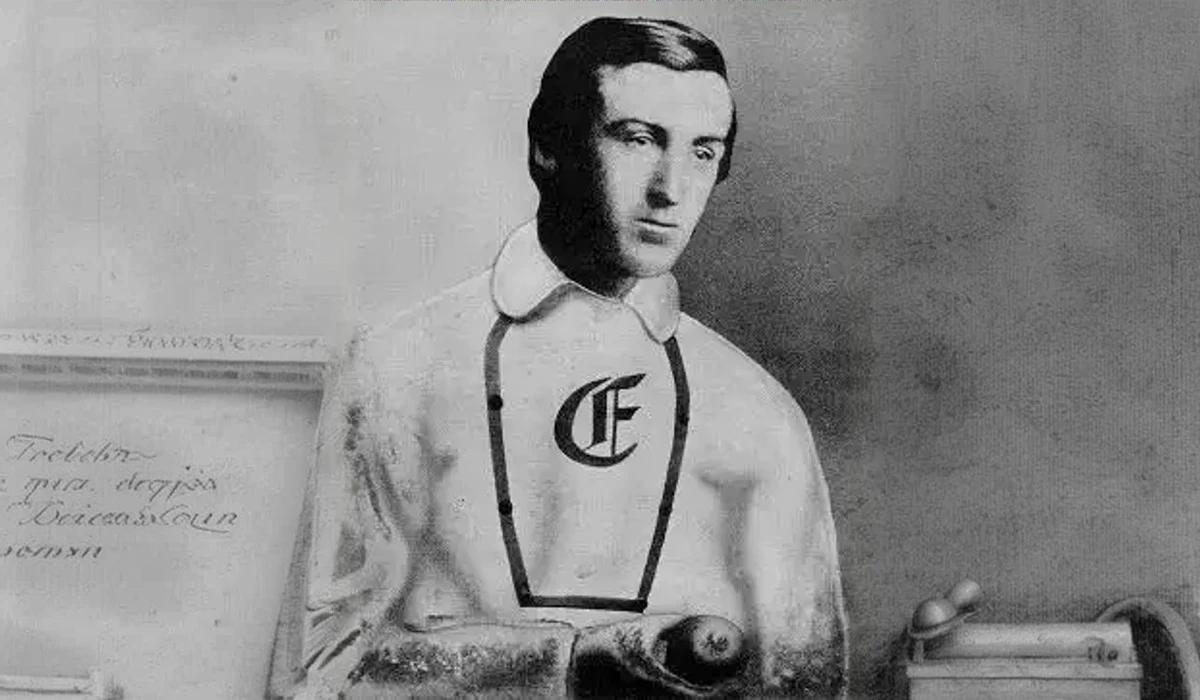
James Creighton Baseball: The First Lost Superstar
When someone figures out how to bend a straight line, the entire game alters. You write a rulebook to contain an anomaly. Long before million-dollar contracts existed, one athlete found a loophole in human anatomy that broke an emerging sport wide open. He turned his hips and shoulders into a whip. He generated a force no hitter had ever faced. The officials watched him do it. They agreed he followed the letter of the law. They later spent decades lying about it to protect their own reputations.
As SABR's coverage of the 1860s superstar notes, James Creighton baseball history starts right here with the sport's first megastar, utilizing a physical motion so violently unnatural it killed him. He threw pitches with such immense velocity that batters simply froze at the plate. The diamond transformed from a polite recreational gathering into a high-stakes athletic showdown. His dominance forced urgent rule changes. He provoked intense professional jealousy among rival clubs. An article in Our Game explains that the Excelsiors took the game from its birthplace to America's other major cities on tours that spurred the creation of national circuits, meaning he laid the firm foundation for the professional leagues we recognize today. The SABR report adds that he accomplished all of this before succumbing to a sudden, horrific physical breakdown at age twenty-one.
The Delivery That Changed James Creighton Baseball
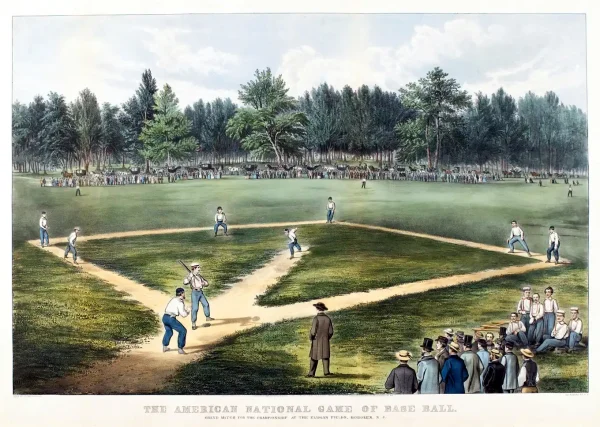
True speed usually comes from running forward, but rotational power requires a complete stop. By July 1859, a terrifying new pitching style emerged from the fields of Manhattan and Brooklyn. Throwers stood a mere 45 feet from home plate. Pitchers previously relied on heavy forward momentum to toss the ball toward the batter. They walked or ran into their release. Creighton changed this approach entirely. While competitors typically jogged to a 45-foot marker for a straight-arm release, a report in The Guardian notes that he adopted a strict single-stride delivery. He halted his forward movement instantly upon planting his foot.
This sudden stop transferred all momentum violently into his torso. He generated massive force through severe hip and shoulder restriction, completely overhauling pitching mechanics. He whipped his arm forward with unprecedented speed. Baseball rules firmly mandated a stiff-arm, underhand release. Early rule-makers expected pitchers to facilitate gentle contact for the batters. Creighton decided to prevent contact entirely. English cricket observer John Lillywhite watched this aggressive American style and immediately called foul. Lillywhite declared the motion a heavily disguised underhand throw. He refused to acknowledge it as a legal bowl.
The Pitch That Changed Everything
The delivery generated immense velocity. It crossed the plate as the ultimate masked delivery. Author Thomas Gilbert notes that stopping forward motion proved mandatory to execute these breaking pitches. Creighton weaponized his entire body. He created a violent upward trajectory that mirrored modern pitching greats like Sandy Koufax and Roger Clemens. He pushed the human arm past its intended physical limits. He forced the batter to guess the ball's location from a dangerously close distance.
Inventing the Breaking Ball A Decade Early
The shape of a pitch changes when a thrower stops aiming and starts weaponizing spin. Most historians stubbornly credit Candy Cummings with the curveball origin. Gilbert argues with absolute certainty that the true pioneer threw his first breaking ball a full decade earlier. According to his SABR BioProject profile, Creighton added an imperceptible, subtly unlawful flick to his low throw, snapping his wrist in a sharp, violent upward motion at the exact point of release. He generated a severe 12-6 break that defied contemporary physics.
He possessed a devastating and unpredictable pitch arsenal. He threw a high-arc "dew-drop" pitch to lull hitters to sleep. He then followed it with aggressive, cutting ball spin. The ball moved with a sharp, inverted vertical snap. Hitters expected a straight, predictable path across the plate. Instead, the ball sharply shifted completely out of the strike zone at the last possible second. Opposing players faced total systemic disruption.
Creighton dominated his early matches with this precise technique. He elevated the existing rules. He dominated the competition without cheating. Rival clubs desperately delayed their own curveball development out of pure confusion. This hesitation created a ten-year gap in pitching evolution. His absolute certainty regarding pitch placement made him an unhittable force on the diamond. He created a completely new vocabulary for pitchers. He proved that a thrown baseball could change directions in mid-air.
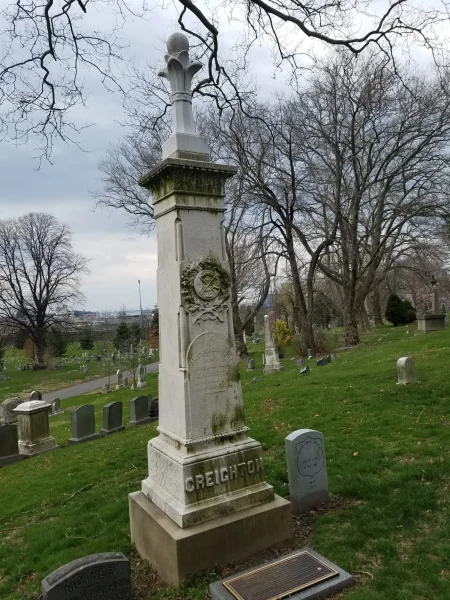
Image Credit - by Irwin Chusid, CC BY-SA 4.0, via Wikimedia Commons
Forcing the Rules to Adapt
Perfect accuracy creates extreme hesitation, forcing rule-makers to outlaw patience. Batters facing this new pitching style simply refused to swing their bats. They recognized the extreme difficulty of making contact with such a volatile, spinning object. This deliberate hesitation slowed early matches to an agonizing crawl. Hitters stood completely still, hoping the pitcher would eventually make a mistake.
Umpires desperately needed a way to keep the game moving forward. How did the walk start in baseball? As detailed in a SABR Journal article on the 1864 winter meetings, rule-makers of that season officially empowered umpires to penalize pitchers for wildness by eventually allowing batters to take a base after three bad pitches. Rule-makers initially implemented the walk in 1864 to enforce this exact penalty and compel batters to swing at called balls. The modern strike zone stems directly from this period of extreme batter hesitation. Pitch count limits eventually emerged to control this unhittable accuracy. The sports world adapted entirely around one man's dominant command of the strike zone.
James Creighton baseball strategy forced the creation of a structured batter-box. Without his overwhelming precision, the game might have remained a slow, high-scoring affair. His overpowering pitches mandated the creation of the called ball penalty. He forced the evolution of modern batter-box parameters. The rulebook expanded specifically to manage his exceptional talent. He dictated the pace of play for an entire generation.
The Contradictions of a First Superstar
Historical records rarely survive a period where athletes take money under the table. Early clubs fiercely debated amateur status and athletic compensation.
The Secret Salary
The Excelsiors paid a massive $500 salary to their star pitcher in 1860. Was James Creighton the first professional baseball player? An essay in Our Game highlights that he was the first young player actively scouted and secured by a US team sport, receiving secret compensation for his skills and becoming one of the game's earliest recognized professionals. The dawn of James Creighton baseball fame happened entirely under the table, defining the shadowy nature of 1860s baseball. As documented in his SABR BioProject profile, he organized a junior team with local kids before he moved rapidly through the local New York baseball ranks:
- Young America (1857)
- Niagaras (1859)
- Stars (1859)
- Excelsiors (1860–1862)
The Fractured Record Book
He played alongside notable teammates like Flanley and the Brainard brothers. Statistics from 1860 show 47 runs in 20 matches. He recorded zero strikeouts as a batter. He threw the first recorded shutout on November 8. He secured the first recorded triple play on September 22. Contradictions plague these early numbers. One historical source claims a perfect 65-for-65 batting record for the season. A conflicting source notes four total retirements across all his appearances. Even visual evidence remains hotly disputed among historical experts. Some historians claim only two photographs exist in the archives. Others confidently cite three known photos. His cultural footprint eventually reached modern television. He appeared as Mr. Burns' right fielder in the famous "Homer at the Bat" episode of The Simpsons.
The Gruesome Toll on Human Anatomy
Athletic dominance often requires pushing the physical body directly past its breaking point. The single-stride, twisting delivery placed severe, repetitive strain on the abdominal core. Management demanded constant, exhausting outings from their star pitcher to sell tickets and win wagers. This deliberate physical exhaustion created a deadly medical vulnerability. The physical demands of James Creighton baseball eventually tore his body apart.
During an October 14, 1862 match against the Union of Morrisania, tragedy finally struck the diamond. The star player went 4-for-4 with four doubles early in the game. Management then forced a desperate relief pitching appearance in the sixth inning. He threw with his signature violent torque. The constant twisting motion finally breached his intestinal muscle wall. He suffered a strangulated inguinal hernia directly on the field.
Fatal tissue decay and rapid gangrene followed his sudden collapse. He spent four agonizing days at 307 Henry Street. He died on October 18, 1862. He reached a premature end to his superstar trajectory at just 21 years old. Management pushed him into an early grave. They ignored his physical limits to secure regional dominance.
The Swinging Myth and PR Spin
A dramatic injury remains infinitely easier to sell than the deliberate destruction caused by management. Teammate Jack Chapman created an epic myth about a fatal four-base hit to shield the club from blame.
The Home Run Lie
The SABR Games Project explores the martyrdom of the young star, noting Chapman claimed he witnessed a massive home run swing that caused the fatal injury, though historians now agree the tale is entirely false. He stated the batter famously confessed to snapping his belt upon crossing home plate. How did James Creighton die? Medical consensus points to a strangulated inguinal hernia and subsequent gangrene, aggravated by intense, repetitive pitching strain. Tom Shieber calls the swinging story a completely fictional narrative. Shieber notes that this myth deliberately masks historical inaccuracy.
The Medical Cover-Up
Other alternative death narratives circulated widely in the local press. An 1887 "Old Timer" letter blamed a ruptured bladder from physical exertion. Dr. Joseph Jones attempted his own desperate PR spin. Jones blamed a minor October 7 cricket match injury. During that specific cricket match, the athlete famously clean-bowled five wickets in six balls against an elite English team. Club officials aggressively pushed these alternative stories. They needed to avoid management culpability. They refused to admit they overworked their greatest financial asset. They buried the truth beneath layers of heroic mythology.
A Lost Legacy in James Creighton Baseball History
Guilt usually reveals itself in the form of lavish, oversized memorials. Excelsior club officials funded a massive 12-foot marble obelisk at Green-Wood Cemetery to memorialize their fallen star. A pristine marble baseball finial sat proudly on top until vandals destroyed it. According to a SABR report on the grave restoration, a dedicated committee finally funded a replacement finial in 2014, allowing the cemetery to unveil the repaired marker. Club officials used this initial lavish memorialization to clear their own guilty consciences following the gruesome end.
Henry Chadwick and Pete O'Brien originally approved the pitching legality in 1860. By the 1870s, they engaged in aggressive historical revisionism. They retrospectively denounced the exact pitch legality they previously endorsed. Gilbert calls this a decade-delayed hypocrisy. Albert Spalding published a posthumous recognition of the unparalleled speed in 1911. Spalding praised the young pitcher as the ultimate hurling supreme.
In the 2020s, author Thomas Thomas Gilbert released "Death in the Strike Zone" to document this cover-up. Today, historians demand justice for this initial diamond legend of early baseball history. As pointed out by The Guardian, the pitcher remains entirely excluded from the sport's highest shrine, prompting Thomas Gilbert, Alexander Cleland, and John Thorn to view his absence from the Hall of Fame as the ultimate Cooperstown snub. They advocate fiercely for his mandatory inclusion. They demand permanent recognition for the sport's true foundational pioneer. They want the modern baseball establishment to acknowledge the man who built their game.
The Final Out
The sport changed forever the moment a nineteenth-century thrower figured out how to control extreme rotational power. He dominated the diamond, altered the rulebook, and forced batters to adapt to unprecedented pitch movement. The officials failed to protect him. The resulting physical trauma ended his life prematurely.
James Creighton baseball history represents the foundational years of the sport. He forced a recreational game to become a serious professional enterprise. The early records remain fractured, but his influence remains undeniable. He broke the rules of human anatomy to throw a ball perfectly. The game continues to chase the exact standard he set at forty-five feet.
Recently Added
Categories
- Arts And Humanities
- Blog
- Business And Management
- Criminology
- Education
- Environment And Conservation
- Farming And Animal Care
- Geopolitics
- Lifestyle And Beauty
- Medicine And Science
- Mental Health
- Nutrition And Diet
- Religion And Spirituality
- Social Care And Health
- Sport And Fitness
- Technology
- Uncategorized
- Videos

