
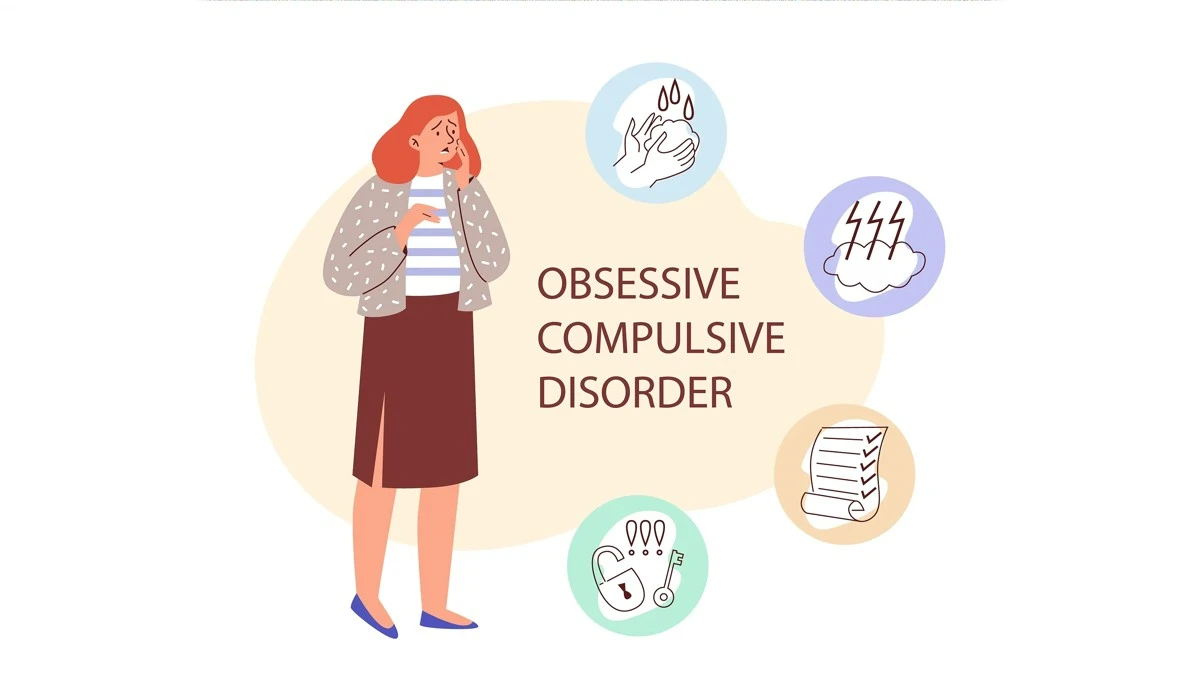
OCD Sends False Danger Signals To The Mind
Your brain constantly makes secret bargains to keep you safe. You lock the door to prevent a break-in, or you wash your hands to avoid the flu. But for some, this internal security system malfunctions. The brain begins to demand payment for threats that do not exist. It insists that tapping a desk three times prevents a car crash, or that a passing thought about illness will physically sicken a loved one. The sufferer knows the logic holds no water, yet the terror feels absolute. This disconnect between what you know and what you feel drives the relentless cycle of OCD.
The Illogical Bargain of Survival
A child’s superstition usually fades, but sometimes it solidifies into a strict set of rules that governs daily survival. Nina was only ten years old when her mind started issuing threats. Her walk home from school transformed from a simple commute into a high-stakes mission. If her mind wandered to anything "bad" while she walked, she believed her family would suffer terrible consequences. To protect them, she had to restart the entire route. She would walk back to the beginning and try again, forcing her brain to hold only "good" thoughts.
Far from a game, this became a terrifying burden of responsibility placed on a child’s shoulders. Nina felt she held the safety of her parents in her hands, dependent entirely on her mental focus. This is the reality of OCD (Obsessive-Compulsive Disorder). It twists normal caution into a paralyzing fear. The brain sends a false signal that danger is imminent, and it offers a ritual as the only escape route.
For Nina, the ritual was walking. For others, it might be checking a lock, counting to ten, or quietly repeating a prayer. The function of the ritual outweighs the action itself. The ritual exists to neutralize the panic caused by the obsession. It provides a quick hit of relief, signaling to the brain that the danger has passed. Unfortunately, this relief is temporary. The brain learns that the ritual "worked," so the next time the anxiety spikes, the demand for the ritual becomes even stronger.
The Sticky Thought Phenomenon
Your brain generates thousands of random images daily, yet only a specific type activates the emergency alarm. While popular culture paints OCD as a quirk of neatness, the clinical reality is darker and more chaotic. The disorder hinges on "intrusive thoughts." These are unsettling scenarios that flash through the mind without permission. A person might suddenly imagine shouting a slur in a quiet church or swerving their car into oncoming traffic.
What are common intrusive thoughts?
Common intrusive thoughts involve violent scenarios, fears of harming loved ones, doubts about sexual identity, or intense fear of contamination. Research published via PubMed notes that four separate surveys found that more than 80% of normal subjects experience obsessive thoughts similar in content to those of patients. A neurotypical brain filters them out. It recognizes the thought as garbage—a random neuron firing—and discards it. The person shrugs and moves on. The OCD brain reacts differently. It latches onto the thought. It treats the mental image as a genuine threat or a revelation of secret evil.
Nina recalls the terror of these fixations. Her mind would conjure images of injury befalling her relatives. Other patients obsess over sexual identity, fearing they might be a predator or questioning their orientation despite knowing who they are. The distress comes from the content of the thoughts. They are often violent, taboo, or morally repugnant to the person thinking them. The sufferer hates the thoughts, which proves they do not reflect their true desires. Yet, the disorder uses that fear to keep the person trapped in a cycle of analysis and guilt.
From Anxiety to Action
The action has nothing to do with hygiene or order; it serves solely to silence a terrifying internal prediction. The cycle of OCD follows a rigid pattern. It begins with the obsession—the unwanted thought or sensation. This ignites intense anxiety. The brain screams that something is wrong. To stop the screaming, the person performs a compulsion. This is a repetitive or ritualized act designed to neutralize the anxiety.
Does everyone with OCD have physical rituals?
No, some compulsions are entirely mental, such as inwardly counting, praying, or reviewing past conversations to prove one's innocence. For a diagnosis, these symptoms must consume more than one hour per day. They must significantly interfere with work, school, or social life. A person might spend three hours a day washing their hands until their skin cracks and bleeds. Another might lose their job because they spend the morning checking the stove repeatedly, unable to leave the house.
Nina describes the compulsion as a way to soothe panic. It acts as a tranquilizer. However, the cost of this tranquilizer is high. The more you use the compulsion, the less you tolerate normal uncertainty. The disorder demands more time and more elaborate rituals to achieve the same level of peace. This escalation can lead to financial ruin, substance abuse to numb the anxiety, or severe skin damage from cleaning rituals. In extreme cases, the constant mental torture leads to suicidal ideation.
The Biological and Environmental Load
Biology loads the gun, but life circumstances often pull the pin. Pinpointing the exact origin of OCD remains difficult. It is rarely the result of a single cause. Instead, it arises from a collision of biology and experience. Studies archived by the NCBI suggest genetics play a heavy role, with twin and family studies estimating heritability as high as 50%. However, genes are not the whole story. Many patients develop the disorder with no family history at all.
Stress acts as a major accelerant. Early life trauma, bullying, family breakdowns, or bereavement can kickstart the cycle. The brain, reeling from emotional pain, tries to seize control over the environment through rituals. Nina notes that even today, as a successful researcher at Oxford, her symptoms flare up during periods of high stress. The condition manages to find cracks in her armor when she is tired or overwhelmed.
There is also a physical component for some children. A condition known as PANDAS/PANS links the sudden onset of pediatric OCD to infections like Strep throat or Scarlet fever. In these cases, the body’s immune response attacks the brain, causing sudden and severe psychiatric symptoms. This highlights that mental health is deeply physical. The brain is an organ, and like any organ, it reacts to inflammation and biological stress.
The Rising Tide of Youth Mental Health
Modern stressors are inflating an old problem, creating a surge in symptom reporting among the young. The state of mental health is shifting. In England, symptom reporting among 16-to-24-year-olds tripled in just one decade. Data from NHS Digital indicates that OCD now ranks as the second most widespread mental health disorder among youth, with prevalence in 16-to-24-year-olds rising from 1.5% in 2000 to 5.7% in 2024. While the global prevalence sits between 1% and 4%, the trend in young people suggests a growing crisis.
The onset pattern explains part of this. Symptoms often appear during puberty or early adolescence. This is a time of massive brain restructuring and social pressure. The disorder takes advantage of this turbulence. Because teenagers often mask their symptoms to fit in, diagnosis is frequently delayed. According to the Cleveland Clinic, many healthcare providers observe a delay in care, with the average person waiting seven to eight years before reaching out to a doctor about symptoms. When they finally see a doctor, the rituals are deeply ingrained and harder to break.
This delay is dangerous. The Mayo Clinic notes that while treatments exist, the risk of suicide in untreated youth is real. The isolation of keeping such a terrifying secret compounds the suffering. Children often lack the vocabulary to explain why they are counting steps or hoarding trash. They just know that stopping feels impossible.
Treating the False Alarm
You cannot fight the thought directly; you must starve it of its power through exposure. Recovery begins when the patient stops negotiating with the disorder. The gold standard for treatment is Exposure and Response Prevention (ERP). This therapy forces the patient to face their fear without performing the ritual. A germaphobe might touch a doorknob and then wait, refusing to wash their hands. The anxiety spikes, but eventually, it falls on its own. The brain learns that the catastrophe did not happen.
Can medication help with OCD symptoms?
Yes, NICE guidelines recommend SSRIs like Fluoxetine or Sertraline as first-line pharmacological treatments to help balance brain chemistry. Nina uses a cognitive strategy to manage her condition. She labels the intrusive thoughts. When a disturbing image pops up, she tells herself, "That is not me; that is the condition." This creates distance. She visualizes the disorder as something external, distinct from her true self. She even sketches the disorder, giving it a shape separate from her own identity.
For resistant cases, the IOCDF notes that modern medicine offers advanced options like Transcranial magnetic stimulation (TMS), which targets specific brain areas to reduce symptoms; deep brain stimulation (DBS) is another avenue for circuits that are misfiring. These treatments attempt to reset the electrical patterns driving the obsession. However, for most, a combination of therapy, medication, and basic self-care—diet, rest, and exercise—keeps the volume of the noise down.
The "Quirk" vs. The Disorder
Preferring a tidy desk is a preference; fearing a messy desk will kill you is a diagnosis. Society often misuses the term OCD. Joking about being "a bit OCD" over color-coded bookshelves trivializes a debilitating condition. Distress defines the difference. Neatness lovers derive satisfaction from cleaning, while patients derive no pleasure, only temporary relief from terror.
The disorder creates a barrier to living a full life. It consumes time, energy, and relationships. Guidelines from NICE and DSM-5 stress that the disruption must be significant. If you can walk away from a crooked picture frame without feeling like the world will end, you do not have the disorder.
Nina’s path from a terrified ten-year-old to an Oxford researcher proves that management is possible. She still experiences mild intrusive thoughts. The difference now is her reaction. She knows they are false alarms. She lets them ring until they fade, refusing to pay the ransom the disorder demands.
Breaking the Silence
OCD thrives in secrecy. It relies on the sufferer believing they are the only one with such dark thoughts. But the data reveals a different story. Millions share this struggle, fighting battles against their own neurology every day. The key to breaking the cycle lies in recognizing the pattern: the thought is a lie, and the ritual is a trap.
Comprehending the internal logic of the condition strips it of its power. Whether through therapy, medication, or the simple act of sharing the burden, the grip of the disorder loosens. The brain may continue to glitch, but the person behind it can learn to ignore the error message and keep moving forward.
Recently Added
Categories
- Arts And Humanities
- Blog
- Business And Management
- Criminology
- Education
- Environment And Conservation
- Farming And Animal Care
- Geopolitics
- Lifestyle And Beauty
- Medicine And Science
- Mental Health
- Nutrition And Diet
- Religion And Spirituality
- Social Care And Health
- Sport And Fitness
- Technology
- Uncategorized
- Videos

