
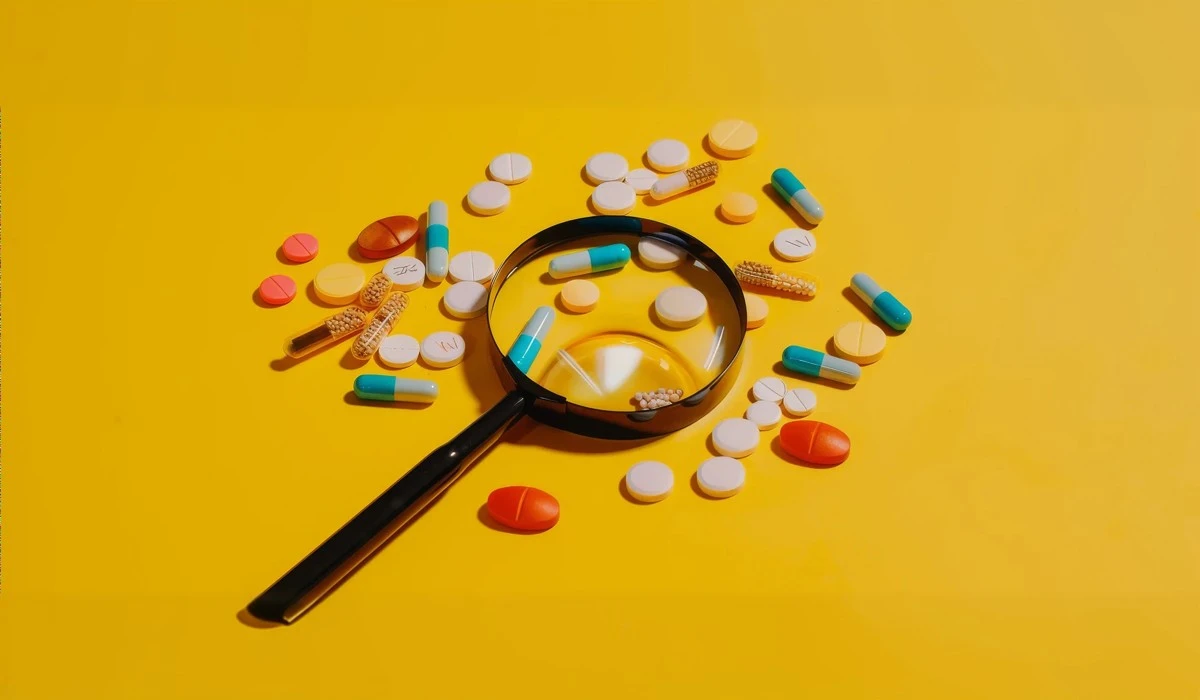
Improve Hit-To-Lead In Drug Design And Discover
Pharmaceutical companies routinely burn billions of dollars on medical compounds that look absolutely perfect on paper but fail the moment they touch human biology. People assume the hardest part of medicine is finding a brand-new disease target. In reality, the true trap lies just after that initial finding. Teams find a promising raw chemical, assume it will work safely, and rush it toward clinical trials. They accidentally ignore tiny chemical flaws that magnify over time, ultimately sinking the entire project years later. The total cost to bring one single new medicine to market can exceed a staggering 2.6 billion dollars. This entire sequence typically drains 10 to 15 years from start to finish. Overcoming this massive preclinical attrition rate is the ultimate test in Drug Design and Discovery, where small early choices decide the ultimate fate of every patient.
Accelerate Drug Discovery with the Hit-to-Lead Phase
This immense pressure makes the very specific jump from an initial chemical hit to a refined candidate so incredibly vital. As noted in research published in Nature, this specific period is broadly known as the hit to lead phase, where goals shift toward developing quantitative structure-activity relationship models to balance potency with pharmacological properties, and optimizing it effectively can literally save years of wasted effort.
Without careful filtering, scientists end up physically creating and testing thousands of useless variations. Instead, modern teams now rely heavily on advanced molecular docking strategies. This allows chemists to test potential connections on a computer screen before they ever mix expensive chemicals in a physical lab. When scientists streamline this early stage, they protect their massive financial investments and vastly increase their chances of actual clinical success. Focusing intensely on this early shift allows researchers to finally stop relying on blind luck and start engineering exact biological solutions that genuinely survive rigorous late-stage medical testing.
Understanding the Bottlenecks in Drug Design and Discovery
Every single day a pharmaceutical project stalls in the early research lab, it burns through massive amounts of funding without moving any closer to a real cure. This early testing period drains vital resources because chemists often struggle to improve weak chemical binders. People often ask how long does the hit-to-lead process take? Typically, the hit-to-lead phase takes anywhere from 12 to 18 months in a standard pharmaceutical pipeline. During this long stretch, researchers must carefully tweak molecular structures to ensure they actually bind properly. If this step drags on, the entire decade-long project timeline gets pushed back significantly. Therefore, shortening this specific testing window has become the absolute top priority for agile Drug Design and Discovery teams today. Every month saved here directly reduces that massive 2.6 billion dollar price tag and accelerates patient treatment.
Identifying the Weak Links in Screening
The biggest point of friction during this testing phase happens when teams try to move from broad physical tests to highly specific chemical evaluations. Traditional high-throughput screening often tests thousands of raw chemicals blindly, producing massive amounts of messy, unreliable data. Scientists then waste precious months trying to figure out which of these initial reactions are actually real and which are just random noise. The move from physical screening to early ligand evaluation forces wet-lab biologists to manually verify endless chemical reactions. Meanwhile, the sheer volume of test tubes and physical materials creates a massive logistical nightmare. If teams cannot quickly separate the promising chemicals from the useless ones, the whole pipeline grinds to a sudden halt. Fixing this messy stage is exactly where smart computational tools must step in to save time and reduce overall testing costs.
Why the Hit to Lead Phase Dictates Clinical Success
Separating a lucky initial reaction from a truly reliable chemical candidate requires incredibly strict physical rules. In 1997, Christopher A. Lipinski created the famous Rule of Five to clearly define what makes a chemical actually developable for human oral use. A high-quality lead must generally have no more than five hydrogen bond donors and a total molecular mass under 500 Daltons. It also requires a calculated octanol-water partition coefficient that stays strictly under five. These early parameters ensure the drug can actually be absorbed and distributed safely within the human body. Today, emerging advanced treatments like macrocyclic peptides demand even stricter early profiling to prevent poor blood exposure. Proper hit to lead optimization ensures researchers never waste time on chemicals that mathematically cannot survive basic human digestion or fail to reach their intended cellular targets effectively.
The Domino Effect on Late-Stage Attrition
Ignoring these strict chemical rules early on almost always leads to spectacular failures much later in the development process. When companies impatiently rush poor-quality chemical compounds forward just to show rapid progress, they practically guarantee a clinical disaster. Phase II trials represent the most critical hurdle in medicine, suffering an average progression rate of only 34 percent. Ironically, 56 percent of these painful late-stage failures happen simply because the drug lacks actual efficacy. Another 28 percent fail due to severe safety concerns that should have been caught years earlier. Pushing a bad molecule into human trials wastes hundreds of millions of dollars on a doomed premise. A rigorous and careful early testing phase acts as a vital shield, preventing highly toxic or entirely useless chemical candidates from ever reaching vulnerable patients during expensive Phase III trials.
Empowering Drug Design and Discovery Through Computational Screening
The modern shift from slow physical experiments to lightning-fast computer models completely changed how scientists find new medicines. Irwin Kuntz at the University of California cleverly designed the very first automated docking algorithm, DOCK 1.0, in 1982. Early computational screening simply treated tiny molecules as stiff, rigid blocks to reduce the demanding mathematical calculations required. Over time, scientists dramatically evolved this digital filtering into what we now call induced-fit modeling. This advanced method accurately calculates how both the protein and the tiny chemical physically twist and bend to fit together. Simulating these highly detailed biological interactions on a computer screen enables scientists to instantly test millions of possibilities. This brilliant digital approach significantly truncates physical screening times and permanently altered the foundational strategies used in all modern Drug Design and Discovery efforts today.
Integrating Software with Bench Science
Bringing powerful computer software into the traditional biology lab creates a highly productive relationship between digital chemists and hands-on scientists. These digital tools guide the physical experiments, stopping teams from synthesizing useless compounds. When aligning these teams, one might wonder what is the main goal of molecular docking? According to a study indexed in PubMed, the main goal of molecular docking is to predict the preferred orientation, or foresee binding modes, of a small molecule when bound to a target protein to evaluate its affinity and activity. Providing these accurate computational predictions allows biologists to completely bypass months of blind trial and error. Instead of guessing which chemical structure might stick to a disease target, scientists use digital models to pinpoint the exact winning combination. This tightly integrated teamwork drastically reduces wasted synthetic efforts and basically accelerates the entire Drug Design and Discovery pipeline toward total clinical success.
Using Molecular Docking for Precision Targeting
As outlined in research from PubMed, before any computer can accurately predict a biological connection, researchers must carefully prepare the digital models of both the protein and the chemical by adding necessary hydrogen atoms prior to docking. The study also suggests this careful structural preparation requires the correct assignment of both protein and ligand protonation and tautomeric states, which is vital for accurate binding mode and affinity predictions. Scientists must also strategically manage tiny digital water molecules that naturally surround these biological targets in real life.
If the starting digital canvas is poorly prepared, the software will only generate completely useless predictions. The primary technical goal of this preparation is to orient the two structures so their overall free energy is mathematically minimized. A perfectly minimized system accurately mirrors how real physical biology behaves inside the human body. Strictly enforcing these essential digital rules ensures scientists' molecular docking simulations produce highly reliable starting points for the hit to lead progression.
Scoring Functions and Pose Evaluation
Once the software generates thousands of potential chemical connections, it must effectively rank them using highly detailed mathematical scoring algorithms. Choosing the correct scoring function is absolutely essential to avoid a catastrophic garbage-in, garbage-out scenario in the digital lab. Scientists typically rely on empirical, knowledge-based, or highly detailed force-field scoring methods to grade every single interaction. These advanced equations use advanced math like Poisson-Boltzmann approaches to carefully measure tiny electrical attractions between the molecules. They also utilize Lennard-Jones models to perfectly capture the weak physical forces that pull chemical surfaces together. If the computer uses the wrong scoring method, it might rank a terrible chemical as a top candidate. Fine-tuning these specific evaluation algorithms allows chemists to confidently identify the strongest binders and safely ignore thousands of weak molecular poses during the demanding screening phase.
Overcoming False Positives in Early Screening
One of the biggest unseen dangers in early testing is the presence of tricky chemicals that look like massive successes but are actually total failures. In 2010, researchers Jonathan Baell and Georgina Holloway formally categorized these deceptive molecules as Pan-Assay Interference Compounds. Baell found that up to 10% of compounds in commercial screening libraries act as complete false positives. These chemical con artists use sneaky functionalities like rhodanines or quinones to non-specifically attach to multiple biological targets at once. They often create messy aggregations or carry tiny metal impurities that successfully trick the testing equipment. Filtering out these annoying liars early in the hit to lead workflow ensures they never drain the research budget. Removing these bad actors computationally is absolutely essential to maintain data integrity during early Drug Design and Discovery operations.
Validating Virtual Results with Rigor
Even the most advanced computer models can occasionally make mistakes, so scientists must always back up their digital claims with hard physical evidence. A common query from junior chemists is how do you validate molecular docking results? According to another PubMed study, you validate molecular docking results by comparing the predicted binding poses against known experimental X-ray crystal structures to ensure the conformation matches well with that of the cocrystallized ligand, alongside running in vitro binding assays.
Relying purely on virtual data without this essential physical cross-check is incredibly dangerous for any research team. Using tools like Surface Plasmon Resonance gives scientists the concrete physical proof they need to trust their digital models. This dual-validation strategy successfully merges virtual speed with undeniable physical reality. Today, combining digital predictions with strict experimental confirmation remains the absolute undisputed gold standard for all successful and highly profitable Drug Design and Discovery projects across the global pharmaceutical industry.
Streamlining the Iterative Optimization Cycle
Building brand new chemicals from scratch takes months of intense labor, so smart chemists found a brilliant shortcut to speed up early testing. A clever tactic known as structure-activity relationship by catalog allows teams to bypass immediate custom synthesis completely. Instead of building molecules, chemists simply purchase commercially available, structurally similar analogs to rapidly establish important binding trends. Modern databases like ZINC20 provide instant access to over fourteen billion commercially available chemical products. As highlighted in research from PubMed, similarly, the massive Enamine REAL Space database contains over 20 billion fully enumerated make-on-demand compounds ready for incredibly rapid delivery. Chemists can instantly expand their hit clusters utilizing simple parallel syntheses without doing any heavy lifting. This catalog strategy dramatically accelerates the testing timeline and provides vital molecular data for any modern Drug Design and Discovery program hoping to outpace competing pharmaceutical companies.
Prioritizing Synthesis Queues
With billions of potential molecules to choose from, laboratories must logically decide exactly which chemical structures actually deserve to be physically created. Chemists intelligently combine strong molecular docking scores with predictive absorption, distribution, metabolism, excretion, and toxicity data. This smart combination strictly dictates the physical synthesis queue, ensuring scientists only spend time building the safest and most effective chemical compounds. If a molecule scores perfectly for target binding but shows massive liver toxicity in the digital model, it gets immediately removed from the physical lab queue. This careful prioritization prevents wet-lab scientists from wasting weeks cooking up doomed chemical structures. Strictly merging digital binding affinity with deep toxicological predictions helps modern laboratories establish a highly effective, cost-effective testing cycle that pushes only the finest possible medical candidates right into the vital hit to lead phase.
The Future of Speeding Up Drug Design and Discovery
The introduction of advanced artificial intelligence is rapidly altering how quickly scientists can invent and test completely new medical treatments. According to a release by Google DeepMind, on May 8, 2024, Google DeepMind and Isomorphic Labs officially launched the groundbreaking AlphaFold 3 software model and server. This system uses a probabilistic diffusion-based architecture capable of predicting detailed co-folded structures, including proteins and small-molecule ligands, entirely simultaneously.
AlphaFold 3 achieved roughly 86 percent binding pose prediction accuracy on the strict PoseBusters benchmark test. This neural network successfully outperformed traditional physics-based computational tools without even needing prior structural input data to function. Deep learning models like this are currently augmenting traditional molecular docking algorithms to predict chemical binding affinities with unprecedented speed and precision. This incredible artificial intelligence integration represents the ultimate evolution of early chemical screening for every modern Drug Design and Discovery organization today.
Cloud Computing and High-Throughput Automation
Running highly detailed chemical simulations used to require massive, expensive supercomputers parked directly inside the pharmaceutical laboratory building itself. Today, infinitely scalable cloud computing platforms can securely process massive virtual libraries holding billions of compounds entirely overnight. Advanced hierarchical enumeration screens like V-SYNTHES are successfully moving the entire pharmaceutical industry away from simply screening a few million compounds.
Instead, teams are moving toward Tera-scale and Peta-scale virtual screening operations that analyze up to 173 billion make-on-demand compounds instantly. This massive technological leap effectively alters the entire hit to lead environment from a slow physical crawl into a high-speed digital sprint. Utilizing unlimited cloud power enables researchers to thoroughly explore the entire known chemical universe in a fraction of the time, guaranteeing much faster innovations within the fast-paced Drug Design and Discovery sector.
Winning the Race in Drug Design and Discovery
The brutal reality of modern medicine creation is that brilliant biological ideas mean absolutely nothing without incredibly fast and flawless execution. Perfecting the hit to lead progression effectively shields massive investments and completely prevents devastating late-stage trial failures. Becoming highly skilled at advanced computational tools like molecular docking is absolutely no longer just an optional laboratory strategy today. These highly sophisticated digital methods have officially become essential survival tactics for any company trying to navigate this fiercely competitive space. Every single month saved during early digital testing directly translates to safer, highly effective medical candidates reaching desperate human patients much sooner. Fiercely embracing massive cloud computing, strict data validation, and deep artificial intelligence ensures agile researchers will undoubtedly continue dominating the vital, ever-shifting environment of global Drug Design and Discovery for many decades to come.
Recently Added
Categories
- Arts And Humanities
- Blog
- Business And Management
- Criminology
- Education
- Environment And Conservation
- Farming And Animal Care
- Geopolitics
- Lifestyle And Beauty
- Medicine And Science
- Mental Health
- Nutrition And Diet
- Religion And Spirituality
- Social Care And Health
- Sport And Fitness
- Technology
- Uncategorized
- Videos

