
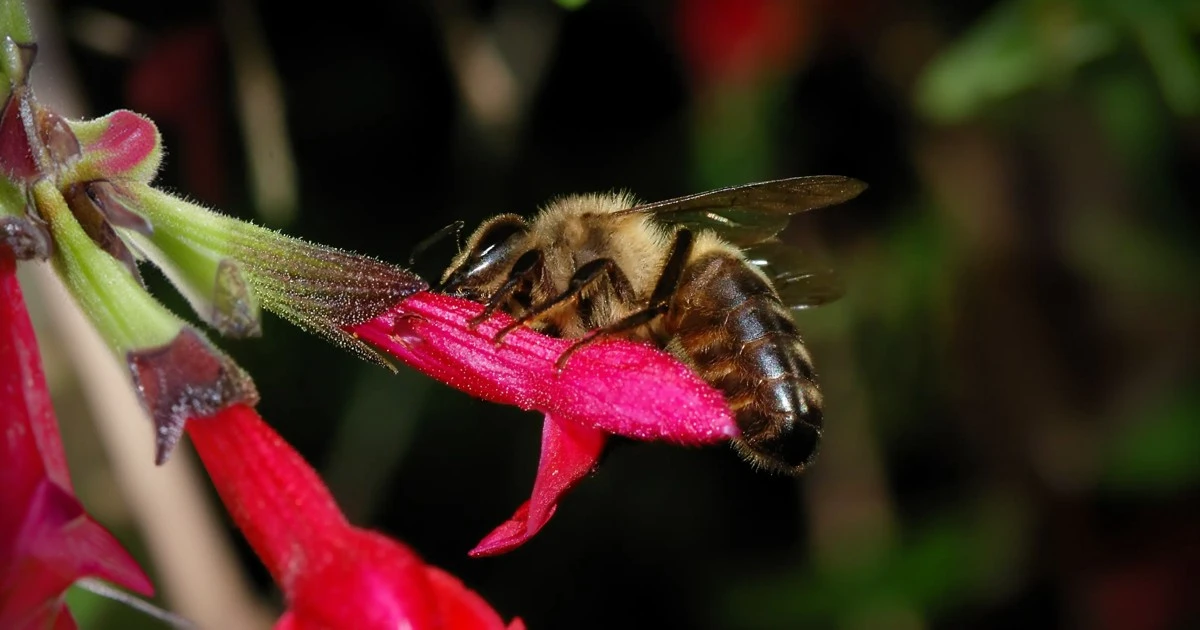
Image Credit - By Alvesgaspar, Wikimedia Commons
European Dark Bee: Native Survivors Beat Disasters
Modern agriculture forces nature to run on a factory schedule, expecting uniform output regardless of the weather. This demand for consistency accidentally breaks the biological gears that keep local species alive during disasters. Industrial farming swaps rugged, native survivors for high-performance hybrids, trading long-term stability for a quick jar of honey. But when the climate shifts and the rain doesn't stop, the high-yield imports collapse while the locals barely notice the change.
In the forests of Chimay, Belgium, a dedicated group of keepers fights to reverse this industrial error. They understand that resilience comes from thousands of years of struggle, not a few decades of lab selection. The European dark bee (Apis mellifera mellifera) carries the genetic code of the north, forged by ice ages and damp summers. Protecting this code requires extreme measures, including a highly controlled "wedding flight" where virgin queens meet carefully selected mates. This work exceeds standard beekeeping definitions, serving as a desperate bid to restore a biological clock that we almost smashed.
The Chimay Breeding Sanctuary
Controlled isolation prevents the genetic chaos that destroys local adaptations. If a native queen mates with an imported drone, millions of years of survival data vanish in a single generation.
To stop this erasure, Hubert Guerriat established a stronghold in South Hainaut in 1983. According to a 2026 report by The Guardian, this yearly journey, which began in 2000, aims to distribute the genetics of the threatened European dark bee. Keepers travel from as far as the Netherlands, France, and Germany, driving over 300 kilometers to reach this genetic fortress. They bring virgin queens to a protected zone spanning 30,000 hectares (74,000 acres). Here, the odds shift back in favor of nature. Roughly 1,000 queens fly out to mate with fewer than 20 distinct males. This scarcity is intentional.
The queens store lots of sperm from this brief encounter, retaining the genetic material for many years. This single flight dictates the future resilience of the entire colony. Through strict filtering of the male bloodline, Guerriat ensures that the offspring maintain the traits necessary to survive Northern Europe’s brutal weather. The sanctuary acts as a time capsule, preserving a lineage that predates modern borders.
Resilience vs. Industrial Yield
Hardships reveal true value, while easy days only mask weaknesses. Commercial beekeepers often prioritize maximum honey production above all else, ignoring the cost of keeping fragile bees alive.
Hubert Guerriat compares the European dark bee to rugged highland cattle, while commercial hybrids resemble industrial dairy cows. The dairy cow produces massive amounts of milk but creates a biological debt; it requires constant medication, specific food, and warm shelter. The highland cow survives on rough terrain and neglect. In 2024, a summer of heavy rainfall proved this point. Hybrid crops failed, and commercial hives starved as their bees refused to hover in the wet.
Meanwhile, the dark bees continued their work. The World Bee Project notes that this Through co-evolution with native species, this subspecies developed resilience to the cold winters and limited summers of northwestern Europe.
They forage in light rain and temperatures that keep other subspecies grounded. Their metabolic efficiency allows them to shut down brood rearing when resources drop, conserving energy for winter. A hybrid queen keeps laying eggs regardless of the weather, creating thousands of hungry mouths that the colony cannot feed. The native queen waits.
The Threat of Genetic Pollution
Introducing "better" genes often destroys the specialized dominance a species holds over its home turf. Beekeepers import foreign strains like the Austrian Carnica or Italian Ligustica to boost short-term harvest, but this creates a permanent mess.
When these foreign drones mate with local queens, the resulting hybrids lose the specific advantages of both parents. Research published in PMC states that habitat destruction, parasites, and crossbreeding with southern bee varieties continue to endanger its populations.
Conservationists argue that you cannot simply swap parts in a connected ecosystem. Guerriat notes that the natural balance resembles a precision Swiss timepiece; substituting a random gear causes the whole device to malfunction.
The outline of foreign bees also brings new diseases. Imported stock frequently carries pathogens that local populations cannot handle. However, the European dark bee shows signs of superior disease tolerance due to its local origins. Some keepers even observe behavioral defenses against invasive predators like the Asian hornet. The native bees reduce their activity late in the season, presenting fewer targets when hornets are most aggressive.
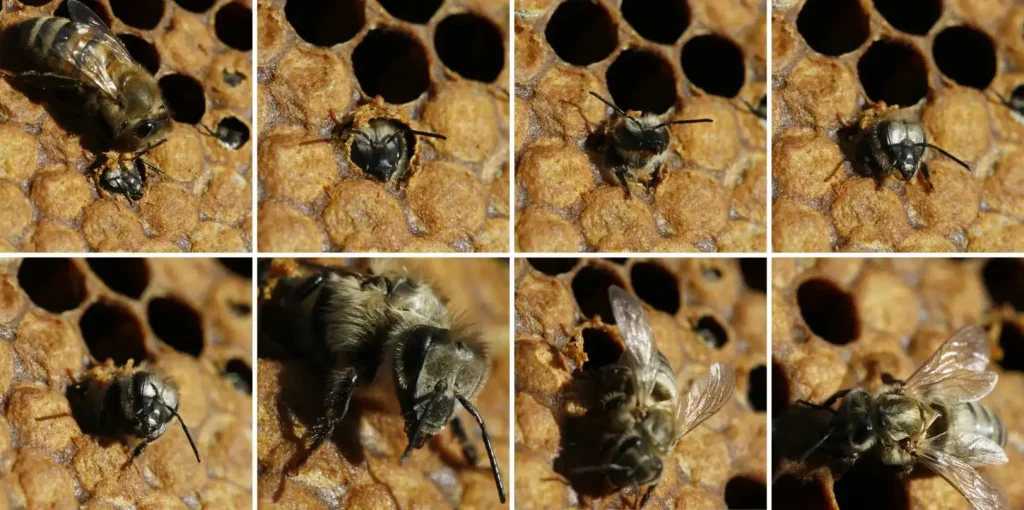
Image Credit - By Wikimedia Commons
Identifying the Native Strain
Looks deceive, but the microscopic details on a wing tell the undisputed truth. You cannot rely solely on color to spot a pure native bee.
While the European dark bee typically features a stocky body with abundant thoracic hair and a dark, black abdomen, hybrids can look similar. Pure strains score a 2.1 on the pigmentation scale (0-9), appearing nearly black. Any yellow or orange spots usually signal genetic contamination. However, as noted in the EurBee9 Abstract Book, experts use monitoring of hybridization and wing morphometrics to identify pure European dark honey bees and support breeding. DNA sequencing offers the final verdict, separating the true natives from the imposters.
Keepers also look at physical traits like tongue length. The integral bee has a shorter tongue (5.7-6.4mm) compared to some foreign cousins. Critics point out that this limits access to deep flowers like long-tubed clover. Yet, this "limitation" is simply a specialization for different flora. The bee fits its environment perfectly, even if it doesn't fit the requirements of every commercial crop.
A History of Survival and suppression
Survival strategies take millennia to forge but only decades to forget. The European dark bee migrated from the Tien Shan Mountains in Central Asia to Europe after the last Ice Age, around 9,000 BC.
For thousands of years, this bee ruled a territory stretching from the Urals to Ireland and the Pyrenees to Scandinavia. It adapted to every local quirk of the landscape. However, human interference nearly wiped it out. In the 20th century, the introduction of hybrids began the decline. A strange chapter in this history involves the Nazi "Blood and Soil" policy of 1937, which initially protected the native bee. But after a Nosema epidemic in the 1940s decimated colonies, the policy shifted to favor the Austrian A. m. carnica. A study in the NCBI database describes Nosematosis as a disease caused by 2 types of Microsporidia: Nosema apis and Nosema ceranae.
By the mid-20th century, many believed the native strain was doomed. In the UK, experts thought the dark bee was extinct until a rediscovery around 2013. Now, groups like the BIBBA (Bee Improvement and Bee Breeders Association) fight the narrative that these bees are gone. They argue that importers peddle the extinction story to sell more foreign queens.
The Aggression Debate
Bad reputations often come from misunderstood mixtures rather than the pure source. A common argument against the European dark bee is its temper.
Critics, including the famous monk Brother Adam, claimed the native bee possessed a "fatal flaw" of nervousness and aggression. Wikipedia and other sources cite its reputation for stinging. However, modern advocates argue this is a case of mistaken identity. The aggression often manifests in "F2 hybrids"—the offspring of a pure queen and a foreign drone. These mismatched genetics create defensive, angry colonies.
Is the European dark bee actually dangerous? Pure strains are typically docile and easy to handle when managed correctly. The "stingy" behavior usually results from poor handling or hybridization. When keepers work with pure stock, they find a calm bee that holds the comb firmly. Isabelle Noé, who runs over 100 hives, describes the activity as highly habit-forming. The joy comes from working with a creature that understands its environment, not fighting against a confused, angry hybrid.
Sustainable Beekeeping Economics
Doing less often yields more stability in a volatile world. The modern commercial model relies on high inputs to sustain high outputs, a risky gamble when prices fluctuate.
The native bee offers a different economic path. While the European dark bee might produce a lesser amount of honey per hive equated to an Italian hybrid, it also demands far fewer resources. The survival rate is higher, meaning keepers spend less money replacing dead colonies each spring. In the United States, colony collapse rates hover around 60%, driving up costs. A native colony manages its own winter stores effectively.
Consumers pay a premium for this stability. Honey from these specific hives sells for around €4.50 (£3.90) per 250g. The value lies in the sustainability of the practice. Through reliance on a bee that consumes less sugar syrup and requires fewer chemical treatments, the beekeeper protects the local ecosystem. Pollinators are not substitutable. Local biodiversity depends on the specific traits of the native bee. When we support the native strain, we support the thousands of plants that evolved alongside it.
The Future of the European Dark Bee
Nature prioritizes long-term survival over quarterly profits. The European dark bee represents a biological investment that pays off when the environment turns hostile. While industrial agriculture pushes for generic, high-output solutions, the keepers in Chimay prove that local specificity saves lives. Through the maintenance of a pure genetic reservoir, they ensure that we have a backup plan when the hybrids fail. The choice is between a fragile system that breaks in the rain and a rugged one that has weathered the storms since the Ice Age.
Recently Added
Categories
- Arts And Humanities
- Blog
- Business And Management
- Criminology
- Education
- Environment And Conservation
- Farming And Animal Care
- Geopolitics
- Lifestyle And Beauty
- Medicine And Science
- Mental Health
- Nutrition And Diet
- Religion And Spirituality
- Social Care And Health
- Sport And Fitness
- Technology
- Uncategorized
- Videos

