
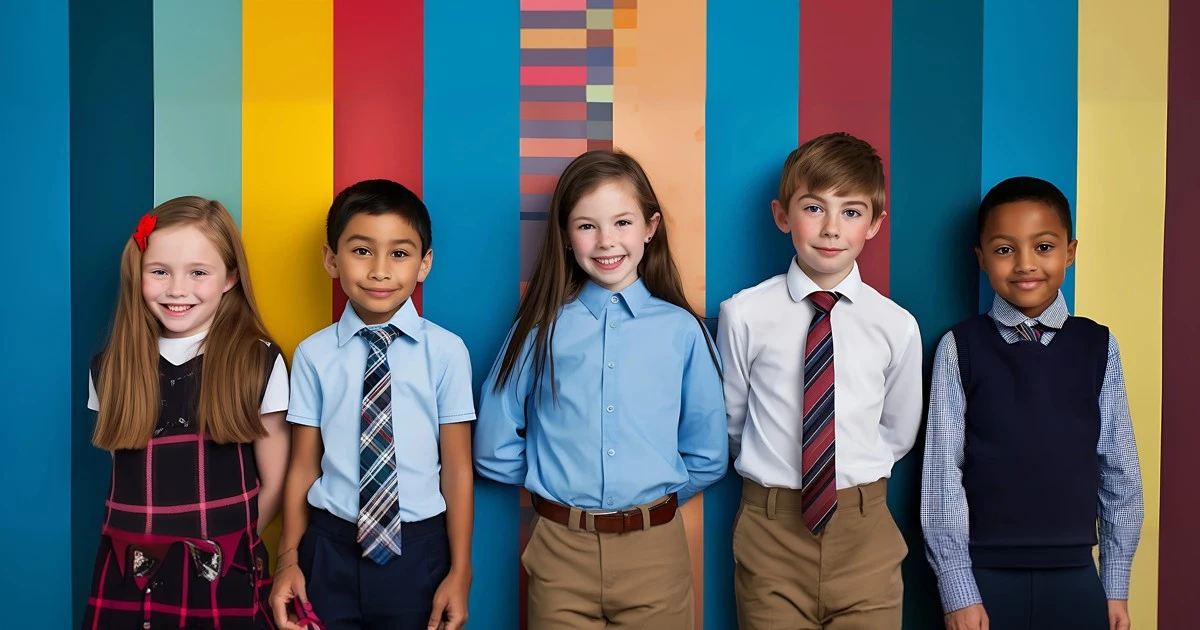
New School Uniform Policy Ditch Blazers For Gym
Strict dress codes often create the very rebellion they try to suppress. When you force a student into an uncomfortable blazer, you unwittingly prioritize compliance over concentration. This realization is currently driving a massive shift in classrooms across the country. Schools are abandoning rigid traditions for activewear, claiming that comfort actually improves academic focus. The Archway Learning Trust recently announced a major overhaul to their school uniform policy starting this September. They aim to prove that relaxed clothing leads to sharper minds.
Principal Tyers leads this charge, aiming to boost attendance and participation by removing physical barriers. The administration believes that generic polos and hoodies support sensory-sensitive pupils better than stiff formal wear. While tradition dictates that blazers prepare children for corporate life, modern educators argue that physical comfort is the real key to learning. This change concerns more than fashion. It forces a complete rethink of how we manage student behavior and expenses.
The Financial Weight of Tradition
Price tags often dictate educational access more than we care to admit. When a school mandates expensive branded gear, they essentially place a toll booth at the classroom door. According to the Children's Wellbeing and Schools Bill policy summary notes, a secondary school kit averages £442, while primary kits sit around £343. These numbers create real problems for families. The Children's Society reports that 38% of parents struggle with these costs. Strict branded requirements accidentally exclude lower-income students before the first bell even rings. The new legislation regarding the "branded item cap" aims to protect roughly 4 million pupils from these spiraling costs.
The Archway Learning Trust’s new school uniform policy tackles this financial strain head-on. They plan to reduce the financial burden on families by switching to generic activewear. This move prioritizes affordability alongside practicality. Critics from the Schoolwear Association argue on their website that because children wear uniforms for approximately 195 days a year, higher quality items actually save money over time. They claim that generic items offer lower quality and require frequent replacement. However, proponents of the change insist that the initial savings outweigh potential durability issues. Parents facing the immediate crunch of a £442 bill often prefer the flexibility of cheaper, replaceable items over a single expensive investment.
How Stiff Fabric Stifles Brain Development
Clothing restricts movement, and restricted movement limits how a child’s brain builds connections. You cannot expect a child to develop resilience while physically hindering their ability to play. The Youth Sport Trust CEO views the shift to activewear as a low-effort way to increase physical activity. Children in stiff blazers and formal shoes often avoid vigorous play during breaks. This avoidance has consequences. Running, climbing, and jumping are essential for developing coordination and physical literacy. Formal shoes and skirts act as physical barriers.
Research published by the University of Cambridge found that traditional uniform policies can act as a barrier to physical activity. An Op-Ed author on the subject notes that formal attire mimics an office aesthetic that ignores a child's biological need for movement. Restricting play blocks necessary developmental stages. The new policy removes these physical shackles. It allows students to move freely, which supports both their physical health and their mental engagement. Principal Tyers emphasizes that the current design restricts sensory-sensitive pupils. A softer, more flexible uniform supports inclusion. It allows students to focus on the lesson rather than the scratching tag or the tight collar distracting them.
The Myth of Academic Correlation
We often confuse looking smart with thinking smart. A tidy tie does not guarantee a tidy mind, yet schools have operated on this assumption for decades. Academic research challenges the link between formal clothes and grades. Writing in the Journal of Educational Research, Brunsma and Rockquemore found a negative effect of uniforms on student academic achievement. This data suggests that forcing students into suits might actually hurt their performance rather than help it. Psychology Professor Dodd reinforces this view. His data indicates zero link between uniform rigor and concentration levels. Achievement remains unaffected by the formalism of clothing. In fact, strict policing of dress codes can damage the teacher-student bond. When teachers spend valuable class time checking for untucked shirts, they erode trust. This friction distracts from the learning objectives.

Do strict uniforms improve grades?
Research suggests they do not; studies show zero link between clothing formalism and academic achievement or concentration levels. The Archway Learning Trust prioritizes community feedback over these hollow traditions. Their goal is increased attendance, which leads to higher engagement and improved achievement. They bank on the idea that students who feel comfortable and accepted are more likely to show up and work hard.
History Reveals the True Purpose of Uniforms
We assume blazers signify prestige, but they originally signaled the exact opposite. History shows that uniforms began as a way to mark the poor rather than the elite. Historical records cited by Britannica note that the Archbishop of Canterbury mandated the first standardized dress—the "cappa clausa"—in 1222 AD. Later, in the 16th century, charity schools used uniforms to signal low status. The clothing marked the students as recipients of aid. Over time, this flipped. In the Derby region, schools historically favored informal codes like polo shirts before 2006. The post-2006 Academy boom brought a shift toward formal blazers to mimic private institutions.
Now, the trend is reversing again. Schools are returning to practical wear, prioritizing function over a manufactured image of prestige. The Admissions Code 2012 legally frames this issue. It states that cost cannot prevent school entry. Governors are obligated to prove "best value" for parents. The return to casual wear aligns with this legal requirement. It strips away the artificial prestige of the blazer to ensure that education remains accessible to all. The new policy reflects a modern understanding of these historical and legal truths.
The Corporate Prep Fallacy
Schools claim to prepare kids for an office that no longer exists. The modern workplace values flexibility and output over stiff suits and ties. Traditionalists argue that blazers aid discipline and create a "ready to learn" mindset. They believe this formal wear prepares students for corporate life. An Industry Representative from the Schoolwear Association defends blazers as proven, practical, and durable. They argue that formal wear fosters a professional atmosphere. However, the post-Covid reality contradicts this. Hybrid working and casual codes dominate the modern professional world. Adults rarely wear full suits to work anymore. Enforcing a 1950s dress code on 2020s students creates a disconnect. It prepares them for a version of the workforce that has largely vanished.
Why do schools still enforce blazers?
Many schools believe formal wear strengthens the school ethos and reduces visual inequality among students. The Head of Marshland High offers a counter-view, arguing that uniforms strengthen the school ethos. He believes values are reinforced through dress and that equality improves through the reduction of visual inconsistency. Yet, this view clashes with the reality of the changing job market. The Archway Learning Trust’s move suggests that preparing students for the future means teaching them adaptability, not just how to tie a knot.
The Battle Between Durability and Cost
Manufacturers fight to keep blazers because generic clothes destroy their profit margins. A branded blazer locks parents into a specific supplier, while a generic hoodie opens the market to supermarkets. The Schoolwear Association argues that longevity offsets the initial expense. They claim a quality blazer lasts longer than cheap activewear. However, this ignores the immediate cash flow problem many families face. Critics argue that activewear is cheaper to replace and easier to wash.
Manufacturers and retailers set higher prices for branded items due to exclusivity and claimed higher durability compared to supermarket alternatives. The cost of ownership debate is central to the new school uniform policy. While a blazer might last two years, the initial £40-£60 outlay is a hurdle. A £10 hoodie might need replacing sooner, but the lower entry price helps parents manage their monthly budgets. Industry confusion regarding new laws complicates this further. Retailers and schools often disagree on how to interpret the "branded item cap," leaving parents caught in the middle.
Implementing the Change
Changing a culture requires winning over the people who live it daily. The Archway Learning Trust understands that buy-in is essential for success. The implementation starts this September. The new policy becomes mandatory for Year 7 students immediately. For Year 8 and above, the change is optional for one year. This phase-in strategy allows older students to wear out their existing uniforms, reducing waste and immediate cost for parents of older children. Principal Tyers anticipates that this shift will boost student presence.
The logic is linear: increased comfort leads to better attendance, which drives academic success. The Trust CEO emphasizes that collaboration is central to their mission. Engaging parents and students drives positive outcomes because it removes barriers. Prioritizing values-led collaboration allows the school to prove that a relaxed dress code creates a stronger, more focused learning environment. They are betting that the removal of strict sensory and financial barriers will do more for discipline than a blazer ever could.
A New Standard for Success
Comfort creates a foundation for engagement that rigid discipline cannot match. The Archway Learning Trust is testing a theory that could reshape education nationwide. The Trust addresses the financial struggle of 38% of parents and the sensory needs of countless students by ditching blazers for activewear. This school uniform policy acknowledges that the world has changed. It prioritizes the mental and physical well-being of the student over the visual uniformity of the group. While traditionalists and industry reps warn of lowered standards, the data points to a different reality. When students feel good, they learn better. The shift from formal wear to activewear represents a rise in common sense rather than a drop in standards. The future of education looks a lot more comfortable, and likely, a lot smarter.
Recently Added
Categories
- Arts And Humanities
- Blog
- Business And Management
- Criminology
- Education
- Environment And Conservation
- Farming And Animal Care
- Geopolitics
- Lifestyle And Beauty
- Medicine And Science
- Mental Health
- Nutrition And Diet
- Religion And Spirituality
- Social Care And Health
- Sport And Fitness
- Technology
- Uncategorized
- Videos

