
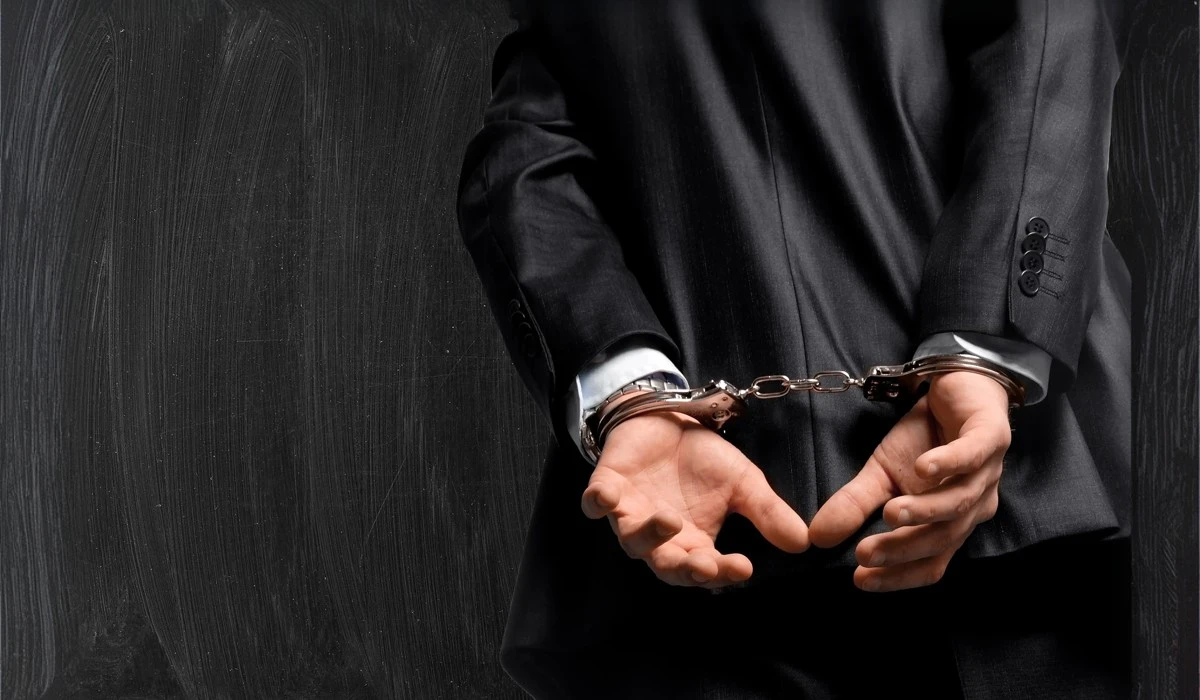
Australian Defamation Trial and SAS War Crimes
When you sue journalists for lying about you, you have to prove exactly what happened. That is precisely what made this lawsuit so costly.
In 2018, The Age, along with The Sydney Morning Herald, and The Canberra Times published allegations of severe misconduct during Australian military deployments to Afghanistan between 2009 and 2012. The suspect responded by suing all three outlets for defamation. This legal campaign lasted seven years and became widely known as Australia's trial of the century.
The media companies fought back with the truth defence. A Federal Court judge found that the reported murders carried substantial truth. What are the accusations against the Australian SAS? Investigators claim elite soldiers executed unarmed detainees and civilians during combat deployments in Afghanistan. As detailed by Reuters, the 2020 Brereton Report officially documented reliable evidence of 39 unlawful killings linked to Australian personnel, resulting in 19 existing and former soldiers being referred for investigation, permanently altering public perception of the military's conduct overseas.
A $30M Defamation Battle That Triggered a War Crimes Probe
The financial scale of this dispute was staggering. Reuters called it the most expensive defamation battle in Australian history. ABC News reported the suspect possibly will face a $30 million bill just for Nine Entertainment's legal costs. Billionaire Kerry Stokes and Australian Capital Equity backed the suspect financially. The early trial consumed roughly $30 million, with an appeal adding another $4 million. The court ultimately ordered the suspect to repay the media companies. That civil defeat gave police a detailed roadmap to pursue Australian SAS war crimes in a criminal court.
Overcoming the 9,000km Evidence Gap
When the crime scene is on another continent, traditional detective work does not apply.
Police faced a real problem. The supposed crimes happened 9,000 kilometers away from Australian jurisdiction. The Office of the Special Investigator confronted that obstacle from day one. Ross Barnett from the OSI outlined the strict limitations plainly: entering Afghanistan proved utterly impossible for Australian authorities. There were no visual records, no dimensional data, no accessible locations to evaluate. No one could recover ballistics from the villages. Biological trace analysis was off the table. The victims' bodies remained completely out of reach.
So, investigators changed their approach. Rather than searching for physical proof, the OSI and federal police built their case around witness testimony, operational command structures, and the findings from the civil court. The defamation trial, in effect, became the crime scene.
The Anatomy of Five Direct Executions
Military hierarchy matters here. It transforms orders into direct criminal liability for the officer who gave them.
The suspect faces five specific charges, each carrying a maximum penalty of life imprisonment. As reported by AP News, prosecutors outline two allegations of war crime murder: one count of direct murder and one of joint commission. The remaining three charges involve assisting, encouraging, advising, or facilitating murder.
Police claim the suspect either killed victims directly or supervised junior soldiers who carried out fatal shots. These charges stem from three specific incidents in Afghanistan. In 2009, 2 deaths occurred at the Whiskey 108 compound in Kakarak. An older man and a disabled man were executed. In 2012, a man named Ali Jan died in Darwan village after soldiers pushed him over a cliff edge and then shot him. Later that same year, two civilians died in Syahchow. These five deaths form the core of the criminal prosecution.
Defining Combatants Versus Captives in Australian SAS War Crimes
The difference between a lawful combat death and a murder charge comes down to what the victim was doing in the seconds before he died.
That is the central dispute in this case. The suspect strongly denies all allegations. He labels the claims as outrageous and malicious, arguing that all deceased were active combatants during military operations. Federal police reject this entirely. AFP Commissioner Krissy Barrett publicly stated the police position: the deceased did not participate in combat, held captive status, and were completely unarmed. Military personnel had full control over these individuals right before they died.
After the incident at the Whiskey 108 compound, soldiers removed a disabled victim's prosthetic limb and used it as a drinking cup at the Fat Ladies' Arms base bar. This detail became a focal point in media investigations and shocked the public when it surfaced.
The Museum Plaque and the Falling Public Hero
An institution can update a plaque faster than a court can deliver a verdict. The suspect left military service in 2013, as a celebrated national figure. He was a Victoria Cross recipient. According to The Guardian, he earned the Father of the Year title and chaired the government's Australia Day council. Now, former colleagues are publicly calling for his military honors to be annulled.
The Australian War Memorial reflects this shift in real time. The museum holds exhibits with his medals, uniform, and heroic paintings. Rather than removing the display, the museum updates the nearby plaque regularly. Visitors now read reflections of the civil court findings and his criminal arrest alongside the artifacts. The physical space captures exactly the tension between who he was and what he is now accused of doing.
Whistleblowers in Prison While Investigations Run
The person who exposed the misconduct went to prison before the soldiers he reported on ever faced a judge.
According to Reuters, while investigators built their case against elite soldiers, the previous military lawyer who leaked the initial classified documents to journalists received a sentence of 5 years and 8 months in prison. Whistleblower David McBride currently sits in prison. Senator David Shoebridge continues to advocate for his release, pointing to the contradiction at the heart of this situation.
Was anyone charged from the Brereton Report? Yes. Authorities have started charging individuals based on findings that flagged 19 ADF members for investigation. In early 2023, former SAS soldier Oliver Schulz became the first person arrested and prosecuted for a war crime from these deployments.
Approximately 39,000 Australian personnel served in Afghanistan over the course of the conflict. The nation suffered 41 fatalities during those years. Human rights advocates, including Rawan Arraf from the Australian Centre for International Justice, argue that accountability is not optional. Fulfilling international legal duties means delivering justice to the affected Afghan communities, even when the process is slow and difficult.
The Shift from Civil Certainty to Criminal Doubt in Australian SAS War Crimes
A defamation verdict and a murder conviction are not the same thing. The standard of proof just got much harder to meet.
The suspect appeared for an online bail hearing on April 8, 2026. The hearing was adjourned to June 4. Prime Minister Anthony Albanese addressed the nation quickly, calling for the judicial process to be respected and warning against government interference.
The legal standards now work against the prosecution in one key way. The Federal Court defamation trial only required established on a preponderance of probabilities. The civil judge decided the murders likely occurred. Criminal courts require something more. What is the penalty for war crimes in Australia? A conviction carries a maximum penalty of life imprisonment for each individual charge. To get there, prosecutors must prove these Australian SAS war crimes beyond a reasonable doubt, and they must do it almost entirely on witness memory and civil court precedent, without a single piece of physical proof from the scene.
The Final Verdict on Australian SAS War Crimes
A civil courtroom forced a decorated soldier to document his own history. Police used that history to build a criminal case.
The government worked around an impossible 9,000km investigative gap by letting a defamation trial test the evidence first. The suspect traded his public standing for a solitary cell before a criminal judge ever heard the case. Now prosecutors must prove that the men killed in Afghanistan were unarmed and under military control when they died. The result of Australian SAS war crimes accountability now depends on whether investigators can close that case beyond a reasonable doubt, armed with witness accounts and a civil ruling, and nothing more from the scene where it all happened.
Recently Added
Categories
- Arts And Humanities
- Blog
- Business And Management
- Criminology
- Education
- Environment And Conservation
- Farming And Animal Care
- Geopolitics
- Lifestyle And Beauty
- Medicine And Science
- Mental Health
- Nutrition And Diet
- Religion And Spirituality
- Social Care And Health
- Sport And Fitness
- Technology
- Uncategorized
- Videos

