
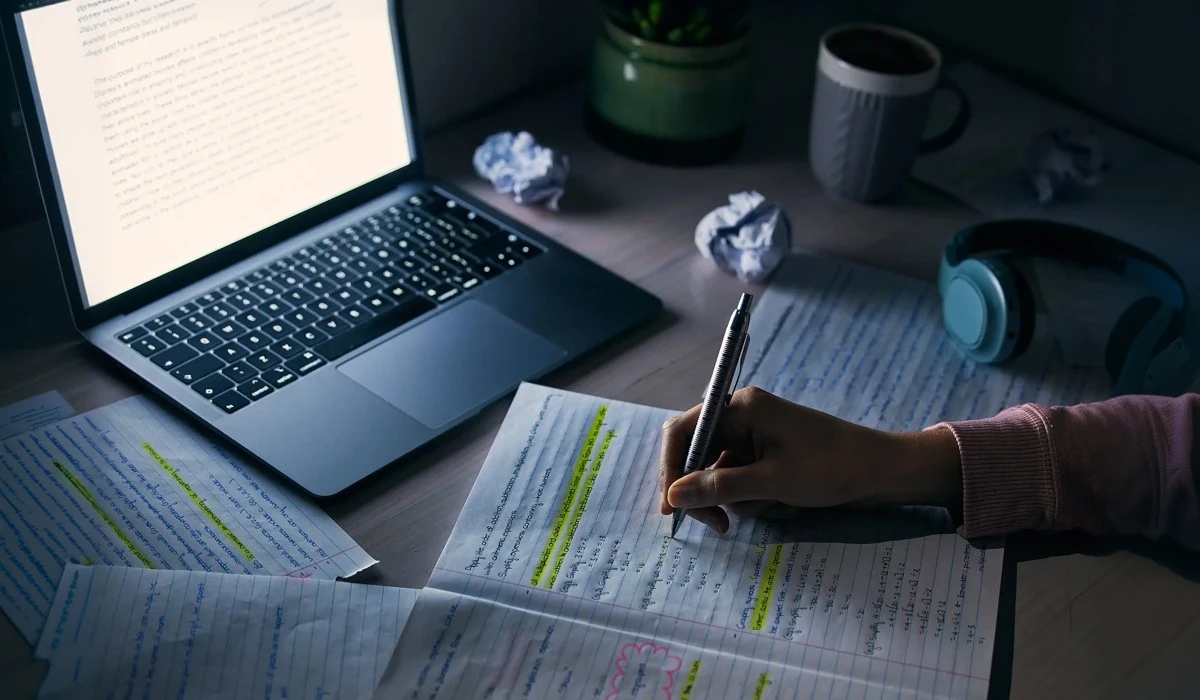
Swift Copy Editing Means Faster Proofreading
When you spend twenty minutes debating a single hyphen, you burn through cognitive fuel rather than simply checking grammar and delaying every project in your queue. Most writers and editors believe that speed kills quality, so they work slowly to stay accurate. In reality, a slow pace often leads to word blindness, where the brain fills in gaps and misses obvious errors. Fast workflows rely on clear rules that remove the need to think about repetitive choices. Setting up a strict system allows you to stop being a judge and start being a technician. This approach turns editing and proofreading from an exhausting chore into a streamlined process. Productivity results from knowing exactly what to look for before you even open the file. This guide explains how to use style guides and copy editing techniques to finish work faster without letting a single typo slip through.
The Strategic Role of Style Guides in Speed
Decision fatigue is the biggest enemy of a fast editor. When you have to decide between "email" and "e-mail" every time the word appears, you waste mental energy. Style guides exist to make these choices for you before you start. As documented by Project Gutenberg, Horace Hart first established these standards in 1893 when he created the Oxford University Press rules to set requirements for punctuation, typography, and citation. The source notes that the original title of his work suggests he wanted to ensure every compositor and reader remained consistent. Today, the Chicago Manual of Style serves a similar purpose. What started as a 203-page manual in 1906 has grown to over 1,100 pages because our language has become more involved. Using these standards means you never have to guess about capitalization or comma placement again.
Customizing Guides for Brand Consistency
While large manuals are helpful, they are too slow for daily use. High-speed teams create a one-page cheat sheet of their primary style guides. This sheet tracks specific spellings or unique brand names that a general manual might miss. Research from the Columbia Journalism Review notes that the Associated Press Stylebook was originally only 68 pages long in 1953. The Review mentions that early stylebooks often started as technical manuals to ensure consistency in print, and the 1909 AP guide specifically focused on the mechanics of story transmission via radio and telegraph. When you follow this example by keeping your rules brief and accessible, you ensure that your copy editing remains 100 percent consistent throughout a long document. When everyone knows the rules, the work moves twice as fast.
Mastering Copy Editing for Rapid Refinement
Do not look for typos during your first pass. Effective copy editing requires structural triage, which means you fix the big problems before the small ones. The Jet Propulsion Laboratory developed a system in 1976 called the Levels of Edit. They identified nine different types of review, including structural integrity and language clarity. If you try to fix a comma in a sentence that you end up deleting later, you have wasted your time. Focus on the logic and flow of the piece first. This ensures the base is solid before you worry about the decorative details of the prose.
Developing an Eye for Linguistic Patterns
Your brain can be trained to see common errors as visual patterns. Most writers have crutch words or rely too much on passive voice. When you learn to spot these patterns instantly, your copy editing speed increases significantly. You can also use the SIFT method to handle facts quickly. This involves stopping to investigate the source and finding better coverage if a claim seems weak. What is the difference between copy editing and proofreading? Copy editing focuses on improving the overall substance, style, and clarity of the text, whereas proofreading is the final check for mechanical errors like spelling and punctuation. When you separate these tasks, you keep your mind focused on one goal at a time.
Essential Tools for Faster Editing and Proofreading
Technology should handle the boring parts of editing and proofreading so you can focus on the nuance. Automated checkers act as a first pass to catch obvious issues like double spaces or basic misspellings. These tools use algorithms like the Flesch-Kincaid Readability Test to measure how accessible your writing is. This test was originally developed for the US Navy in 1975 to ensure technical manuals were easy to follow. When software flags these issues early, it saves you from doing the manual labor yourself. It allows the human editor to spend more time on tone and flow, which machines still struggle to understand.
Custom Macros and Keyboard Shortcuts
If you want to move like a pro, you must stop using your mouse. Paul Beverley, a well-known editor, developed over 800 free macros to automate tasks in Microsoft Word. As noted on his website, these tools are designed to speed up any editorial task that is performed repeatedly, such as standardizing hyphenation or fixing typos across a 100,000-word manuscript in a matter of seconds. Another tool called PerfectIt assists with consistency by locating every instance where a term is capitalized differently. A guide for the software explains that it can check phrases to see if they appear in both uppercase and lowercase, such as "President" and "president". These technical solutions reduce the manual labor involved in copy editing and ensure that the mechanical details are perfect. When you automate the repetitive stuff, you gain hours of your life back every week.
Optimizing the Editorial Environment for Deep Work
Working on too many things at once is a myth that slows you down. Education Northern Ireland notes that Cognitive Load Theory suggests our working memory can only handle a few pieces of information at once, with estimates ranging between four and seven items. If you have music with lyrics playing or notifications popping up, your brain has less power to find errors. Creating a silent environment is important for a high-quality final pass. Some editors even use a technique called Bionic Reading, which Oxford Learning describes as selectively bolding the first few letters of words. While advocates cited by Literary Hub claim this helps the eye move across the page faster without losing comprehension, some initial tests suggest the font may not actually increase reading speed. When you minimize distractions, you allow your brain to enter a state of deep focus that is required for accurate editing and proofreading.
Time-Blocking the Editorial Pipeline
Segmenting your day into specific blocks of time keeps your momentum high. According to Todoist, the Pomodoro Technique is a time management method that involves focused work during 25-minute intervals, known as pomodoros, and taking a five-minute break. This approach is very effective for editors as it prevents word blindness by providing regular breaks. After about 50 minutes of reading, your eyes stop registering errors because the brain gets tired. Working in 25-minute sprints followed by a short break keeps your mind sharp. How can I improve my editing speed? Standardized style guides allow you to increase your speed as they eliminate guesswork and allow you to perform multiple specialized passes rather than trying to fix everything at once. This method ensures that each phase of the project receives your full attention.
Collaborative Workflows and Version Control
Nothing slows down a project like a messy hand-off. When writers and editors use tracked changes effectively, the feedback loop stays tight. You should provide clear comments that explain why an edit was made, especially if it relates to the primary style guides. This teaches the writer and prevents them from making the same mistake in the future. In the industry, we use the term "Stet" to indicate that an original word should remain. This Latin term has been used since the 18th century to cancel an edit. Clear communication ensures that no time is wasted on redundant feedback or confusing corrections.
Real-Time Editing vs Asynchronous Review
Choosing the right way to collaborate depends on your deadline. Real-time editing in shared documents is great for short, urgent projects. However, asynchronous review is usually better for deep copy editing because it allows the editor to work without interruption. You must decide which model fits your team’s timeline. If you are working on a high-volume project, having a clear version control system is vital. This prevents people from working on the wrong draft, which is a common mistake that can cost days of work. An organized workflow is just as important as the editing itself.
Advanced Tactics for High-Volume Copy Editing
When you read a sentence normally, your brain predicts the ending and often skips over typos. To fix this, try reading the text backward from the last word to the first. This breaks your brain's ability to understand the meaning, which forces you to look at the individual characters. This method is a standard practice in professional editing and proofreading because it catches twice as many errors as a standard read. You might also notice the traditional "delta" symbol in old-school proofreading. It is a Greek letter that stands for "delete." Even in a digital world, these old principles of focused character review remain the most effective ways to catch mistakes.
Fact-Checking without the Rabbit Hole

Fact-checking can easily become a distraction that halts your progress. To stay fast, through the use of lateral reading, you can verify sources. This involves opening multiple tabs to see what other reputable organizations say about a topic rather than reading one source deeply. You can also use the Gunning Fog Index to check if your involved sentences are becoming too dense. This formula calculates how many years of education someone needs to read your text easily. When you use these objective metrics, you can make quick decisions about whether a sentence needs to be rewritten or if a fact is solid enough to move on.
The Final Polish of High-Speed Editing and Proofreading
A professional checklist is the best way to ensure quality at high speeds. In his book, The Checklist Manifesto, Atul Gawande shows that even experts make fewer mistakes when they follow a simple list. Your checklist should include specific tasks like checking name spellings and verifying that all links work. This prevents you from having to re-read your style guides for every new document. Following a "do-confirm" list ensures that you don't miss mechanical errors due to a lapse in memory. This provides a safety net that allows you to work much faster during the actual copy editing phase.
Defining the Good Enough Threshold
Perfectionism can be a trap that leads to diminishing returns. You must know when a document has reached the point of being ready for publication. Is there a checklist for proofreading? A professional checklist usually includes verifying name spellings, checking link functionality, ensuring consistent heading styles, and scanning for double spaces or missing punctuation. Once you have cleared your checklist and followed your standards, the document is likely ready. Spending three extra hours to find one tiny comma error in a blog post is rarely a good use of time. Professional editing and proofreading are about balance and meeting the specific needs of the audience.
Building Your Accelerated Editorial Engine
Fast workflows are built on systems rather than raw effort. When you combine strict style guides with automated tools, you remove the friction that slows most editors down. You no longer have to guess about grammar or waste time on repetitive formatting. Instead, you can focus on the art of copy editing, which involves making the text clear and strong for the reader. These methods turn a slow, manual process into a reliable routine that produces high-quality work every time. Accuracy and speed are not opposites; they are the result of a disciplined approach to the page. Implement one new macro or checklist today to see an immediate change in your delivery speed. Improving your editing and proofreading habits is the best way to gain a competitive edge in any writing career.
Recently Added
Categories
- Arts And Humanities
- Blog
- Business And Management
- Criminology
- Education
- Environment And Conservation
- Farming And Animal Care
- Geopolitics
- Lifestyle And Beauty
- Medicine And Science
- Mental Health
- Nutrition And Diet
- Religion And Spirituality
- Social Care And Health
- Sport And Fitness
- Technology
- Uncategorized
- Videos

