
What Can Ancient Aztec Gods Teach Us Today?
Historians often treat ancient mythologies as simple collections of folklore. Scholars read about rain deities and serpent creators and assume these early societies simply invented colorful stories to explain the weather. Mesoamerican rulers operated under a completely different, terrifying reality. The divine realm dictated literal survival. The pantheon formed an ironclad legal and ecological system governing every harvest, every military campaign, and every royal decree. Leaders believed the universe perched perpetually on the edge of total collapse. Preventing the end of the world required constant, brutal human intervention. To fully grasp the deep fears, political strategies, and daily triumphs of this massive empire, researchers must decode their vast divine hierarchy. The Aztec gods functioned as the absolute rulers of a powerful civilization. Decoding these specific deities definitively reveals the most closely guarded secrets of this ancient society, exposing its true nature.
The Foundation of Mesoamerica: Why the Aztec gods Mattered
The universe experienced four distinct ages of creation and apocalyptic ruin before the current fifth age began. From the primordial void, the dual deity Ōmeteōtl birthed four children known as the Tezcatlipocas. These divine siblings engaged in violent cosmic battles that repeatedly destroyed the earth. The First Sun ended when a jaguar army devoured a race of giants. This belief in previous, destroyed worlds created a culture hyper-focused on religious preservation and absolute divine appeasement. Who was the most important Aztec god? While many deities shared supreme power, Huitzilopochtli, the god of sun and war, remained central to their imperial identity. This core theology set the precise stage for everything the empire ultimately built. The constant threat of huge earthquakes ending the Fifth Sun terrified citizens daily.
Daily life governed by divine will
Ancient citizens viewed the universe as existing in a highly delicate equilibrium. Competing powers of opposing divine forces constantly endangered this fragile balance. To combat this instability, society designated themselves as the legendary People of the Sun. They believed it remained their absolute, unyielding duty to provide nourishment directly to the sun. This vital obligation ensured the universe remained operational and balanced. A publication by Cambridge University Press notes that the population centered their religion on powerful spiritual beings through enveloping and time-consuming activities.
The study also states that everyday life heavily featured ceremony and strict timekeeping. Consequently, every single action from birth to death blended the sacred and the mundane. Farmers planted specific crops according to celestial alignments, while merchants conducted trade under the watchful eyes of their patron spirits. Rulers consulted omens before making any significant political decisions. This deep reverence dictated the flow of daily routines and grand ceremonies alike. Failing to honor these forces meant risking severe agricultural collapse, devastating diseases, or even sudden catastrophic destruction.
The Intersection of Faith and Aztec history
According to an article from The Guardian, the nomadic Mexica people finally ended a grueling migration spanning nearly two centuries in the year thirteen twenty-five. The report details how they founded Tenochtitlan on a muddy, unpromising swamp island sitting in the middle of Lake Texcoco. This unlikely location held immense spiritual significance due to a direct divine prophecy. Huitzilopochtli instructed the revered leader Tenoch to search for a highly specific sacred omen.
The community needed to find a golden eagle perched atop a prickly pear cactus, actively devouring a snake. Spotting this exact scene convinced the weary travelers to build their capital on the water. This monumental decision permanently altered Aztec history by establishing a heavily fortified, wealthy island metropolis. Research published by Cambridge University Press suggests the entire founding story proves that spiritual devotion entirely dictated their geographical destiny. Their eventual sprawling capital began as a simple act of strict religious obedience.
Imperial expansion driven by divine mandate
Military strategy necessitates examining the high priest Tlacaelel. A Reuters report indicates he elevated Huitzilopochtli from a minor local hunting spirit into a supreme solar and war deity. This calculated elevation positioned military dominance as an absolute religious necessity. Generals orchestrated elaborate campaigns specifically to capture prisoners and rapidly expand the tribute network for the Aztec gods. Warriors utilized unique weapons like the wooden atlatl alongside blunt, non-venomous arrows. These specific tools wounded enemies to prevent lethal blows on the battlefield. Securing living captives ensured a steady supply of offerings necessary to appease the pantheon. This specific perspective completely changes how ancient historians currently view their aggressive political environment and overall battlefield maneuvers.
Tlaloc: The Supreme Provider and Destroyer
Tlaloc represented a terrifying yet vital force of nature. Displaying a fanged mouth, bifurcated tongue, and distinctive goggle-like ringed eyes, he commanded massive respect. He ruled over essential agricultural fertility, bringing life-giving rain alongside highly destructive hailstorms. In ancient lore, he possessed four giant jars pointing toward the sacred cardinal directions. From the East, he generously dispensed vital, life-giving water for the maize crops. The remaining jars released terrible scourges of drought, deadly disease, and freezing frost upon the fields. Meanwhile, his divine afterlife named Tlalocan provided a lush, verdant paradise. This specific irrigated heaven exclusively welcomed individuals who perished via water-related incidents like drowning or violent storms. This intense duality perfectly encapsulates the deep reverence and sheer terror that agricultural communities constantly felt toward the unpredictable natural daily weather patterns.
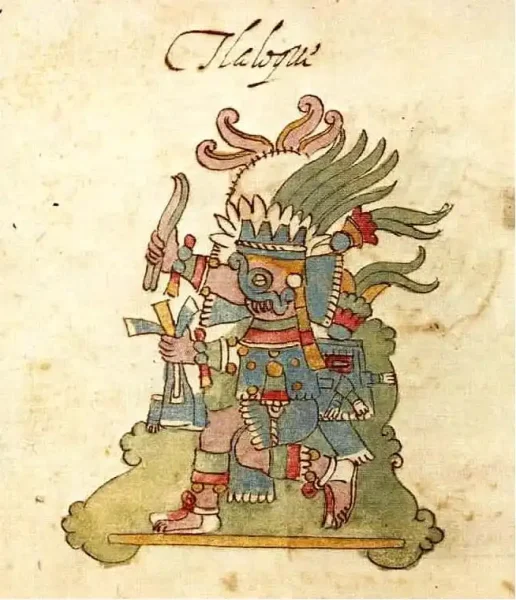
Image credits - Wikimedia Commons
Mount Tlaloc and high-altitude sacrifices
Securing timely rains demanded examining the darker aspects of their ecological rituals. During the intense Atlcahualo festival occurring in late winter, priests conducted terrifying rituals on mountaintops situated at altitudes exceeding four thousand meters. What did Tlaloc demand from the population? He required non-stop offerings, frequently including the sacrifice of children whose tears supposedly guaranteed the annual seasonal rains needed for crop survival. The designated children wore costumes imitating the Tlaloque, the smaller helper deities. Priests intentionally pinched the young victims to make them weep constantly before the final ceremony. Society viewed these tears as powerful sympathetic magic. Priests interpreted a steady flow of tears as a positive omen, meaning imminent, abundant rainfall. This horrifying practice highlights the extreme lengths the empire willingly went to secure their vital, vulnerable food supply.
Quetzalcoatl: The Feathered Serpent of Wisdom
Translating literally to the Feathered Serpent, Quetzalcoatl remained one of the most iconic cultural heroes in ancient Mesoamerica. He held deep associations with the forceful wind, the bright planet Venus, and the rapid advancement of early human civilization. Legends credit him with introducing essential knowledge, including maize agriculture, the detailed calendar system, and the revolutionary concept of writing. Widespread mythological accounts state he ruled the ancient Second Sun. Britannica notes he famously traveled directly into Mictlan, the dark underworld, traveling alongside his loyal canine-headed twin brother Xolotl. The encyclopedia details how the pair retrieved the scattered bones of past generations from the ancient dead. Upon returning, he ground these ancient bones into a fine powder and anointed them with his own drawn blood. This huge act of self-sacrifice successfully created modern humans, cementing his legacy as a deeply compassionate and highly revered creator figure.
The rivalry with Tezcatlipoca
A thorough study of these deities requires unpacking the bitter cosmic conflict between the Feathered Serpent and his powerful brother, the Smoking Mirror. Quetzalcoatl and Tezcatlipoca initially joined forces to violently shape the earth and sky. They attacked the primordial crocodilian earth monster Cipactli, a terrifying process that actually cost Tezcatlipoca his foot. However, this fragile alliance completely shattered during the golden age of the Toltecs. The foundational legends of Tollan describe how Tezcatlipoca disguised himself as a frail, aged man. He maliciously tricked the peace-loving Feathered Serpent into drinking fermented pulque. This resulting intense intoxication caused immense public shame and disgrace. Consequently, the embarrassed ruler forced himself into lonely exile. This famous rivalry reflects the broader moral nuances of the Aztec gods. They existed as highly layered figures embodying both necessary order and unpredictable, devastating chaos.
The Cosmological Calendar and the Aztec gods of Time
Religion combined seamlessly with advanced mathematics and strict timekeeping. The Tonalpohualli, meaning the counting of the days, functioned as a sacred divinatory calendar consisting of exactly two hundred and sixty days. Priests broke this cycle into twenty distinct periods of thirteen days, named trecenas. Every single day and trecena fell under the direct governance of a specific patron deity. This governing spirit supplied the tonalli, or life energy, for that exact date. The assigned energy heavily dictated the daily luck for vital activities like agriculture, warfare, and royal marriages. If a child suffered the misfortune of being born on a cursed day, parents desperately sought interventions from specialized priests to mitigate the bad luck. Escaping religious devotion proved entirely impossible because the calendar firmly bound every human action to a specific, watchful divine ruler.
Solar festivals and agricultural timing
Alongside the sacred cycle ran the Xiuhpohualli, a practical 365-day solar calendar. Officials divided this solar year into eighteen separate veintenas, or twenty-day months, leaving five highly unlucky gap days at the end. This practical calendar strictly dictated mass public rituals and essential agricultural timing. Farmers honored agricultural spirits at precise points in the planting and harvest cycle. The exact mathematical intersection of these two huge calendars occurred precisely every fifty-two years. This massive event sparked the terrifying New Fire Ceremony, also named the Binding of the Years. During this apocalyptic event, citizens extinguished every flame across the empire. A high priest performed a specialized sacrifice to ignite a fresh fire inside the victim’s chest. A successful spark proved the aztec gods granted the sun another safe period.
Rituals, Offerings, and the Debt of Blood
Modern observers frequently view ancient blood rituals through a lens of sheer cruelty, missing the severe religious context driving these actions. The entire practice essentially stemmed from a terrifying concept named the blood debt. Heroic divine figures literally bled and threw themselves into a blazing fire to spark the current sun into existence. Why did the society sacrifice humans? They believed the universe constantly hovered on the brink of collapse, and human blood provided the literal nourishment required to keep the sun moving. This practice functioned as a binding cosmic contract to return the monumental favor. Refusing this harsh duty meant inviting catastrophic global destruction. Citizens considered this a strict cosmic duty to the Aztec gods. Priests viewed the bloody extraction as a grim, essential chore to save the world from absolute darkness and ruin.
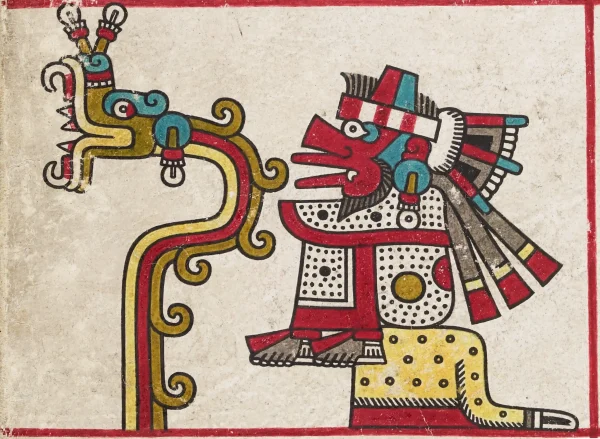
Image credits - Wikimedia Commons
Priestly duties and temple architecture
The physical epicenter of these massive offerings sat firmly in the capital. Builders designed the Templo Mayor as a staggering physical recreation of the mythological Snake Mountain. This massive pyramid featured twin shrines sitting at the absolute peak, exclusively dedicated to the rain bringer and the supreme war spirit. Additionally, a report by The Guardian reveals archaeologists found evidence of massive skull towers containing thousands of fragments near the site of the Templo Mayor.
During the famous rededication of the temple in fourteen eighty-seven, religious officials conducted massive ceremonies. According to History.com, Aztec priests used obsidian blades to slice open the chests of sacrificial victims and offered their still-beating hearts to the deities. Historical estimates suggest they rapidly processed fifteen to twenty thousand prisoners of war over an intense four-day event. Maintaining this cosmic balance demanded a highly disciplined clerical class. Priests endured grueling daily lives filled with fasting, sleep deprivation, and intense physical bloodletting. These spiritual leaders literally bled themselves daily to appease the Aztec gods and ensure the terrifyingly fragile universe survived another morning.
The Downfall: Mythological Prophecies and Historical Reality
In the tense decade leading up to the Spanish arrival in fifteen nineteen, the indigenous belief system heavily affected the royal psychology. Emperor Moctezuma II reportedly suffered extreme distress after witnessing eight catastrophic omens. These terrifying signs included sightings of strange two-headed men and dire warnings from Nezahualpilli, the highly respected seer-king of Texcoco. The psychological toll of these religious warnings deeply unsettled the imperial leadership. Spanish chroniclers heavily propagated a specific narrative following the invasion. They claimed Moctezuma genuinely believed Hernán Cortés represented the resurrected Quetzalcoatl. The exiled Feathered Serpent had famously promised to return from the eastern ocean during the specific calendar year One Reed. Through sheer historical coincidence, Cortés landed his ships during that exact year. This powerful myth heavily shaped early diplomatic interactions and sowed initial confusion among the defending military commanders.
Spanish conquest and the end of an era
Deep-rooted faith in their divine pantheon initially fortified fierce indigenous resistance against the foreign invaders. Warriors fought with incredible bravery to protect their sacred shrines from desecration. However, this same unyielding devotion ultimately contributed to the rapid collapse of the empire. According to AP News, the world-changing battle started on May 22, 1521, and lasted for months until the city finally fell to the conquistadores on August 13.
Spanish colonizers, fighting alongside a massive confederacy of rival indigenous allies like the Tlaxcalans, successfully captured Emperor Cuauhtémoc. A devastating outbreak of smallpox, which the foreigners brought, decimated the population, killing an estimated five to eight million people. This biological disaster completely shattered their powerful military forces. Surviving citizens watched as colonizers buried the glorious Templo Mayor beneath the stone foundations of the new Catholic Mexico City. The physical demise of these temples effectively sealed the tragic end of a once-unbeatable and deeply spiritual civilization.
Decoding the Past Through the Aztec gods
Learning about incredible figures like the fierce rain bringer and the wise feathered serpent provides a brilliant lesson in historical analysis. Grasping the true scope of Aztec history demands abandoning modern perspectives and fully embracing their terrifying, blood-soaked, and highly structured cosmological reality. The Aztec gods dictated every single breath, military strike, and agricultural harvest throughout the vast empire. They demanded extreme sacrifices to keep the universe from crumbling into absolute darkness. Analyzing this relentless divine pressure remains the absolute key to comprehending the daily fears, military triumphs, and magnificent cultural realities of this legendary civilization. Viewing ancient Mesoamerica strictly through this sacred lens completely turns a simple timeline of military conquests into a breathtaking story of cosmic survival. Their grand temples may lie buried, but their intense spiritual legacy permanently shaped human history.
Recently Added
Categories
- Arts And Humanities
- Blog
- Business And Management
- Criminology
- Education
- Environment And Conservation
- Farming And Animal Care
- Geopolitics
- Lifestyle And Beauty
- Medicine And Science
- Mental Health
- Nutrition And Diet
- Religion And Spirituality
- Social Care And Health
- Sport And Fitness
- Technology
- Uncategorized
- Videos

