

The World of Love is Changing Korean Cinema
When stories focus on the moment of impact, they freeze survivors in a state of suffering that ignores the reality of their daily movement. Most films about hardship stop at the tragedy, but the real story happens in the long hours of the following Tuesday. The World of Love shifts the focus away from the damage and toward the person standing in the wreckage. By centering the narrative on daily survival rather than the incident itself, the film changes how the world views recovery.
This shift in perspective explains why a small indie film currently dominates conversations across the global film circuit. Audiences often expect trauma to define a character's every move. Instead, director Yoon Ga-eun allows her protagonist to breathe, eat, and laugh. This choice breaks the mold of traditional drama. It forces viewers to acknowledge that life continues even when the world feels broken. The World of Love creates a new path for Korean cinema by treating recovery as a series of ordinary choices.
The Financial Success of The World of Love
Audience spending habits track with shifts in social tolerance rather than marketing budgets. While big-budget action films usually take the top spots, a quiet story about a seventeen-year-old girl is currently challenging that trend. The World of Love has earned over $1.1 million since its theatrical debut in October 2025. This performance signals a massive win for independent cinema in South Korea. People often ask, how much money did The World of Love make? The film surpassed the $1.1 million mark quickly, proving that audiences want stories with depth.
The film began its journey at the European Film Market in Berlin in February 2025. By the time it reached the South Korean market, it occupied 358 screens. This scale of distribution for an indie project shows immense confidence from theaters. More than 165,000 people bought tickets to see the protagonist’s story on the big screen. On Naver, the primary search portal in South Korea, the movie maintains a high rating of 9 out of 10. These numbers reflect a dark-horse hit that critics did not expect.
Director Yoon Ga-eun admitted that the success feels unreal. She described her current mental state as void, filled with a mix of gratitude and apprehension. Meanwhile, the film continues to draw crowds who find comfort in the journey of the main character. The financial data proves that non-commercial themes can still find a massive audience if the story feels honest. This success allows independent creators to take more risks with challenging subject matter.
Breaking Records in the South Korean Film Industry
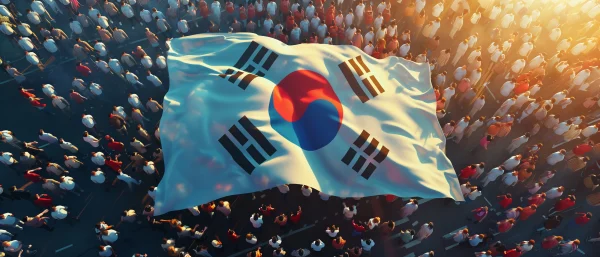
The South Korean film industry usually relies on star power and high-concept plots to drive ticket sales. The World of Love ignores these requirements. It relies on the strength of its script and the relatability of its lead character. Seeing an indie film occupy 358 screens reveals a shift in how distributors view smaller projects. They recognize that a well-told story can compete with blockbusters if it touches on universal human truths.
The high rating on Naver suggests that word-of-mouth marketing drove much of this success. When viewers see a rating of 9 out of 10, they pay attention. This organic growth shows that the film resonates with the average moviegoer, not just film critics at festivals. The $1.1 million gross acts as a beacon for other independent filmmakers who want to tell difficult stories without compromising their artistic vision.
Reclaiming Agency Through the Character of Joo-in in The World of Love
Names function as internal commands that dictate how a character navigates their own history. The protagonist’s name, Joo-in, translates to "Owner" or "Master" in English. This choice gives the character immediate authority over her own life. Instead of being a victim defined by an event, she acts as the master of her own future. She explicitly rejects the idea that an assault makes her a "destroyed soul." This reclamation of personal history allows her to focus on mundane joys and conflicts.
Joo-in treats the assault as just one part of her identity, rather than her entire existence. She spends her time navigating friendships and family dynamics. The film uses her agency to push back against the "victim" label that society often tries to force on survivors. Her brother, Hae-in, adds another layer to this domestic life as an amateur magician. His presence brings a sense of wonder to their shared home. Their relationship shows that life continues in all its complexity even after a major incident.
By focusing on these small interactions, the film honors the strength it takes to lead a normal life. Joo-in’s character proves that survival is an active choice made every single morning. She demands the right to be ordinary, messy, and hopeful. This refusal of permanent ruin creates a powerful narrative arc that relies on character strength rather than plot twists.
The Power of Domestic Life
Hae-in's role in the house provides a necessary contrast to the heavy themes of the film. As an amateur magician, he looks for magic in the everyday. This hobby brings a lighthearted energy to the siblings' relationship. It serves as a reminder that family members support each other through presence, not just through talking about pain. Their shared home becomes a space where Joo-in can simply be a sister.
The film avoids the cliché of a character who stays trapped in their room. Joo-in moves through the world. She goes to school, talks to friends, and manages her household. These actions reclaim the space that trauma often tries to steal. By being the "Owner" of her story, she sets the terms for how others interact with her. She chooses when to speak and when to stay still, making every move a statement of self-ownership.
A Historic Breakthrough for The World of Love in China
Borders open when a narrative addresses a universal tension that political walls cannot block. The World of Love recently finalized a distribution deal in China, marking a major milestone for South Korean film. This deal ends a five-year gap for South Korean theatrical releases in the Chinese market. Not since 2020 has a Korean film seen this kind of entry into Chinese theaters. This breakthrough suggests that certain themes can bridge political and cultural divides.
The universal struggle for self-ownership resonates regardless of geography. Regional distributors like Light Films Limited in China and Edko Films in Hong Kong recognized this potential early on. They saw a story that didn't rely on spectacle, but on human connection. The film also saw success in Japan through Bitters End and in Taiwan through Andrews Film. Each of these markets responded to the film’s unique tone.
By breaking the five-year drought in China, the movie sets a new standard for how indie films can navigate international waters. It shows that a deeply personal story from Seoul can work just as well in Beijing or Taipei. International rights holder Barunson E&A managed the global sales that led to this expansion. This global reach highlights a growing appetite for Korean stories that explore the human condition with nuance.
Bridging Cultural Gaps in International Distribution
The success of The World of Love in international markets proves that emotional honesty translates across languages. Distributors in Japan and Taiwan saw the value in Joo-in's journey because it mirrors the struggles of young people everywhere. The deal with Light Films Limited is particularly significant because of the long absence of Korean films in Chinese theaters. It signals a possible thawing of relations in the film industry.
Barunson E&A played a vital role in this global journey. They identified the film's potential to reach beyond South Korea. By focusing on markets like Hong Kong and Japan, they built a foundation for the film's eventual entry into China. This strategy shows that independent films can achieve global reach with the right partners. The film's presence in these diverse markets reinforces its status as a universal story of resilience.
Yoon Ga-eun and the Art of Post-Trauma Storytelling
True impact resides in the mundane hours that follow a crisis rather than the crisis itself. Yoon Ga-eun deliberately avoids recreating the crime in her latest work. She focuses entirely on the period following the incident, which she calls the post-trauma phase. This choice prevents the film from becoming a spectacle of suffering. Many viewers wonder, who directed the movie The World of Love? Yoon Ga-eun directed the film, and she is well-known for her previous works like "The World of Us" and "The House of Us."
Her portfolio shows a long-standing interest in the lives of young people. In this film, she uses fractured narrative glimpses to tell the story. These short, broken scenes mirror the way a teenager actually experiences the world. Instead of a perfectly linear plot, the audience sees life in snapshots. This technique creates a sense of authenticity that traditional dramas often lack.
The director’s focus on normalcy over victimhood is a bold move. She allows her characters to be angry, happy, and bored. This emotional range makes the protagonist feel like a real person rather than a plot point. Critics like Wendy Ide have praised the extended camera takes that capture this range. These long shots force the viewer to sit with the character during her most vulnerable and most ordinary moments.
A Focus on the Young Perspective
Yoon Ga-eun has a reputation for capturing the inner lives of children and teenagers. In "The World of Us," she explored the complexities of childhood friendships. In The World of Love, she applies that same careful observation to a more mature subject. She understands that teenagers don't always process events in a straight line. Their lives consist of scattered moments and sudden realizations.
The use of snapshots allows the film to cover a lot of emotional ground without feeling rushed. We see Joo-in in her bedroom, in the car, and at school. Each scene adds a layer to her character. This approach respects the viewer’s intelligence. It doesn't over-explain the character's feelings. Instead, it invites the audience to observe and empathize with her daily reality.
The Mundane Beauty of Fractured Narratives in The World of Love
Fractured storytelling mirrors the scattered focus of a mind trying to find its place in the world. Small, everyday actions tell a bigger story than high-speed chase scenes ever could. The film uses a carwash sequence to demonstrate this point. The camera sits static in the backseat, offering an unedited view of the intimacy between a mother and daughter. This lack of editing makes the scene feel private and real. It highlights the strength found in quiet, supportive relationships.
The soundtrack also plays a role in creating this atmosphere. It features a twinkly piano arrangement of Johann Sebastian Bach’s “Sheep may safely graze.” While some critics feel this music creates a tonal mismatch, others find it perfect. The music represents the peace that Joo-in tries to maintain in her daily life. It acts as a shield against the noise of the outside world. This contrast between the heavy subject matter and the light music creates a unique tension.
Ironically, the most powerful moments in the film are the most trivial ones. A mentor figure named Mi-do, a former runaway, provides guidance that avoids being preachy. She simply exists alongside Joo-in as a life mentor. These relationships form a support system that feels realistic. They offer presence instead of easy answers. This focus on the "trivial" allows the film to preserve a delicate friction between hope and reality.
Sound and Stillness as Narrative Tools
The choice of Bach's music is deliberate. The "twinkly" piano sound provides a sense of order and beauty amidst the character's internal struggle. It suggests that even in a fractured life, there is room for grace. Some viewers might expect a dark or somber score, but Yoon Ga-eun chooses something that feels hopeful. This choice aligns with Joo-in's refusal to let tragedy define her mood.
The carwash scene is another example of using stillness to tell a story. By keeping the camera in the backseat, the director forces the audience to become an observer of a very normal moment. There is no dramatic dialogue, just the sound of the water and the presence of two people who care for each other. These moments build the foundation of the film’s emotional impact. They prove that the strongest bonds often show themselves in the most mundane settings.
How Public Empathy Shaped The World of Love
Social movements prepare the ground for artistic reception long before the camera starts rolling. The post-MeToo era has created a climate where public empathy for survivors is higher than ever before. Consultant Cho Eunhee noted that the film arrived at the perfect historical time. People are now more ready to engage with survivor stories through a lens of compassion. Many people ask, when did The World of Love premiere? The film had its world premiere on September 7, 2025, at the Toronto International Film Festival.
This timing allowed it to ride a wave of global interest in nuanced storytelling. The audience’s receptivity to Joo-in’s story shows a maturing cultural landscape. People no longer want to see survivors as "broken"; they want to see them as whole people. An anonymous survivor who viewed the film expressed a desire for celebratory gestures after watching it. They saw Joo-in’s smile as an encouragement for shared survival.
This reaction highlights the film’s success in creating a platform for vital exchange. It doesn't just tell a story; it starts a conversation about how we treat people after they experience trauma. The film acts as a mirror for a society that is finally learning how to listen. Critics like Min Youngjun agree that excellence is measured by the discourse a film creates. The World of Love succeeds by forcing the audience to look at the survivor’s joy as much as her struggle.
Changing the Cultural Conversation
The film serves as a bridge between artistic expression and social change. By arriving during a time of increased awareness, it provides a concrete example of what healthy recovery looks like. It challenges the media's tendency to focus on the graphic details of a crime. Instead, it directs the audience's attention to the person's humanity. This shift is essential for building a more empathetic society.
The feedback from survivors is perhaps the most important metric of success. When a film makes someone feel seen and understood, it has achieved something beyond financial gain. The desire for "celebratory gestures" shows that the film offers hope without being dishonest. It acknowledges the pain but prioritizes the joy. This balanced approach is why The World of Love has become such a significant cultural touchstone in 2025.
The Global Festival Journey and Critical Praise
Critical success stems from a filmmaker's willingness to sit in the quiet spaces others try to fill with noise. Festival wins often follow a specific pattern of emotional honesty and technical risk. The World of Love followed its Toronto premiere with a string of prestigious appearances. It won awards at the Pingyao International Film Festival and entered the competition at the Warsaw Film Festival in October 2025. By November, it took home the grand prize at the Three Continents Festival.
Director Bong Joon-ho has even declared himself the president of the filmmaker’s local admirer group. He called the film an absolute cinematic achievement. This level of praise from a world-renowned director helped boost the film’s profile significantly. The movie also appeared at the BFI London Film Festival and the São Paulo International Film Festival. Each stop on the tour added to its reputation as a must-see piece of cinema.
The film earned three nominations at the Roberto Rossellini Awards. Editor Seo Jinwon noted that the atmosphere in the cinema during screenings is often one of total silence. This stillness reflects the audience’s deep engagement with the material. Variety praised the film for its seamless transition between humor and heartbreak. This documentary-style authenticity is what keeps the film grounded even as it travels to events like the Red Sea International Film Festival and the Jogja-NETPAC Asian Film Festival.
Recognition from the Masters of Cinema
Bong Joon-ho’s endorsement carries a lot of weight in the film world. His support of Yoon Ga-eun’s work signals that she is a major talent to watch. When a director of his caliber calls a film an "absolute cinematic achievement," the global community listens. This praise helped the film secure spots at festivals in London, São Paulo, and beyond. It moved the film from being a local indie hit to a global phenomenon.
The "total silence" in the theaters described by Seo Jinwon is a testament to the film's power. It shows that the audience is not just watching; they are experiencing the story. The film's ability to move between humor and heartbreak keeps the audience engaged without overwhelming them. This technical skill, combined with raw emotional honesty, is why the film continues to win awards and earn nominations worldwide.
A New Perspective on Survival in Modern Cinema
Survival is an active choice made every single morning rather than a passive state of being. The story of The World of Love succeeds because it trusts the audience to handle the truth of recovery. It avoids the easy path of dramatizing a crime and instead takes the harder path of filming the aftermath. By focusing on the protagonist's agency and her refusal to be defined by her past, the film offers a new way to think about resilience. The name Joo-in reminds us that we can remain the masters of our own lives even when external events threaten our peace.
The global success of The World of Love proves that there is a hunger for authentic, post-trauma narratives. From the box office in Seoul to the theaters in Beijing, the message remains the same: survival is about reclaiming one's joy. Yoon Ga-eun has created a work that will likely influence Korean cinema for years to come. Ultimately, the film teaches us that the most heroic thing a person can do is simply continue to be themselves. This movie stands as a testament to the power of a single person deciding that their story is not over. The World of Love ensures that the survivor's voice is the one that lasts the longest.
Recently Added
Categories
- Arts And Humanities
- Blog
- Business And Management
- Criminology
- Education
- Environment And Conservation
- Farming And Animal Care
- Geopolitics
- Lifestyle And Beauty
- Medicine And Science
- Mental Health
- Nutrition And Diet
- Religion And Spirituality
- Social Care And Health
- Sport And Fitness
- Technology
- Uncategorized
- Videos

