

Salt Path Scandal Reveals Hidden £64,000 Reality
Memoir readers instinctively trust the narrator, assuming the author lays every dark secret bare on the page. Yet, publishers routinely sell redemption arcs without ever verifying the original sins. Millions of readers bought into a heartbreaking story detailing a couple losing their home after a friend's bad business deal. According to AP News, that narrative sold 2 million copies and spawned 2 sequels, launching an entire literary franchise. The reality involved a £64,000 corporate embezzlement, multiple legal names, and a massive web of staggering debts. The Salt Path scandal forces audiences to question the line between artistic liberty and outright deception. When investigative journalists investigated the case in 2025, the entire literary phenomenon fell apart. This investigation breaks down exactly how a highly profitable publishing darling constructed a fiction that fooled the world.
The £64,000 Secret Igniting The Scandal
Financial devastation rarely happens by sheer bad luck; a very intentional human error usually lights the match. The original book blames sudden homelessness on an unfortunate business deal involving a friend. Readers sympathized instantly with this helpless victimhood. However, the July 2025 Observer investigation revealed a severely different starting point. In the pre-crash period of 2008, Raynor Winn embezzled £64,000 from her employer, Martin Hemmings. This staggering theft created a massive financial crater. To cover the tracks, the family acquired a massive relative loan. According to ABC News, they borrowed £100,000 from a distant relative, securing the debt against their house with a brutal 18 percent interest rate. They also owned a ruinous French property, directly contradicting the book's claims of absolute poverty.
Is The Salt Path a true story? An AP News report confirms the book features real experiences of coastal walking, but investigations reveal the author altered major financial facts, changing the reason for losing their house from suspicions that Winn had improperly taken substantial funds from her employer for a poor investment. A criminal choice, instead of naive trust in a friend, caused the crushing debt. Years later, speaking to The Observer, Raynor issued a public apology. The newspaper noted she deeply regretted any mistakes she made in that office, and while she accepts she was arrested, authorities never charged her. This admission permanently changes the emotional core of the story. A tale of unjust hardship turns into a story of facing the consequences of theft.
From Embezzlement to Ruin
The 18% interest rate rapidly consumed their finances. The family watched their stability evaporate as the debt compounded. The author presented a picture of complete destitution after she excluded the French property from the memoir. True financial ruin leaves a devastating paper trail, and the Observer simply followed the documents that Penguin Random House ignored.
The Alias Network Behind The Salt Path Scandal
Authors frequently claim complete ignorance of the publishing world, despite having already navigated it under a completely different identity. Penguin Random House marketed the 2018 memoir as a miraculous debut. In 2019, the book secured the £10,000 Christopher Bland Prize, an award exclusively celebrating first-time writers over the age of fifty. During a 2019 BBC Radio Cornwall interview, Raynor claimed she performed web searches just to find representation. She insisted she possessed zero industry contacts and harbored total cluelessness about the procedure. Her husband, Moth Winn, echoed this during a 2020 Waterstones interview.
He claimed total ignorance regarding his spouse's literary talent and expressed complete astonishment at her success. The scandal exposes a vastly different timeline. In March 2012, Raynor established Gangani Publishing in Bangor, Gwynedd. Under the pseudonym Izzy Wyn-Thomas, she released a novel titled How Not to Dal Dy Dir. Did Raynor Winn write a book before The Salt Path? Yes. A March 2026 report by The Guardian revealed she released the book How Not to Dal Dy Dir in 2012 under the alias Izzy Wyn-Thomas, directly contradicting the marketing claims that her famous 2018 memoir was her very first attempt at writing. This earlier book featured parallel plot elements to her later blockbuster.
The Ghost of Izzy Wyn-Thomas
The Bangor literary scene noticed her early efforts. Stephen Lloyd Wright, a local author, remembered her outgoing personality as a regular customer, though he noted zero awareness about her publishing role. Meanwhile, a Welsh bookshop owner in Pwllheli stocked five copies of the Izzy Wyn-Thomas novel. The owner noted a reality mismatch in the book, highlighting bizarre phrase selections and minimal sales opportunities. Raynor also operated under various aliases, including Sally Walker and Sally Ann Winn, while Moth used Tim Walker and Timothy Walker. Following the Observer report, organizers hastily altered the Christopher Bland Prize eligibility rules.
The Fraudulent Raffle Disguised as Salvation
Debt-ridden individuals sometimes launch online contests that mimic charity but function exclusively as personal bailouts. The financial desperation in 2012 pushed the couple into questionable legal territory. By mid-2012, an intriguing post appeared on the Accidental Smallholder forum. The user advertised a property raffle, promising a fully mortgage-free home as the grand prize. Hopeful entrants purchased tickets, believing they might win absolute financial freedom. Behind the scenes, the actual property carried immense liabilities. The couple held a £230,000 mortgage on the home, alongside a £100,000 relative loan. Offering a heavily indebted property as a "mortgage-free" prize skirts the edges of outright fraud. Readers craving The Salt Path true story rarely hear about this aggressive attempt to dump debt onto an unsuspecting internet lottery winner.
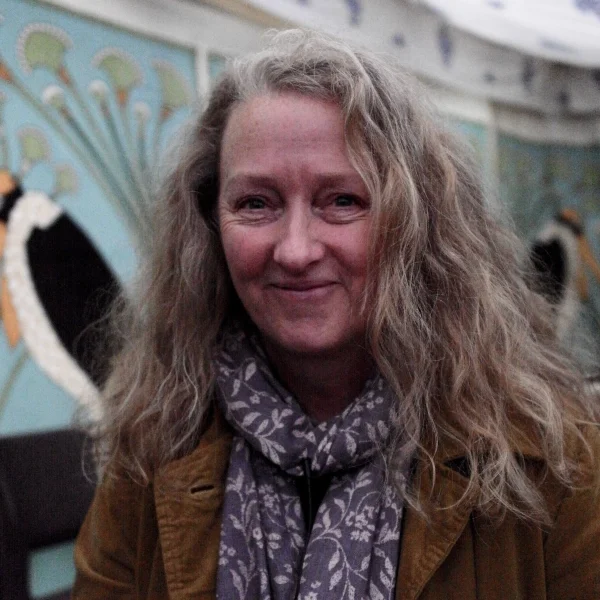
Image Credit - by Theroadislong, CC BY-SA 4.0, via Wikimedia Commons
The Online Lottery That Failed
In July 2025, Raynor addressed this specific event. She framed it as a desperate attempt at a literary property lottery. She claimed she experienced a swift realization about her grave error, followed immediately by contest cancellation and full ticket refunds. Yet, this scheme perfectly illustrates the extreme lengths the couple went to escape the £64,000 embezzlement fallout. Matt Swarbrick, who later purchased the website, noted a deep hunger for similar lifestyle narratives. He felt a shared path sensation when taking over the domain, entirely unaware of the fraudulent raffle buried in the site's history.
The Contradictory Medical Timeline
A story gains immense emotional weight when a terminal illness strikes exactly as a physical expedition begins, rather than years later. The original book wrings incredible tension from Moth’s deteriorating health. According to AP News, the original book recounts how doctors diagnosed Moth Winn, having recently received a diagnosis of corticobasal degeneration (CBD), a highly uncommon and incurable neurological illness, just prior to the loss of their home. They walked the coastal trail believing Moth had only years to live.
The July 2025 Observer investigation shattered this specific timeline. Medical letters obtained by journalists revealed Moth received a tentative, mild Corticobasal syndrome (CBS) diagnosis two full years after they completed the walk. What disease does Moth Winn have? He reportedly suffers from Corticobasal Syndrome, though nine separate neurologists have publicly questioned his timeline and severity based on his unusually long survival. These nine specialists strongly doubt the 12-year survival timeline presented in the media. They suggest he likely suffers from a completely different atypical or monogenetic disorder.
Neurologists Question the Timeline
The Moth Winn illness narrative provides the emotional anchor for the entire franchise. Altering the date of the diagnosis manipulates the reader's sympathy, making the physical expedition seem far more dangerous and urgent than reality dictates. The fallout reached medical charities quickly. The PSP Association, a prominent charity supporting CBD and PSP patients, officially terminated their relationship with the Winn family following the revelations.
Publishing Industry Blind Spots
Award committees aggressively celebrate unvarnished honesty without ever demanding actual receipts from the authors they crown. The publishing world built an empire on this memoir. Penguin Michael Joseph, the publisher, eagerly sold the tale of resilience. After the 2025 revelations, the publisher publicly claimed they completed mandatory background checks prior to the book's release. If true, their vetting team massively failed. They missed a £64,000 embezzlement, a six-year alias history, a prior self-published novel, and a fraudulent property raffle. The Raynor Winn controversy highlights a massive vulnerability in the non-fiction market. Editors prioritize a dramatic arc over factual accuracy. Columnist Gaby Hinsliff captured the public mood perfectly. She stated that memoir appeal relies entirely on raw truthfulness. Consequently, even minimal fabrication suspicion creates a deep betrayal sensation among loyal readers.
Background Checks and Prizes
Marianne Elliott echoed this sentiment, noting the author used elements-based character reformation to sanitize her past. The industry rewarded a fiction dressed as fact. As highlighted by The Guardian, the Christopher Bland Prize provides a £10,000 reward exclusively for debut writers, yet Winn claimed the money despite releasing How Not to Dal Dy Dir in 2012. The total failure of publishing gatekeepers ensures that readers bear the burden of verifying the true stories they purchase.
Media Fallout and Scandal Investigations
A carefully crafted public image shatters the moment journalists stop reading the promotional material and start pulling court documents. The summer of 2025 brought absolute chaos to the author's doorstep. The Observer investigation dropped a bombshell that the BBC quickly corroborated. Sky Documentaries escalated the crisis by announcing the Scandal, a rigorous documentary featuring additional whistleblowers. The narrative slipped completely out of the author's control. Raynor struck back aggressively. According to a July 2025 Guardian report, she labeled the press coverage "highly misleading" and announced she was taking legal advice. In her response to the documentary, she expressed deep gratitude for her loyal readership and insisted the core truth remained unchanged.
Documentaries and Defenses
She claimed she held a sincere memory of the house loss and genuinely found hope on the coastal trail. She dismissed the use of alternative names as simple privacy-based alterations. However, calling a pseudonym a "privacy alteration" fails to explain why she submitted a 2018 book for a debut author prize when she had already published a parallel book in 2012 as Izzy Wyn-Thomas. The documentary shattered the illusion, bringing receipts to a fight the author previously fought only with emotions.
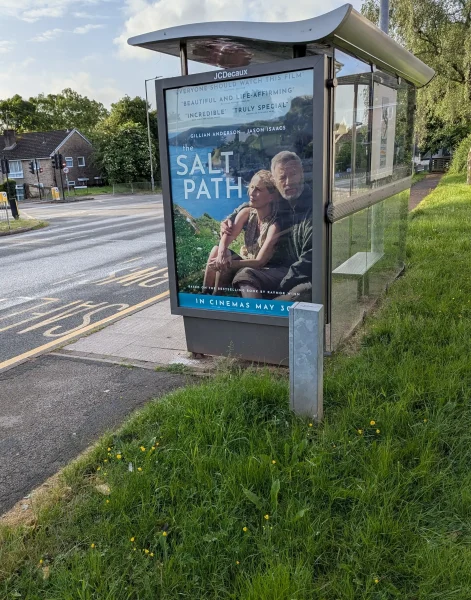
Image Credit - by The Salt Path advert, Malpas, Newport by Jaggery, CC BY-SA 2.0, via Wikimedia Commons
The Future of a Tarnished Franchise
Film studios often release adaptations of inspiring true stories right as the public learns the story consists mostly of fiction. Despite the scandal, the Hollywood machine pushes forward. As reported by AP News, a major film adaptation starring Jason Isaacs and Gillian Anderson captured the hearts of millions and was released this spring. The studio now faces a marketing nightmare. They must sell an inspiring true story about innocent victims, while audiences watch a Sky documentary about embezzlement, fraudulent raffles, and manipulated medical timelines. The literary franchise also hit a massive roadblock. Following the massive success of The Wild Silence in 2020 and Landlines in 2022, Penguin planned to release a fourth book. They originally targeted October 2025 for this highly anticipated sequel.
The Fallout for Readers
As the controversy exploded across the British press, The Guardian reported the publisher decided to delay the publication of the sequel. Consequently, Penguin's official website now lists On Winter Hill with a release date of 27/01/2028. The industry clearly hopes a three-year delay will give readers adequate time to forget the deception. Readers, however, possess long memories when authors betray their trust.
Reevaluating the Coastal Trail
When an author builds a multi-million-pound brand on authenticity, exposing a foundation of lies leaves a permanent stain. The Salt Path scandal proves that readers desperately want to believe in redemption, even when the facts point directly to fraud. Raynor Winn crafted a beautiful narrative about walking away from pain, but she ultimately failed to walk away from her own paper trail. The £64,000 embezzlement, the concealed 2012 debut, and the manipulated medical timeline strip the romanticism from the hike. The publishing industry must now reckon with its own complicity in selling a sanitized version of reality. True stories require actual truth, and the world now knows exactly what this author left off the page.
Recently Added
Categories
- Arts And Humanities
- Blog
- Business And Management
- Criminology
- Education
- Environment And Conservation
- Farming And Animal Care
- Geopolitics
- Lifestyle And Beauty
- Medicine And Science
- Mental Health
- Nutrition And Diet
- Religion And Spirituality
- Social Care And Health
- Sport And Fitness
- Technology
- Uncategorized
- Videos

