
Drama and Theatre Studies: Steal The Spotlight
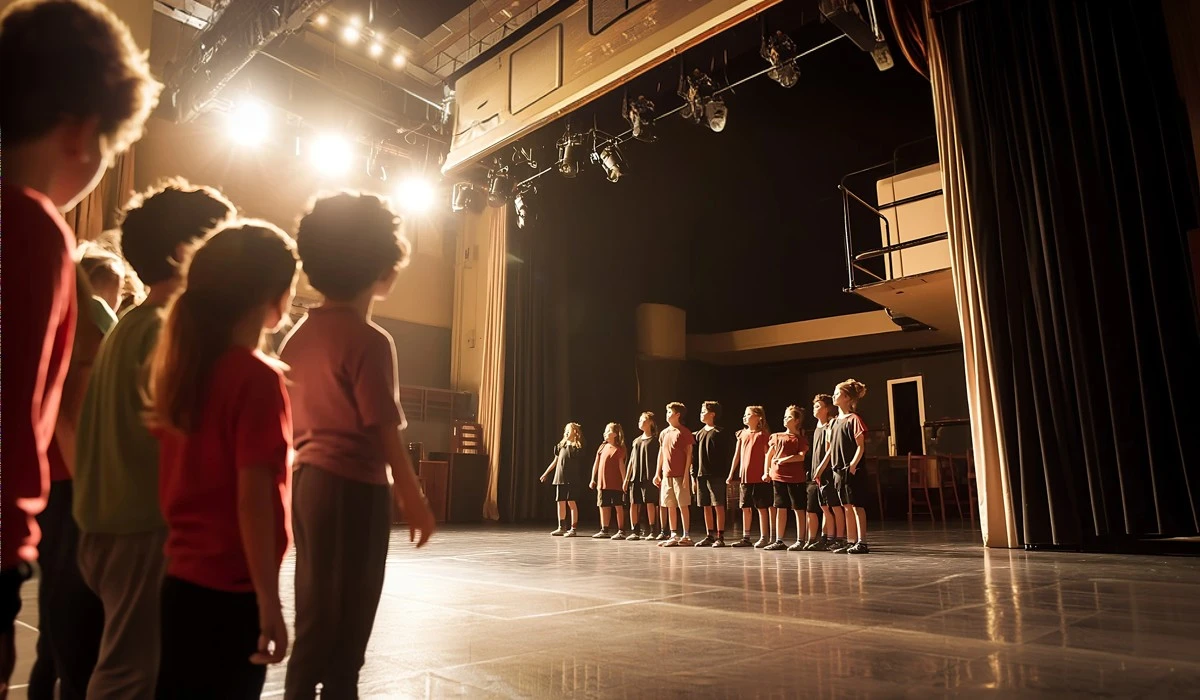
You walk into a dark room and see a single chair sitting under a harsh light. Before the actor breathes, your brain decides the mood and the social status of the scene. Although people often assume the script carries the entire story, the set informs the audience's feelings before the plot begins. Within the field of Drama and Theatre Studies, practitioners learn that every shadow and prop acts as a shortcut to the viewer’s emotions. If you place a crown on a dirty floor, the audience feels the loss of power without hearing a single line of dialogue. This crossover between physical objects and emotional meaning defines the modern stage. Focusing on the appearance and movement of items allows for specific control over how a crowd reacts to a performance.
Elevating Performance with Professional Stagecraft Techniques
When actors fumble with a prop, they break the audience’s belief in the story. Great theatre relies on a smooth connection between people and things. According to the Encyclopedia Britannica, historical stagecraft techniques began with the Greeks, who used a wheeled platform called the ekkyklema to reveal interior scenes or offstage events. They also used the mechane, a huge crane, to fly gods onto the stage. Today, these ideas remain in use alongside improved technology. Learning the physical stage means treating a chair or a sword like a partner in a scene. If an actor touches a table with respect, the audience sees it as a holy relic. If they kick it, it becomes trash. This physical interaction builds the world of the play far more effectively than words ever could. It turns a simple room into a high-stakes arena for the drama.
Blocking for Visual Impact and Fluidity
High-quality blocking ensures that every movement has a clear purpose. Directors use the geometry of the stage to guide where the audience looks. Dividing the stage into nine zones, from upstage right to downstage left, provides a method to manage the tension in a scene. This is a key part of drama and theatre studies because it creates a professional look. Encyclopedia Britannica defines stagecraft as the technical aspects of theatrical production, explaining that elements such as scenic design, stage machinery, lighting, sound, costume design, and makeup work together to tell a story. Proficiency in these areas allows students to transform a bare stage into a living world. The publication also notes that André Antoine popularized the fourth wall technique, an unseen barrier that allows actors to behave naturally in an authentic environment. Without it, the story feels like a staged presentation rather than a true experience.
Using Theatrical Semiotics for Deeper Meaning
Every object on a stage carries two meanings. There is the physical item itself and the idea it represents. Within theatrical semiotics, these are called the signifier and the signified. For example, a simple red chair on an empty stage might represent a king’s throne or a bloody past. Research published in the Cambridge Introduction to Theatre Studies describes theatrical semiotics as the study of how meaning is produced on stage through a system of signs. It notes that Ferdinand de Saussure showed that we learn these meanings through culture.
Meanwhile, the study highlights that Charles Sanders Peirce identified three types of signs: icons, indexes, and symbols. An icon looks like the thing it represents, like a painted tree. An index shows a cause, like smoke suggesting a fire. A symbol is something people agree on, like a white flag meaning peace. Understanding these codes allows for the creation of a show that communicates effectively through minimal action. It gives a performance a layered quality that keeps viewers engaged.
Color Theory and Symbolic Lighting
Lighting provides visibility and communicates emotion. As detailed by the Encyclopedia Britannica, Adolphe Appia revolutionized the field in the late 1800s by replacing painted scenery with three-dimensional structures and using directional light to create plastic shapes. He realized that shadows make the human body look more real and three-dimensional. Lighting affects the mood on stage by using intensity, color, and angle to produce specific emotional responses from the audience. A cold blue wash can instantly signal isolation without a single word of dialogue. In reality, a warm orange light can make a basement feel like a cozy home. Choosing specific colors for lights and costumes communicates subtext. This non-verbal language reaches the audience on a gut level. It bypasses their logic and goes straight to their feelings, making the theatrical world feel much more intense.
Why Drama and Theatre Studies Students Need Technical Mastery
Studying drama and theatre studies means learning to read a script like a map for a physical space. You don't just look at the words; you look for clues about how things should look and sound. This process is called concretization, where the director and designers turn abstract ideas into real objects. Viewing a play through a semiotic lens allows for the finding of creative ways to stage difficult scenes. Instead of a real car, four actors might hold flashlights. This choice tells the audience that the world is imaginative rather than literal. It allows the performance to reach beyond the limits of a small budget. Focus on stage writing instead of solely dramatic writing produces a unique vision. This makes your work stand out in a crowded field of performers.
The Psychology of Audience Perception
Audience members are constantly scanning the stage for patterns. They look for meaning in every corner, even when they don't realize it. Research by Erika Fischer-Lichte suggests that theatre arises from the bodily co-presence of actors and spectators, forming a loop of energy. This is why technical skill is so important. If a light cue is late, it breaks that energy. If a costume looks wrong for the character's status, the audience feels confused. Using ostension is a powerful way to focus this energy. This happens when you take a real-life object and put it on stage to show its symbolic value. Suddenly, a real loaf of bread isn't just food; it becomes a sign of hunger or sharing. These design choices hit the viewer’s subconscious. They drive the emotional arc of the play without the actors having to explain everything.
Utilizing Proxemics to Communicate Relationships
The physical distance between two actors tells the whole story of their relationship. This is the science of proxemics. Anthropologist Edward T. Hall defined four main zones of space. The intimate zone is for lovers or close family, while the public zone is for strangers. In Drama and Theatre Studies, directors use these distances to show tension. If two characters hate each other but have to stand close, the audience feels the pressure. Conversely, if two people are far apart, it shows emotional distance. As previously noted by the Cambridge Introduction to Theatre Studies, theatrical semiotics involves the study of how signs and symbols communicate meaning to an audience. In this context, every physical placement becomes a sign that the audience decodes. Control of the space tells a story about power and love that the eyes understand instantly.
Level Shifts and Power Hierarchies
Using different heights on stage is a classic way to show who is in charge. This is a staple of effective stagecraft techniques. When one actor stands on a platform and another sits on the floor, the power balance is obvious. Verticality communicates status better than any dialogue. Edward Gordon Craig often used large towers and steps to make actors look small or grand. In reality, even a small stool can change a scene. An actor sitting down looks vulnerable, while an actor standing over them looks dominant. Level shifts keep the stage looking interesting and prevent flat scenes. They guide the audience's gaze and make the stage feel like a three-dimensional environment. Learning these heights allows you to build involved social hierarchies. It turns the physical set into a map of the characters' internal struggles and victories.
Creating Subtext Through Auditory Cues
Sound acts as the heartbeat of a production. It can be diegetic, like a knock on a door that characters hear. It can also be non-diegetic, like a scary violin track that only the audience hears. Great designers use trans-diegetic sound to blur these lines. This is when a character hums a tune and it slowly grows into a full orchestra. This technique pulls the audience deeper into the character's mind. It makes the world of the play feel fluid and alive. In Drama and Theatre Studies, sound is treated as a major part of the environment. It sets the tempo of the performance. A fast, mechanical rhythm can make a scene feel rushed and stressful. A low, humming bass can make the room feel heavy with dread. These auditory layers build a rich atmosphere that words alone cannot achieve.
Integrating Sound with Live Performance
Coordinating sound and light cues requires extreme precision. As specified by the developers at QLab, the software provides a platform for macOS to design and play back lighting, sound, and video cues with high precision. If a thunder sound happens five seconds after a lightning flash, the illusion is lost. This technical coordination is a vital part of professional stagecraft techniques. When cues are perfectly synced, the audience stops seeing the technology and starts feeling the story. It creates a seamless immersion where the play becomes a living reality. Meanwhile, modern productions often include live music or Foley artists who make sounds right on stage. This adds a layer of raw energy to the performance. It reminds the audience that they are watching something happen in real-time. This level of detail separates amateur shows from professional art. It requires discipline and a deep understanding of how timing affects human emotion.
Practical Application in Drama and Theatre Studies Curriculum
Modern theatre doesn't just happen with paint and wood. Students now use digital tools like AutoCAD and Vectorworks to plan their sets. This is called digital scenography. It allows designers to see how theatrical semiotics will work before they build anything. They can test lighting angles and furniture placement in a 3D model. A study published by Springer explains that game engines like Unreal Engine have entered the theatre world to facilitate Virtual Scenography, which uses text-to-scene systems to generate 3D environments that react to live movement. In Drama and Theatre Studies, these tools help students experiment with big ideas without spending a lot of money. It bridges the gap between imagination and reality. Using CAD allows a designer to show a director exactly how a red light will hit a blue wall. This prevents expensive mistakes and allows for much bolder creative choices during the production phase.
Rehearsal Room Strategies for Semi-Pro Productions
You don't need a million-dollar budget to use professional techniques. In school programs, students learn to devise their own work using a portfolio of evidence. This documents how they use stagecraft techniques on a smaller scale. One strategy is to focus on found objects and give them new meanings. This is a direct application of semiotics in a rehearsal room. For example, using a simple ladder to represent a mountain or a prison. Ironically, these limitations often lead to better creativity. When you can't afford a real set, you have to find clever ways to signal the setting to the audience. This forces you to think deeply about what every object signifies. It turns the rehearsal space into a laboratory for storytelling. These skills are essential for anyone wanting to work in the modern, fast-paced theatre industry.
Evolving Traditions: Modern vs. Classical Stagecraft
Theatre has moved away from hyper-realistic sets toward more abstract designs. This shift relies heavily on the audience's ability to decode symbols. Peter Brook’s empty space philosophy shows that you only need an actor and a witness to have theatre. In this minimalist style, every single item carries huge weight. If there is only one suitcase on a bare stage, that suitcase becomes the center of the world. This is the peak of theatrical semiotics. Meanwhile, Bertolt Brecht used the alienation effect to keep the audience thinking. He purposefully showed the lighting rigs and used placards to tell the story. He didn't want the audience to get lost in the emotion; he wanted them to see the message. Stripping away the fluff allows these styles to focus purely on the central meaning of the performance and the narrative.
Multimedia Integration in Contemporary Theatre
Today, many plays use projection mapping to turn the stage into a giant screen. In productions like The Curious Incident of the Dog in the Night-Time, the walls themselves show the main character's thoughts. This is one of the most exciting new stagecraft techniques. It combines film, digital art, and live acting into one experience. These tools allow for instant scene changes and impossible visuals. For students of Drama and Theatre Studies, this means learning how to interact with digital actors or changing light patterns. Ironically, these high-tech tools often return us to the most basic form of storytelling: using light and shadow to spark the imagination. As theatre evolves, the line between the physical and the digital gets thinner. This creates a new playground for designers to explore how signs and symbols work in an environment full of screens.
The Future of Drama and Theatre Studies
Success in this field requires more than just acting talent or technical knowledge. It requires a deep understanding of how those two worlds overlap. The most memorable shows are those where the lighting, the set, and the sound all tell the same story as the actors. In Drama and Theatre Studies, we learn that every choice on stage is a message sent to the audience. Proficiency in both the physical tools and the symbolic language provides total control over the performance. Whether you use a high-tech projector or a single wooden chair, the goal remains the same. You want to create a moment that feels real and meaningful to the people watching. Continue to refine your skills in these areas to push the boundaries of what is possible. The stage is a place where your imagination can truly come to life.lacards.
Recently Added
Categories
- Arts And Humanities
- Blog
- Business And Management
- Criminology
- Education
- Environment And Conservation
- Farming And Animal Care
- Geopolitics
- Lifestyle And Beauty
- Medicine And Science
- Mental Health
- Nutrition And Diet
- Religion And Spirituality
- Social Care And Health
- Sport And Fitness
- Technology
- Uncategorized
- Videos

