
The Mathematical Roots Within Sacred Geometry
The mathematical roots of Sacred Geometry
Look at your own hand. The lengths of your finger bones follow a specific numerical shift. Look at a sunflower. The seeds crowd together in perfect arcs so every single one gets enough room to grow. You see these patterns everywhere. They appear in the spiral of a galaxy and the curve of a seashell. This happens because the physical world follows strict rules of shape and number. We call this study Sacred Geometry. It moves beyond simple aesthetics to reveal the hard logic that builds the world. You are looking at a system where math dictates reality.
Sacred Geometry proves that nature avoids randomness. Every leaf and bone grows according to a plan. This field strips away the noise of the physical environment to show the shapes underneath. Scientists and artists use these shapes to understand how things fit together. When you learn these rules, you see things differently. You stop seeing a forest and start seeing a grid of precise ratios. This article explores those mathematical roots and how they define your life.
Euclidean Principles in Universal Symbols
Ancient mathematicians used only a compass and a straightedge to map the shapes around them. They started with a single point and grew it into a circle. Drawing a second circle centered on the first one's edge created the Vesica Piscis. This shape features a length-to-width ratio of the square root of three. This number, 1.732, appears in modern engineering and carpentry today. It serves as the foundation for the Seed of Life and the Flower of Life. These patterns use circle-packing to create a perfectly balanced grid.
Builders use these circles to find the center of any space. What is the point of sacred geometry? It identifies the mathematical constants that govern physical growth and structural stability across the natural world. These constants ensure that a structure can support its own weight. This logic applies to a honeycomb as much as it applies to a skyscraper. Following these geometric intersections allows nature to find the strongest possible way to hold space.
The Relationship Between Number and Shape
Every number has a shape. The number one relates to the point. The number two creates the line. When we reach three, we find the triangle, the first stable surface in the universe. Sacred Geometry translates these abstract numbers into physical things you can touch. It turns irrational numbers into visual harmonies. Your brain recognizes these harmonies instantly. This recognition happens because your eyes evolved to spot order in the wild.
When a shape follows a clear ratio, your mind feels at ease. We call this "visual rest." Designers use these ratios to guide your eyes across a page. They know that certain angles create more tension than others. Mathematics provides the map for these feelings. A square feels stable because its angles are equal. A triangle feels active because it points toward a direction. Geometry gives a physical body to the logic of numbers.
The Limitless Growth of the Spiral
The physical environment grows through addition. In the 13th century, a man named Leonardo of Pisa, who, according to Britannica, is mainly known because of his sequence, the Fibonacci sequence, shared a specific number string. The same encyclopedia notes that each number in this string is the sum of the two preceding numbers: 0, 1, 1, 2, 3, 5, 8, 13, and so on. These Fibonacci sequence patterns provide the math for expansion. If you build squares using these numbers and draw an arc through them, you get a logarithmic spiral. This spiral grows but never changes its core shape.
This specific type of growth allows an organism to get bigger without becoming clunky. A seashell grows in a spiral, so the animal inside always has the same amount of protection. The math stays the same while the size increases. This tiling method creates a perfect flow of energy and matter. Within business and finance, as reported by Reuters, analysts use these same numbers to predict movements in the stock market, often basing forecasts on a retracement analysis derived from the sequence. The math of growth remains consistent across different fields.
How Nature Counts Seed Heads and Petals
Plants are expert mathematicians. They use Fibonacci sequence patterns to arrange their parts. This process, called phyllotaxis, ensures that leaves do not shade each other. A plant that follows this math gets more sunlight and more rain. Sunflowers often show 34 spirals going one way and 55 going the other. These are "neighbor" numbers in the Fibonacci string. This arrangement packs the most seeds into the smallest possible space.
Pinecones and pineapples follow these same rules, serving as a functional requirement for survival. If a plant used a different ratio, it would waste space or starve its own leaves. Nature picks the most direct path every time. Using these numerical patterns helps biology achieve maximum output with minimum effort. You are seeing the math of optimization in every garden.
Calculating the Divine Proportion
According to a paper published by the National Center for Biotechnology Information (NCBI), the Golden Ratio, or Phi, equals roughly 1.618. Dividing a line into two parts so the long part divided by the short part equals the whole length divided by the long part produces this ratio. This creates a specific balance where every piece relates to the whole. This ratio forms the heart of golden ratio design. It creates a relationship that feels infinite and complete. Mathematically, Phi is an irrational number that never ends, yet it creates the most "finished" look in art.
We see this number in the human body. Your forearm and your hand relate to each other through this ratio. Your face looks "beautiful" to others when your features align with Phi. This alignment relates directly to symmetry. Symmetry signals health and balance to our brains. Designers take this math and apply it to everything from websites to furniture. They use the Golden Rectangle to place buttons and text where you expect to see them.
Balance and Symmetry in Visual Composition
The human eye processes information faster when it sits in a Golden Ratio layout. This speed happens because the ratio matches the structure of our own visual field. Artists use the golden ratio design to create focal points that demand your attention. They divide their canvas into sections based on 1.618 to ensure the viewer's eye never gets stuck. This math creates a sense of movement and "rightness" in a flat image.
Is sacred geometry real math? Its foundations are strictly based on verifiable geometric proofs and irrational numbers like Phi that appear in advanced trigonometry. Mathematicians prove these ratios through algebra and geometry every day. Designers use these proofs to solve visual problems. If a logo looks "off," a designer often checks the ratios. Adjusting a circle or a line to fit the Golden Ratio usually fixes the visual tension immediately.
Polyhedral Symmetry and Atomic Theory
Only five shapes have equal sides, equal angles, and fit perfectly inside a sphere. As detailed by Britannica, these are the Platonic Solids: the tetrahedron, cube, octahedron, dodecahedron, and icosahedron. In Sacred Geometry, these shapes represent the building blocks of 3D space. They possess a high level of symmetry. This means you can rotate them in many ways, and they still look the same. This stability makes them perfect for structural engineering and chemistry.
Atomic structures often mirror these polyhedra. When atoms bond together, they seek the most stable shape possible. They often form triangles or squares in three dimensions. Modern crystallography uses these geometric rules to map how minerals grow. A diamond is hard because its atoms bond in a specific geometric lattice. The math of the Platonic solids dictates the strength of the physical surroundings around you.
Rationalizing the Elements through Geometry
Ancient thinkers used these five shapes to explain the states of matter. They linked the cube to the Earth because it is the most stable. They linked the tetrahedron to fire because its sharp points suggest heat. While we now use the periodic table, the structural logic remains. Geometry helps us categorize the physical properties around us. We use these shapes to describe how gases expand and how solids resist pressure.
Modern science still finds these shapes in the smallest places. Research published in Science magazine indicates that spherical viruses often take the shape of an icosahedron, with this specific capsid structure being ubiquitous across forms. This twenty-sided shape allows the virus to hold the most genetic material in the smallest shell. Nature chooses this shape because the math of the icosahedron is the most optimal for packing. Even at the microscopic level, geometry provides the rules for life and structure.
Integrating Pi and Phi into Sacred Geometry
The circle represents the infinite because it has no beginning and no end. The square represents the finite because it has four clear corners. "Squaring the circle" is a classic challenge where you try to make a square with the exact same area as a circle using only a compass. While it is mathematically impossible to do perfectly because of the number Pi, Sacred Geometry uses this effort to find a middle ground. It seeks to bridge the gap between things we can measure and things we cannot.
This struggle creates a specific set of ratios. These ratios appear in the blueprints of ancient temples and modern government buildings. Architects use this math to create a sense of awe. They combine the curves of the circle with the lines of the square. This mix creates a space that feels both solid and expansive. It forces our brains to reconcile two different types of logic at once.
Vector Equilibrium and the Mechanics of Space
Buckminster Fuller studied a shape called the cuboctahedron, which he called the Vector Equilibrium. According to literature on Fuller's work from Arvind Gupta Toys, in this shape, every line from the center to the edge is the same length as every edge, maintaining equal radial and edge lengths. This creates a state of "zero-growth." It is the point where all forces are equal, and nothing moves. This is the math of perfect balance. In physics, this shape helps us understand how energy sits still before it turns into matter.
Engineers use these vector rules to build domes and bridges. A structure built on these points can handle immense pressure without collapsing. The weight moves through the vectors equally. This prevents any single point from snapping. This geometry shows us how to build things that last. It provides the framework for stability amid constant change.
The Great Pyramids and Astronomical Alignment
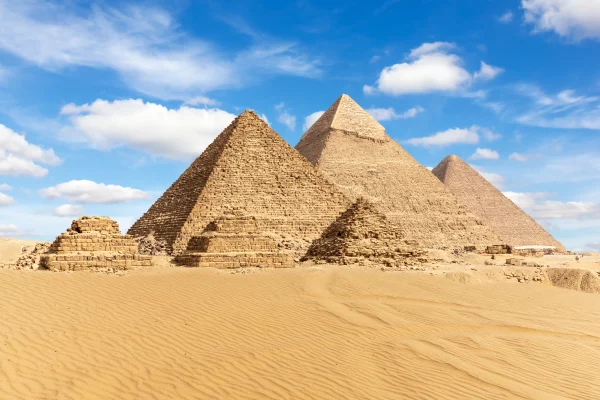
The Great Pyramid of Giza is a massive math problem made of stone. Its height and base correlate to the radius and circumference of the Earth. The dimensions also incorporate both Pi and the Golden Ratio. These builders used Sacred Geometry to ground their work in universal constants. This math allowed them to align the structure with the stars with incredible precision. The structure served as both a tomb and a massive stone calculator.
Where do we see sacred geometry in nature? It is visible in the branching of trees, the formation of crystals, and the proportions of the human body, all of which follow specific geometric constraints for optimal performance. The pyramid builders simply copied these natural constraints. Using the Golden Ratio ensured the pyramid would survive for millennia. The math provides the structural integrity that resists the passage of time and the shift of the desert.
Renaissance Art and the Search for Harmony
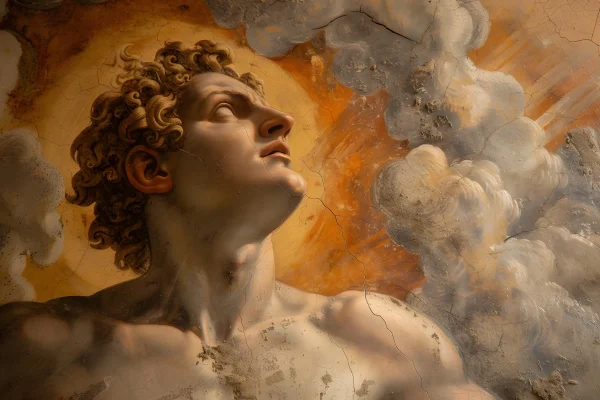
During the Renaissance, painters like Leonardo Da Vinci obsessed over math. They used the golden ratio design to place the subjects in their paintings. As noted by the Metropolitan Museum of Art, in "The Last Supper," the room and the figures follow strict perspective lines that meet at a single point, where all lines of the perspectival projection converge. This creates a 3D effect on a flat wall. These artists used geometry to trick the human brain into seeing depth and realism.
They also used the Golden Ratio to draw the human body. They knew that a hand looks right only if it follows the Fibonacci sequence. This served as a specific tool for anatomical perfection rather than a secret code. If an artist ignored the math, the painting looked "flat" or "wrong." Following Sacred Geometry allowed them to capture the same beauty found in the natural forms around them. They turned their canvases into mirrors of the universe’s logic.
Quantum Geometry and Subatomic Patterns
Today, physicists look at the smallest particles through a geometric lens. They use models like the E8 lattice to explain how subatomic particles interact. This lattice is a highly detailed 8D shape that contains thousands of symmetries. It suggests that the entire universe might be a massive geometric projection. This brings the study of Sacred Geometry directly into quantum mechanics.
If particles follow geometric rules, then reality has a clear structure. Scientists are finding that the math of these lattices matches the behavior of light and gravity. This research could eventually unite all of physics. It shows that the same shapes we see in shells and flowers also exist at the base of reality. Geometry provides the single language that connects the small to the large.
The Role of Fractals in Digital Environments
Computer scientists use fractal math to create realistic simulations in video games and movies. A fractal is a shape that repeats itself at every scale. This is a key part of Sacred Geometry. If you look closer at a fractal, you see the same shape over and over. This math allows a computer to draw a mountain or a tree using very little data. It just repeats a single geometric rule.
This technology also helps compress data for the internet. It allows your phone to stream high-quality video without crashing. Employing recursive patterns lets us store massive amounts of information in small spaces. This mimics how DNA packs instructions into a tiny cell. We are using the math of the physical elements to build our digital future. Sacred Geometry is now the backbone of our technology.
The Enduring Logic of Universal Form
The mathematical roots of Sacred Geometry prove that the physical surroundings follow a plan. Beauty represents the result of precise calculations and ordered growth. Whether you look at Fibonacci sequence patterns in a flower or apply golden ratio design to a new project, you are using the same rules. These numbers and shapes provide the framework for everything we see.
Your reality is built on logic. This logic connects your own body to the stars above. Studying these geometric roots grants you a new perspective on your surroundings. You see the order beneath the chaos. You recognize the symmetry in a leaf and the ratio in a building. This ancient math remains as relevant today as it was thousands of years ago. It is the permanent language of the universe.
Recently Added
Categories
- Arts And Humanities
- Blog
- Business And Management
- Criminology
- Education
- Environment And Conservation
- Farming And Animal Care
- Geopolitics
- Lifestyle And Beauty
- Medicine And Science
- Mental Health
- Nutrition And Diet
- Religion And Spirituality
- Social Care And Health
- Sport And Fitness
- Technology
- Uncategorized
- Videos

