
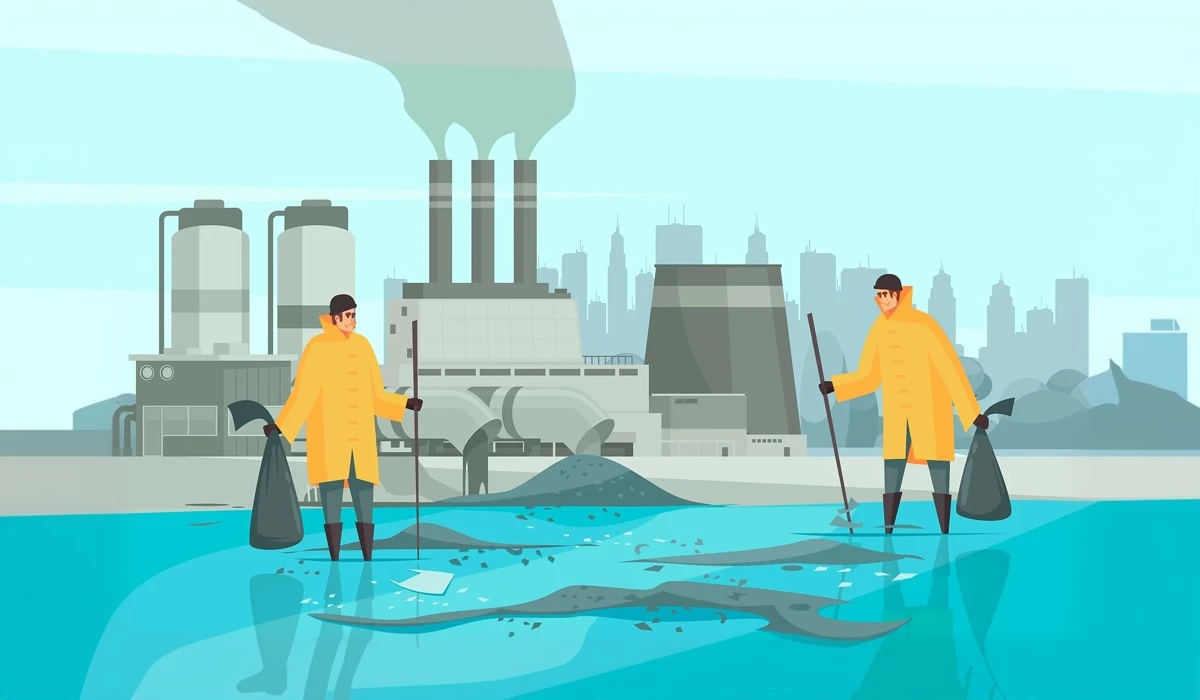
Toxic Water Purified Thanks To Nanotechnology
Cities spend billions on massive concrete basins and thick sand beds to clean our water. Yet, the most dangerous poisons move through these systems like ghosts through a screen door. Lead, arsenic, and microscopic plastics are simply too small for gravel and mesh to stop. To fix this, researchers have stopped looking at the big picture and started looking at the atomic level.
The use of nanotechnology enables the capture of toxins that were once out of reach. The process moves beyond simple filtration to involve the re-engineering of the water itself. This upheaval changes the very material properties of our filters to ensure that what comes out of the tap is actually safe for your family to drink.
Grasping the Power of Scale: What Makes Nano Different?
According to the National Nanotechnology Initiative, this field involves the control of matter at dimensions between approximately 1 and 100 nanometers. The agency also notes that matter can display unusual physical or chemical properties at this scale. This potential was highlighted by physicist Richard Feynman in 1959, who famously remarked that there was plenty of room at the bottom for scientific exploration and new findings.
The Importance of Surface Area and Reactivity
Size changes everything because of surface area. Imagine a solid 1 cm³ cube. It has a surface area of 6 cm². If you chop that same cube into tiny 10 nm pieces, the total surface area jumps to 6,000,000 cm². Reports from the National Nanotechnology Initiative explain that materials often become more chemically reactive as their size or structure is modified at the nano level. This increase in surface area creates millions of contact points where a filter can touch and grab a toxin.
Engineering Specific Material Properties
The agency further states that scientists now have the ability to precisely manipulate and control matter at these scales, allowing them to tune material properties like a radio dial. They can change the electrical charge of a surface or make it full of tiny holes called pores. This allows them to create filters that only attract the bad stuff while letting clean water slide by.
How does nanotechnology remove heavy metals from water? The use of functionalized nanoparticles that act like microscopic magnets allows scientists to bind to heavy metals like lead or arsenic and pull them out of the water stream with extreme precision. These nanoparticles are engineered to be sticky only to the specific metal they want to remove.
How Materials Science Overhauls Filtration Membranes
Traditional water filters are basically fancy strainers. If the hole is smaller than the dirt, the dirt stays out. However, materials science is moving us toward atomic-scale sieves. These new membranes are thinner than a human hair but stronger than steel. They do not just block dirt; they actively manage how molecules move.
The Magic of Carbon Nanotubes (CNTs)
In 1991, Sumio Iijima identified carbon nanotubes, which are hexagonal carbon lattices rolled into tiny cylinders. These tubes are only about 1 nm wide. Surprisingly, water molecules zip through these tubes 1,000 to 10,000 times faster than they should. The smooth, water-fearing interior of the tube creates a nearly frictionless path. This allows for high-speed cleaning without using massive amounts of energy or pressure.
Graphene and Atomic-Thin Sieves
Graphene is a single layer of carbon atoms arranged in a honeycomb pattern. The process of stacking these layers allows researchers to create graphene oxide membranes with gaps exactly 0.7 nm wide. This is the perfect size to let a water molecule through while blocking 99% of salt ions. These membranes are only 68 nm thick but can push through nearly 1,000 liters of water per hour. They also handle 870 psi of pressure, making them perfect for turning seawater into drinking water.
The Role of Nanosorbents in Chemical Decontamination
Sometimes you cannot just block a toxin; you have to soak it up. This is called adsorption. Modern nanotechnology utilizes smart sponges that, according to research published by IWA Publishing, are modified with titanium dioxide catalysts to degrade dyes, pesticides, and other organic pollutants in water bodies. These sponges have a much higher density of active sites than the old charcoal filters your parents used.
Iron-Based Nanoparticles for Arsenic Removal
A study found in ScienceDirect refers to arsenic in groundwater as a "quiet killer" because it remains one of the primary threats in drinking water sources, particularly in rural locations. Tiny 9 nm magnetite particles are now used to pull this poison out. These iron oxide clusters have a massive capacity for soaking up arsenic, often outperforming older filters by 10 times. Once the iron particles are full of arsenic, engineers use a simple magnet to pull them out of the water.
What are the benefits of using nanomaterials for water purification? As noted in a report by the Central University of Kerala, engineered nanomaterials provide a highly capable way to remove heavy metals and organic contaminants. Research from Wiley-VCH indicates that these nanoadsorbents require low doses and less contact time, which helps lower long-term operational costs. This means we can use the same cleaning material over and over again, which reduces waste and cost.
Photocatalysis: The Application of Light to Shred Toxic Molecules
While some filters trap toxins, others destroy them entirely. This method uses light to initiate a chemical reaction on the surface of a catalyst. This is a very active way to clean water. It essentially uses the power of the sun to shred dangerous molecules into harmless bits of water and carbon dioxide.
Titanium Dioxide and Solar-Powered Cleanup
Titanium dioxide is a common material found in sunscreen, but according to a study in MDPI, titanium dioxide technologies show great promise for treating oily wastewater at the nano scale. When UV light hits these particles, it creates a reaction that produces hydroxyl radicals. These radicals are some of the strongest oxidants known to man. They attack organic pollutants and break them down instantly.
Eliminating Forever Chemicals (PFAS)
The study further explains that this method works well against organic pollutant sources like textile dyes and plastics. PFAS are synthetic chemicals found in non-stick pans and fire-fighting foam. They are called chemicals forever because they never break down in nature. However, nanotechnology is finding a way to kill them. The application of lead-doped titanium dioxide allows researchers to destroy 98% of these chemicals in just 24 hours. The light breaks the incredibly strong bonds between the carbon and fluorine atoms, which finally removes these stubborn toxins from our environment.
Innovations in Materials Science for Biological Safety
Cleaning water also means killing living threats like bacteria and viruses. Many cities use chlorine for this, but chlorine can leave behind a bad taste and harmful byproducts. Modern materials science is finding ways to kill germs using metal ions instead of harsh chemicals. This approach is much safer for the people drinking the water.
Silver Nanoparticles as Antimicrobial Guards
Silver has been used to keep water fresh for centuries, but nano-silver is on a different level. These tiny particles release silver ions that latch onto a bacterium’s protein. This stops the germ from breathing and pops its cell membrane. In a disaster zone, just a small amount of silver-infused ceramic can kill 99.9999% of E. coli in one minute.
Are nanoparticles safe in drinking water? While most current systems keep nanoparticles fixed within a solid filter matrix to prevent them from entering the water, ongoing research focuses on ensuring these materials remain stable and do not pose any secondary health risks. Scientists design these systems so the cleaning particles never actually leave the filter housing.
Overcoming the Challenges of Scalability and Cost
If this tech is so great, why isn't it in every home yet? The truth is that making these materials is still expensive. Most of these breakthroughs happen in high-tech labs under perfect conditions. Moving from a lab to a city-wide treatment plant is a massive engineering challenge.
Moving from the Lab to the Treatment Plant

Our current water infrastructure is old. Most of it was built to handle sand and gravel, not atomic-scale carbon tubes. The integration of nanotechnology into these aging systems requires new pipes and new ways to monitor water flow. We also need green ways to make these particles so that the manufacturing process itself doesn't hurt the environment.
The Future State: Sustainable and Smart Water Systems
The next step is making filters that can talk to us. Research published in ScienceDirect suggests that upcoming systems will feature sensors capable of rapidly detecting trace levels of lead and mercury at levels as low as parts per billion. These sensors will give us instant alerts if the water becomes unsafe. This moves us away from testing water once a month and toward knowing what is in our pipes every second.
Circular Economy and Reusable Nanomaterials
Sustainability is the ultimate goal. As detailed in Biointerface Research, these materials support longer cycles of reuse and desalination due to their specific properties, allowing them to be washed and reused. This creates a circular system where we don't throw away filters every few months. This saves money and keeps millions of pounds of old filter waste out of our landfills.
A Brighter Future Through Materials Science
Access to clean water should not be a luxury. As our planet faces more pollution and more people, we cannot rely on 19th-century plumbing to keep us safe. We need a solution that works at the scale of the problem. The scaling down of our technology has finally provided a way to catch the smallest and most dangerous threats to our health.
The field of materials science has expanded beyond construction and computing to become the front line of defense for our health. These microscopic tools give us the power to reclaim our natural resources from toxic waste. In the end, the smallest particles are the ones that will provide the biggest protection for our global future.
Recently Added
Categories
- Arts And Humanities
- Blog
- Business And Management
- Criminology
- Education
- Environment And Conservation
- Farming And Animal Care
- Geopolitics
- Lifestyle And Beauty
- Medicine And Science
- Mental Health
- Nutrition And Diet
- Religion And Spirituality
- Social Care And Health
- Sport And Fitness
- Technology
- Uncategorized
- Videos

