
Bioarchaeology Proves We Are What We Ate
When you visit a museum, you see the shiny objects our ancestors left behind. You see the sharp weapons they carried and the heavy jewelry they wore. While many assume these items tell the whole story of a person's life, the objects actually tell us what a person owned, whereas their bones tell us what they survived. Your body acts as a permanent ledger of every meal you ever swallowed. Every glass of water and every piece of bread leaves a chemical mark that stays in your skeleton for thousands of years.
Bioarchaeology looks past the funeral gifts to find the truth written in human remains. Scientists use isotope analysis in archaeology to examine the specific elements inside ancient teeth and bones. This method turns a skull into a witness of its own history. It reveals the secrets of a person's life, from the first time they ate solid food to the water they drank in a faraway land. This field shows us the reality of the past, often proving that historical legends do not match the biological facts.
Why Bioarchaeology provides a clearer picture of the past
History books often focus on kings, wars, and big monuments. These records ignore the daily lives of the people who actually built those civilizations. Bioarchaeology changes this through a focus on the physical body rather than the stories people wrote about themselves. While a written record can be biased or false, a skeleton remains honest.
Moving beyond artifacts to human biology
Jane Buikstra coined the term Bioarchaeology in 1977 to describe this shift toward biological evidence. Before this, researchers spent most of their time looking at pottery and stone tools. They assumed that a person buried with expensive jars must have lived a wealthy life. Biological data often proves these assumptions wrong.
As noted in a book published by Cambridge University Press, stable isotope analysis is an established methodology that reconstructs individual diets and complements the information obtained from studying faunal and botanical remains, providing personalized data that a clay pot cannot. Observation of the wear on a person's joints or the density of their bones allows scientists to see the actual physical labor they performed. They see the injuries a person survived and the diseases that eventually ended their life. This biological approach provides a direct connection to the person rather than just their culture.
Bridging the gap between culture and health
This field connects the way people lived to their overall physical well-being. Researchers use these biological markers to see how social rules affect people's health. In many ancient cities, the physical layout of the town dictated who stayed healthy and who fell ill. According to research in ScienceDirect, the composition of isotopes in bone collagen is increasingly used to investigate mobility and subsistence strategies spanning much of the Holocene, allowing scientists to track these patterns over generations.
Teeth serve as one of the most important tools in this investigation. What can bioarchaeologists learn from teeth? Bioarchaeologists analyze tooth enamel to determine the specific foods eaten during childhood and the geographical origin of an individual. This provides a direct link between a person's early life and their eventual burial site. These dental records survive much longer than skin or muscle, acting as a time capsule of a person’s earliest years.
How isotope analysis in archaeology tracks ancient meals
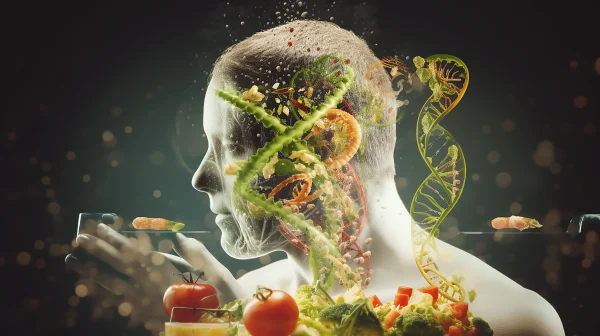
The food you eat contains specific chemical elements called isotopes. A report by the Scottish Archaeological Research Framework notes that stable isotope techniques rely on the principle that body tissues reflect the composition of ingested food and water, effectively proving the "you are what you eat" rule at a molecular level. ScienceDirect published research indicating that carbon and nitrogen compositions reflect the foodstuffs consumed and can be used to reconstruct past diets and chemical "fingerprints."
The chemical memory of bone collagen
Bone tissue grows and replaces itself very slowly. It takes about ten years for your skeleton to completely refresh its chemical makeup. As stated by the Scottish Archaeological Research Framework, the most frequently used technique involves analyzing carbon and nitrogen ratios in bone collagen to reconstruct long-term dietary history, meaning a single piece holds a roughly ten-year average. Scientists extract this protein to see if a person ate a steady diet or if their food sources changed over a decade.
Isotopic signatures in collagen stay stable even after a person dies and is buried. As long as the bone does not decay completely, the chemical data remains intact. Researchers use mass spectrometers to measure these signatures. They look for tiny differences in the weight of atoms to understand which specific food groups supported the person’s life.
Distinguishing between local and imported resources
Communities in the past did not always eat what they grew in their own backyards. Some groups traded for exotic spices, while others moved their herds hundreds of miles across different terrains. A study in PubMed Central highlights that isotope ratios can indicate a terrestrial C3 diet with nuanced differences suggesting exogenous influences, helping researchers identify if a population relied on trade. Through a comparison of the isotopes in human remains to the local soil and water, scientists can spot "food outsiders."
This method proves whether people were eating local crops or food brought in from a different climate. How does isotope analysis work in archaeology? As outlined in PubMed Central, stable carbon and nitrogen analyses are widely used to infer diet and mobility in populations, answering how isotope analysis works in archaeology. This method relies on the fact that different environments leave unique chemical "fingerprints" in the food chain. If the signatures in the bones don't match the local environment, the person likely moved or imported their food.
Carbon signatures reveal what prehistoric humans ate
Carbon is the building block of life, but not all carbon is the same. Plants use different methods to pull carbon from the air during photosynthesis. These different methods leave distinct isotopic marks that stay in the human body. Measurements of these marks allow researchers to tell exactly which types of crops a population relied on for survival.
Differentiating between C3 and C4 plant groups
Scientists divide most edible plants into two main groups called C3 and C4. C3 plants include wheat, rice, and most trees found in temperate climates. C4 plants include tropical or arid-weather crops like maize (corn), millet, and sorghum. These two groups have very different chemical values.
C3 plants show a specific range of carbon isotopes between -20 and -35 parts per thousand. C4 plants are much higher, ranging between -7 and -15 parts per thousand. When a bioarchaeologist finds a skeleton with a high carbon value, they know that the person ate a lot of corn or millet. This distinction helps researchers understand how different cultures managed their farms and responded to their climate.
Tracking the global spread of agriculture
Bioarchaeology tracks how the introduction of new crops changed the human body. Research available on ResearchGate indicates that stable isotope analysis has been widely applied to archaeological material to show sources of protein over the long term, tracking how the introduction of new crops changed the human body. They proved that people switched to corn much faster than historians originally thought.
This change in diet had a huge effect on human health. Switching from a diverse diet of gathered nuts and berries to a diet heavy in corn often led to more cavities and smaller skeletons. Tracing the spread of C4 plants allows scientists to see how the move toward farming changed the shape of human skulls and the strength of our teeth.
Nitrogen levels show the role of protein in ancient diets
While carbon tells us about plants, nitrogen tells us about protein. Nitrogen isotopes help researchers understand where a person sat on the food chain. Every time one animal eats another, the nitrogen levels in its body increase. This allows scientists to see how much meat or dairy a person consumed compared to vegetables.
Identifying marine versus terrestrial protein sources
Nitrogen isotopes are especially helpful for identifying people who lived near the ocean. Marine food chains are much longer than land-based ones. Because of this, people who eat a lot of fish and seaweed show much higher nitrogen levels than people who eat beef or deer meat. This helps solve mysteries about coastal communities.
Sometimes, people lived right next to the ocean but didn't actually eat fish. Can isotope analysis distinguish between plant and animal diets? According to JSTOR, isotopic analyses of carbon and nitrogen in collagen provide information on food types like C4 plants and marine resources, allowing scientists to identify if a population relied more on terrestrial plants, marine life, or meat. This helps researchers understand the intricacy of ancient food webs. In some cases, people ignored the sea and focused entirely on farming land animals, which shows up clearly in their nitrogen levels.
Social stratification and access to meat
In many ancient societies, meat was a luxury. Kings and warriors usually ate more protein than farmers or laborers. Bioarchaeology reveals these social gaps by comparing the nitrogen levels of people buried in the same cemetery. High nitrogen levels often point to the "elite" members of a group who had the power to claim the best food.
In Medieval Europe, researchers found that people buried inside churches had much higher nitrogen levels than those buried in the churchyard. This confirms that the wealthy people had regular access to meat and dairy. These chemical signatures provide proof of social inequality that isn't always mentioned in written history. It shows that your social status literally changed the chemistry of your body.
Strontium ratios reveal obscured migration patterns in Bioarchaeology
Diet encompasses the location of food growth in addition to the food itself. Strontium is an element found in rocks and soil. As rocks break down, strontium enters the groundwater and the plants. Humans then absorb this strontium into their teeth while they are growing. This creates a permanent record of where a person spent their childhood.
Bedrock chemistry and the water supply
Every geological region has a unique strontium ratio based on the age and type of its rocks. Old granite mountains have different strontium levels than young volcanic islands. Because strontium replaces calcium in your teeth, your smile becomes a geological map. This record is permanent because tooth enamel does not change once it forms in childhood.
Bioarchaeologists compare the strontium in a person’s teeth to the local environment of their grave. If the numbers match, the person grew up in the local area. If the numbers are different, the person was an immigrant. This allows scientists to track how people moved across the region thousands of years ago without relying on modern maps.
Identifying the "outsiders" in ancient cemeteries
Isotope analysis in archaeology has solved several famous historical mysteries regarding migration. One major example is the crew of the Mary Rose, a ship that sank in 1545. A study in Nature explains that strontium and oxygen isotope analysis of tooth enamel provides evidence of in-life mobility, which was confirmed when scientists found levels in sailors matching Southern Europe and North Africa.
An article in Springer notes that isotope data reveal so far underestimated mobility patterns, proving that groups like the English navy were much more diverse than expected. It showed that people traveled long distances to find work and join crews. This kind of data allows us to see the world as a mobile, connected place. It reveals that the "outsiders" in an ancient cemetery were often vital members of the community.
The influence of isotope analysis on modern nutritional studies
The data we get from ancient skeletons helps us understand our own health today. Through the observation of thousands of years of human dieting, we can see how our bodies evolved to handle different foods. This long-term view helps modern doctors understand why certain diets make us sick or keep us healthy.
Understanding the evolution of the human gut
Humans spent most of their history as hunters and gatherers. Our digestive systems evolved to handle a wide variety of wild plants and lean meats. Bioarchaeology shows that when humans switched to a single crop like wheat or corn, their health often declined. They became shorter, their bones became thinner, and they developed more infections.
This ancient data helps explain modern metabolic issues like diabetes or gluten intolerance. It shows that our bodies are still trying to catch up to the rapid changes in our diet over the last few thousand years. Studying the chemical history of the human gut allows researchers to find better ways to design modern diets that match our biological needs.
Validating historical records with biological evidence
History is often written by the winners, and those winners often exaggerate the truth. Bioarchaeology provides a way to check if the stories are real. For example, some historical texts claim that certain ancient groups were master hunters who lived entirely on meat. Examination of the actual isotopes provides the true story of human survival, stripped of all the myths and exaggerations.
This biological evidence forces historians to rewrite their theories. It proves that what people said they ate was often a lie meant to make them look more powerful or wealthy. By looking at the actual isotopes, we get the true story of human survival, stripped of all the myths and exaggerations.
Future breakthroughs in Bioarchaeology and dietary research
Technology is making it possible to see even smaller details in ancient remains. We no longer have to look at a ten-year average of a person's life. ScienceDirect reports that while bone reflects long-term data, human scalp hair remains unaltered and provides the most recent information found at the root, allowing new methods to zoom in on specific periods of history. This gives us a level of detail that was impossible just a few years ago.
High-resolution sampling of single teeth
A single tooth grows in layers, much like the rings of a tree. Scientists now use lasers to take tiny samples from these individual layers. This technique, called incremental sampling, allows us to see how a person’s diet changed as they grew up. We can see exactly when a mother stopped nursing her baby or when a family went through a period of famine.
This high-resolution data helps us understand the stress levels of ancient people. We can track how seasonal changes affected their access to food. If a person moved to a new city, we can see the exact year their chemical signature changed. This turns every skeleton into a detailed biography.
Combining ancient DNA with isotope analysis in archaeology
The most exciting progress happens when we combine chemistry with genetics. Pairing DNA data with isotope analysis in archaeology allows scientists to see how a person’s ancestry influenced their diet. They can tell if an immigrant kept eating their traditional foods or if they quickly adopted the diet of their new home.
This combination provides the most complete picture of an ancient person ever possible. We can see where they came from, who their family was, and exactly what they ate every day. This high-tech approach removes the guesswork from history. It allows us to meet our ancestors as real, living people with complicated lives and unique stories.
Why Bioarchaeology changes how we see human survival
The study of ancient remains concerns the resilience of the living as much as the dead. Bioarchaeology proves that our ancestors were incredibly adaptable. They survived climate changes, migrations, and shifts in food supplies by finding new ways to fuel their bodies. Through the observation of the biological truth of the past, we can finally see the quiet struggles and triumphs that never made it into the history books.
These chemical signals give a voice to the millions of people who lived and died without leaving behind a single written word. They tell us that history consists of more than gold and monuments; it comprises the food that sustained us and the existence we experienced to find it. By looking at the biological truth of the past, we gain a deeper respect for human history and the biology that connects us all.
Recently Added
Categories
- Arts And Humanities
- Blog
- Business And Management
- Criminology
- Education
- Environment And Conservation
- Farming And Animal Care
- Geopolitics
- Lifestyle And Beauty
- Medicine And Science
- Mental Health
- Nutrition And Diet
- Religion And Spirituality
- Social Care And Health
- Sport And Fitness
- Technology
- Uncategorized
- Videos

