

Augmentative and Alternative Communication Tools
We often assume that when a person loses their ability to speak, their inner world shuts down. In reality, the mind usually remains perfectly intact, completely alert, and entirely trapped behind a locked physical door. Without a reliable way to project thoughts outward, basic human connection becomes an agonizing game of charades. This immense frustration highlights why early intervention is so essential for anyone struggling to be understood by their friends and family. Finding the right tools can instantly release a person's personality, needs, and desires. Thankfully, you do not need to spend thousands of dollars to find that key. Modern augmentative and alternative communication has completely changed accessibility. Today, powerful software exists on the smart devices we already own, turning everyday screens into lifelines for those who desperately need a voice.
Affordable AAC Options That Truly Work
Exploring these life-changing technologies can feel overwhelming, especially when medical companies push massively expensive hardware as the only valid option. However, high-quality aac devices have evolved dramatically, becoming more affordable and vastly more accessible to the average family. You can now support non verbal communication without taking on a crushing financial burden. Whether you are helping a child with autism express their favorite foods, or assisting an adult recovering from a stroke, there are brilliant, completely free tools available right now. This guide will walk you through the most effective applications, printable boards, and lesser-known settings on your phone that can restore independence. Everyone possesses a basic human right to express themselves, and a lack of immediate funding should never mean a lack of a voice. Let us explore exactly how these tools work.
What is Augmentative and Alternative Communication?
To understand exactly what augmentative and alternative communication involves, we must look at how we naturally share information every single day. As defined by the American Speech-Language-Hearing Association, augmentative and alternative communication encompasses all of the ways that someone communicates besides talking. The word "augmentative" refers to tools that add to your existing speech. For example, if your voice is slightly unclear, you might point to a picture to clarify what you mean. Meanwhile, the word "alternative" describes methods used entirely in place of natural speech. This field embraces a Total Communication approach. It acknowledges that human connection relies heavily on diverse physical and visual expressions. Embracing these diverse methods validates every single attempt a person makes to beautifully share their internal world with the wonderful people around them.
The Spectrum of Support
This vast spectrum of support covers a brilliant variety of expressions, ranging from simple facial cues to highly advanced software programs. We all use basic forms of this every day when we wave goodbye, point to a menu item, or give a thumbs-up. For individuals facing severe speech barriers, this natural spectrum expands to include manual signs, line drawings, and high-tech tablets. A child might pull their parent toward the refrigerator to request a snack, which is a perfectly valid form of expression. Later in the day, that same child might press a customized button on an iPad to say they feel tired. Recognizing this wide spectrum helps families understand that these various tools simply amplify the deep connection that already exists within the loving family relationship.
Demographics and Core Beneficiaries
The sheer number of people who rely on these systems is staggering. According to researchers Beukelman and Light, an estimated ninety-seven million people worldwide have severe communication needs that could significantly benefit from dedicated support. As families begin this deeply personal process, they often wonder, who actually uses aac devices? Individuals with a wide variety of conditions, including autism, cerebral palsy, aphasia after a stroke, and even temporary vocal cord injuries, utilize aac devices. Essentially, anyone who struggles to meet their daily communication needs through natural speech can benefit immensely. According to research published by the American Speech-Language-Hearing Association, approximately twelve percent of preschoolers receiving special education services require this assistance. Ultimately, these solutions serve a wonderfully diverse demographic, proving that the desire to connect spans across all ages and completely unique physical abilities.
Understanding the Types of AAC Devices Available
To truly grasp the options available, it helps to categorize the technology into distinct groups. Organizing these tools allows you to easily navigate the current market and find exactly what fits your specific situation. The sheer volume of applications and hardware on the market can easily overwhelm a beginner. When you break down these advanced technologies into digestible, everyday concepts, the process becomes much less intimidating. Families often start with something far simpler rather than jumping straight into complicated, computer-based systems. Understanding the core differences between basic visual aids and advanced speech-generating hardware helps caregivers make highly informed decisions. This basic knowledge empowers parents, teachers, and therapists to build a strong environment where everyone celebrates, respects, and constantly nurtures non verbal communication without unnecessary pressure.
No-Tech and Low-Tech Options
The most reliable tools often require absolutely zero electricity or batteries to function perfectly. No-tech and low-tech options include paper-based visual schedules, basic whiteboards, and simple printed core word boards. For example, a sturdy laminated sheet filled with essential words typically costs under thirty dollars to produce, yet it provides immense value. Another incredibly popular method is the Picture Exchange Communication System, where users hand a physical card to a partner to request a desired item. Additionally, low-tech choices include single-message recordable buttons. A parent can quickly record the word "More" into a battery-operated switch, allowing a toddler to hit the button during snack time. These wonderful, straightforward, durable items rarely break, never run out of battery power, and provide a fantastic, frustration-free introduction to the much broader field of expressive language tools.
High-Tech Systems
On the opposite end of the spectrum, high-tech systems offer incredibly sophisticated features tailored to severe physical needs. These tools include modern smartphones, standard touchscreen tablets, and highly specialized, dedicated dynamic display screens. Companies like Tobii Dynavox manufacture powerful speech-generating systems that utilize advanced predictive software to speed up conversational pacing. Furthermore, these high-end units often integrate precise eye-tracking technology, allowing individuals with severe motor impairments to select words simply by staring at a screen. You will frequently see these comprehensive devices attached to specialized wheelchair mounting hardware for daily use. While everyday modern iPads serve as excellent aac devices for many, these medical-grade systems push the boundaries of what is possible. They grant ultimate independence, ensuring that severe physical limitations never permanently block a person's rich, ongoing need for non verbal communication.
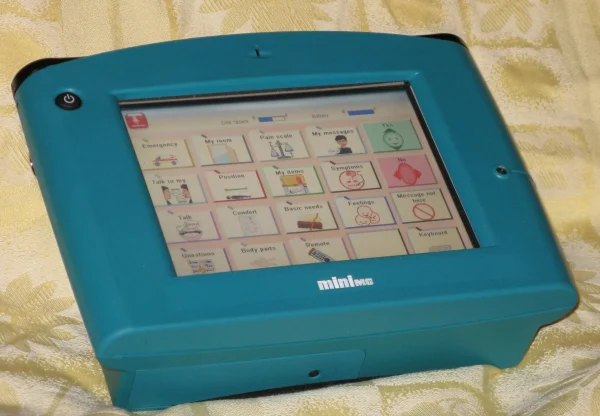
Image Credit - by Poule at English Wikipedia, CC BY-SA 3.0, via Wikimedia Commons
The Importance of Free Augmentative and Alternative Communication Tools
The financial reality of acquiring medical-grade technology can be a shocking hurdle for many desperate families. According to a report in the Internet Journal of Allied Health Sciences and Practice, dedicated speech-generating screens often retail anywhere between five thousand and fifteen thousand dollars. Some medical supply companies even bill insurance programs upwards of fourteen thousand dollars for a single unit. This staggering cost makes free augmentative and alternative communication software absolutely vital for everyday life and survival. Democratizing access to language through free tools ensures that financial hardship never silences a voice. Families do not need to wait months for extensive insurance approvals just to begin teaching their child basic words. Immediate access allows for instant, life-changing intervention right at the kitchen table. Stripping away the massive price tag removes a major barrier, letting caregivers focus entirely on the beautiful process of actually teaching language.
Bridging the Gap Before Funding
The bureaucratic process of securing funding for medical equipment is notoriously slow and painfully complicated. Families often endure extensive speech therapy evaluations, lengthy school district meetings, and endless rounds of insurance paperwork before seeing a device. This waiting period can easily stretch out for six to twelve agonizing months. During this incredibly sensitive window, free tools serve as an absolutely essential bridge. A parent can immediately download a tablet application today while they wait for the official, school-funded hardware to arrive next year. Providing temporary, cost-free access prevents the user from regressing or giving up on interacting entirely. This essential bridge ensures that language development proceeds smoothly and without interruption, maintaining the user's motivation to interact with the world while the adults handle the tedious administrative battles for permanent funding.
Dismantling Communication Myths
A major hesitation caregivers face is the fear that technology will somehow replace natural vocalization. Parents and caregivers frequently ask, does using augmentative and alternative communication hinder natural speech development? Decades of clinical research consistently show that using these tools actually encourages and supports natural speech development. According to a research review published in the American Speech-Language-Hearing Association journal, a landmark 2006 meta-analysis by Millar, Light, and Schlosser found that in eighty-nine percent of studied cases, intervention actually resulted in noticeable gains in natural speech production. Reducing the intense frustration associated with non verbal communication gives individuals the confidence to vocalize alongside their devices. When the intense pressure to form perfect syllables disappears, a child can finally relax. This newfound psychological comfort creates the perfect environment for natural vocal exploration, entirely dismantling the oldest, most pervasive myth in speech therapy today.
Top Free Text-to-Speech (TTS) Applications
For users who are fully literate and capable of spelling, text-to-speech technology offers an incredibly fast path to expression. These applications cater brilliantly to teenagers and adults who have lost their voice due to conditions like ALS or a sudden stroke. A literate individual simply types out their exact thought to communicate quickly. The software then instantly reads the constructed sentence aloud using a clear, synthesized human voice. This direct method removes the guesswork, allowing for nuanced, adult-level conversations to take place naturally. Many brilliant developers have released powerful, no-cost applications designed specifically for these urgent situations. Utilizing the processing speed of modern smartphones allows these specialized text-to-speech programs to grant immediate, reliable independence to anyone who can confidently spell out their thoughts on an everyday keyboard.
Built-in Mobile OS TTS
As outlined in Apple's accessibility guides, the phone already sitting in your pocket possesses powerful, native text-to-speech functions. The documentation also notes that users can easily highlight any typed text in a standard notes app and prompt the device to speak it aloud. Both major mobile operating systems include these highly capable functions baked directly into their standard menus. Additionally, native on-screen keyboards now utilize sophisticated predictive text, accurately guessing the next word you want to type based on your past habits. This drastically reduces the physical fatigue associated with tapping out long sentences during a busy conversation. While these built-in features lack the specific, dedicated interfaces of clinical medical applications, they remain incredibly convenient in a pinch. These native tools provide a seamless, entirely free backup method for literate individuals navigating brief, everyday social interactions.
Third-Party Free Apps
Several incredible third-party applications have stepped up to offer truly comprehensive features without demanding a subscription. According to the developer's feature list, the Spoken app offers advanced predictive text that can guess the words you want to say. The documentation also states that it features a canvas for handwriting if typing feels too tedious. Another fantastic option is Speech Assistant AAC, which A-Soft-nl created, offering immense customization. A truly standout feature of Speech Assistant is its direct integration with recent iOS calling capabilities. It lets users type during a live FaceTime call, feeding the synthesized audio directly into the phone line so the receiver hears it perfectly. These clever, highly effective programs elevate basic augmentative and alternative communication, giving literate users the speed and clarity they need to participate fully in their everyday modern social life.
Best Free Picture-Based Communication Boards and Apps
For individuals who cannot spell, picture-based systems remain the absolute gold standard for sharing their daily thoughts. These visual grids use simple icons to represent verbs, nouns, and everyday feelings, allowing a person to construct a full sentence by simply touching pictures. This visual approach is a massive staple of augmentative and alternative communication, helping young children and cognitively impaired adults grasp language concepts quickly. Users memorize the motor plan and location of specific images on their screen or paper to avoid difficult alphabetical spelling. This method essentially mirrors how we naturally learn our very first spoken words through visual association and repetition. Luckily, numerous prestigious universities and open-source software developers provide these comprehensive image libraries completely free of charge to any family needing immediate, high-quality visual support right now today.
Printable Symbol Boards
If you prefer a physical, paper-based approach, high-quality printable symbol grids are readily available online right now. According to materials from the Center for Literacy and Disability Studies at UNC-Chapel Hill, Project Core offers a completely free, scientifically backed 36 Location Universal Core Communication Board. The organization also provides a 4 Corners Eye Gaze Universal Core Communication Book designed explicitly so users can learn to use eye gaze to select symbols. You can easily download these precise PDF templates and print them at home. Another excellent resource is CoughDrop, which offers highly accessible, free printable grids directly through their website. Slipping one of these printed sheets into a plastic protector instantly creates a durable, highly portable tool. These low-tech boards survive messy lunchrooms and outdoor playgrounds, ensuring language is constantly available no matter where the user goes during the busy day. This builds great communication habits.
Robust Free Mobile Apps
Transforming an ordinary household tablet into a dedicated speech device is easier than ever with open-source software. UNICEF heavily funds Cboard, a phenomenal web application that supports forty different languages. It operates smoothly using a web browser’s native speech synthesis, and because it is open-source, users can instantly upload personal family photos. Another incredibly popular option is LetMeTalk, a brilliant application available on both major mobile stores. LetMeTalk utilizes a massive, totally free library containing over nine thousand ARASAAC pictograms, allowing users to build detailed visual sentences quickly. These strong applications turn standard, everyday tablets into incredibly powerful aac devices without requiring a credit card. Removing paywalls allows these visionary developers to ensure that visually based language learning remains fully accessible to thousands of vulnerable families across the entire modern globe today.
Navigating Built-in Accessibility Features on Smart Devices
The incredible smartphones sitting on our desks already hold tremendous, widely ignored potential to change how we connect. Major technology giants have quietly integrated staggering accessibility improvements into their latest software updates over the years. Exploring the lesser-known settings menus allows you to access tools that developers originally designed to assist with mild impairments but function beautifully for speech. Your operating system possesses these native abilities, providing an excellent alternative to sketchy third-party programs. Configuring these specific toggles gives you immediate access to reliable vocal output. This native integration represents a massive leap forward in universal design, seamlessly blending assistive tech into the mainstream. It ensures that everyone, regardless of their medical diagnosis, holds the true power of expression directly in their very own hands today.

Apple Accessibility (Live Speech & Personal Voice)
Apple completely changed mobile accessibility in late 2023 by launching Live Speech and Personal Voice on iOS. According to official Apple Support documentation, Live Speech allows users to simply triple-click their side button, type what they want to say, and have it spoken out loud during phone and FaceTime calls, as well as in-person conversations. However, the true breakthrough is the Personal Voice feature. Reading one hundred and fifty randomized text prompts for about fifteen minutes allows users to securely bank a synthetic clone of their real voice. This strictly on-device machine learning is a massive game-changer for adults facing progressive conditions like ALS. They can digitally preserve their unique vocal identity before they lose it physically. Combining these two native features essentially turns an ordinary iPhone into a highly specialized, deeply personal communication powerhouse, entirely free of charge for anyone updating their current phone's main operating system today.
Android Accessibility Suite
Google has also made massive strides with its strong Android Accessibility Suite, specifically through the Action Blocks feature. Originally released to help with cognitive impairments, users can now create massive home-screen buttons that read phrases aloud via Google Assistant. Discussing the strong nature of these free features often makes users ask, are free aac devices and apps as good as paid ones? While paid applications typically offer much larger, customizable vocabularies and dedicated technical support, many free apps and built-in features are incredibly effective for basic, everyday augmentative and alternative communication. They serve as an excellent, risk-free starting point for families exploring their options. Interestingly, Google natively integrated tens of thousands of premium Picture Communication Symbols by Tobii Dynavox directly into Action Blocks for free, making it an incredibly powerful daily visual tool today.
How to Choose the Right Tool for Non Verbal Communication
Finding the perfect software or physical board is never a simple guessing game; it requires a logical, methodical approach. The gold standard for assessing these specific needs is the SETT Framework, which Dr. Joy Zabala famously developed in 1990. SETT stands for Student, Environment, Tasks, and finally, Tools. Notice that Zabala strategically places the actual technology at the very end of the evaluation process. You must deeply understand the individual's environment and their daily goals before you ever download an app. Choosing a device simply because it looks impressive often leads to immediate abandonment and severe frustration. Carefully mapping out what the user actually wants to achieve guarantees a much higher success rate. This thoughtful methodology ensures the chosen technology serves the human being and prevents daily frustration.
Assessing Motor and Cognitive Skills
Under Zabala's proven methodology, assessors must strictly practice feature matching by evaluating physical capabilities first. You have to map the user's specific motor skills, comparing fine motor control against the need for eye-gaze tracking. A user might have excellent cognitive understanding but lack the finger dexterity to press a tiny icon on an iPad. Furthermore, visual capabilities dictate whether a person needs a grid of thirty-six small symbols or just four massive buttons. The chosen technology must perfectly match the user's bodily inputs and visual processing speeds. If an application requires difficult swiping motions that the user physically cannot perform, that tool is entirely useless. Carefully observing these subtle physical and cognitive nuances ensures that the final setup empowers the user, making every single interaction feel naturally fluid and completely accessible every day.
The Importance of Trial and Error
Caregivers must embrace a deep sense of patience during this highly experimental phase of matching tools to needs. Finding the absolute best form of augmentative and alternative communication is always a messy process of testing different free tools without pressure. You might print out a core board on Monday, only to realize by Friday that the child responds much better to a digital tablet. This trial and error phase is completely normal, and caregivers should never view it as a clinical failure. Free software is incredibly useful here because it allows you to test out dozens of interfaces without wasting thousands of dollars. Celebrate the small victories, remain incredibly flexible, and let the user's daily reactions guide your final choice. Over time, the right system will naturally stick and flourish beautifully for them in the end.
Empowering Voices Through Augmentative and Alternative Communication
The rapid shift from fifteen-thousand-dollar dedicated hardware units to powerful, free software represents a staggering democratization of language. We must completely eradicate the harmful idea that a severe physical limitation means a person has nothing valuable to say. Communication is an undeniable, basic human right, and a tragic lack of medical funding should never dictate who gets to participate in society. Whether a family leans heavily on low-tech printed sheets from a university or utilizes advanced predictive text on an iPhone, these accessible tools essentially change non verbal communication. They tear down agonizing barriers of isolation, replacing intense frustration with joyful, active participation. Every single human being deserves the basic dignity of expressing their deepest thoughts, easily ordering their favorite meal, or simply telling a family member that they love them deeply.
Empowering Communication, One Word at a Time
As technology continues to evolve at a blistering pace, the gap between expensive clinical hardware and everyday smartphones will shrink. The integration of advanced machine learning and voice cloning ensures that our daily devices will only become more intuitive and heavily personalized. Caregivers, therapists, and users should feel incredibly empowered to start experimenting with diverse aac devices today. Beginning only requires the willingness to try, rather than absolute perfection. Download a free application, print a simple vocabulary board, and observe how the world opens up for your loved one. Every successfully communicated word, no matter how small it seems, is a massive victory worth celebrating. Embracing this incredible augmentative and alternative communication technology guarantees that every brilliant mind finally gets the strong, clear voice it truly deserves today.
Recently Added
Categories
- Arts And Humanities
- Blog
- Business And Management
- Criminology
- Education
- Environment And Conservation
- Farming And Animal Care
- Geopolitics
- Lifestyle And Beauty
- Medicine And Science
- Mental Health
- Nutrition And Diet
- Religion And Spirituality
- Social Care And Health
- Sport And Fitness
- Technology
- Uncategorized
- Videos

