
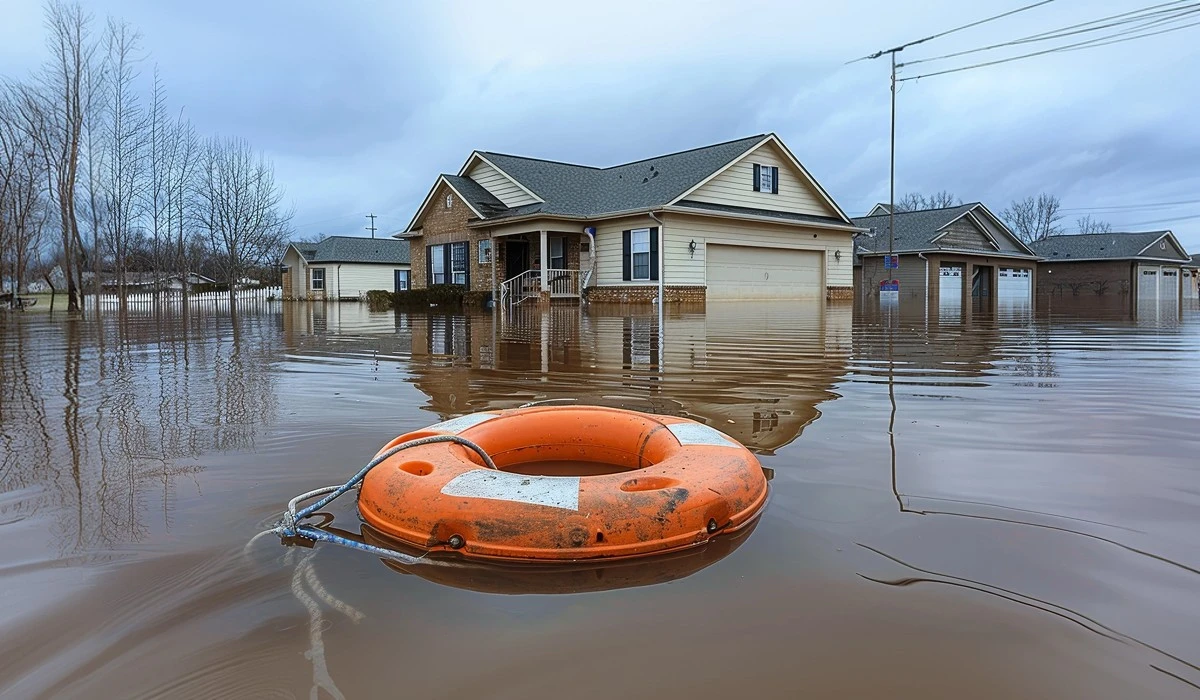
Outsmart Insurers With Flood Risk Management
An insurance adjuster in an office holds your financial future in their hands. They look at a computer screen and see a large blue polygon covering your property. These adjusters do not visit your site or check your specific floor levels. They simply see a high-risk label and double your annual premium. This happens because the industry relies on broad data that treats your modern warehouse and a low-lying marsh the same way. You pay for their lack of detail.
Reuters reports that while some insurers are pulling back from high-risk markets, they often rely on broad data that might lead to worst-case scenario assumptions for specific postcodes. They use coarse maps that miss the small details of your land. Taking control of your own data prevents you from being a victim of their guesses. This change in perspective changes your property from a high-stakes gamble into a calculated, manageable asset. High-fidelity data fills the gap between how an insurer perceives your risk and how that risk actually functions on the ground.
The direct link between flood risk management and your bottom line
Insurance companies operate on a cautious-default pricing model. When an underwriter lacks specific site data, they automatically apply the highest possible risk rating to ensure they cover potential losses. This deficiency in precision costs UK property owners millions in unnecessary premiums every year. Implementation of a proactive flood risk management strategy provides the evidence needed to challenge these default settings. The conversation moves from hypothetical possibilities to factual realities.
Underwriters do not actually hate risk; they hate uncertainty. They want to know exactly how much water will enter a building and at what frequency.
Can flood risk management lower my property insurance?
Yes, proving specific safety measures are in place with high-fidelity data often allows owners to secure significantly lower premiums than those based on generic regional estimates. Presentation of a professional report proves that your site sits higher or drains faster than the neighboring plots.
Modern insurers increasingly use risk-reflective pricing. This means they reward owners who can document their safety. According to industry data, the average commercial flood claim for a small business ranges between £70,000 and £100,000. Investing in a professional assessment costs a fraction of that amount. You essentially trade a small, one-time consulting fee for years of reduced insurance overhead and a much lower risk of total business interruption.
Challenging the flood mapping environment agency defaults
The flood mapping environment agency provides a starting point for national planning, but it rarely captures the reality of a single specific plot. Research published in ScienceDirect notes that while JFLOW helps assess river catchments, its local application is characterized by model uncertainty rather than a constant bias toward overestimation. It misses small culverts, private defenses, and subtle changes in ground elevation that keep your specific building dry during a storm.
You must look closer at the Product 4 data packages available from the agency. These packages include detailed flood levels and historical outlines for your specific National Grid Reference. Often, a High Risk label on a national map stems from a generic calculation that ignores the 1m or 2m resolution Digital Terrain Models now available through the National LiDAR Programme. Use of this granular data frequently reveals that your building sits outside the actual danger zone.
Identifying these discrepancies is the first step toward lower costs. Many generic maps fail to account for local defense assets or recent drainage improvements. If the national map says you are in Flood Zone 3, but your site-specific elevation proves you are higher than the predicted water levels, the insurer is overcharging you. Challenging these defaults requires a technical evidence base that the government maps simply were not designed to provide.
Precision through professional hydraulic modeling
Changing an insurer's mind requires math in addition to a map. According to an article in MDPI, hydraulic modeling serves to quantify uncertainty for underwriters, as these models measure risks rather than providing absolute proof that an insurer's model is wrong. This process uses elaborate algorithms to simulate how water flows, where it pools, and how fast it drains. Instead of guessing, you see exactly how a 1-in-100-year storm affects your front door. This precision gives underwriters the confidence they need to reduce your rates.
Specialists use tools like TUFLOW to run these simulations. They input variables like the Manning’s roughness coefficient to account for surface resistance. For instance, a concrete channel has a coefficient of about 0.012, while a patch of heavy brush reaches 0.100. Modeling these specific surface types allows the simulation to produce a much more accurate result than a generic government model.
How do I challenge a flood zone rating on my property?
You can submit a formal appeal using detailed site data and a professional model to prove the property is higher or better protected than the official maps suggest.
These models provide the hard math that actuaries love. When you can show that your Finished Floor Level sits exactly 450mm above the peak flood level of a 1% Annual Exceedance Probability (AEP) event, you remove the insurer's excuse for high premiums. This data-driven evidence highlights potential outcomes, though research hosted by the National Center for Biotechnology Information suggests that the relationship between flood depth and damage is highly uncertain, making it difficult to ensure inventory stays dry. It turns a perceived catastrophe into a minor site drainage issue.
Enhancing site clarity with floodplain mapping
Standard maps often blur the lines between safe ground and hazardous zones. Bespoke floodplain mapping offers a much more granular view by separating buildable land from flood-prone areas. This clarity is vital for site owners who want to maximize their land use. A Digital Terrain Model (DTM), which strips away buildings and trees to show the bare earth, provides an honest look at where water will travel.
This localized mapping allows you to identify islands of safety that generic maps overlook. While a regional map might paint your entire ten-acre site blue, a professional site-specific map might show that eight of those acres are perfectly safe. This distinction is vital for securing loans and attracting high-quality tenants. Lenders are far more likely to offer favorable terms when they see a map that clearly delineates the Functional Floodplain from the development area.
A clear map acts as a Safety Case for all stakeholders. It proves you understand the environment and have planned accordingly. For properties located behind river or sea defenses, insurers often require a breach analysis. This specific type of mapping simulates what happens if a defense wall fails. Providing this information upfront shows the insurer that you have prepared for the absolute worst-case scenario, which often results in more competitive policy quotes.
Proactive flood risk management for new developments
Insurability should start at the design phase. Building insurability into a project from day one saves massive amounts of money over the life of the property. Integration of Sustainable Drainage Systems, or SuDS, lowers the risk profile in the eyes of an actuary. Features like attenuation ponds, swales, and permeable paving can reduce peak runoff rates by up to 80%. This effectively moves a site from a high-risk category to a low-risk one before the first brick is even laid.
Designers must also stay ahead of the 2022 climate change allowance updates. These rules require flood risk assessments to include peak river flow uplifts, sometimes as high as 100%, depending on the region.
What documents do insurers need for flood-prone areas?
Most providers require a formal Flood Risk Assessment (FRA) that details the floor levels relative to expected water levels and a summary of any active or passive mitigation measures installed. Having these documents ready makes the insurance application process seamless.
Proper flood risk management in new builds also involves setting Finished Floor Levels (FFLs) at least 300mm to 600mm above predicted flood levels. This small design choice can be the difference between a standard insurance policy and a specialist policy with a £25,000 excess. Documentation of these elevations during construction creates a permanent Insurance Pack that adds significant value to the property's legal title.
Negotiating with insurance providers using technical evidence
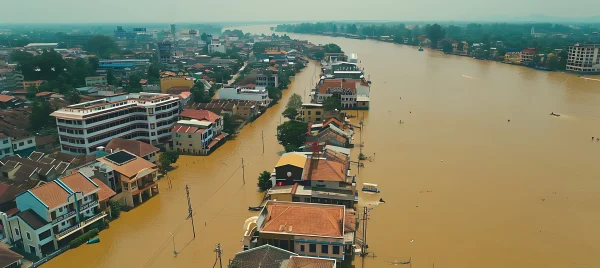
Once you have the data, you must use it as a negotiation tool. Standard insurance brokers often lack the technical expertise to interpret hydraulic modeling results. You should seek out specialist brokers who understand the difference between a 1% AEP and a 0.1% AEP. A study in ScienceDirect indicates that commercial insurance pricing is influenced by market cycles and reinsurance costs, rather than relying solely on risk-reflective models.
When you present your Evidence of Mitigation, you are essentially telling the insurer that their computer model is wrong. Show them the specific resistance measures you have installed, such as flood gates or non-return valves on drainage pipes. These physical improvements, backed by professional data, justify a reduction in premiums. Insurers are businesses; they want to write policies, and they will compete for your business if you prove the risk is lower than their competitors realize.
Long-term value and the resale advantage
The financial benefits of professional data extend far beyond the annual insurance bill. A property that is insurable at a normal rate is significantly more liquid than one with a high-risk label. When it comes time to sell, a buyer’s surveyor will check the flood maps. As reported by Floodmatik, data from Business in the Community indicates that 40% of small businesses fail to reopen following a significant flood event. You protect the property’s market value by removing the stigma of flood risk.
Business interruption is another ignored cost that professional planning prevents. Proactive management helps you avoid the loss of equipment, stock, and trade. Even if a flood occurs, having a plan in place ensures you can recover in days rather than months. This resilience is a tangible asset that lenders and investors value highly.
Better data today allows you to secure the long-term viability of your business and ensures your property remains a profitable investment for decades to come. Insurers are much more likely to offer consequential loss insurance at an affordable rate if you can prove your site won't be underwater for weeks.
Securing your future with flood risk management
The cost of flood-related damage in the UK continues to rise, reaching billions of pounds annually. You cannot control the weather, but you can control the data that defines your financial risk. Relying on generic maps leaves you at the mercy of insurance companies that price for the worst-case scenario. A proactive stance allows you to reclaim control over your overhead and your property's reputation.
Professional hydraulic modeling and detailed floodplain mapping provide the transparency needed to lower insurance premiums and secure property value. While these assessments require an initial investment, the return on investment is immediate through reduced premiums and long-term through increased site liquidity. Every pound spent on understanding your site’s unique elevation and drainage saves ten pounds in future insurance costs and repair bills. Investors should avoid paying for an insurer’s uncertainty and instead focus on the certainty provided by flood risk management.
Recently Added
Categories
- Arts And Humanities
- Blog
- Business And Management
- Criminology
- Education
- Environment And Conservation
- Farming And Animal Care
- Geopolitics
- Lifestyle And Beauty
- Medicine And Science
- Mental Health
- Nutrition And Diet
- Religion And Spirituality
- Social Care And Health
- Sport And Fitness
- Technology
- Uncategorized
- Videos

