
How Does Hydrogeology Stop Water Pollution?
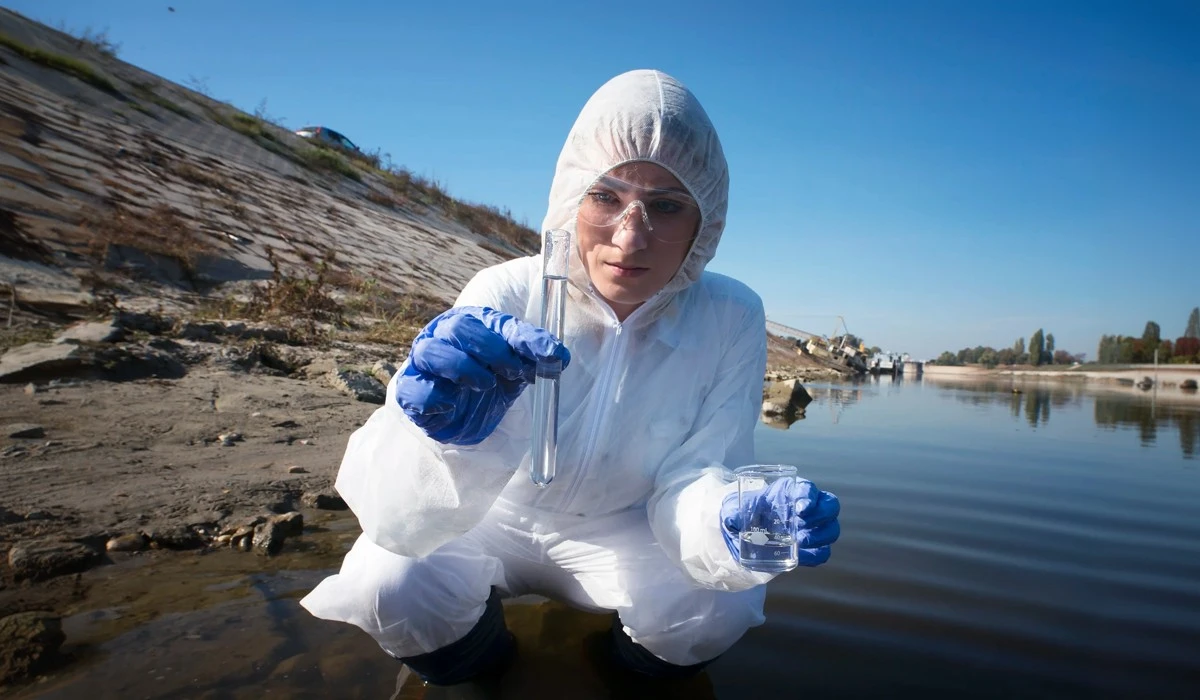
When a chemical spills on a factory floor, the danger begins long after someone mops the surface. Liquid waste moves through the dirt and joins a large liquid network that spans miles. This buried system links a leaking drum in an industrial park to the well water in a nearby suburb. People rarely think about the layers of rock and sand under their feet until a crisis hits. With hydrogeology, experts track these movements and stop poisons before they reach your glass.
Knowledge of how water interacts with the earth keeps our drinking supply safe. Most of the world's liquid freshwater stays trapped in the ground. In fact, groundwater makes up nearly 99 percent of the liquid freshwater on the planet. This resource provides half of the global domestic water supply, and a report by the Water Resources Development and Management Department at IITR indicates that groundwater provides 43 percent of all water used for irrigation globally. The study further notes that it accounts for nearly 62 percent of the irrigation water requirement in India.
The Critical Role of Hydrogeology in Risk Mitigation
Jean-Baptiste Lamarck first coined the term hydrogeology in 1802. Later, Henry Darcy formalized the science in 1856. He performed experiments on sand filters in Dijon, France, to see how water moves through different materials. Today, experts use these principles to predict where a spill will go before it even happens.
Identifying Potential Contaminant Sources
Experts look for surface threats that might reach the water table. These include leaking underground storage tanks, landfills, and septic systems. They also watch for runoff from farms that use heavy fertilizers. The early identification of these sources allows cities to build protective zones around their wells.
Understanding Subsurface Connectivity
Awareness of the plumbing of the earth prevents small spills from becoming huge disasters. Rocks like granite have less than 1 percent porosity, meaning they hold very little water. Sand, however, has a porosity between 25 and 50 percent. Water moves easily through sand, carrying pollutants along with it. If a spill happens in a sandy area, it moves much faster than it would in clay or solid rock.
Deciphering the Map: Utilizing Aquifer Mapping to Protect Resources
Aquifer mapping provides a clear look at what lies beneath the surface. It shows us where the water is and how much we can safely take out. It also identifies the layers of clay or rock that act as shields against pollution.
High-Resolution Imaging of Storage Units
Scientists use Electrical Resistivity Tomography to see underground. This tool sends electrical currents into the earth. Since water-saturated sand conducts electricity differently from dry rock, the tool creates a picture of the subsurface. Airborne Electromagnetic surveys use helicopters to map large areas quickly. These surveys can see 500 meters deep to find new water sources or track pollution paths.
Differentiating Confined vs. Unconfined Aquifers
An unconfined aquifer sits right below the soil and has no protective lid. A confined aquifer stays trapped under a thick layer of clay or solid rock. This clay layer acts as an aquitard because it has very low hydraulic conductivity, often as low as 10^(-9) cm/s. How do pollutants reach deep aquifers? Pollutants usually migrate downward through porous soil or faulty well casings, eventually hitching a ride on natural water movement to reach deep storage zones. Once a pollutant gets past the clay lid, it becomes much harder to remove.
Real-Time Intelligence: Analyzing Groundwater Flow Patterns
Predicting the path of a contaminant requires a deep understanding of groundwater flow. Unlike the rushing water in a river, water underground moves very slowly. It usually follows a smooth, laminar path because it stays in tiny spaces between grains of sand.
Darcy’s Law and the Velocity of Contamination
Henry Darcy gave us the math to calculate flow. The formula Q=-KiA helps hydrogeologists determine the discharge rate, as research published by Columbia University shows that the discharge rate is proportional to the hydraulic conductivity and the gradient in hydraulic head. Consequently, professionals use Darcy’s law and the hydraulic gradient to calculate discharge. When researchers measure the hydraulic gradient, which is the slope of the water table, they calculate exactly how many feet a contaminant travels per day.
Directional Dynamics
Gravity and pressure dictate where water goes. In a confined aquifer, scientists measure the potentiometric surface. This imaginary line shows the pressure level of the water. Water always moves from high pressure to low pressure. When a city pumps a well too hard, it creates a cone of depression. This pressure drop can actually pull nearby pollution plumes toward the drinking water source.
Utilizing Hydrogeology for Precision Remediation
Hydrogeology allows for precision when a spill occurs. Finding a leak does not require digging up an entire county, as researchers use chemistry and physics to identify the specific location of the issue.
Isotope Analysis and Chemical Fingerprinting
Scientists use stable isotopes like Oxygen-18 and Deuterium to identify the source of water. These isotopes act like a fingerprint. They tell us the age of the water and where it came from. For example, Tritium dating helps us find water that entered the ground after 1950. If we find Tritium in a deep well, we know that modern pollution could reach it easily.
Targeted Extraction and Containment
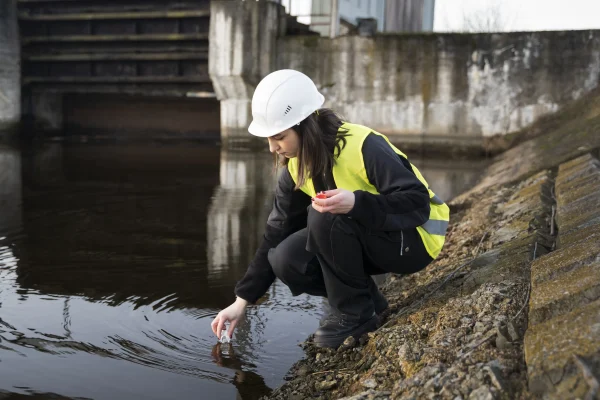
We categorize pollutants to decide how to catch them. Gasoline is a Light Non-Aqueous Phase Liquid that floats on the water table. Solvents like Trichloroethylene are Dense Non-Aqueous Phase Liquids that sink to the bottom of the aquifer. Can contaminated groundwater be cleaned naturally? In many cases, a process called natural attenuation allows native bacteria and chemical reactions to neutralize toxins over long periods without human intervention. To speed things up, we might inject specialized microbes, like Dehalococcoides mccartyi, to eat the toxic chemicals.
Strategic Early Warning: The Power of Monitoring Wells
Monitoring wells serve as a first line of defense. They allow us to test the water before it reaches the main pumps. This proactive approach saves lives and prevents expensive cleanups.
Improving Well Placement
Aquifer mapping helps decide where to put these sensors. Placing a well in the wrong spot is a waste of money. We look for high-transmissivity zones where water moves the fastest. These zones are the most likely paths for a pollution plume. The placement of a piezometer in these spots allows for the measurement of the hydraulic head and provides an early warning if things change.
Ongoing Data Collection
Old methods required people to visit wells and take samples by hand. Now, we use pressure transducers and digital sensors. These tools record water levels every second. They can even detect the weight of a passing train or changes in barometric pressure. This ongoing stream of data allows us to see how groundwater flow reacts to heavy rain or high demand in real-time.
Incorporating Modern Tech into Aquifer Mapping Strategies
Technology has changed how we look at the world beneath us. We no longer guess what the layers of rock look like. We build digital versions of the subsurface that we can rotate and explore on a screen.
3D Subsurface Modeling
Software like MODFLOW, created by the USGS in 1983, is the industry standard. It uses data from aquifer mapping to create a 3D model of the ground. We can run simulations to see what happens if a factory leaks or if a new housing development pumps more water. This helps city planners make better choices about where to build.
Geophysical Surveys for Non-Invasive Insights
Geophysical tools let us see through the ground without drilling a single hole. Seismic surveys use sound waves to find different rock layers. Is aquifer mapping expensive to perform? While initial geophysical surveys require an investment, they significantly reduce long-term costs by preventing dry holes and identifying contamination before it requires multi-million dollar cleanups. These tools are much cheaper than drilling dozens of test wells that might come up dry.
The Future of Clean Water: Scaling Hydrogeology Globally
As the world grows, we need more water. Climate change makes rain patterns less predictable. We must use the earth itself to store water for the future.
Climate Resilience and Subsurface Storage
California’s Sustainable Groundwater Management Act of 2014 requires local groups to map their water. This law helps prevent land subsidence, which happens when the ground sinks because too much water is pumped. We can use hydrogeology to pump excess rainwater into the ground during wet years. This stores the water in the aquifer so we can use it during a drought.
Influencing Policy through Data
Good data leads to good laws. The Hinkley case, made famous by Erin Brockovich, showed the world what happens when we ignore groundwater safety. Scientists tracked a plume of Hexavalent Chromium that was two miles long. This evidence led to a massive settlement and better rules for industrial waste. Scientific maps help communities stand up for their right to clean water.
Securing Our Liquid Assets through Hydrogeology
Protecting our water requires looking deeper than the surface. We must understand the detailed world of sand, rock, and pressure that exists underground. When aquifer mapping is combined with a deep study of groundwater flow, a shield is created for our most vital resource.
The Walkerton outbreak in 2000 reminded us that water can move through fractured rock in just days. Without a scientific plan, we are simply waiting for the next crisis. Hydrogeology gives us the tools to be proactive rather than reactive. It ensures that every time you turn on a faucet, the water is safe, clean, and reliable for your family.
Recently Added
Categories
- Arts And Humanities
- Blog
- Business And Management
- Criminology
- Education
- Environment And Conservation
- Farming And Animal Care
- Geopolitics
- Lifestyle And Beauty
- Medicine And Science
- Mental Health
- Nutrition And Diet
- Religion And Spirituality
- Social Care And Health
- Sport And Fitness
- Technology
- Uncategorized
- Videos

