
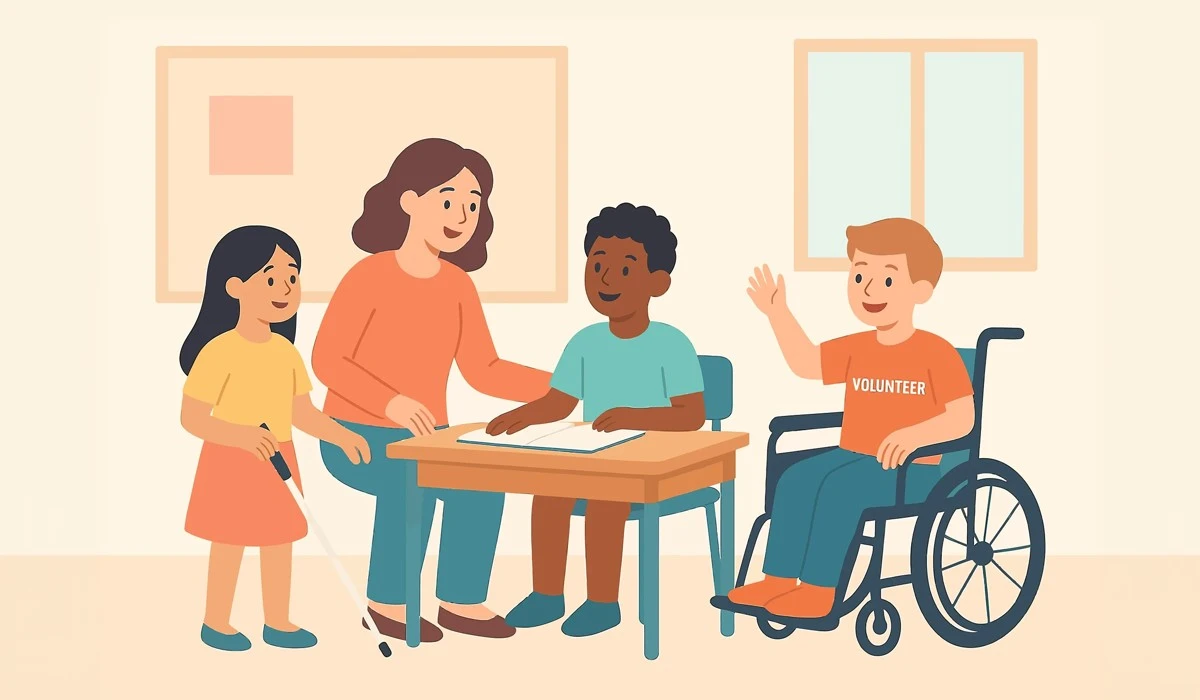
Top Inclusion And Special Educational Needs Tips
Research published in MDPI shows that educators frequently underestimate the actual lifetime prevalence of combined autism and ADHD compared to a 40.2 percent benchmark, meaning teachers often aim their lessons at an imaginary "average" student while nearly twenty percent of the class sits on the sidelines. This approach creates a wall between the instruction and the learner. In reality, modern education requires a shift away from rigid rows and one-way lectures. Every student processes information differently. Educators now need specific Inclusion and Special Educational Needs neuro tips to reach every child effectively.
True inclusive classrooms value neurodivergent learning as a strength rather than a problem to solve. According to the CDC, conditions like autism present as natural variations across all socioeconomic, ethnic, and racial groups, with the agency also noting that the disorder is identified over three times more frequently in boys than in girls. This guide provides the tools to bridge the gap between old teaching habits and modern, effective support. Changing the environment and the delivery ensures every student has a fair shot at success.
Building the Foundation of Inclusive Classrooms
The 1978 Warnock Report changed the face of education by moving away from harsh medical labels. It introduced the concept of Inclusion and Special Educational Needs, suggesting that one in five children requires extra support at some point, a figure mirrored by inclusive.tki.org.nz, which notes that roughly 15 percent of students in New Zealand schools are classified as having special learning needs. As noted by ScienceDirect, students with special educational needs are increasingly included in general classrooms, which means true inclusion requires full social and academic participation rather than a simple physical presence in the room. Students must feel like valued members of the community, not visitors.
The 1994 Salamanca Statement pushed this further. Research published in Sagepub notes that global inclusive education has increasingly focused on supporting neurodivergent students, aligning with the declaration that inclusive classrooms are the most effective way to fight discrimination. When schools welcome everyone, they create a better learning environment for all pupils. This legal and moral framework ensures that no child is left behind because of how their brain works.
Shifting the Mindset from Deficit to Diversity
According to Deepranjani, Australian sociologist Judy Singer originally introduced the term "Neurodiversity" in her 1998 honors thesis. A publication by KB.osu.edu explains that neurodiversity shifts the perspective from a deficit model to one of natural difference, meaning ADHD, autism, and dyslexia are simply different ways of being human. When teachers adopt this view, they stop trying to "fix" the student. Instead, they look for ways to adjust the teaching style. This asset-based approach focuses on what the student can do.
Reframing challenges as unique processing styles improves the relationship between teachers and students. A student who struggles to sit still might have high energy for creative projects. A student who avoids eye contact might have an incredible eye for detail. Identifying these strengths allows teachers to build a classroom culture based on mutual respect and understanding.
Inclusion and Special Educational Needs Neuro Tips for Sensory Regulation
Classrooms often buzz with distracting noises and harsh lights that derail focus. The American National Standards Institute recommends that background noise stay under 35 decibels for optimal learning. Loud cooling fans or humming computers can make it impossible for some students to hear the teacher’s voice. These environmental factors directly influence neurodivergent learning and student comfort.
Standard fluorescent lights also cause issues. Many neurodivergent students see a 60Hz flicker that others do not notice, which causes headaches and fatigue. Swapping these for warm LED lights or using light filters creates a calmer space. What are the best classroom layouts for neurodiverse students? Flexible seating options and quiet zones provide the best results because they let students select a spot that matches their sensory tolerance. Adding a "calm-down kit" with noise-canceling headphones helps students manage their own sensory input.
Sensory Breaks as Proactive Tools

Movement helps the brain stay alert and focused. Instead of waiting for a student to become restless, teachers should schedule regular "brain breaks" for the entire class. These breaks normalize the need for movement in inclusive classrooms. A quick two-minute stretching session can reset a student's ability to process new information.
Proprioceptive input, or "heavy work," also helps ground students who feel overwhelmed. Research shows that weighted lap pads, typically five to ten percent of a child's body weight, can lower cortisol levels. Giving a student a job like carrying heavy books to the library serves the same purpose. These proactive steps prevent burnout and keep the learning momentum going.
Inclusion and Special Educational Needs Neuro Tips for Curriculum Access
John Sweller’s Cognitive Load Theory explains that brains can only handle so much new info at once. When a task feels too big, the brain shuts down. Teachers use Inclusion and Special Educational Needs neuro tips to break large projects into tiny, bite-sized steps. A visual checklist on a student's desk provides a clear path forward.
Tiered assignments allow all students to work on the same topic at different levels of difficulty. For example, while the class studies the solar system, one student might write a report while another labels a diagram. Both students learn the core facts, but the delivery matches their current skill level. This method reduces the mental fatigue that often comes with neurodivergent learning.
Universal Design for Learning (UDL) Implementation
Dr. David Rose and the team at CAST developed UDL to make learning accessible for everyone from the start. UDL offers three ways to help: multiple ways to engage, multiple ways to see info, and multiple ways to show knowledge. This framework benefits every student in the room, alongside those with a diagnosis. How does UDL support inclusive education? UDL removes learning barriers by offering different ways for kids to see info and show what they know, keeping the bar high for everyone.
Teachers might provide a video, a podcast, and a printed article on the same topic. Students then choose the format that works best for them. This choice empowers learners and ensures that a reading struggle does not stop a student from learning science or history. UDL turns Inclusion and Special Educational Needs into a standard part of the lesson plan rather than an afterthought.
Redefining Neurodivergent Learning through Differentiation
The brain processes images much faster than text. Dual Coding Theory suggests that combining words with visuals increases memory retention by up to 50%. In inclusive classrooms, anchor charts and visual schedules provide a permanent reference for students. This is especially helpful for students with working memory challenges who might forget verbal instructions.
Color-coding is another powerful tool for neurodivergent learning. Using a specific color for each subject helps students find their folders and books quickly. Visual timers also help students "see" time passing. When a student sees a red disc disappearing on a clock, they understand how much time they have left better than when a teacher says, "five minutes."
Tailoring Assessment Methods
Standardized tests often measure a student's ability to sit still and read rather than their actual knowledge. Educators can use different methods to see what a student truly knows. Oral presentations, digital portfolios, or building a 3D model provide alternative ways to demonstrate proficiency. These methods highlight student strengths that a pen-and-paper test might miss.
Assessment should serve as a tool for growth alongside grading. Precision Teaching uses "fluency" charts to track how quickly and accurately a student performs a task. This data helps teachers adjust their Inclusion and Special Educational Needs neuro tips in real-time. If a student isn't making progress, the teacher changes the strategy immediately rather than waiting for the end of the term.
Communication Strategies for Diverse Needs
Students need the words to explain what they need to succeed. Teachers can provide "need cards" or scripts to help students ask for help. A card that says "I need a break" or "This is too loud" allows a student to communicate without feeling embarrassed. This builds independence and confidence over time.
Self-advocacy also involves understanding one's own brain. When students learn about neurodivergent learning, they stop feeling "broken" and start feeling capable. They learn to say, "I need to look away so I can listen better." This level of self-awareness is a vital life skill that extends far beyond the classroom walls, especially since a report by ResearchGate highlights that over 200,000 students entering U.S. colleges in 2018 were on the autism spectrum.
Peer Support and Social Integration
Inclusion is a social process as much as an academic one. "Peer buddy" systems pair students up to help with transitions or social cues. This builds empathy and reduces the isolation that students with Inclusion and Special Educational Needs often feel. Structured social activities ensure that every child has a friend on the playground.
What are some effective social inclusion strategies? Peer buddy systems and assigned roles in group work create a safe structure for social interaction. Giving a neurodivergent student a specific role, like "timekeeper" or "recorder," helps them participate in group work with confidence. These roles provide a clear script for interaction and help students build meaningful connections with their classmates.
Using Assistive Technology for Academic Parity
Technology levels the playing field for students with literacy challenges. Optical Character Recognition (OCR) tools allow students to scan a page and have it read aloud to them. This ensures that a student’s reading level does not limit their ability to learn advanced subjects. Text-to-speech and speech-to-text software are essential for neurodivergent learning in the digital age.
Grammar checkers and word prediction software also help students who struggle with the physical act of writing. These tools allow them to focus on their ideas rather than the mechanics of spelling. Using these technologies in inclusive classrooms makes the curriculum accessible to everyone, regardless of their starting point.
Organization and Time Management Apps
Executive function challenges make it hard for many students to stay organized. Digital calendars and task management apps help students track deadlines and homework. A study in Springer indicates that ADHD occurs in 50 to 70 percent of autistic individuals, meaning these apps act as an external brain for students managing these overlapping traits. Teachers can support this through posting all assignments in a central digital hub.
Visual organizers and mind-mapping software help students plan their writing. Instead of staring at a blank page, they can drag and drop ideas into a logical order. These Inclusion and Special Educational Needs neuro tips turn a daunting task into a series of manageable steps. When students have the right tools, they can focus on learning the content.
Future-Proofing with Inclusion and Special Educational Needs Neuro Tips
The field of neuroeducation moves fast. Research published on Arxiv notes that much of the current literature on neurodiversity remains preliminary and lacks empirical evidence. The study also suggests that teachers must stay updated on the latest research to provide the best support despite these gaps. Grasping concepts like the "Double Empathy Problem" helps teachers see that communication is a two-way street. This research shows that misunderstandings between autistic and non-autistic people are mutual, requiring both sides to adapt.
Ongoing training ensures that Inclusion and Special Educational Needs strategies remain evidence-based. Schools should provide time for teachers to share what works in their own inclusive classrooms. Learning from colleagues is often the best way to find practical solutions for daily challenges. Professional growth keeps the teaching fresh and effective.
Data-Driven Adjustments
Effective teaching requires constant checking and adjusting. Teachers use both grades and observations to see if their Inclusion and Special Educational Needs neuro tips are working. If a student's behavior changes, it often signals that a sensory or academic barrier has appeared. Tracking these patterns allows for quick fixes.
Quantitative data, like reading scores, tell part of the story. Qualitative data, like a student's confidence level, tells the rest. Looking at both sets of data allows educators to refine their approach to neurodivergent learning. This ongoing cycle of observation and adjustment ensures that every student gets exactly what they need to thrive.
Perfecting Inclusion And Special Educational Needs Neuro Tips
Creating an environment where every student succeeds requires a comprehensive approach beyond a simple checklist. It demands a commitment to seeing the world through the eyes of the learner. Implementing these Inclusion and Special Educational Needs neuro tips turns the classroom from a place of frustration into a place of opportunity. The shift toward inclusive classrooms benefits every child by teaching them that diversity is a strength.
This process focuses on empathy, flexibility, and the belief that every brain has value. Small changes in lighting, scheduling, or how you give instructions can change a student's entire future. Start today with one adjustment to your environment. When we support neurodivergent learning, we build a world where everyone belongs.
Recently Added
Categories
- Arts And Humanities
- Blog
- Business And Management
- Criminology
- Education
- Environment And Conservation
- Farming And Animal Care
- Geopolitics
- Lifestyle And Beauty
- Medicine And Science
- Mental Health
- Nutrition And Diet
- Religion And Spirituality
- Social Care And Health
- Sport And Fitness
- Technology
- Uncategorized
- Videos