
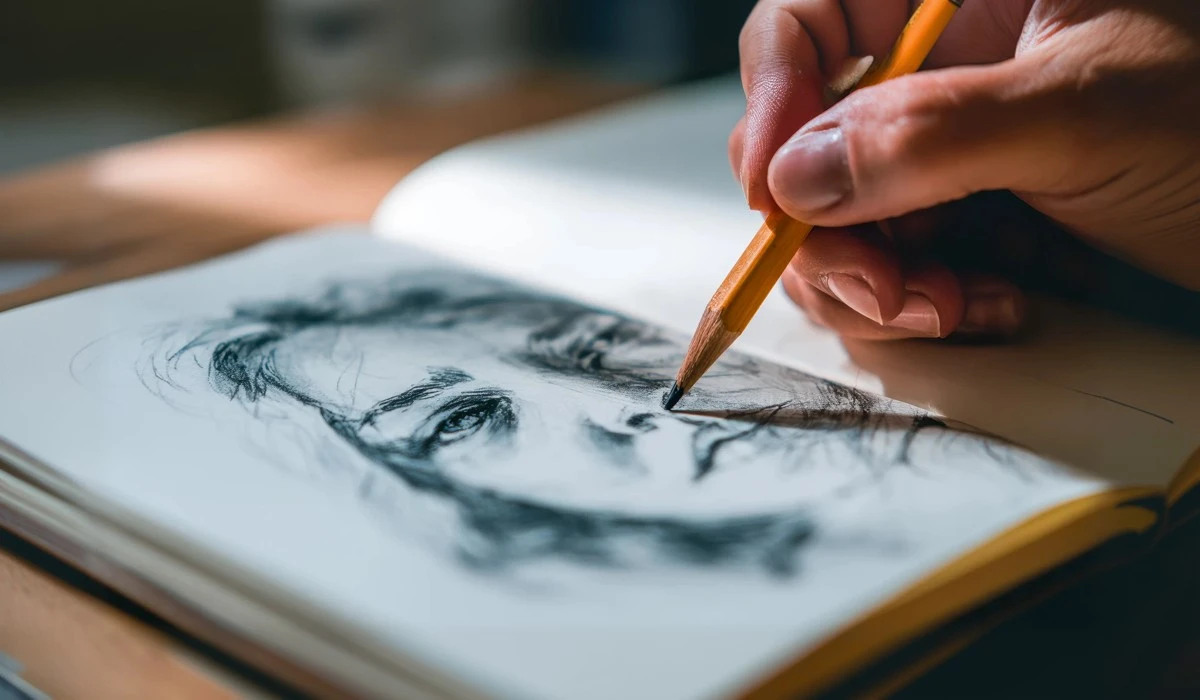
Speedy Suspect Identification With Forensic Art
A detective stares at a grainy security video. The screen shows only a dark shadow and a blurry jacket. The witness remembers the fear clearly, but the face of the suspect feels like it is slipping away. Most people believe memory works like a high-definition camera, but the human brain actually stores faces in fragments. Over time, new information overwrites these small details. Forensic Art steps in to stop this process and pull those fading shapes back into the real world.
This craft turns a foggy recollection into a physical lead that police can actually use. It gives a face to a ghost. Investigators often hit a wall when digital evidence fails, or cameras point the wrong direction. Bridging the gap between a witness's mind and a piece of paper allows an artist to create a tool that a computer simply cannot replicate.
The Evolution of Forensic Art in Modern Investigations
The history of catching criminals with drawings goes far beyond the wanted posters of the Old West. Modern Forensic Art functions as a sophisticated science rooted in human anatomy. According to the Darwin Museum, pioneer Mikhail Gerasimov proved that a skull's shape dictates the look of a face, having recreated more than 200 sculptural portraits of people from the past. The museum notes that his work, using only bone structure as a guide, allows us to know what historical figures, including Ivan the Terrible, looked like.
Ironically, the rise of high-definition CCTV did not make this skill obsolete. Cameras often have blind spots or low-light issues that hide important features. Records from Taylor & Francis show that Karen T. Taylor’s definitive textbook, Forensic Art and Illustration, codified these practices when first published in 2000. Furthermore, Routledge describes the book as the first to provide complete coverage of all aspects of the discipline, moving the field from creative guesswork to a disciplined marriage of biology and art.
Today, the International Association for Identification (IAI) website outlines certification requirements, maintaining strict standards for this profession. To earn certification, an artist must complete 80 hours of training and present a portfolio of 30 successful sketches. This rigor ensures that the drawings remain objective tools, completely distinct from mere decorative pictures.
Learning composite drawing techniques to Build Leads
Creating a likeness from a conversation demands specific drawing skills alongside a deep comprehension of how the brain stores images. Forensic artists use specific composite drawing techniques to help witnesses see the suspect again. They start with a blank page and build a face based on a specific interview style.
The process begins with the Cognitive Interview, a method developed by Geiselman and Fisher in 1984. How do police artists draw from memory? Police artists use specialized cognitive interviewing to help witnesses access sensory details without creating false memories. This ensures the sketch reflects the witness's mind rather than the artist's imagination. This method increases correct recall by up to 55% compared to standard questioning.
Meanwhile, the artist must account for the Inversion Effect. Research published in Frontiers in Psychology shows that humans recognize upright faces as a whole percept rather than feature-by-feature. An artist will ask about the vibe or mood of a face before asking about the width of a nose. This holistic approach prevents the witness from getting stuck on tiny details that might confuse their memory.
The Science Behind Facial Reconstruction Sketching
When investigators find unidentified remains, the process changes completely. There is no witness to interview, so the artist looks to the bone. This is where facial reconstruction sketching becomes a biological necessity. The artist uses the skull as a map to find the person's identity.
Different schools of thought exist for this process. A study on the history of facial reconstruction published on ResearchGate notes that the Gatliff-Snow method, or the American Method, uses craniometric and anatomical soft tissue markers, traditionally applying 21 anatomical landmarks. The same research details that the artist places vinyl pegs on specific areas of the skull to show how thick the skin and muscle should be at each point. What is the purpose of Forensic Art? In cases of skeletal remains, it recreates a recognizable face that the public can identify. This process bridges biology and recognition, often naming victims who would otherwise stay unknown.
Research from Liverpool John Moores University explains that the Manchester Method offers even more detail by incorporating both anatomical and anthropometrical standards. This approach builds each facial muscle, like the masseter or zygomaticus, directly onto the skull using clay or digital layers based on the study of facial anatomy. Understanding how muscles wrap around bone helps the artist ensure the final sketch looks like a living person. This mathematical accuracy helps the public recognize the individual from a distance.
How Forensic Art Accelerates Law Enforcement Timelines
Time is the biggest enemy in any criminal case. Investigators often talk about the Golden 48 Hours, the window where leads are fresh, and evidence is easy to find. Forensic Art speeds up this timeline by providing an immediate visual for the media and the public.
A well-made sketch acts as a targeted asset. It does not need to look exactly like a photograph to work. Instead, it needs to spark recognition in someone who already knows the suspect. A field review of suspect sketches published on ResearchGate notes that sketches produce significant identification results, supporting statistics that cases with a visual component generate 20% to 30% more viable leads than those without one.
Meanwhile, this process filters out the noise. When police release a description like white male, six feet tall, they get thousands of useless tips. A sketch provides specific character lines or unique asymmetries that narrow the search. This precision saves hundreds of man-hours for detectives who would otherwise chase dead ends.
Advanced Digital Tools Enhancing Forensic Art Accuracy
Traditional graphite on vellum remains a powerful tool, but technology now offers new ways to refine a likeness. Many artists now use Wacom Cintiq tablets to create their work. These digital screens allow for non-destructive editing. If a witness changes their mind about a jawline, the artist can adjust a single layer without erasing the entire face.
Software like Corel Painter has become a favorite in the community. It mimics the texture of real pencils while allowing the artist to quickly swap out features. However, software like FACES 4.0 has limits. While it contains over 4,000 features, a hand-drawn sketch still captures the human quality that helps people recognize a face.
Ironically, the most advanced tool today comes from the lab. DNA phenotyping now allows artists to see a suspect's genetic blueprint. Services like Parabon NanoLabs can predict eye color, hair color, and ancestry with 90% accuracy. The artist then uses this data to ground their composite drawing techniques in biological reality, making the final image much more reliable.
Overcoming Witness Memory Gaps and Biases
Memory is a fragile thing. Research published on ResearchGate regarding the weapon focus effect suggests that trauma, lighting, and even the presence of a weapon at the scene of a crime impairs the witness's memory for the perpetrator, distorting what they think they saw. Forensic artists must navigate these gaps without adding their own bias to the sketch. They focus on the T-Zone, the eyes, nose, and mouth, because these are the features people remember most accurately.
The artist must also understand the difference between internal and external features. Strangers usually recognize people by their hair or face shape. However, close friends and family recognize people by their eyes and mouth. The artist must balance both to ensure the drawing reaches the right audience.
Maintaining neutrality is vital. A leading question can plant a false detail in a witness's mind. Can Forensic Art be used in court? While primarily a tool to find leads, sketches can enter evidence to show how an investigation progressed. It acts as a visual record of what a witness first described to police. This record protects the integrity of the case as it moves toward a trial.
The Ethics and Standards of Professional Forensic Art
Every line an artist draws has the power to change a life. Because of this, Forensic Art follows a strict ethical code. The focus rests entirely on being an accurate reporter of information rather than being a great illustrator. Artists use craniometry, the measurement of the skull, to ensure the proportions of a face are biologically possible.
They must avoid the uncanny valley, where a drawing looks almost human but slightly off. This can actually prevent people from recognizing a suspect because the brain focuses on the weirdness of the art rather than the face. Professional artists stay away from artistic flair and stick to the facts provided by the witness or the bone.
The IAI ensures that artists do not use reference photos during interviews. Showing a witness a photo of a typical nose can wipe out their actual memory of the suspect. Sticking to these rigid standards helps the artist ensure their work serves justice, avoiding merely filling a space on a wanted poster.
The Human Element of Forensic Art
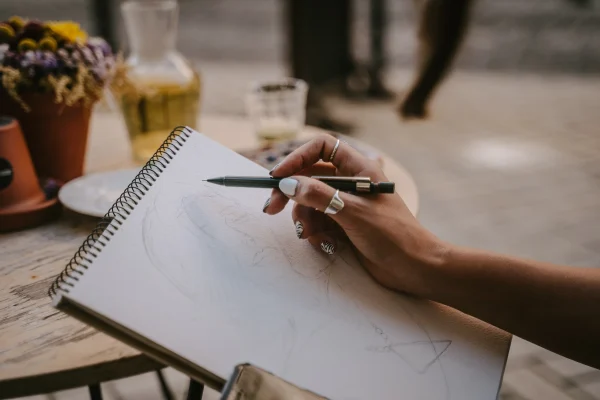
As technology advances, the need for a human touch only grows. Computers can process data, but they cannot navigate the difficult emotions of a traumatized witness. The combination of facial reconstruction sketching and modern composite drawing techniques remains one of the most effective ways to solve cold cases.
This field proves that a simple pencil and an understanding of anatomy can do what a million-dollar camera cannot. Turning a fading thought into a clear image allows Forensic Art to provide the breakthrough that closes cases and brings answers to families. It remains a vital bridge between the science of the lab and the reality of the street.
Recently Added
Categories
- Arts And Humanities
- Blog
- Business And Management
- Criminology
- Education
- Environment And Conservation
- Farming And Animal Care
- Geopolitics
- Lifestyle And Beauty
- Medicine And Science
- Mental Health
- Nutrition And Diet
- Religion And Spirituality
- Social Care And Health
- Sport And Fitness
- Technology
- Uncategorized
- Videos

