

Overcoming Shyness and Social Anxiety On Stages
Standing in the wings before a presentation feels like waiting for an execution. Your palms sweat, your heart races, and every instinct screams at you to flee the building. You think you are experiencing a personal failure. In reality, your brain is functioning exactly as evolution designed it to. The National Institute of Mental Health reports that forty percent of the population shares this terror of public speaking. A review published in PubMed indicates that substantial evidence links the amygdala to the pathophysiology of Social Anxiety Disorder, illustrating why your amygdala perceives the eyes of the audience as a literal predator.
Normal stage jitters turn into clinical dread when you believe the spotlight will physically harm you. According to the American Psychological Association, exposure therapy was created to help people confront their fears. Therefore, Overcoming Shyness and Social Anxiety on stage requires essentially changing your relationship with this fear. We will explore practical exposure strategies and actionable confidence-building tactics to train your nervous system to feel safe while standing directly in front of the crowd.
The Physiology of Stage Fright: Overcoming Shyness and Social Anxiety Under Pressure
The American Psychiatric Association classifies severe performance terror under Social Anxiety Disorder because the body reacts to a crowd exactly like a physical attack. Your brain shuts down executive control in the prefrontal cortex, which causes you to suddenly forget your entire speech. Many performers wonder about these intense physical reactions. Why do I get so nervous before going on stage? It happens because your brain perceives the audience as a potential threat, initiating a fight-or-flight response.
According to an NCBI publication, this fight-or-flight response causes temporary physiological shifts like an increased heart rate and adrenaline release. Consequently, this biological reaction pumps adrenaline and cortisol into your system to prepare you for danger, even when none exists. Blood rushes away from your digestive tract, creating instant nausea and shaking hands. Overcoming Shyness and Social Anxiety requires you to recognize these uncomfortable biological symptoms without letting them hijack your rational thought process during the event.
Adrenaline vs. Panic
Psychologists actively use the Yerkes-Dodson Law to help speakers manage this chemical rush. This principle demonstrates how a moderate level of physiological arousal actually improves your performance significantly. The adrenaline sharpens your focus, increases your vocal energy, and provides the motivation necessary to project confidence to the back of the room. Performance degrades only when that arousal escalates into absolute panic. Up to sixty percent of professional musicians experience debilitating stage fright, proving that even experts struggle to balance this energy. You must learn to interpret a racing heart as a sign of readiness. When you reframe these physical sensations as helpful tools, you stop fighting your own body. This shift in perspective turns crippling fear into a powerful source of usable energy that elevates your entire presentation in front of the crowd.
Reframing Nervous Energy
Cognitive reframing allows you to consciously relabel your biological responses in real time. Instead of telling yourself to calm down, you verbally declare your excitement. Telling a highly stimulated brain to relax rarely works because the physiological gap remains too large. Moving from terror to excitement requires much less mental effort since both states involve similar heart rates and breathing patterns. You simply redirect the narrative surrounding the physical symptoms. A speaker might say, "My hands are shaking because I care deeply about delivering this message." This active declaration forces the prefrontal cortex back online. Overcoming Shyness and Social Anxiety happens precisely in these small moments of cognitive override. You train your nervous system to accept high arousal as a positive state, allowing you to deliver your speech with genuine passion and clarity.
Gradual Acclimation: Using Social Phobia Exposure for the Stage
South African psychiatrist Joseph Wolpe developed systematic desensitization to help individuals face their deepest fears through measured steps. This classic form of conditioning replaces a panic response with physical relaxation. Many speakers want to know how this translates to stage fright. How do you do exposure therapy for social anxiety? As noted by the American Psychological Association, graded exposure involves constructing an exposure fear hierarchy where intimidating situations are ranked.
You implement this by creating a hierarchy of feared social situations and gradually facing them one by one. Starting with low-stress scenarios and working your way up teaches your brain that these interactions are safe. You rely on reciprocal inhibition, a principle proving that deep physical relaxation and severe anxiety cannot coexist in your body. Consistent social phobia exposure rewires your threat detection system. You gradually stop avoiding the spotlight and start moving deliberately toward the uncomfortable feeling of being completely visible to others.
Creating a Stage-Specific Fear Hierarchy
Building your anxiety ladder requires breaking the performance down into small, highly manageable actions. You begin with imaginal exposure, closing your eyes and vividly picturing yourself walking onto a stage. Once you tolerate that mental image without a racing heart, you progress to real-life practice. You deliver your speech to an empty room, adjusting your vocal projection and physical gestures. Next, you record a video of yourself and watch it back. You then invite three trusted friends to sit in the front row while you present the material. Each ascending step proves to your amygdala that the audience poses no physical danger. Overcoming Shyness and Social Anxiety happens systematically during these progressive phases. You intentionally induce mild discomfort and wait for it to subside before climbing to the next intimidating rung on your ladder.
Micro-Performances and Safe Spaces
Finding low-stakes environments accelerates your social phobia exposure practice significantly. You do not need to book a massive conference to practice your new skills. Toastmasters clubs exist specifically to provide a supportive audience for nervous speakers. Open mic nights at local cafes offer a slightly higher-pressure environment without catastrophic career stakes. Community board meetings allow you to stand up and speak for just two minutes at a time. These micro-performances serve as interoceptive exposure sessions. You purposefully induce the physical symptoms of stage fright—like a dry mouth or sweating—in a completely safe space. This process teaches your body to tolerate the physical sensations of fear without spiraling into a full panic attack. You normalize the feeling of being watched, making the actual high-stakes presentation feel incredibly routine and entirely manageable.
Tactical Social Confidence Building Before You Step Up
True confidence is never a fixed personality trait you either possess or lack. It functions as a structured habit built through deliberate preparation and repetitive action. Actionable pre-performance routines ground your nervous system before you ever leave the wings. A strong pre-stage ritual acts as an emotional anchor, pulling you back to reality when anticipatory anxiety threatens to overwhelm you. Professional musicians rely heavily on these strict routines to combat the ninety-five percent probability of experiencing performance anxiety during live shows. Active social confidence building requires you to take control of the minutes leading up to your entrance. Engaging in targeted psychological and physical exercises actively suppresses cortisol levels and signals safety to your brain. This intentional preparation changes paralyzing anticipation into a state of focused, ready energy.

Visualization Techniques
Sports psychology champions mental rehearsal to build immediate automaticity under extreme pressure. You must visualize success instead of merely hoping to avoid failure. Sit quietly and picture the specific sensory details of the upcoming venue. Imagine the heat of the stage lights, the temperature of the room, and the smiling faces of the audience members in the front row. Envision yourself executing a particularly difficult shift in your speech with absolute clarity. This detailed mental simulation regulates your arousal levels long before you grip the microphone. Your brain struggles to distinguish between a vividly imagined event and reality, meaning you effectively practice the performance internally. These mental repetitions fortify your resilience, ensuring you step onto the stage feeling like you have successfully completed the entire presentation dozens of times already.
Vocal and Physical Warm-ups
You cannot think your way out of a physiological stress response. Research published in PubMed suggests that diaphragmatic breathing can decrease stress across both physiological biomarkers and psychological self-reports. Following this science, you must use your body to manually override the panic. Implementing the four-seven-eight breathing protocol forcefully stimulates your parasympathetic nervous system. You inhale for four seconds, hold the breath for seven, and exhale slowly for eight.
This biological hack physically counteracts the adrenaline rushing through your veins. Next, you execute a rigid vocal warm-up routine using lip trills and humming exercises. These vibrations lower cortisol levels while building muscle memory in your vocal cords. Good posture expands your diaphragm, allowing you to project a strong, unwavering voice. When your body feels grounded and prepared, your mind naturally follows suit. You replace the chaotic, fearful anticipation with a structured, reliable physical sequence that readies you to command the attention of the room.
Real-Time Grounding: Managing Your Body When the Curtain Opens
The moment the stage lights hit your face, all your previous mental preparation undergoes a severe stress test. Your heart rate violently spikes again as the audience turns their collective gaze toward you. Overcoming Shyness and Social Anxiety in the middle of a speech requires intense bodily regulation rather than sheer mental willpower.
Acceptance and Commitment Therapy teaches a valuable defusion technique during these exact moments. Instead of desperately fighting the thought that you will fail, you mentally state, "I am currently having the thought that I will fail." This slight shift instantly removes the power of the catastrophic prediction. You acknowledge the fear without allowing it to dictate your physical actions. An NCBI publication highlights that grounding strategies assist overwhelmed individuals in becoming aware of the here and now. Therefore, relying on immediate somatic tools forces your nervous system to stay present while you deliver your carefully rehearsed opening lines.
The 5-4-3-2-1 Sensory Technique
Mid-performance panic attacks detach you from reality, making you feel entirely disconnected from the room. You interrupt this acute terror by applying the five-four-three-two-one sensory technique directly from the stage. You discreetly identify five distinct objects you can see, like the exit sign or a red chair. Next, you focus on four things you can physically touch, intentionally feeling the solid wood of the podium or the fabric of your clothing. You listen for three background sounds, notice two subtle smells in the auditorium, and register one taste in your mouth. You also implement the twenty-second Feet-Hands-Face sequence. You press your shoes firmly into the floorboards, briefly squeeze your fingers together, and consciously unclench your jaw. These intense sensory inputs violently pull your racing mind away from future catastrophes and back into the present second.
Anchoring Through Strategic Eye Contact
Looking at a sea of blank faces causes the amygdala to classify the crowd as a singular, hostile entity. You dismantle this illusion by using strategic eye contact to anchor your nervous system. You scan the front rows during your introduction and locate three individuals who are smiling or nodding affirmatively. You divide your entire presentation into a series of intimate, one-on-one conversations with these specific people. Speaking directly to a single friendly face for a full sentence tricks your brain into recognizing a safe social interaction. You completely ignore the individuals staring at their phones or frowning in the back rows. This deliberate visual anchoring significantly lowers your heart rate. You turn an intimidating, nameless mob back into a small group of ordinary humans genuinely interested in hearing your important message.
Navigating Mistakes Without Spiraling
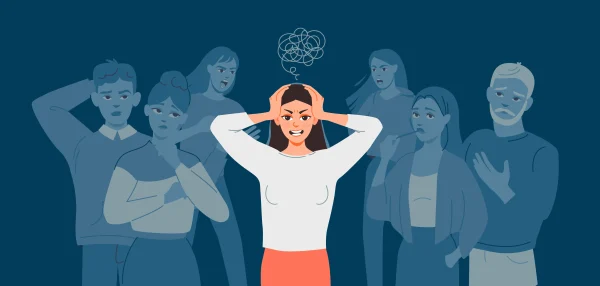
The ultimate fear for any speaker centers entirely around messing up in front of everyone. You drop your notes, forget your core argument, or stutter through a vital sentence. Perfectionism creates an impossible standard that guarantees severe anxiety. Many people desperately search for rapid solutions to this fear of failure. What is the fastest way to build social confidence? The fastest method involves consistent, small-scale practice combined with self-compassion.
Forcing yourself into manageable interactions while replacing negative self-talk with neutral observations accelerates your comfort around others. You must entirely remove the intense pressure to deliver a flawless performance. Audiences do not demand perfection; they simply desire authenticity and clear communication. When you accept that mistakes are inevitable, you immediately reduce the cognitive load on your brain. You grant yourself the freedom to recover gracefully.
The Pause and Reset Protocol
When you lose your place mid-sentence, your initial instinct drives you to rush forward or rapidly fill the silence with awkward sounds. You defeat this panic by executing a deliberate post-pause. You stop speaking entirely for two full seconds. This brief silence allows your brain's cognitive processing to catch up with your racing thoughts. You execute the sixty-second physiological interrupt by taking an extended eight-second exhale while gripping the podium. You calmly take a sip of water, grounding yourself physically while reviewing your notes. The audience merely sees a thoughtful, deliberate speaker pausing for dramatic effect. You also rely on pre-scripted bridge phrases like, "This leads to my next important point," to smoothly bypass memory lapses. This structured reset prevents a minor stumble from cascading into a catastrophic mental freeze on stage.
Humor as a Deflection Tool
Leaning into self-deprecating humor instantly diffuses tension when an undeniable mistake occurs. If your microphone suddenly cuts out or you knock over a glass of water, apologizing profusely only makes the crowd uncomfortable. Instead, you confidently smile and deliver a lighthearted remark about the situation. You might say, "Well, I clearly practice my clumsy moments as much as my speech." This confident deflection demonstrates high emotional intelligence and proves you remain in total control of the room. The audience invariably laughs and immediately aligns themselves with you. They root for the human being who acknowledges a flaw with grace rather than the robot trying to hide it. Humor bridges the gap between performer and spectator, proving that vulnerability actually creates a much stronger, more memorable connection than absolute perfection ever could.
The Post-Performance Review: Avoiding the Shame Hangover
The way you speak to yourself after stepping off the stage dictates your anxiety levels for the next presentation. Cognitive psychologists Clark and Wells defined post-event processing as a devastating, negative rumination loop. Socially anxious individuals obsessively critique their performance for days, recalling perceived failures with vivid emotional intensity. This negative memory bias causes you to entirely discount positive feedback and roaring applause.
Overcoming Shyness and Social Anxiety requires you to violently interrupt this shame hangover. You must stop agonizing over the one sentence you mumbled and recognize the complete success of the event. Clinical interventions suggest scheduling a strict ten-minute window to review your performance. Once that timer expires, you firmly close the mental review and refuse to dwell on the unchangeable past, actively protecting your hard-earned confidence for future events.
Neutral Observation vs. Harsh Criticism
You evaluate your performance objectively by removing moral judgments entirely. You do not label yourself a failure because your hands shook during the opening minutes. Instead, you utilize an exposure journal to document the objective reality of the situation. You write down factual statements like, "The audience smiled when I told the opening story, "rather than entertaining subjective fears like, "Everyone hated my voice." You note that you rushed the second section, but you also document that you recovered smoothly during the conclusion. This analytical approach distances your intrinsic self-worth from the mechanical execution of a public speech. You treat the presentation as pure data collection rather than a definitive test of your character. Focusing solely on neutral observations allows you to identify specific areas for improvement without setting off the devastating cycle of self-loathing.
Celebrating the Win of Simply Showing Up
The primary victory happens the exact moment you refuse to cancel the event. Walking onto the stage despite your racing heart is a massive accomplishment, regardless of the applause or the stumbles. Many speakers forget that courage means acting in the presence of fear rather than demanding its absence. You successfully rewired your brain the second you chose exposure over avoidance. You must actively celebrate this incredible courage. Treat yourself to a nice dinner, share your success with a supportive friend, and genuinely acknowledge the difficult work you just completed. Rewarding yourself reinforces the positive aspects of the experience within your nervous system. You prove to yourself that you possess the resilience to survive highly uncomfortable situations. This self-celebration guarantees you will willingly step back onto the stage again in the future.
The Long Game: Overcoming Shyness and Social Anxiety Beyond the Spotlight
The skills you forge under the intense pressure of the spotlight inevitably bleed into your everyday life. Handling a crowd of fifty people makes holding a conversation with a single colleague feel entirely effortless. Overcoming Shyness and Social Anxiety on stage serves as the ultimate driver for overarching social confidence building. You notice that the grounding techniques keeping you calm during a keynote speech also stop your hands from shaking during a first date. You stop utilizing workplace safety behaviors, like avoiding eye contact in meetings or over-rehearsing small talk, because you no longer fear judgment. This deep translation of skills completely changes your daily reality. You naturally command deep respect from peers and communicate your boundaries clearly, permanently turning these intense stage victories into a solid foundation of lasting personal empowerment every single day.
Transferring Stage Skills to Daily Conversations
The strategic eye contact you practiced on stage works wonders during a tense salary negotiation. You look directly at your manager, anchoring your nervous system exactly as you did with the audience. Overcoming Shyness and Social Anxiety requires you to actively apply these identical tools across all environments. The five-four-three-two-one sensory technique pulls you out of a panic attack whether you stand behind a podium or sit in a crowded restaurant. When you stumble over your words during a casual chat, you implement the two-second post-pause without apologizing. You breathe, reset your thought process, and continue the story with total confidence. This consistent application ensures your exposure therapy covers your entire life alongside your specific performances. You systematically eliminate the daily safety behaviors that previously held your social life hostage.
Ongoing Growth and Therapy Options
Some physical reactions require additional support beyond standard exposure exercises. Severe tremors and extreme heart palpitations occasionally block you from even attempting a micro-performance. A study published in PubMed notes that propranolol is often used off-label for performance anxiety. Consequently, in these extreme cases, doctors frequently prescribe propranolol off-label to block the beta receptors feeding the intense physical symptoms. This medication stops the shaking without dulling your mental sharpness, providing a vital bridge to face your fears.
The National Institute for Health and Care Excellence (NICE) guidelines recommend offering adults with social anxiety disorder individual Cognitive Behavioral Therapy, such as the Clark and Wells model, alongside graduated exposure. In alignment with this, pairing systematic desensitization with Cognitive Behavioral Therapy creates the gold standard for long-term recovery. A therapist helps you dismantle the harsh cognitive distortions, like mind-reading, that convince you the audience secretly hates you. You combine these professional tools with your daily practice to guarantee ongoing growth. You consistently push your boundaries, completely trusting that you now possess the exact skills required to navigate any social or professional speaking challenge confidently.
Stepping Into Your Power
The progression from debilitating stage panic to empowered performance relies entirely on strategic exposure and deep physiological regulation. You literally train your nervous system to tolerate the spotlight. You no longer view the audience as a hostile threat waiting for you to fail. Instead, you utilize strong physical routines, cognitive reframing, and immediate grounding techniques to present your message with undeniable clarity. Overcoming Shyness and Social Anxiety on stage remains an ongoing, deeply rewarding practice that essentially alters how you interact with the entire world. Your voice carries significant value, and your message deserves to be heard without the heavy burden of paralyzing fear. Take control of your progress today by deliberately booking your next small speaking engagement, trusting that you are completely ready to step into your power right now.
Recently Added
Categories
- Arts And Humanities
- Blog
- Business And Management
- Criminology
- Education
- Environment And Conservation
- Farming And Animal Care
- Geopolitics
- Lifestyle And Beauty
- Medicine And Science
- Mental Health
- Nutrition And Diet
- Religion And Spirituality
- Social Care And Health
- Sport And Fitness
- Technology
- Uncategorized
- Videos

