
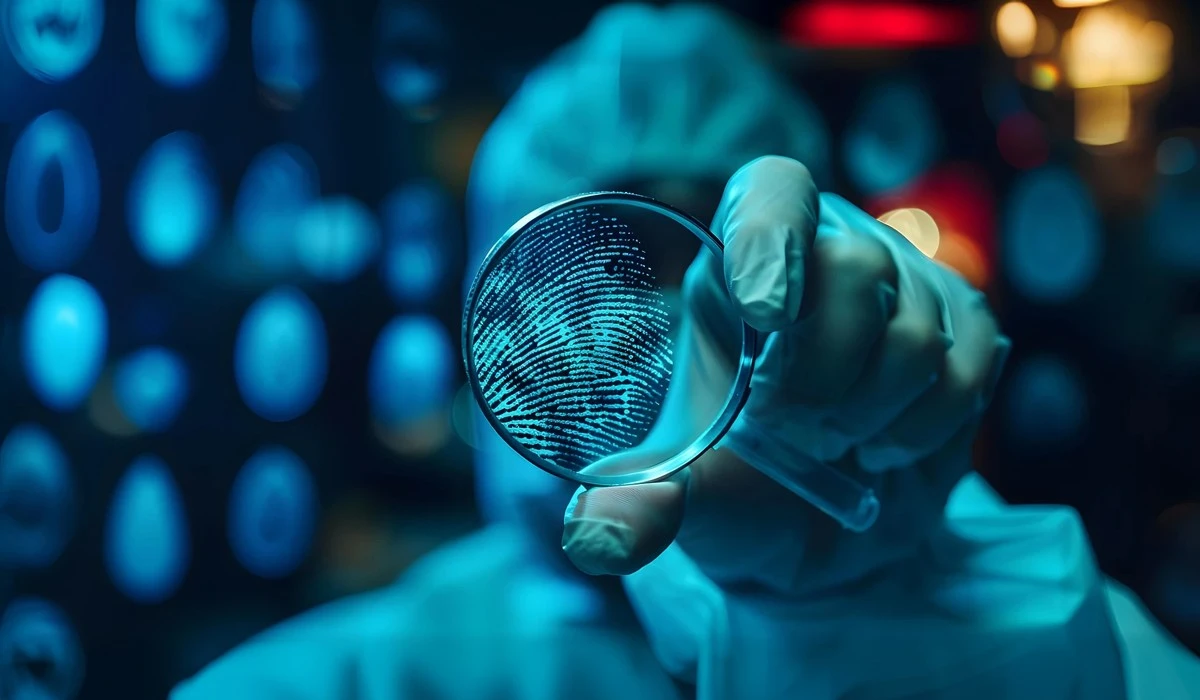
How Forensic Technology Rescues Corrupted Drives
Investigators pull a shattered, water-logged laptop from a muddy riverbank, hoping to find answers. Physical decay begins destroying internal components immediately, trapping essential location data and communication logs inside failing memory chips. A normal air-conditioned room contains hundreds of thousands of microscopic particles per cubic foot, and exposing a damaged hard drive platter to this air permanently obliterates the remaining data. Law enforcement faces a ticking clock where the device holds the entire truth. While physical clues tell part of the story, Forensic Technology acts as the ultimate lifeline for revealing reality concealed within severely damaged devices. Recent advancements completely overhauled digital evidence recovery and reshaped modern crime scene forensics from the ground up. This rigorous scientific process identifies, preserves, and rescues essential data in a legally defensible manner, ensuring critical facts survive even the most extreme physical destruction.
The Shift From Fingerprints to Hard Drives
Investigators treated early investigations purely as physical puzzles, relying heavily on tangible items to link suspects to locations. Francis Galton conducted the first scientific study of physical fingerprints in 1892, cementing biological tracking as the standard. According to a report from the Office of Justice Programs, modern crime scene forensics experienced a massive shift in nineteen seventy-eight when the first state computer crime law took effect.
The Federal Bureau of Investigation officially launched its Computer Analysis and Response Team in 1984, recognizing that digital devices track suspect movements better than any eyewitness. Research published in a nineteen ninety-two Springer article formally introduced the term computer forensics, while an article from Utica University notes that federal laboratory directors subsequently collaborated to form the Scientific Working Group on Digital Evidence. Today, law enforcement agents treat smartphones, laptops, and external storage drives with the exact same extreme care they apply to a physical weapon found at a fresh crime scene.
The Rise of Digital Evidence in Modern Investigations
Investigators rely on these modern digital footprints to build comprehensive suspect profiles that physical clues simply cannot match. Before the digital revolution, detectives depended almost exclusively on unreliable witness statements and rare physical traces like hair fibers. Today, crime scene forensics utilizes connected smartwatches, cloud-synced home assistants, and vehicle navigation modules to verify alibis with absolute mathematical certainty.
Law enforcement agencies quickly realized that human memory drastically fades over time, whereas a thoroughly parsed database table retains extreme accuracy indefinitely. This major shift forced police departments worldwide to aggressively expand their technical divisions, funding specialized laboratories entirely dedicated to dissecting modern electronics. digital evidence recovery rapidly evolved from a niche specialty into the central pillar of modern investigative work, proving repeatedly that a single recovered text message holds significantly more weight than a dozen circumstantial witness accounts during high-profile trials.
Why Digital Storage Fails During an Investigation
Suspects routinely attempt to destroy their digital trails using fire, water, or blunt force. During extreme heat scenarios, the solder holding components to the printed circuit board melts entirely, causing critical microchips to physically detach. When someone submerges a drive in water, the manufacturer seals eventually fail, allowing pressurized water, corrosive salt, and dirt to breach the internal chassis. When confronted with a smashed device, people naturally wonder, can experts recover data from a physically destroyed hard drive?
Yes, assuming the internal magnetic platters or memory chips remain relatively intact, specialists safely rebuild the ruined drive inside a sterile cleanroom to successfully extract the critical data. Meanwhile, logical corruption happens via malware, sudden power loss, or intentional software wiping. Simply deleting files always leaves recoverable traces, making digital evidence recovery highly effective against basic attempts at concealing the truth.
The Myth of Total Data Destruction
Perpetrators routinely underestimate the sheer resilience of modern hardware against their violent destruction attempts. When criminals smash laptops with hammers or throw desktop towers off balconies, they usually only break the brittle exterior casings and delicate display screens. The internal metal hard drive chassis naturally shields the sensitive magnetic platters spinning securely inside. Physical damage almost never targets the exact microscopic sectors holding the most damning communication logs.
Experts systematically dissect these battered machines in sterile environments, carefully extracting the unharmed data sectors right past the visible external ruin. The most common logical damage occurs when suspects frantically run specialized software formatting tools right before police knock on their door. They incorrectly assume that a standard operating system reset permanently erases their illegal history, fully unaware that digital evidence recovery easily reconstructs heavily fragmented directories to reveal their concealed crimes.

How Forensic Technology Approaches a Dead Drive
The primary mandate during any investigation involves total isolation, ensuring analysts never modify the original media at the microscopic level. The National Institute of Standards and Technology strictly mandates the use of write-blocked hardware tools for legally sound digital evidence recovery. These specialized write-blockers force the hard drive into a read-only state via an onboard hardware chipset, stopping the operating system from making any accidental changes to obscured metadata or boot loaders.
Forensic Technology utilizes this secure connection to create a perfect, bit-by-bit replica of the corrupted drive for safe analysis. Investigators then validate the exactness of the newly cloned image via cryptographic hash value comparisons. Specifically, they utilize MD5 and SHA-256 mathematical algorithms to cross-verify data authenticity, guaranteeing the copy perfectly mirrors the source drive before any deep examination or file extraction officially begins in the lab.
Bypassing Logical Corruption
Once professionals secure the bit-by-bit clone, the investigation transitions entirely to the software side of the rescue operation. Severe malware infections or sudden power outages routinely destroy the central file system, leaving the computer utterly unable to locate its own stored documents. Advanced software programs bypass this logical corruption through rigorous sector-level analysis directly on the copied media.
Analysts systematically navigate around bad sectors to locate abandoned system structures and obscured partitions scattered across the drive space. Treating the drive as a massive grid of raw data rather than relying on broken directory maps allows investigators to successfully capture deleted operating system logs and user files. This methodical software approach effectively reconstructs shattered digital environments, allowing experts to view essential evidence exactly as it existed moments before the device suffered the fatal software crash or intentional format attempt.
Advanced Tools Powering the Rescue Mission
Rescuing data from physically destroyed hardware requires incredibly precise environmental controls. According to an IAEA publication, technicians must rebuild exposed hard drives inside an ISO Class One Hundred cleanroom, a highly controlled space that limits airborne contamination to no more than one hundred particles larger than half a micron per cubic foot. When a modern smartphone suffers catastrophic damage, experts deploy the specialized chip-off method to bypass dead circuit boards entirely.
Technicians rely on a thermal infrared station heated to exactly two hundred forty-five degrees Celsius to safely melt the industrial compound glue holding the flash memory in place. This high heat avoids frying the delicate internal components during removal. Non-destructive alternatives include tapping directly into physical debugging nodes on the circuit board to bypass the dead processor, giving investigators direct access to the raw storage chips holding the necessary criminal evidence safely tucked inside the broken shell.
Software Solutions: Carving Out Raw Data
When operating systems obliterate directory structures entirely, digital evidence recovery relies heavily on an aggressive technique known as file carving. This highly technical software process scans the remaining raw binary data for unique hexadecimal byte sequences called magic numbers. For example, specific forensic software instantly recognizes that a JPEG image file always starts with the specific hexadecimal header FF D8 FF. Because these extraction methods require immense technical precision, victims and investigators often ask, how long does forensic data recovery take?
The process typically requires anywhere from a few days to several weeks, depending entirely on the severity of the drive corruption and the total storage capacity. Once completed, advanced Forensic Technology tools piece these carved hexadecimal fragments back together, completely restoring readable photographs, obscured documents, and deleted text messages from what previously looked like a meaningless wall of random numbers.
Connecting Rescued Data to Physical Investigations
Rescuing data holds little value until analysts bridge the gap between digital findings and real-world movements. Advanced carving tools reconstruct behavior timelines through the isolation of specific internal computer artifacts like Shellbags, Amcache, and Prefetch files, which permanently link user keyboard activity directly to the local system. According to a ScienceDirect article, law enforcement utilizes extracted exchangeable image file format data from recovered photographs to track people based on GPS longitude, latitude, and specific street positions.
The study also suggests these parsed databases provide exact geolocation pings, rapidly converting random device usage into a detailed suspect map. Seamless digital evidence recovery feeds directly into the broader strategy of crime scene forensics to corroborate or definitively disprove witness testimonies. Matching a specific text message timestamp pulled from a corrupted phone directly to a local security camera feed helps investigators quickly lock down airtight timelines that defense attorneys struggle to dismantle in front of a strict courtroom jury.
Mapping Digital Footprints
Investigators expertly synthesize these recovered digital fragments into comprehensive chronological maps that clearly highlight suspicious suspect behavior. Whenever a person takes a photo on their modern smartphone, the device automatically embeds extremely precise exchangeable image file data directly into the background code. This internal metadata records the exact longitude and latitude coordinates where the camera lens captured the image.
Even if the suspect actively disables their primary cellular network connection, internal application logs constantly capture surrounding wireless network signals to successfully document their immediate location history. This advanced digital evidence recovery seamlessly connects abstract data points with tangible physical locations, radically reinforcing standard crime scene forensics. When technicians successfully recover previously deleted text messages discussing a specific criminal event, analysts cross-reference these timestamps directly against the internal metadata coordinates to instantly establish undisputed geographical proof of suspect involvement.
The Unsung Heroes of Forensic Technology in Action
Real-world hardware recovery occasionally reaches astonishing levels of survivability. In two thousand three, engineers successfully salvaged ninety-nine percent of the data from a 400-megabyte hard drive that survived the catastrophic Space Shuttle Columbia disaster. The drive fell from space, melted entirely, and lay abandoned in a dried Texas lakebed for six long months. Though the plastic shell burned beyond recognition, technicians transplanted the internal 2.5-inch platters into a new motor to extract critical data.
Even when a suspect tries to wipe their tracks logically, hope remains. You might wonder, is it possible to recover data after a factory reset? Yes, a study published on ResearchGate concludes that reset devices still provide useful information to a forensic investigation, as advanced tools piece together scattered data fragments left behind, provided newer files leave those specific storage sectors entirely untouched. This unique capability makes Forensic Technology incredibly formidable in reviving unsolved cold cases.

Navigating Encryption and Modern Roadblocks
Modern storage devices introduce massive complications that force investigators to constantly adapt their recovery methods. Solid State Drives present major hurdles because they utilize the automated TRIM command to maintain high operating speeds. When a user deletes a file on a solid-state drive, the operating system issues a TRIM command, prompting the drive’s background garbage collection process to actively overwrite abandoned data blocks with zeroes.
Unlike older magnetic hard drives, traditional write-blocking hardware cannot stop this internal self-corrosion process. If the system issued the TRIM command directly before law enforcement seized the hardware, the solid-state drive continues erasing essential data blocks internally the exact second a technician applies power to the unit. This automated destruction forces crime lab specialists to execute incredibly fast, highly precise interventions to freeze the memory chips before the background garbage collection permanently clears out all remaining evidence.
When Encryption Aids Investigation
Ironically, strong full-disk encryption systems like BitLocker sometimes work entirely in favour of digital investigators. Deleted files trapped inside encrypted volumes often survive automated TRIM commands because the operating system cannot read the heavily scrambled blocks to properly authorize the final garbage collection sweep. If forensic experts successfully obtain the binary decryption keys, they rapidly carve the shielded data from the frozen partition.
Research in ScienceDirect notes that to overcome encryption challenges, experts aggressively rely on bypassing security features and exploiting system vulnerabilities through cutting-edge Forensic Technology, allowing them to capture necessary decryption keys directly from the volatile system memory and clear heavy lockscreen barriers. These highly sophisticated techniques keep digital evidence recovery viable even against modern military-grade encryption defenses. As device manufacturers regularly implement tougher security protocols, investigators routinely counter these moves through the invention of brilliant reverse-engineering solutions that systematically pull the obscured facts into the light for the waiting courtroom.
The Future of Data Rescue and Forensic Technology
A corrupted or shattered storage drive no longer signifies a permanent dead end during a detailed criminal investigation. digital evidence recovery thoroughly reshaped modern justice, ensuring suspects can never entirely destroy their incriminating electronic footprints. Law enforcement routinely relies on advanced scientific procedures to safely revive critical user data directly from the mangled wreckage of burned, drowned, or intentionally wiped personal devices. Future innovations will consistently expand these capabilities, pivoting from localized hardware extractions directly toward decentralized cloud tracking and sophisticated artificial intelligence pattern recognition.
Crime lab specialists prepare aggressively for an incoming period filled with fragmented information scattered widely across thousands of smart home electronics. Ultimately, powerful Forensic Technology relentlessly guarantees that the absolute truth survives any disaster, consistently pulling critical details from the deepest shadows and placing them firmly before a judge. This relentless evolution proves that concealing a crime requires significantly more effort than simply shattering a screen or deleting an inconvenient text message.
Digital Evidence: The Final Word in Justice
Law enforcement consistently maintains a sharp tactical advantage because experts treat every single damaged microchip as a vital crime scene waiting for thorough analysis. As criminals adopt increasingly sophisticated evasion tactics, investigators simply adapt their recovery frameworks to outsmart these defensive moves. The rapid progression of Forensic Technology firmly cements digital analysis as the most dependable tool available in modern criminal prosecution. When a judge hands down a guilty verdict based entirely on hexadecimal fragments carved out of a shattered hard drive, it sends a crystal-clear message to future offenders. Every action creates an undeniable trace, ensuring that expert technicians always find a viable path to rescue the truth from total destruction.
Recently Added
Categories
- Arts And Humanities
- Blog
- Business And Management
- Criminology
- Education
- Environment And Conservation
- Farming And Animal Care
- Geopolitics
- Lifestyle And Beauty
- Medicine And Science
- Mental Health
- Nutrition And Diet
- Religion And Spirituality
- Social Care And Health
- Sport And Fitness
- Technology
- Uncategorized
- Videos

