
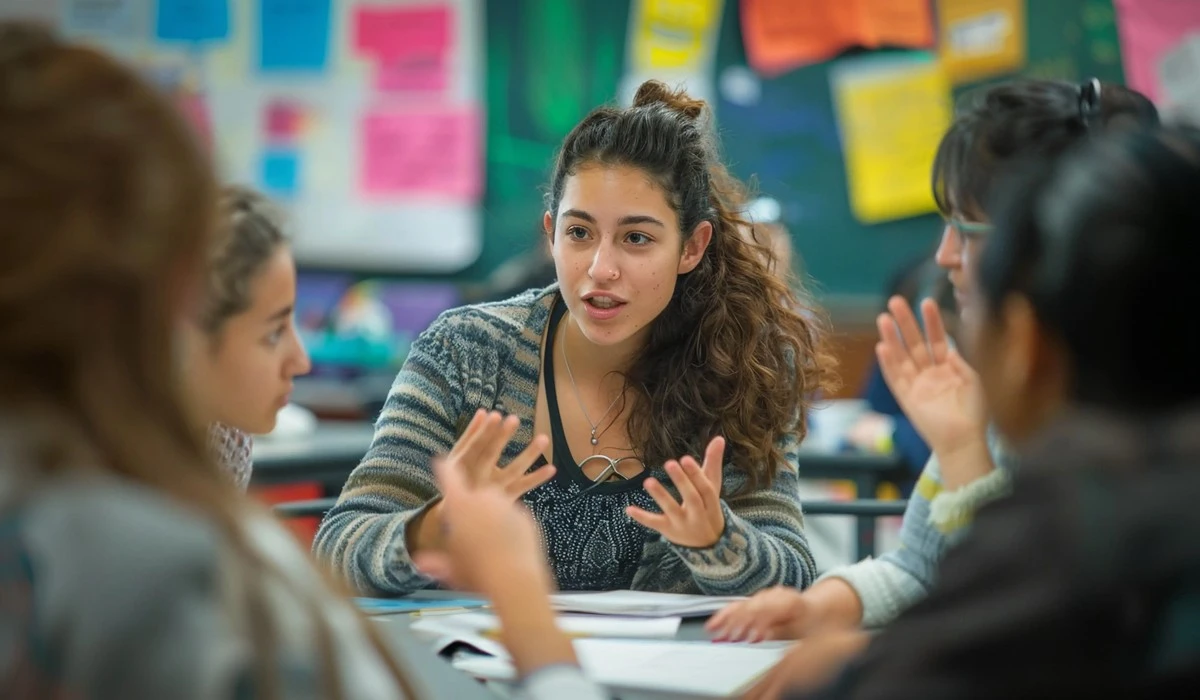
Language Teaching Techniques End Class Silence
A quiet room signals a deep problem. You planned a perfect lesson. You practiced grammar drills. Yet, your students stare back in stillness. This happens because the human brain shuts down when it feels threatened by judgment. Traditional schooling creates a wall between the learner and the language.
Modern Language Teaching Techniques break this wall. They focus on how second language acquisition actually works in daily life. Moving toward a communicative pedagogy gives students permission to speak. You turn the classroom into a place where talk matters more than perfection. These strategies help students find their voice and keep the conversation moving.
Shifting from Teacher-Led to Student-Centered
Teachers often spend too much time talking. This creates a passive environment where students simply listen. The "Guide on the Side" philosophy changes this relationship. In this model, the teacher facilitates rather than dictates. You provide the tools, and the students build the conversation. This shift requires trust. You must believe that students can use the language without constant interference.
Creating Low-Stakes Opportunities for Speech
Anxiety kills fluency. When a student fears a grade, they choose silence. A guide from the University of Glasgow notes that many students are reluctant to speak up, particularly because of a lack of confidence or social anxiety. According to EBSCO, Think-Pair-Share is an instructional strategy that encourages students to share ideas before a whole-class discussion, allowing them to test ideas in a safe space.
They talk to one partner before addressing the whole group. Research published by the NCBI states that Think-Pair-Share promotes a more equitable distribution of student participation and increased interaction.
A study in ScienceDirect further shows that Think-Pair-Share often leads to greater student participation than Think Share or Share alone. The ERIC database features multiple reports on this method; one confirms that Think-Pair-Share has been shown to be effective in increasing student achievement in multiple contexts, while another notes it is accepted as a teaching method across various disciplines. Additionally, an article in the International Journal of Health Sciences indicates that students’ perceptions of learning can improve with Think-Pair-Share.
Research in the International Electronic Journal of Elementary Education suggests that cooperative learning strategies are generally more effective than traditional methods for certain cognitive outcomes. How do you get quiet students to talk in class? You can encourage reluctant speakers by using small-group "buzz sessions" where the pressure of a whole-class audience is removed. This builds confidence in a low-stakes environment before moving to larger discussions. These small wins create a foundation for bigger risks later in the term.
Reducing Performance Anxiety
Stephen Krashen identified a major barrier to learning. According to FabuLingua, the Affective Filter Hypothesis states that negative emotions create a psychological filter that reduces a student’s ability to absorb comprehensible input. High-stress classrooms prevent students from taking risks. To lower this filter, you must create a supportive atmosphere. Use humor and personal stories. Show your own struggles with language. When the teacher appears human, the students feel safe enough to try.
Building a Culture of "Good Mistakes"

Traditional error correction often stops the flow of speech. If you stop a student every time they miss a verb tense, they will stop talking entirely. Focus on "global errors" that hinder understanding. Ignore "local errors" that do not change the meaning. Celebrate mistakes as evidence of learning. A student who makes a mistake is a student who is practicing. This change in perspective encourages constant output.
Moving Beyond Simple Comprehensible Input
Listening is important, but it is only half of the process. A document published on Scribd highlights that Merrill Swain developed the Output Hypothesis, which argues that producing language constitutes part of the process of second language learning. According to Cambridge University Press, pushed output means learners must produce language slightly beyond their current ability. Speaking forces the brain to notice its own gaps. When a student tries to explain a complicated idea, they realize which words they lack. This realization drives the brain to search for new information. Effective Language Teaching Techniques use this pressure to help students grow.
The Role of Social Interaction in Brain Development
The brain learns best through social negotiation. Michael Long’s Interaction Hypothesis suggests that we learn when we struggle to understand others. We paraphrase. We ask for clarification. These moments of "negotiation of meaning" are where the most growth happens. What is the best way to learn a second language? Research suggests that the most effective method is a balance of comprehensible input and active, meaningful social interaction. This dual approach ensures the brain both understands and learns to produce the new language.
Designing Authentic Task-Based Activities
Students find motivation when the language serves a purpose. According to a study in ScienceDirect, task-based language teaching emphasizes meaningful communication and uses real-world goals to drive speech. You might ask students to plan a trip or solve a mystery. Use "Information Gap" activities where each student has different pieces of a puzzle. They must talk to each other to finish the task. This necessity creates an organic reason to speak. It mirrors how people use language outside of school.
Prioritizing Function Over Form
Communicative pedagogy values the message over the grammar. Outside of the classroom, a traveler needs to find a train. They do not need a perfect past participle to achieve that goal. Teach functions like "apologizing," "requesting," or "complaining." Why is communicative language teaching important? It is essential because it prepares students for real-life communication instead of passing grammar tests. Focusing on functional language gives students the practical skills needed to operate in everyday situations.
Gamification Without the Gimmicks
Games provide a natural reason to communicate. Use role-play and simulations to immerse students in scenarios. A mock trial or a simulated press conference forces students to adopt new perspectives. This allows them to "hide" behind a character. When a student plays a role, they often feel less personal anxiety about their mistakes. They focus on winning the game or completing the role, which keeps the language flowing.
Using Visual Literacy to Spark Conversation
Images provide a concrete starting point for talk. Use the Picture Word Inductive Model to lead students from simple descriptions to detailed analysis. Ask them what they see, what they think is happening, and what might happen next. This visual scaffolding supports students who lack the vocabulary to start from scratch. It gives everyone the same reference point. Meanwhile, the conversation naturally expands as different students offer different interpretations of the same image.
Scaffolding for Beginner Speakers
Beginners often want to participate but lack the tools. You can provide sentence frames to bridge this gap. Frames like "I agree because..." or "I disagree because..." give them a head start. These supports reduce the cognitive load. The student focuses on the idea rather than the sentence structure. As they gain confidence, you can slowly remove these supports. This ensures that even the lowest-level learners have a seat at the table.
Challenging Advanced Learners Within the Same Task
Mixed-ability classes require tiered questioning. Ask a beginner a "Yes/No" question. Ask an intermediate learner a "Why" question. Ask an advanced student to predict a future outcome. This allows everyone to contribute to the same topic at their own level. It keeps the class unified while respecting individual growth. Advanced learners stay engaged by tackling more advanced logic, while beginners feel successful by contributing factual information.
Moving from Written Exams to Oral Portfolios
Paper tests rarely measure a student’s ability to hold a conversation. Switch to oral portfolios where students record themselves over time. This allows them to hear their own progress. They can track how their fluency improves and how their pauses become shorter. This method emphasizes growth over a single grade. It also provides a private space for students to practice their speaking skills without the eyes of the class on them.
Providing Feedback that Fuels Future Talk
Correction should support the conversation instead of ending it. According to the PMC database, corrective feedback is an extensively researched area in second language acquisition. Use "recasts" to provide the correct form without stopping the student. If a student says, "He goes to school," you say, "Yes, he goes to school." This provides the correct model implicitly. A publication on ResearchGate notes that corrective feedback is a central variable mediating interaction effects in SLA research. Ironically, many students learn better from these subtle corrections than from long grammar explanations. For more significant issues, use delayed feedback. Take notes during the activity and discuss the common errors at the end of the lesson.
Breaking the Silence Forever
A vibrant classroom depends on a good textbook and a shift in how we view the act of learning. Applying specific Language Teaching Techniques shifts the attention from rules to people. You acknowledge the hurdles of second language acquisition and create a path over them.
The shift from a quiet room to a talkative one takes time. However, a communicative pedagogy provides the framework for this change. Your students have ideas, opinions, and stories. They simply need the right environment to share them. When you prioritize the person across the desk, the silence ends, and the real learning begins.
Recently Added
Categories
- Arts And Humanities
- Blog
- Business And Management
- Criminology
- Education
- Environment And Conservation
- Farming And Animal Care
- Geopolitics
- Lifestyle And Beauty
- Medicine And Science
- Mental Health
- Nutrition And Diet
- Religion And Spirituality
- Social Care And Health
- Sport And Fitness
- Technology
- Uncategorized
- Videos

