
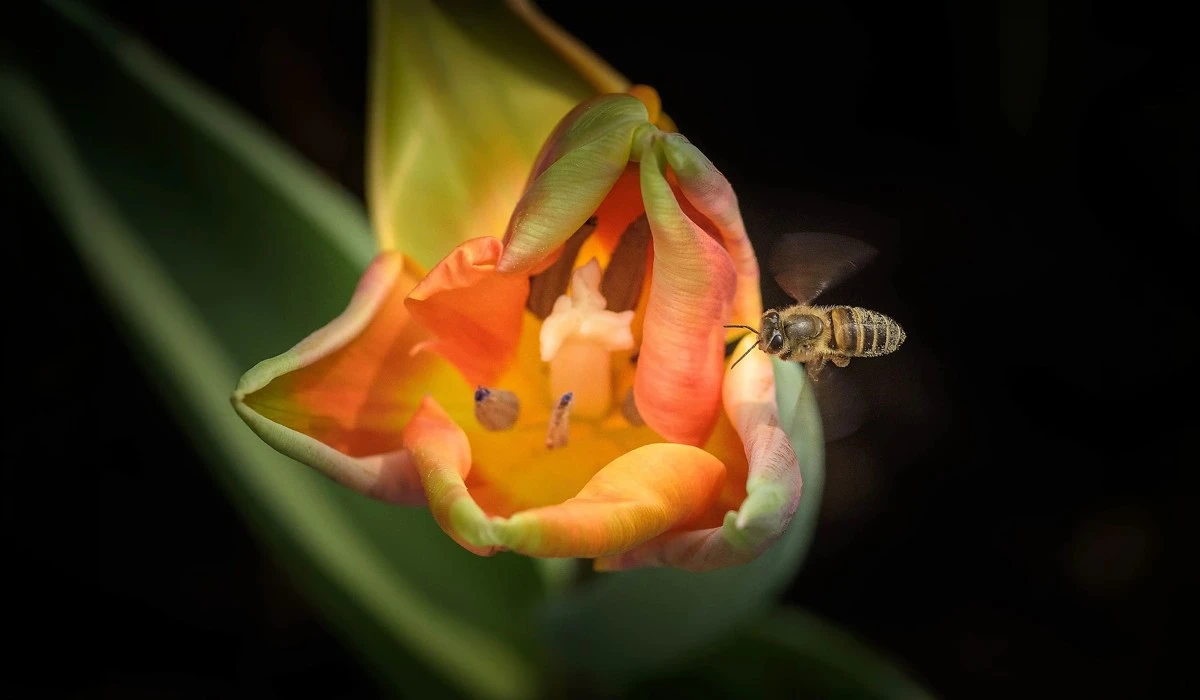
Pollination Biology: Scent Trails Decoded
A hawk moth hovers over a moonflower in the dead of night. It ignores the bright white petals and focuses entirely on a trail of molecules hanging in the humid air. While we see a garden as a collection of shapes and colors, insects experience it as a roaring conversation of chemicals. This chemical dialogue dictates which species thrive and which vanish. Understanding these interactions falls under the field of Pollination Biology, which provides the vital framework for how plants and animals ensure the next generation of life.
Decoding these chemical maps gives us the ability to protect our food supply and repair broken habitats. When we look closer, we find that flowers actually shout to their partners across vast distances using specific odors. These scents act as a survival guide for hungry insects navigating dense vegetation. Pollination Biology helps us read these guides to see how nature maintains its balance.
Beyond the Petal: Why Pollination Biology is Driven by Airborne Chemicals
Plants cannot move to find a mate, so they send out chemical scouts. These scouts take the form of Volatile Organic Compounds, or VOCs. Flowers synthesize these compounds in their petal cells, releasing them into the wind to attract specific visitors. As detailed in the Annual Reviews journal, Pollination Biology teaches us that these odors function as the primary vocabulary for plant-to-insect communication, serving as an ancient and essential channel for interaction.
Researchers use Solid-Phase Microextraction (SPME) to capture these smells. This process involves a tiny fiber that absorbs scent molecules directly from the air around a bloom. Analyzing these samples allows scientists to identify the exact chemical "fingerprint" of a flower. This data proves that a plant's smell often matters more than its appearance when it comes to reproductive success.
The Chemical Composition of Attraction
According to research published in Frontiers in Plant Science, most floral scents consist of multi-part blends classified as terpenes, benzenoids, and phenylpropanoids. Terpenes often provide the citrus or pine-like notes, while benzenoids create the heavy, sweet smells typical of lilies. Pollination Biology research demonstrates that nocturnal pollinators rely almost exclusively on these scents because colors disappear in the dark.
Many plants invest significant energy into producing these molecules. In some cases, flowers use "thermogenic volatilization." These plants actually generate heat to evaporate their scent compounds faster. This process pumps the odor further into the surrounding air, reaching pollinators that might be miles away.
The Precision of Floral Scent Tracking in Modern Ecosystems
Pollinators do not fly in straight lines; they follow a jagged path dictated by the wind. They perform floral scent tracking by moving toward pulses of odor. When an insect hits a pocket of scent, it flies upwind. If it loses the trail, it zig-zags back and forth until it finds the chemical signal again.
Scientists call this behavior "odor-gated anemotaxis." It requires incredible mental processing power from a brain the size of a pinhead. Insects use their antennae to detect even a few molecules of a specific compound amidst a sea of background noise. This precision allows them to find a single flower in a dense forest.
Navigating the Olfactory Plume
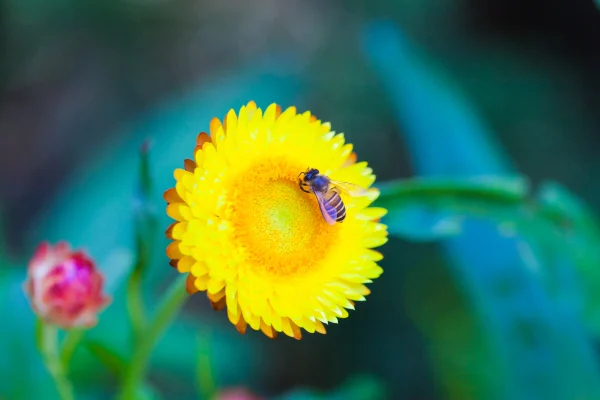
A study in ScienceDirect notes that the "active space" of a flower refers to the area where its scent is strong enough for an insect to detect, forming the steep concentration gradients necessary for pollinators to locate a bloom. Wind speed and air temperature constantly reshape this space. How do bees find flowers using scent? Bees use high-sensitivity antennal receptors to detect chemical gradients in the air, allowing them to "triangulate" the exact location of a nectar source from hundreds of meters away.
Once a bee enters the plume, it monitors the concentration of molecules in real-time. It compares the input from its left and right antennae to stay centered on the trail. This biological GPS system ensures the bee reaches the nectar reward with minimal energy waste. High-speed cameras show bees adjusting their flight path every few milliseconds based on these chemical hits.
The Evolutionary Logic of plant pollinator coevolution
As highlighted by Annual Reviews, the bond between a flower and its visitor represents a long-term biological agreement, as floral scents promote a high degree of specialization. This relationship, known as plant pollinator coevolution, results in distinct traits that benefit both parties. Over millions of years, flowers evolved scents that perfectly match the sensory preferences of their preferred partners.
Some plants even practice "sensory bias exploitation." They mimic the smells of things insects already like, such as rotting protein or pheromones. These plants trick the insect into providing pollination services without offering a nectar reward in return. This elaborate deception highlights the competitive side of evolutionary history.
Specialized Signals for Exclusive Partners
Pollination syndromes describe groups of traits that target specific animals. For example, flowers that want to attract beetles often produce spicy or fermented smells. Meanwhile, those targeting butterflies offer light, sweet scents. This plant pollinator coevolution ensures that pollen moves between members of the same species rather than being dropped on the wrong plant.
Research in PubMed states the Ophrys orchid provides a famous example of this specialization, emitting pseudo-pheromones that perfectly match the sexual attractants of female bees. Male bees attempt to mate with the flower and accidentally pick up pollen. This high-fidelity transfer depends entirely on the plant's ability to produce the correct chemical mimic.
How Scientific Breakthroughs in Pollination Biology Help Save Crops
Modern agriculture relies heavily on the principles of Pollination Biology to ensure high yields. According to the USDA, many of our favorite fruits and vegetables, like almonds and berries, require insect visits to produce a crop, with about 35 percent of global agricultural food depending entirely on animal pollinators. Scientists now use scent data to improve these pollination rates in commercial orchards.
Identifying the most attractive VOCs enables researchers to create synthetic lures. These lures draw wild bees into fields that might otherwise struggle with low visitation. This technology bridges the gap between natural processes and industrial food production, securing our global food supply.
Synthetic Lures and Agricultural Effectiveness
Farmers can now "prime" honeybees by exposing them to specific scents inside the hive. When the bees fly out, they immediately search for that specific smell in the field. Can plants change their smell to attract pollinators? Yes, many species have evolved the ability to ramp up scent production during the specific hours their primary pollinator is active to maximize the chances of successful reproduction.
This timing prevents the plant from wasting resources. A plant that attracts moths will smell strongest at dusk, while a bee-pollinated flower peaks mid-morning. An analysis detailed in ScienceDirect illustrates that scientists use Gas Chromatography-Mass Spectrometry (GC-MS) to map these emission schedules. This allows farmers to release hives exactly when the "chemical shout" of the crop is at its loudest.
Studying floral scent tracking to Understand Pollinator Memory
Pollinators possess a remarkable ability to learn and remember. When a bee finds a flower with high-quality nectar, it associates that specific scent with the reward. This "scent memory" guides the bee's future decisions. This cognitive aspect of floral scent tracking turns a simple insect into a highly effective foraging professional.
Research published in NCBI Research News shows that bees can remember a reward-associated floral scent for up to three days after just one successful learning experience. This memory helps them ignore low-quality flowers and focus on the best sources. This skillfulness benefits the hive by increasing the total amount of food collected per hour of flight.
Associative Learning and Floral Constancy
As observed in a study from the NCBI PMC database, bees often exhibit "floral constancy," meaning insect pollinators show a strong preference to visit just one flower species during a foraging trip. The study also suggests this behavior is a core element of Pollination Biology because it prevents pollen loss to incompatible allospecific plants. If a bee visits an apple blossom and then a cherry blossom, the pollen is wasted.
Scent memory makes this constancy possible. Locking onto a single chemical signature simplifies the bee's search. Ironically, this loyalty benefits the plant even more than the bee. It ensures that the pollen the bee carries actually reaches a compatible flower, completing the cycle of reproduction.
The Destructive Effects of Pollution on Pollination Biology
Human activity now threatens these ancient chemical pathways. According to an article in Science, air pollution from cars and factories changes the chemistry of the atmosphere, as atmospheric oxidants like ozone react with and chemically alter floral VOCs. This disruption directly harms the effectiveness of Pollination Biology in the wild.
A report by ScienceDirect demonstrates that when scent molecules break down due to ozone pollution, the odour plumes degrade, and the "active space" of the flower shrinks with reduced filament width. A moth that could once smell a flower from a kilometer away might now need to be within 200 meters to find it. This increased difficulty leads to lower seed production and weaker plant populations over time.
Scent Degradation in Urban Environments
Urban areas present a particularly difficult challenge for floral scent tracking. While research in ScienceDirect yields strong evidence for pollution generally degrading floral odors rather than listing specific products, it is understood that high levels of "chemical noise" from asphalt, gasoline, and cleaning products mask the delicate smells of nature. This blinding effect forces pollinators to spend much more energy searching for food, which often leads to colony collapse or local extinction.
Studies using Electroantennography (EAG) show that insects still try to find the scents, but the signals are too distorted to follow. This degradation of the chemical commons creates a disconnect between plants and their partners. Protecting the air quality in our cities is therefore a biological necessity for maintaining urban greenery.
Why Plant Pollinator Coevolution Holds the Key to Biodiversity
The survival of most terrestrial life depends on the success of plant-pollinator coevolution. Without these specialized relationships, the majority of flowering plants would disappear. This loss would cause a collapse of the food chain, affecting everything from songbirds to large mammals.
Maintaining biodiversity requires protecting land alongside the communication channels between species. We must view the air as a vital habitat that carries the signals of life. Conservation efforts now focus on planting "pollinator ribbons" that provide unbroken scent trails across fragmented environments.
Protecting the Chemical Commons
Sustainable farming and urban planning must incorporate the needs of the olfactory environment. Choosing plants that provide strong, clear signals to local insects can boost biodiversity. As the USDA points out, why is Pollination Biology important for food security? It provides the basic understanding needed to protect the natural processes that fertilize exactly one out of every three bites of food consumed globally.
Prioritizing these chemical connections ensures that plant pollinator coevolution continues to drive the variety of life on Earth. Modern tools now allow us to monitor these unseen interactions in real-time. This data gives us the power to act before a species reaches the point of no return.
The Vital Future of Pollination Biology
The world is much louder and more colorful than our human senses suggest. Every flower is a broadcaster, and every insect is a sophisticated receiver. Studying Pollination Biology gives us access to a conversation that has sustained the planet for millions of years. We now know that scent is the glue that holds these diverse biological systems together.
Learning the nuances of floral scent tracking and the history of plant pollinator coevolution allows us to intervene where nature is struggling. We can restore lost scents to bred flowers, protect the air from degrading chemicals, and help pollinators find their way as the climate shifts. Our future depends on our ability to listen to the chemical language of the garden and protect the messengers that keep our world in bloom.
Recently Added
Categories
- Arts And Humanities
- Blog
- Business And Management
- Criminology
- Education
- Environment And Conservation
- Farming And Animal Care
- Geopolitics
- Lifestyle And Beauty
- Medicine And Science
- Mental Health
- Nutrition And Diet
- Religion And Spirituality
- Social Care And Health
- Sport And Fitness
- Technology
- Uncategorized
- Videos

