

Modern Prepping Culture Becomes A Global Market
According to research published in the Journal of Consumer Research, people hoarding supplies to survive the collapse of capitalism spend billions of dollars inside the exact consumer markets they expect to fail by stockpiling consumer goods, acquiring prosumptive knowledge, and cultivating survival skills in an industry projected to reach $423 billion by 2025. Preparing for the end of the world requires an active credit card. This simple contradiction drives modern prepping culture. Once dismissed as a fringe hobby for doomsday fanatics, survivalism now spans across all political spectrums.
Everyday professionals stockpile canned goods and carbon monoxide monitors while navigating precarious employment and climate threats. From the Great Depression to the Ukraine conflict, historical anxieties constantly shape how ordinary citizens define personal safety. Today, the movement relies heavily on specialized gear, massive retail industries, and highly secretive community networks.
A close look reveals strict unwritten rules governing how people prepare for worst-case scenarios. Buying a water filter serves as a physical shield against global instability.
The Geographic Divide in Modern Prepping Culture
Where a person lives dictates their exact definition of the apocalypse. Geography shapes survival strategies long before the first canned good hits the pantry shelf. A deep cultural divide separates survivalists across the Atlantic.
A report from The Guardian notes that the United States harbors more than 20 million active participants who engage in prepping. American influence heavily skews public perception toward extreme stereotypes, featuring isolated bunkers and zombie fixations. British survivalists face vastly different daily hazards. Fifty-one-year-old father of three Leigh Price notes that the UK mindset focuses on highly probable threats like cyber-attacks, grid failures, and civil unrest. Nuclear war remains a low-probability concern for his peers.
Public perception often dismisses these individuals as tin-hat wearers. Hollywood fantasies heavily distort the reality of daily preparedness. The average participant simply wants a buffer against societal tension and severe weather. They completely sidestep apocalyptic delusions to focus on mundane, localized threats. Preparing for a flood requires practical planning, stripping away the cinematic drama of surviving a wasteland.
Incidents Driving Modern Prepping Culture
Minor inconveniences successfully radicalize ordinary citizens into full-time survivalists. A single temporary outage transforms a suburban home into a severe vulnerability zone. Sixty-year-old Donna Lloyd realized her total dependence on the grid when she lost power during the COVID-19 pandemic lockdowns. Relying entirely on a friend's camping stove pushed her toward strict self-sufficiency.
Personal crises often initiate long-term stockpiling habits. Chris White began hoarding bulk food after realizing his severe job insecurity. A sudden lack of work shifts exposed his proximity to poverty. His food storage immediately became a reliable financial safety net. Why do normal people start prepping? Most individuals begin preparing after experiencing sudden service disruptions, job loss, or natural disasters that expose their complete reliance on modern infrastructure.
Historically, the 1930s Great Depression and Cold War nuclear fears established the foundation for readiness. The 1970s oil crisis and inflation subsequently drove people to anticipate economic collapse. Modern drivers include the 9/11 attacks, the 2008 financial crisis, escalating climate change, and the Ukraine conflict. Three years ago, prepper meet-ups in Wales drew an attendance quantity of exactly one person. Today, widespread anxiety accelerates mainstream participation.
The Financial Cost of Crisis Management
Anti-consumerist ideologies fuel a massive consumer spending spree. People preparing for an industrial civilization failure buy disruption-proof assets to secure immediate peace of mind. Survival commercialization turns disaster anticipation into a highly lucrative global market. Enthusiasts invest heavy capital into acquiring gear, using retail purchases as their primary defense against uncertainty.
Leigh Price operates a specialized survival shop, a business venture born directly after his previous company closed down. His personal financial investment totals several thousand pounds. He also dedicates roughly one hour every week to maintaining his equipment. This repetitive behavior feeds a multi-billion-dollar industry catering to modern prepping culture.
The market supplies everything from high-end water filtration systems to luxury underground bunkers. Reality television programming like Doomsday Preppers and endless YouTube tutorials drive massive product sales. Participants routinely mock complacent citizens, yet they rely on major retail supply chains to build their survival kits. Buying specialized tools provides an immediate sense of control over uncontrollable global dangers. Researcher Richard G. Mitchell Jr. notes that gear acquisition represents a core defense tactic against modern anxieties.
Bugging In vs. The Wilderness Delusion
The ultimate survival plan fails the moment the temperature drops. Hollywood survival fantasies push a dangerous narrative of lone wilderness domination. Leigh Price stresses that isolation proves entirely unviable during a genuine crisis. Human evolutionary success stems directly from community living. Those attempting a rugged, solitary escape quickly face a rapid reality check courtesy of harsh weather elements.
A successful strategy requires safe location defense and extensive community cooperation. What is the rule of 3 in survival? A human can survive three minutes without air, three hours without shelter in extreme conditions, three days without water, and three weeks without food. Building on this biological timeline, a Reuters report notes that the EU Commission now urges the public to maintain sufficient emergency supplies for at least 72 hours to handle natural disasters, cyber-attacks, and geopolitical crises. This strict biological timeline dictates all evacuation planning within modern prepping culture.
Enthusiasts separate their tactics into two distinct categories. Bugging In involves fortifying a primary home and practicing homesteading skills. Bugging Out requires immediate evacuation using specialized kits. Escaping into the woods usually results in weather-induced failure, making localized community defense the superior option. True endurance requires a warm shelter and reliable neighbours.
Societal Trust and the Realities of Disaster Sociology
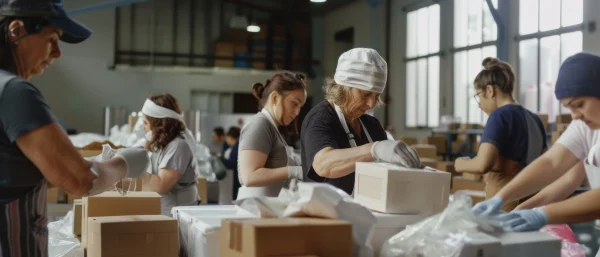
Preparing for mass violence blinds people to widespread human generosity. A deep contradiction exists regarding human nature during crises. Many survivalists expect immediate violence, looting, and Hobbesian selfishness. They anticipate the total breakdown of industrial civilization by the year 2030, a concept widely known as collapsology.
Disaster sociology presents a completely different outcome. Researchers like Quarantelli and Solnit observe immense altruism, mutual aid, and community solidarity following catastrophic events. Early survivalists focused heavily on tax evasion and government defiance. Modern mainstream preppers are often urban professionals preparing for temporary service disruptions. Still, specific traumas validate highly defensive mindsets.
A survivor named Adriaan experienced severe societal breakdown following a major hurricane. He witnessed widespread anger and a total absence of community solidarity. These conflicting realities show how personal trauma dictates an individual's level of societal trust. Leigh Price observes that a major cyber threat holds the potential to destroy the grid and force a return to stone age conditions. In that scenario, basic trust in neighbors vanishes instantly.
The Secret Lexicon of the Survival Spectrum
According to the Journal of Consumer Research, a shared coded language allows individuals to identify allies while remaining undetected in plain sight. Enthusiasts use a specific vocabulary to navigate their secretive subculture. The study notes this shared terminology creates clear boundaries between insiders and the uninformed public. What does SHTF mean in prepping? The acronym stands for "shit hits the fan," referring to the exact moment a major disaster or societal collapse begins.
Additional terms include BOB for Bug Out Bag and TEOTWAWKI for "the end of the world as we know it." Unprepared citizens receive the label "SHEEPLE," marking them as blind followers of a fragile system. Donna Lloyd highlights the intense secrecy within these communities. Many fear extreme social stigma from their unprepared peers.
The preparation spectrum ranges wildly. Some individuals maintain a concealed stash of extra canned goods in their pantry. Others pursue total isolation from society. Staying anonymous protects their resources from desperate neighbours during an emergency. Speaking the jargon allows them to share strategies without exposing their physical supply caches.
Redefining Resilience in Modern Prepping Culture
Past trauma functions as a strict instruction manual for future survival. Childhood struggles permanently alter how adults perceive basic security. As detailed by a report from The Guardian, Morana Revel spent five days living in a car in Kentucky during the 2009 ice storm. This early normalcy directly forged her current disaster resilience.
Her competence became obvious during a police interaction when she refused to relocate to a public shelter. Providing evidence of warm blankets and a functional carbon monoxide monitor proved her total self-sufficiency. Modern prepping culture emphasizes hard skill acquisition over mere physical accumulation. Donna Lloyd views building a fire as an exercise in environmental awareness and a massive confidence boost. Learning these basic physical tasks establishes permanent independence.
A reporter evaluating their own readiness scored a solid seven out of ten, reflecting the growing mainstream normalization of these practices. Collapsology requires absolute cooperation to build a new world. Everyday people now prioritize self-education to guarantee their relevance in a post-disaster society.
The True Value of Readiness
Stockpiling supplies forces a brutal evaluation of personal vulnerabilities. Acquiring an evacuation bag requires accepting the extreme fragility of everyday conveniences. Modern prepping culture exposes the thin barrier between absolute comfort and total deprivation. The impulse to hoard goods stems from a highly rational assessment of modern global instability. Severe weather, precarious employment, and cyber threats routinely disrupt daily life.
Survivalism ultimately demands intense community cooperation. Bunkers and luxury gear provide a temporary illusion of control against unpredictable hazards. True resilience relies on human connection and shared knowledge. Building a localized support network outlasts any commercial survival tool. A well-stocked pantry buys time, giving communities the required breathing room to organize, adapt, and outlast the disaster.
Recently Added
Categories
- Arts And Humanities
- Blog
- Business And Management
- Criminology
- Education
- Environment And Conservation
- Farming And Animal Care
- Geopolitics
- Lifestyle And Beauty
- Medicine And Science
- Mental Health
- Nutrition And Diet
- Religion And Spirituality
- Social Care And Health
- Sport And Fitness
- Technology
- Uncategorized
- Videos

