

Sports Science Periodization Builds Elite Strength
Most people enter the gym and move heavy weights until their muscles burn. They assume that more sweat always leads to more power. In reality, your body eventually stops responding to random hard work. It treats constant, unorganized stress as a threat and not as a reason to grow. If you push at maximum intensity every single session, your nervous system eventually hits a wall. You stop seeing gains because your body enters a state of permanent defense. Sports Science changes this path. It uses periodization in athletic training to time your heavy lifts with surgical precision. This approach ensures you hit a new personal record exactly when you want it. You stop guessing and start commanding your physical limits through logic.
The Foundation of Force Production
Strength begins in the brain before it ever reaches the muscle. When you lift a heavy barbell, your central nervous system sends electrical signals to your motor units. These units consist of a single nerve and all the muscle fibers it controls. According to research published in PubMed, Sports Science proves that training can lead to adaptive nervous system changes that allow you to recruit more of these fibers through specific loading patterns. Lifting at 90% of your maximum capacity every day usually backfires. This constant high-tension stress strains your neural pathways. Instead, you need to target myofibrillar hypertrophy. As noted in a study by PubMed, this process increases the size and number of contractile proteins called actin and myosin; this allows the cross-bridge to move from a low-force state to a high-force state, which creates more pulling force. Periodization in athletic training organizes your sessions so you build these proteins without exhausting your nerves.
How Sports Science Eliminates Training Guesswork
Traditional training relies on how you feel. Some days you feel strong, and other days you feel weak. According to a study in PubMed, professional athletes track variables like heart rate variability and bar speed to see how the body actually functions, as these metrics help assess training status and recovery. What is the best periodization model for strength? Most experts recommend linear models for beginners and undulating models for advanced lifters to ensure steady progress. Using these models allows you to match your daily workload to your actual recovery levels.
Research from PubMed indicates that Velocity-Based Training (VBT) provides an objective look at your power through the use of movement velocity as an indicator of relative load. A sensor tracks how fast the bar moves in meters per second. The study also suggests that if the bar slows down significantly, you have reached your limit for the day, which helps determine the appropriate training effect by comparing velocity loss. This prevents you from digging a hole of fatigue that takes weeks to climb out of. Sports Science removes the ego from the lifting platform and replaces it with measurable facts.
Designing a Roadmap with Periodization in Athletic Training
A successful strength program looks like a map. You need to know your destination and every turn required to get there. Without a plan, you are just driving in circles. As explained in PubMed, periodization in athletic training divides your year into specific blocks, such as block periodization models, which build upon each other. This prevents you from trying to improve everything at once, which usually results in improving nothing.
The Macrocycle: Your Big Picture Goal
According to the NSCA, the Macrocycle covers your entire training year and helps establish the annual plan's loading patterns. The process begins with identifying your primary goal, such as a powerlifting meet or a season opener. You then work backward from that date. This long-term view allows you to schedule phases for building muscle, developing force, and resting. It ensures you don't peak three months too early or too late.
Mesocycles: The Monthly Blocks of Adaptation
Mesocycles typically last four to six weeks. Each block focuses on one specific physical trait. For example, you might spend four weeks on hypertrophy to build the engine. The next four weeks focus on absolute strength to make that engine more effective. Concentrating your efforts forces your body to adapt to one stimulus at a time.
The Biological Signals That Drive Muscle Adaptation
Your body follows a predictable pattern called the General Adaptation Syndrome. When you lift a heavy weight, you create an "alarm" signal. This causes temporary fatigue and soreness. After the session, your body enters the "resistance" phase. It repairs the damage and builds the muscle back stronger than before. Research published in PubMed notes that if you add too much stress too soon, you hit the "exhaustion" phase of the General Adaptation Syndrome, where injuries happen.
Does periodization prevent injuries? As stated by the NSCA, it does because it reduces the risk of overtraining by balancing heavy loading with planned recovery to stop tissues from reaching their breaking point. Shifting your volume and intensity allows you to avoid the repetitive stress that causes joint pain. You give your ligaments and tendons time to catch up to your muscle growth. This keeps you in the gym and off the physical therapy table.
Leveraging Sports Science for Strategic Recovery
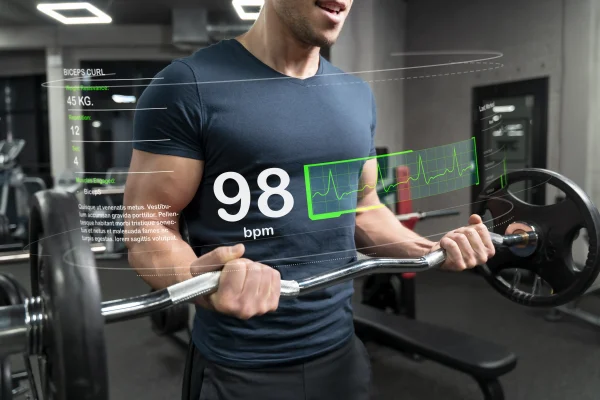
Recovery is a physical requirement and is not a sign of weakness. During a hard training block, your body produces high levels of cortisol. This hormone helps you handle stress, but too much of it stops muscle growth. Sports Science helps you manage these hormonal changes. You must treat your rest days with the same discipline as your heavy squat days.
Managing Systemic Fatigue
Systemic fatigue affects your whole body, not just one muscle group. Even if your legs feel fine, your nervous system might still be tired from a heavy deadlift session. According to a study in PubMed, monitoring your sleep quality and resting heart rate helps you spot this fatigue early, as heart rate recovery is a valid tool for tracking training status. If your resting heart rate jumps by ten beats per minute, your body needs a light day. This keeps your hormones in a growth-focused state.
Nutritional Timing for Strength Cycles
Your diet should change as your training changes. During a high-volume hypertrophy phase, you need more carbohydrates to fuel the extra reps. As noted in PubMed, when you switch to a low-volume, high-intensity strength phase, your body needs more protein to repair dense muscle fibers because the timing and amount of intake influence recovery. Sports Science teaches us that fueling the specific demand of the day leads to faster results.
Quantifying Success Through Performance Metrics
Stop looking only at the scale to judge your progress. Research from PubMed shows that strength athletes care about the "Volume Load," which is the product of sets, repetitions, and intensity performed during a training session. You calculate this through the multiplication of sets, reps, and weight. If your volume load increases over several months while your effort stays the same, you are getting stronger. This metric provides a clear picture of your actual work capacity.
Relative intensity also matters. This measures how close you are to your absolute limit on every set. A study in PubMed indicates that if you always lift to total failure, you generate too much fatigue for the gain you receive, suggesting that training not to failure may induce similar or better strength improvements. As described in research from PubMed, Sports Science suggests leaving one or two reps "in the tank" during most sessions through the use of the relationship between RPE and velocity. This allows you to train more often and accumulate more total work over the year.
Modernizing Your Routine with Sports Science Principles
Moving to a professional-grade program requires a change in mindset. You must value quality over quantity. Instead of adding more exercises, improve the ones that matter most. Start by tracking your bar speed or using a scale of one to ten to rate your difficulty. This shift in focus turns a standard workout into a data-driven training session.
How long should a strength phase last? Most athletes see the best results from blocks lasting four to six weeks before they need a deload. A deload week involves cutting your weights and volume by half. This period of improvement allows your body to fully realize the gains from the previous weeks. It feels like taking a step back, but it actually prepares you to take two steps forward.
Reaching the Summit of Elite Performance
True power arises from applying Sports Science to every rep and every rest period rather than relying on luck or generic routines. When you use periodization in athletic training, you align your efforts with the natural laws of human biology. You move past the plateaus that stop most people in their tracks. Following a structured plan ensures that every drop of sweat contributes to a stronger, more capable version of yourself.
Recently Added
Categories
- Arts And Humanities
- Blog
- Business And Management
- Criminology
- Education
- Environment And Conservation
- Farming And Animal Care
- Geopolitics
- Lifestyle And Beauty
- Medicine And Science
- Mental Health
- Nutrition And Diet
- Religion And Spirituality
- Social Care And Health
- Sport And Fitness
- Technology
- Uncategorized
- Videos

