
Herpetology Skills for Finding Rare Pond Turtles
Most people walk past a swamp and see only brown water and downed trees. They look for a bright green animal sitting in plain sight. In reality, rare turtles hide by blending into the shadows. You find them when you stop looking for the creature and start looking for the temperature of the wood. Professional Herpetology methods turn a frustrating hike into a successful search. Learn the rules of how water and sun interact to stop guessing and start knowing where life waits. A grasp of amphibian and reptile ecology allows you to see the pond as a map of energy rather than a mess of mud. This shift in focus reveals rare species that most people never see in a lifetime.
Why Herpetology is your map to rare turtle sites
Professional Herpetology provides a systematic way to find animals that want to stay concealed. The field grew from the Greek word herpeton, which means "creeping thing." Early scientists used this branch of biology to separate cold-blooded crawlers from mammals and birds. Today, experts use predictive modeling to find rare turtles. Instead of wandering through a wetland, you study the data of past sightings. This discipline moves you past simple identification and into the world of behavioral forecasting.
Experts use Visual Encounter Surveys (VES) to track populations. This method requires you to search a specific area for a set amount of time. You record every turtle you see, even the common ones. This data reveals the "hot spots" where rare species likely live. Apply these scientific steps to change from a casual observer into a skilled tracker. Herpetology takes the luck out of the hunt through a focus on the environmental variables that dictate animal presence.
Becoming proficient in the basics of amphibian and reptile ecology
The study of amphibian and reptile ecology centers on how these animals interact with their physical world. Turtles are ectotherms. This means they cannot create their own body heat. They rely on the sun to reach their Preferred Body Temperature (PBT). Without this heat, their bodies stop working. They cannot digest food or fight off diseases without proper warmth. This biological need dictates exactly where you will find them on any given day.
Turtles seek out "thermal mosaics." These are areas in a pond with different temperature zones. A turtle moves between hot sun and cool water to keep its body running perfectly. Many people ask, "Where do pond turtles go in the winter?" These reptiles typically enter a state of brumation, burying themselves in oxygen-rich mud or underwater debris until spring. As noted by the McGill University Office for Science and Society, turtles use a process called cloacal respiration during this time, where they pull oxygen directly from the water through specialized tissues in their tail end.
Identifying thermal microhabitats
Rare turtles look for very specific basking sites. They prefer logs or banks with maximum southern exposure. This position catches the most solar radiation throughout the day. You should look for "lentic" water, which is still and warms up quickly. "Lotic" water moves and stays colder, which turtles often avoid during the spring when they need to jumpstart their metabolism.
Seasonal migration patterns
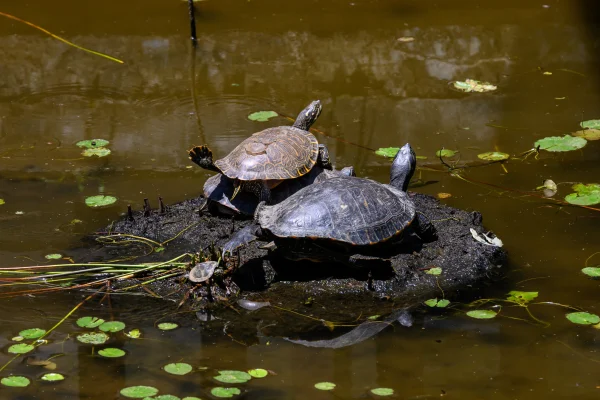
Many rare species show high "philopatry." This means they return to the exact same log or nesting bank every single year. They also move across land during certain seasons. You might find a pond turtle far from water when it searches for a new home or a place to lay eggs. Tracking these movements requires a deep knowledge of the surrounding amphibian and reptile ecology. Some turtles even use aestivation, burying themselves in upland soil to survive extreme summer droughts.
Reading the terrain through a Herpetology lens
To find the rarest species, you must learn to read the water like a book. Professional Herpetology researchers look for "structural complexity." This means the pond has plenty of submerged root masses, fallen branches, and varied depths. These features provide hiding spots from predators like raccoons or herons. A pond with a flat, empty bottom rarely supports a diverse turtle population.
Modern researchers now use Environmental DNA (eDNA) to find hard-to-find species. According to research published in PLOS ONE, scientists take a water sample to detect genetic material from shed skin cells, feces, or other secretions. The study further explains that this technology confirms that a turtle lives in the pond even if no one sees it. Combine these high-tech tools with old-school observation to increase your chances of a find. You should focus your efforts on ponds that show high levels of organic health and stable water levels.
Deciphering water quality and vegetation
Rare turtles prefer a balance of open water and thick vegetation. Submerged plants provide a home for the small animals that turtles eat. A common query is, "What do pond turtles eat in the wild?" According to the U.S. Fish and Wildlife Service, most pond turtles are opportunistic omnivores that consume a mix of aquatic insects, small fish, and various water plants. Research published in Frontiers in Marine Science also describes them as environmental bioindicators; as they live a long time, their shells store data about heavy metals or pesticides in the water.
Identifying nesting substrate
The area around the pond matters just as much as the water itself. Rare turtles need "well-drained, friable soil" to lay their eggs. This usually means a mix of loam or sand that stays soft enough for digging. This soil must sit in a sunny spot with very little canopy cover. The sun provides the consistent heat required for egg incubation. This relationship between the ground and the sun forms a vital part of amphibian and reptile ecology.
Tactical field gear for successful pond surveys
You cannot find rare turtles if you spook them before you get close. Turtles have sharp vision and, as explained by SeaWorld, can feel vibrations through the ground and water as they respond to low-frequency sounds. Professional Herpetology work requires high-quality optics. Polarized sunglasses are your most important tool. They cut through the glare on the water's surface, allowing you to see turtles resting just below the top of the pond.
Optics for non-invasive spotting
Use binoculars with 8x42 or 10x42 magnification for the best results. These allow you to scan logs from a safe distance. Every species has a "Flight Initiation Distance" (FID). This is the distance at which a turtle feels threatened and dives into the water. Rare species often have a very high FID. If you get within 50 feet, they vanish. Using long-range optics keeps the animals calm and visible.
Timing your search using Herpetology data
Timing is everything when you hunt for rare reptiles. You must find the "thermal gap." This happens when the air temperature is at least 5 degrees Celsius warmer than the water. On the first sunny day after a long rain, every turtle in the pond will climb onto a log to dry out and warm up. Professional Herpetology involves a check of weather patterns days in advance to pick the perfect morning.
Best hours for basking activity
The "golden hour" for turtle spotting usually runs from 8:00 AM to 11:00 AM. During this window, the sun hits the logs at a sharp angle. This provides maximum warmth before the water heats up too much in the afternoon. Turtles often move back into the water once they reach their target body temperature. Early morning searches yield the highest number of sightings because the animals are desperate for heat after a cold night.
Field ethics and turtle conservation protocols
Finding a rare species brings a heavy responsibility. According to a report by The Guardian, you must keep the location of rare turtles a secret to protect them from the illegal pet trade, as poaching for the pet market has significantly endangered many species. Taking a photo is great, but moving the turtle or sharing its GPS coordinates can cause real harm.
Follow the legacy of Archie Carr, a famous figure in the field. He taught that we must protect the entire terrain beyond the pond. Turtles need safe paths to travel between different wetlands. Roads often block these paths, leading to high death rates for "gravid" (egg-bearing) females. Learn about amphibian and reptile ecology to become an advocate for the corridors these animals need to survive.
Improving your Herpetology observational skills
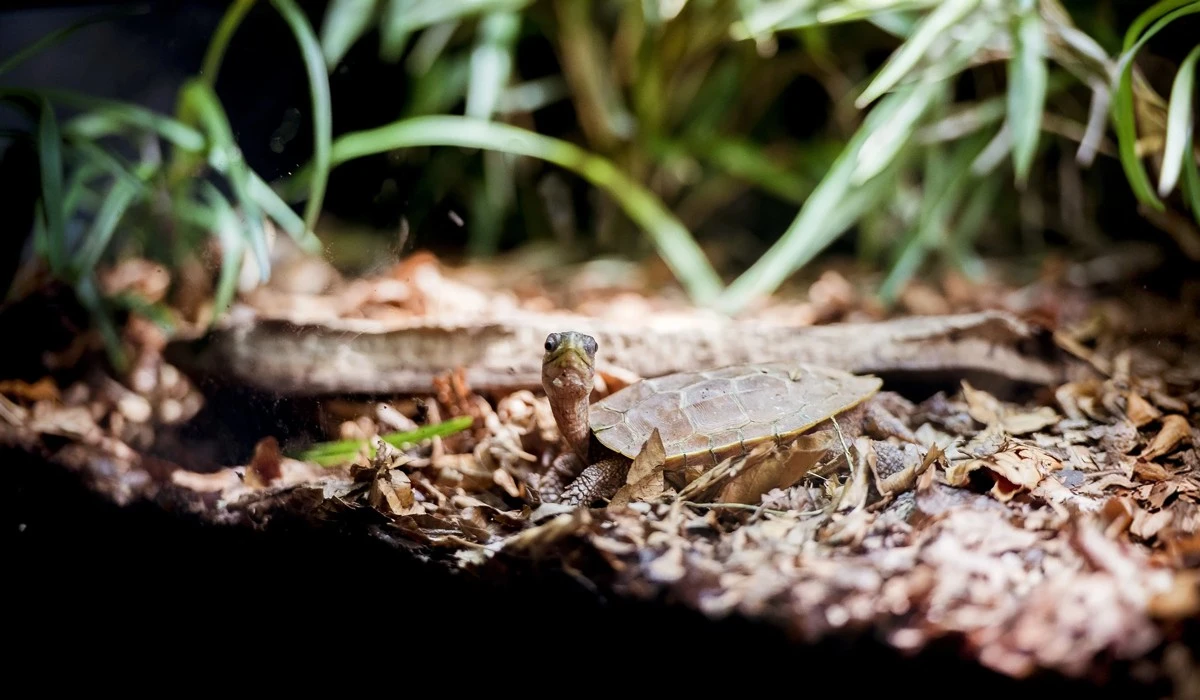
You must train your brain to recognize a "search image." Instead of looking for a whole turtle, look for a perfect circle or a dark dome on a log. Often, you will only see the tip of a nose or the curve of a shell. Advanced Herpetology also involves your ears. If you hear a sudden "plop" in the water as you walk, you likely just missed a turtle. Stop, sit still, and wait ten minutes. The turtle will often climb back up if the area stays quiet.
Distinguishing species at a distance
Learn to identify turtles using their silhouettes and shell patterns. The "scutes" or plates on a turtle’s shell provide clues about its species and age. Look for neck stripes or the shape of the plastron (the bottom shell). Some rare pond turtles have very specific markings that set them apart from common sliders. Learning these fine details makes you a true expert in the field.
Your next steps in the field of Herpetology
Finding rare pond turtles requires patience and a sharp eye. You now have the tools to turn a simple walk into a scientific mission. Use professional Herpetology techniques to see through the camouflage of the natural world. Every log and every patch of sand tells a story about the animals living there.
A firm grasp of amphibian and reptile ecology changes how you value the wetlands in your community. You can now identify high-quality habitats and notice when an environment is in trouble. Get out into the field, bring your binoculars, and start documenting what you find. Your observations contribute to a global community of enthusiasts working to keep these ancient creatures on the map for another million years.
Recently Added
Categories
- Arts And Humanities
- Blog
- Business And Management
- Criminology
- Education
- Environment And Conservation
- Farming And Animal Care
- Geopolitics
- Lifestyle And Beauty
- Medicine And Science
- Mental Health
- Nutrition And Diet
- Religion And Spirituality
- Social Care And Health
- Sport And Fitness
- Technology
- Uncategorized
- Videos

