
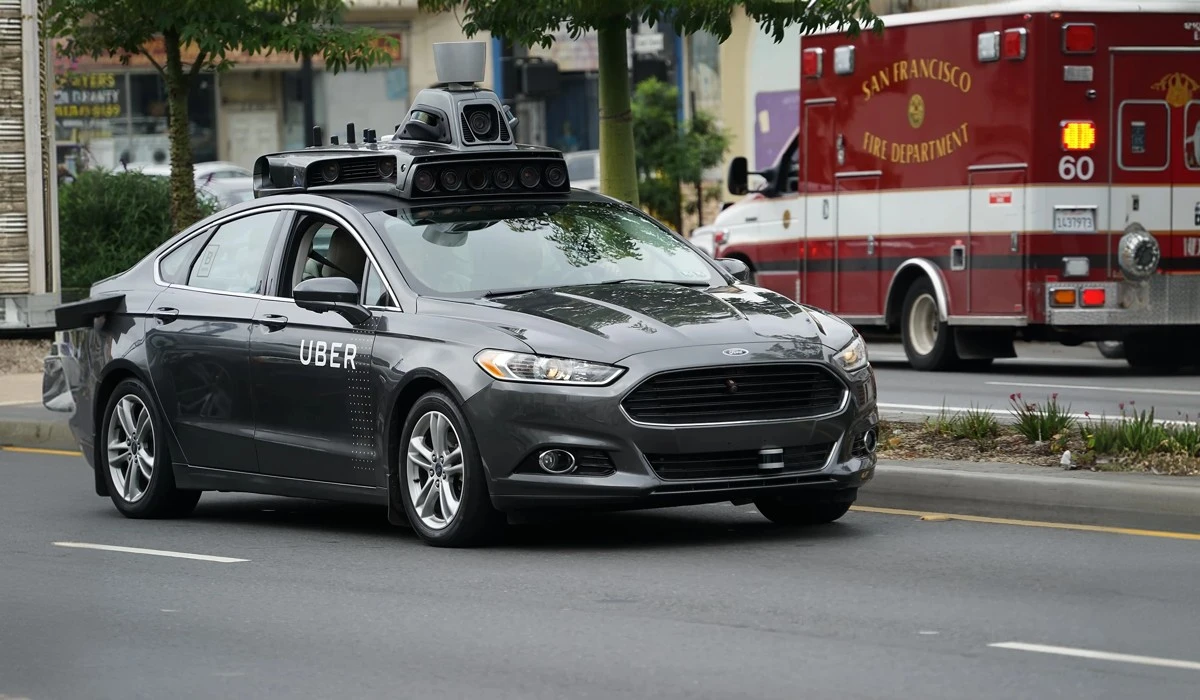
Image Credit - by Dllu, CC BY-SA 4.0, via Wikimedia Commons
Uber Women Preferences Feature Sparks Legal Clash
A safety tool designed to protect one group accidentally becomes the exact legal weapon used by another group to sue the company. You launch a feature to keep female riders safe. Almost immediately, male drivers drag you into court for civil rights violations. This is the reality behind the new Uber Women Preferences feature. According to an Associated Press report, the company tested a pilot program last year aimed at addressing platform safety concerns.
On Monday, the company expanded the initiative and launched this tool nationwide across the United States, allowing women to exclusively request female drivers. Users want greater trip autonomy. Drivers want elevated income generation agency. The concept makes perfect sense on paper. However, executing this idea causes a massive legal and logistical collision. Fixing an obvious safety issue exposes deep flaws in gig economy labor laws. The platform created a solution for transit anxiety. Consequently, they handed their own workforce grounds for a massive discrimination lawsuit.
Monday’s Nationwide Launch and The Supply Reality
App toggles promise immediate control, but the supply side of the market actually dictates who gets a ride. On Monday, the formal rollout hit smartphones across the United States. Riders can now access the Uber Women Preferences feature directly in their app. However, a major supply issue complicates the user experience immediately. Women currently make up only around 20% of US female drivers. This creates a severe bottleneck during peak hours. How does the Uber women preference work? As detailed in an Uber press release, users can toggle a setting in the app or book in advance to request a female driver, though they maintain the option to accept a faster alternative ride if wait times get too long.
Rideshare blogger Sergio Avedian points out a harsh reality regarding consumer patience. He notes that most riders prioritize speed and cost over personal preference. If a female driver is twenty minutes away and a male driver is two minutes away, the rider usually chooses convenience. The app offers alternative ride options and wait time flexibility to counter this problem. Yet, a low supply of female drivers casts doubt on the real-world execution of the program. Riders often abandon their preference when faced with a surging price or a delayed commute.
The $8.5 Million Verdict Driving the Change
Corporate policy changes rarely stem from goodwill; they almost always trace directly back to a massive courtroom loss. Last month, a court hit Uber with an $8.5 million penalty. A jury found the company liable after a driver assaulted a passenger. This staggering verdict looms large over the current rollout of the Uber Women Preferences feature. Legal experts see these new tools as a direct response to massive legal vulnerability. Attorney Ann Olivarius views assault risk reduction as a strict commercial imperative for rideshare platforms.
When companies implement specific safety options, they establish a valid defense against future discrimination claims. Safety data forces their hand completely. As reported by PBS NewsHour, the platform recorded 5,981 sexual assault incidents on US rides between 2017 and 2018. The same report notes that by 2021 and 2022, that number dropped to 2,717 incidents. That represents roughly 0.0001% of total trips. According to Reuters, the company previously agreed to a $28.5 million settlement in 2016 to resolve litigation over misrepresented safety practices and background checks. Uber knows safety failures destroy profit margins.
The Male Driver Backlash and Civil Rights
A system built to filter out danger inherently blocks economic opportunity for the majority of workers. Uber promotes the Uber Women Preferences feature as an alignment with public welfare. Meanwhile, male drivers view the tool as a direct attack on their livelihood. A group of male drivers filed a gender discrimination lawsuit against the company. They claim the feature violates the Unruh Act by unfairly restricting their access to the passenger pool. Can male drivers sue Uber for discrimination? Yes, several male drivers have filed lawsuits arguing that gender-based ride filtering violates civil rights laws because it restricts their access to paying customers.
The plaintiffs argue the feature perpetuates harmful biases against men. They claim the app creates an unfair assumption of male threat over females. The lawsuit focuses heavily on unfair business competition. When the algorithm prioritizes female drivers for female riders, it pushes male drivers to the back of the line. The gig economy relies on equal access to requests. Filtering riders by gender disrupts that core promise. It attracts intense legal scrutiny from the very people keeping the platform running.
Uber's Independent Contractor Legal Strategy
The strongest corporate defense involves proving the company has absolutely no control over the people executing its services. Uber defends its safety record using a highly controversial legal strategy. The company relies heavily on the independent contractor classification. Uber claims complete platform immunity from criminal acts committed by drivers. Because the drivers operate as independent businesses, the company argues it bears no direct liability for their individual actions.
Furthermore, Uber forces drivers into private arbitration mandates through signed contracts. This strategy keeps high-profile disputes out of public courtrooms. Uber classifies itself strictly as a technology platform. The company aggressively denies operating as a transportation fleet. This distinction creates a massive legal hurdle for passengers seeking damages. However, recent multimillion-dollar verdicts show juries starting to reject this absolute immunity argument. The company must balance its hands-off labor classification with the pressing need to introduce proactive safety tools. They must prove they care about passenger safety without admitting they employ the drivers.
How Lyft women+connect Tested the Market First
First-mover advantage usually requires testing civil rights boundaries before competitors take the same risk. Uber did not invent this matching concept. TIME magazine notes that Lyft beat them to the market by launching its counterpart program, "Women+ Connect," in 2023. The publication explains this feature offers priority matching for women and nonbinary drivers. Lyft subsequently faced a similar discrimination lawsuit in 2024. Uber clearly watched this legal battle unfold before finalizing the Uber Women Preferences feature. They learned from their rival's legal exposure.
Interestingly, the two companies take very different approaches to gender identity. Lyft includes non-binary users in its matching pool. Uber strictly limits its feature to biological or ID-verified women. Uber issued a public statement clarifying this strict limitation. The company consulted with advocacy groups and decided the current feature remains unsuitable for gender-diverse users. This creates a clear division in how rideshare platforms handle gender identity.

The Dispute Over Biological Limits
One company risks alienating biological women because it includes non-binary users in a specific safety pool. The other company risks severe backlash from the LGBTQ+ community to maintain strict biological parameters. Uber chose to isolate the feature entirely to biological or legally identified women. They prioritized straightforward matching over total inclusivity.
From Saudi Arabia to US Teen Accounts
Regulations born from strict overseas laws frequently evolve into safety solutions for suburban parents in the West. The origin of the Uber Women Preferences feature traces back to Saudi Arabia in 2019. Following the legalization of female drivers, the company introduced gender preference matching to align with local cultural norms. The feature expanded rapidly across the globe. Today, it operates in more than 40 countries for drivers and 7 countries for riders. The platform has facilitated over 230 million global trips under this preference program.
Now, Uber uses this global testing data to target a highly lucrative demographic. They want to attract worried parents. The platform integrated the preference tool directly into teen accounts as a parental control option. Can teens use the Uber women preference? Parents can activate this specific preference through linked teen accounts to ensure younger riders match with female drivers whenever possible. The company pairs this preference with a suite of 2024 safety tools. These include audio recording, live tracking, and route deviation detection.
Pilot Programs and Gradual Expansion
The company took a cautious approach to the US rollout. According to Forbes, the initial summer pilot programs ran in Los Angeles, San Francisco, and Detroit. By November, a second pilot phase expanded into 26 US cities. This slow release allowed Uber to gather data on wait times and driver availability before the official launch.
The App Features Guarding the Ride
Technology solves human unpredictability because it turns every single transit movement into an auditable data point. Uber secures its platform using gender filtering and additional measures. The company deployed a massive suite of safety tools in 2024. These in-app features include audio recording, live tracking, and deviation detection. These tools work in tandem with the Uber Women Preferences feature. If a driver veers off the expected route, the app detects the anomaly immediately. It pings both the driver and the rider to confirm their safety.
The audio recording feature provides a different level of security. Riders and drivers can encrypt audio directly on their devices. Uber cannot access this audio unless a user submits a specific safety report. This creates a digital paper trail for any dispute. The live tracking allows users to share their exact coordinates with friends or family members. These features attempt to eliminate the blind spots inherent in gig economy transportation. They transform the private car into a highly monitored corporate space.
The True Reality for Night Shift Female Drivers
Highly produced marketing campaigns sell empowerment, while actual workers use the tools strictly to avoid late-night anxiety. Uber launched a massive marketing campaign featuring athlete endorsements from Alex Morgan and Jordan Chiles. These ads focus heavily on empowerment and the benefits of the Uber Women Preferences feature. The reality on the ground looks much more practical and slightly grim. Female drivers simply want to feel safe in their own cars.
Driver Melody Flores notes the feature provides significant ease during nocturnal shifts. She reports feeling much more comfort in previously intimidating neighborhoods. Before this tool, many female drivers simply logged off after dark. They refused to pick up intoxicated male passengers at 2:00 AM. When Uber allows female drivers to exclusively match with female passengers, the company effectively extends their working hours. The company claims this provides enhanced driver assurance. The drivers finally get to control who enters their personal vehicles. It solves a real-world problem without the corporate gloss.
The True Cost of Comfort
Creating safe transit environments forces companies to make highly uncomfortable compromises. The Uber Women Preferences feature highlights a massive friction point in the gig economy. Passengers demand ultimate safety. Drivers demand equal access to the platform's customer base. The law demands non-discriminatory business practices. These three forces absolutely cannot perfectly coexist.
Uber built a tool that provides incredible peace of mind for female riders and drivers. Simultaneously, that exact tool hands male drivers a legitimate civil rights grievance. The courts will ultimately decide if commercial safety overrides anti-discrimination laws. Uber continues to argue that public safety interests justify the feature. Until a judge rules definitively, riders will keep toggling the preference button. They will continue weighing their personal comfort against the length of the wait time.
Recently Added
Categories
- Arts And Humanities
- Blog
- Business And Management
- Criminology
- Education
- Environment And Conservation
- Farming And Animal Care
- Geopolitics
- Lifestyle And Beauty
- Medicine And Science
- Mental Health
- Nutrition And Diet
- Religion And Spirituality
- Social Care And Health
- Sport And Fitness
- Technology
- Uncategorized
- Videos

